The horror movie franchise-to-asymmetrical multiplayer video game pipeline has been a consistent one for years now. Dead by Daylight kicked off the idea back in 2017 and cemented its place in the genre, offering a blueprint for others. Following the success of that game, we got the likes of Friday the 13th, Killer Klowns from Outer Space: The Game, and even The Texas Chain Saw Massacre. Each of these games has leaned into the specific aesthetics of those franchises, all of which leads us to now, as the granddaddy of the slasher genre finally gets its time in the spotlight with Halloween: The Game.
Videos by ComicBook.com
It would be easy to think that IllFonic had simply taken the ideas of Friday the 13th and simply reskinned it for John Carpenter’s 1978 feature film, but the reality is that it is an active improvement on that game in every way. Halloween: The Game not only shows a lot of strides in learning and enhancing the asymmetrical multiplayer gameplay from the previous titles, but also in making sure that it maintains a distinct fidelity to the movie itself. Though some wild glitches and bugs, and some frustrating design choices, will pop up, it’s a satisfying experience where no two rounds go the same way.
Rating: 3.5 out of 5
| PROS | CONS |
|---|---|
| Michael’s gameplay is distinct | Hilarious bugs and animations abound |
| Civilians are still fun to play | Takes franchise liberties that stand out |
| Attention to detail |
Halloween’s Single Player Mode Is a Prolonged Tutorial
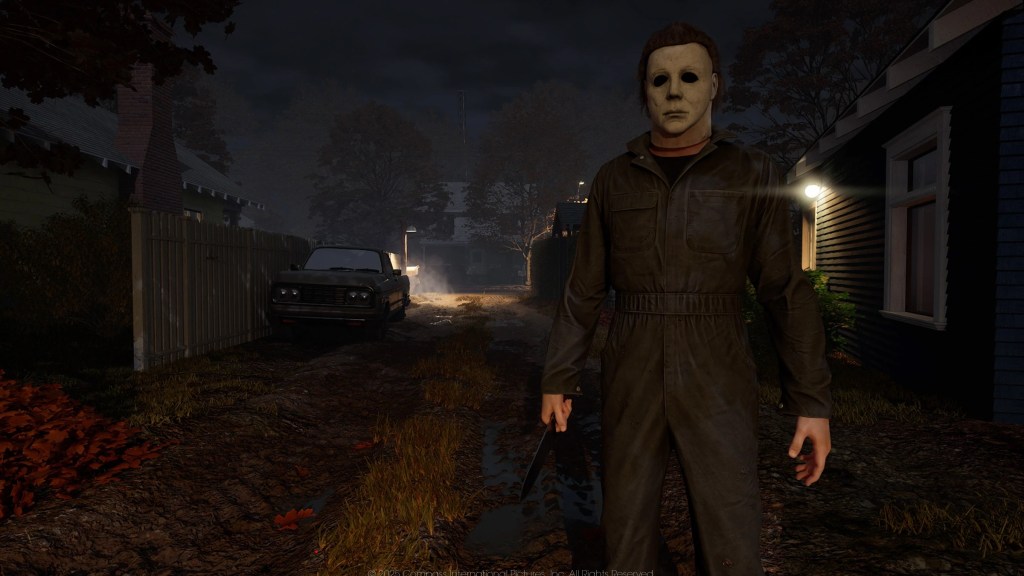
A key component that immediately separates Halloween: The Game from many other asymmetrical multiplayer horror games is the single-player component that comes with it. Across six stages, players are given a series of challenges and moments from the original film to recreate (on top of original story ideas that the movie does not show).
The entire point it even exists appears to just be making sure that players are fully adapted to the unique mechanics of playing as Michael Myers in the game. This includes not only his abilities, but how he interacts with the world itself. One of the good things working in its favor is the level of flexibility that’s allowed in most of these stages, giving the player the option to carry out the objectives however they see fit, using whatever weapons they can find along the way. It’s almost Hitman-like in that way, as players who find it satisfying to master moments and do them quickly could find replayability in the whole thing.
For completionists, there are plenty of reasons to replay, such as completing the challenges that unlock the many (MANY) cosmetics available in the game. On the whole, though, all of these missions can likely be completed in less than the amount of time it would take to watch the original Halloween itself, even with all the added story elements, and it’s tough to ever see it as anything but a lengthy how-to.
Playing as Civilians in Halloween Is Actually Fun

Halloween‘s primary multiplayer mode is set up as a 1v4-style game, but the good news for gamers who drop in as a concerned citizen of Haddonfield is that playing on the side with more people is somehow less stressful than playing as the Boogeyman himself. It can certainly be startling to run away from Myers, but getting yourself out alive feels less nervewracking than trying to find and slay everyone in town.
Players have a slew of different characters to choose from, all with their own perks and stats that suit whatever style of play that you want to embody in the game. Some characters are better at talking to civilians and convincing them of the threat outside (more on that later), while others might be better at repairing damaged vehicles or phones, and others may just be a certified track star who can run at full speed no matter how scared. On top of that, there are even more layers of customization, as players can change the outfits, accessories, and even starting items of their characters.
A key facet of Halloween: The Game compared to Friday the 13th is that the objective of escaping isn’t the only thing on your mind. With three priority NPC targets that Michael is after (plus four more also wandering about), the game rewards players who work toward making sure their fellow residents are safe and able to escape the Boogeyman’s clutches. The game also rewards talking to NPCs, allowing it to unlock a random draw of perk cards from the player-made decks, all of which can enhance stats or offer a respawn as a cop after death.
There’s so much to do, and the randomization of every round makes each game of Halloween feel fresh and distinct. Maybe you’ll take my approach and pick a character good at repairing stuff, arm them with a repair kit as their starting item, and hope that you’ll be able to find the car and get it going in order to escape. You know what they say though: man plans, and God laughs, because there’s no guarantee that the car will even be available in any given match.
As a result, you have to adapt. These change-ups don’t fit into the select patterns that say Friday the 13th had beforehand, and with the sheer amount of different items and places to look, no two games will ever be the same. There are only four maps, though, so learning the idiosyncrasies of them all will take time.
To that end, one of the pain points in the game is what happens if you die early. Some mini-games while observing the remaining players allow you to keep “playing” and deliver perk cards to anyone still alive, with the potential to respawn as Doctor Loomis also lingering. That said, there’s no guarantee you ever will get one of those respawn cards, or that the mechanic meant to summon Loomis will be activated, so if you die first, you might be stuck with a lot of dead air while you wait for the match to end (the only way to get all your XP).
Michael Myers Isn’t Too OP in Halloween

In Friday the 13th, players were dropped in as the ultimate killing machine, Jason Voorhees, and though he and Michael Myers might be in the same category as unkillable slashers, their gameplay stands in stark contrast to one another. With Halloween: The Game, the mechanics of playing as Michael Myers lean specifically into how the boogeyman operates in the original movie.
One of the new elements in playing as Myers is stalking, a first-person POV mechanic that mirrors the iconic shots from Carpenter’s 1978 movie and opens up the world in distinct ways. Players can not only see where noise is coming from in this mode, but also lock onto NPCs and player characters to up the “stalk” meter on them. In doing this, you can not only track these players better on the mini-map but unlock bigger and more elaborate kills as a result. Halloween: The Game rewards players who play Michael as he acts in the film, while simply rampaging about might work for some; it’s not going to be the best way to win.
To that end, Myers is also not a steamroller that will simply have his way in any given scenario. Not only can he be downed, blinded, and tricked, but players can definitely escape from him if they’re savvy (or fast) enough. He’s the boogeyman after all, though, so even if he does have weaknesses, there’s a reason the game is 1v4. Myers players also have a distinct level of customization offered to them too, with different abilities, starting weapons, and even skins for The Shape to wear.
Halloween’s Authenticity Is Its Best Asset (But It Blurs the Lines)
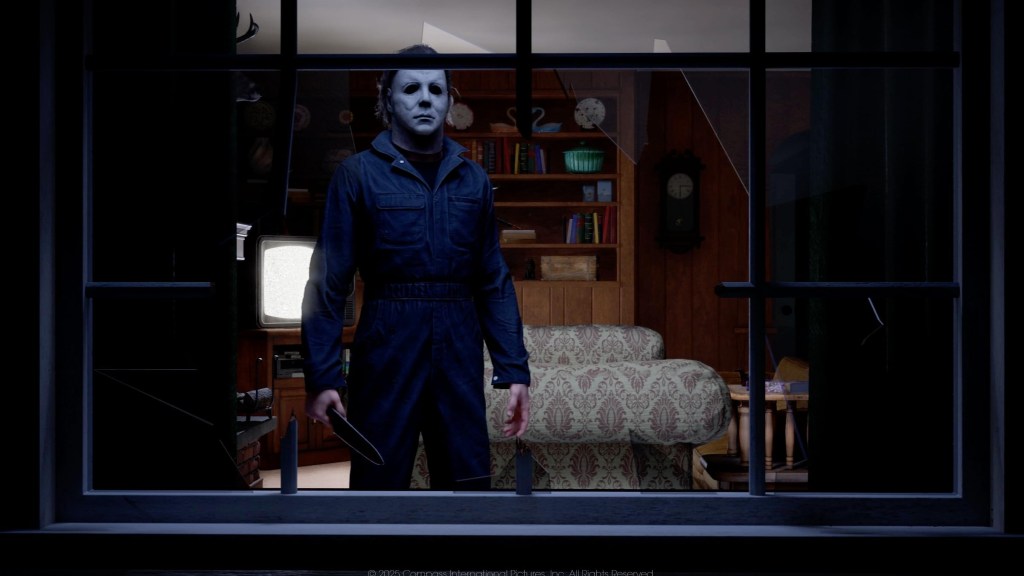
John Carpenter’s iconic music does a lot of the heavy lifting in making Halloween: The Game feel like the movie, but there’s also an incredible commitment to maintaining the visual style of the film. Very much set on that autumn night in the late ’70s, fans of Carpenter’s movie will not only get the chance to walk through the iconic locations of the film but also others that are only hinted at, like The Rabbit in Red Lounge. Even houses and locations created whole cloth feel within the lines of the movie, sticking to that style of decor (you might even find a gun in the hall pantry; it was just America in the ’70s after all).
The shadows that fall, the leaves that rustle, and the iconic sideburns that half the characters wear keep the fidelity of Carpenter’s movie alive, with the added hilarity of beer and joints being present as consumables that offer distinct advantages for civilian players. Longtime fans of the 1978 movie shouldn’t be surprised to hear that, but might be surprised by how helpful they really are (even if they mess with your visuals).
To that end, though, some of the liberties that Halloween: The Game takes compared to the movie really stand out, and not just in story decisions for the campaign. Carpenter’s original film was a methodical and precise exercise, with violence that wasn’t gratuitous or over the top. By extension, the game…does not do this, with kills where Myers plunges his knife into the top of a victim’s head, or chokes them so hard that a fountain of blood pours out of their mouth.
Environmental kills amp it up even more, like bashing someone’s head against a hot stove iron, or killing them with a lawn flamingo. These all might seem well in line with the expectations of an asymmetrical multiplayer game based on a slasher film. Still, they fit more along with Halloween sequels that Carpenter’s original and stick out like a sore thumb (fun as they are to…ahem..execute).
This is what it’s like to play Halloween: The Game, though, and it has a lot working in its favor. Despite going out of its way to commit to recreating an iconic piece of horror storytelling from almost 50 years ago, it still has to work within the frames of what fans expect from a horror game in 2026. Most of the time, those things actually work fine together; sometimes they bump up against each other. Even with the frustrating elements that pop up, though, Halloween: The Game scratches a specific kind of itch, and fans of this subgenre should be glad that it’s arrived. Thanks to the replayability at its core, each round will feel like you’re living an all-new Halloween movie every time, warts and all.
Halloween: The Game will launch globally on September 8 on PlayStation 5, Xbox Series, and PC via Steam and Epic Games Store. An advance copy of the game was provided by Illfonic for the purpose of this review.
More Gaming
-

Courtesy of Saber Interactive -
Image Courtesy of Electronic Arts/Secret Mode