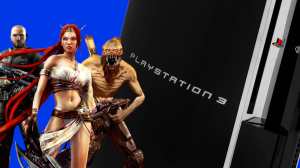
Out of all the games locked in PS3 jail — three Infamous titles, the core Resistance trilogy, Tokyo Jungle — Metal Gear Solid 4: Guns of the Patriots has always been the most noteworthy inmate. As more and more titles got ported and remastered, the 2008 stealth epic was one of the few holdouts that remained loyal to the PS3, as if the many in-game jokes about and references to the $600 system guaranteed its perpetual exclusivity. It’s a fitting time capsule of the era, culture, and Metal Gear series and has remained so frustratingly inaccessible in the years since. Even dreams of a mere port seemed far-fetched.
Videos by ComicBook.com
Metal Gear Solid: Master Collection Vol. 2 is headlined by said mere port, offering a modern version of the pivotal PS3 exclusive along with Peace Walker and an oft-forgotten Game Boy Color entry. And even with its relatively basic and predictable presentation, it’s wonderful to have access to the best version of such a seminal title.
Rating: 4/5
| Pros | Cons |
|---|---|
| Metal Gear Solid 4 is finally (officially) available on more systems | Peace Walker has no cross-platform play. |
| MGS4 is prettier and much more stable | Peace Walker‘s repetitive missions are grindy |
| MGS4 has held up relatively well | Supplemental materials like Metal Gear Solid 4‘s documentary aren’t included |
| Peace Walker is simple, yet still has charm |
Metal Gear Solid 4 Looks and Runs Much Better

Master Collection Vol. 2‘s version of MGS4 is vastly superior to the PS3 original in just about every way, too. Load times are much quicker, and there’s no longer a need to watch Snake smoke a pack cigarettes as the game installs. Nostalgia goggles may cloud some memories, but going back to MGS4 on its original home reveals a somewhat blurry game with a vastly uneven frame rate. Like too many games of that era, it didn’t run well, and its technical shortcomings are easier to notice now, as frame rates, for the most part, are more stable. Modern displays also make the PS3 version’s less-than-ideal visuals, which were impressive for their time, harder to ignore.
This latest upgrade runs at a much higher and more consistent frame rate and cleans up the resolution to something a lot more fitting of this console cycle. It still has the same textures and noticeably muted color palette, so it wouldn’t be confused for a modern PS5 game, but this bump in resolution lets the art direction shine more clearly.
Stabilizing the frame rate also means MGS4 plays more smoothly than ever. This entry was notable for how it modernized the series, and even though Metal Gear Solid 5: The Phantom Pain handily bests it in this regard, MGS4 still controls well. Although he’s an old man, Snake is more agile than ever, and it’s much easier to get a bead on enemies, thanks to the more standard third-person shooter controls. Its slow aim acceleration leaves a bit to be desired, but being able to more cleanly pick off targets means sneaking is more tense and boss fights are more satisfying; moments like fighting the controls to accurately toss a grenade into Vulcan Raven’s tank are a thing of the past.
Metal Gear Solid 4 Has Aged Well in Many Regards

Even with an extended arsenal and more capable hero, MGS4 is still a game that’s watched more than it is played. MGS4 has incredibly long and frequent cutscenes that are peppered into small bits of actions. It’s all too common to watch a cutscene, clear a small area, and then sit through yet another long, jargon-heavy cutscene.
It’s hard to knock this unorthodox balance because MGS4 is a stunning game to absorb and perhaps the biggest poster child for Kojima Productions’ signature style. One minute players will watch a monkey steal a cigarette and smoke it like a naughty child, only to listen to the presence of the war-driven economy and the wreckage it leaves in its wake.
“Jarring” could sound like a pejorative here, but it all comes together well because of the charm inherent to these clashes. Kojima’s games have almost always had this fusion of styles where a scene with a guy who can’t stop pooping himself can be squished up against political struggles that have, sadly, only gotten more prescient over time. MGS4 is an indulgent game — perhaps even Hideo Kojima at his most indulgent — but it works because of its earnestness and how few games there are like this, the latter of which has only gotten more clear over the past two decades or so as games have been more and more scared to criticize the wretched systems that surround them.
MGS4‘s story is full of contrived points and has the audacity to wrap up almost possible plot point that preceded it to a comical degree, yet these sillier moments are intertwined with savvy criticisms of war and the evils of artificial intelligence. Kojima and his writers had a knack for looking at past and present ills to make salient points about what is now the modern day. The United States has only gotten into another illegal war in the Middle East, one that is undoubtedly bankrolling weapon manufacturers. And artificial intelligence is wreaking havoc across the globe through the way in which it deceives, surveils, steals, and is upholding the fragile U.S. economy. The natural progression of the world has led to this point, so it doesn’t exactly take a soothsayer to come to these conclusions, but they are still noteworthy to see in a video game from 2008. It’s bombastic story full of earned and unearned fan service, but it is given extra life through its examination of these themes and is at least somewhat timeless because of them.
Peace Walker Is Decent but Comparatively Not As Smooth
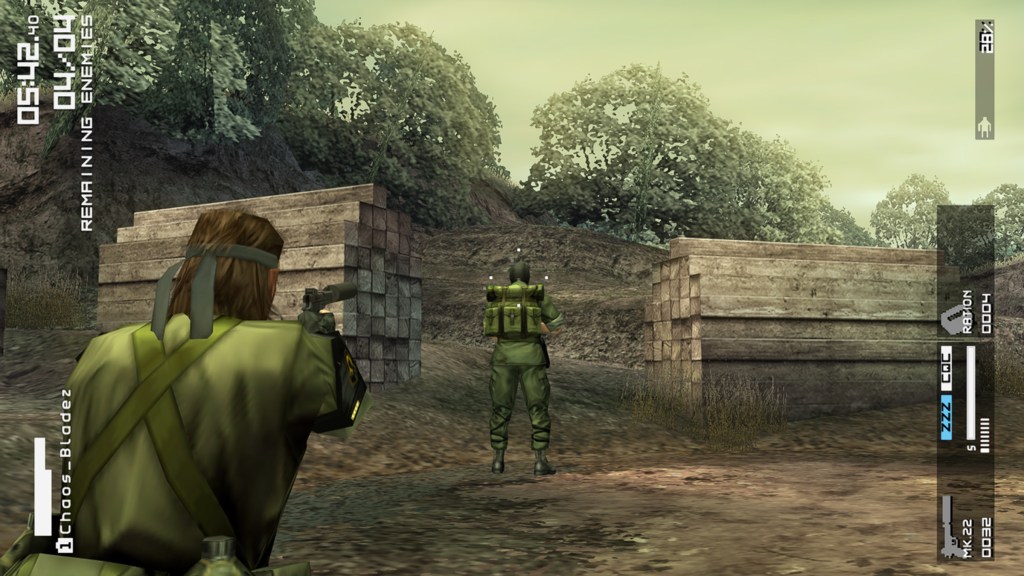
Peace Walker is the other main game in the collection and, while an admirable entry in its own right, is naturally going to play second fiddle to MGS4. Peace Walker at least made it onto other platforms through the 2011 Metal Gear Solid HD Collection, but its presence on more systems is welcome.
This PSP-first installment greatly expanded on Metal Gear Solid: Portable Ops‘ base-building gameplay, and The Phantom Pain then borrowed that blueprint and took it to the next level, meaning Peace Walker is the middle child here. However, gathering a host of soldiers remains quite the hook and allows it to have quite a deep well of unlockables. There are always new weapons to research, tanks to steal, blueprints to find, and S-tier enemies to track down, all of which feed into the loop and give players more to do.
And while its replayability is a strength, this also means Peace Walker can get quite repetitive at times. It can sometimes feel like the meta game is the actual game, since players do a lot of the same things from mission to mission, and the moment-to-moment gameplay isn’t as deep as other entries. Because of its handheld origins and the PSP’s limited controls, guards are pretty blind and stupid, meaning sneaking isn’t that tense or gratifying. Snake can’t even crawl forward on his belly; he can only lie down flat on the ground or crouch walk. Missions are usually not primarily ways to test one’s sneaking abilities and are instead often a means to purchase a new upgrade.
The repetitive nature is much more present in the endgame. Peace Walker‘s Extra Ops are copied and pasted to a ludicrous degree. Maps are recycled over and over, and its slate of “new” vehicular bosses are often just gradually stronger versions of the previous one in the same class. S-ranking these battles is a true test of patience because getting an alert essentially kills the whole plan. Each soldier must be silently extracted for the highest marks, which is tedious and extremely difficult, especially when dozens of them have to be taken out without so much as a peep. This laborious process is often more appealing for solo players than violently shooting these mechs down since these fights do not scale to the number of players and aren’t balanced for lone Snakes. Peace Walker is still a decent cooperative game and overall quality entry, but it’s harder to look past its flaws after all this time and when this core loop was honed to a near-perfect sheen in The Phantom Pain.
Peace Walker‘s story is also a little conflicted, however, it still has its high points. Its more sympathetic portrayal of the Sandinistas, ability to directly show the follies of artificial intelligence, and beautiful comic book-like scenes all make Peace Walker‘s tale one of the more coherent and underrated ones in the entire franchise. Whereas MGS4 is an excessive game, Peace Walker‘s lighter touch is one of its strengths; each mission isn’t bookended with a lengthy diatribe. It’s unfortunate how so many of its rich audio logs are buried within the menus, but its ability to provide different viewpoints and not overly bog itself down make Peace Walker‘s story, despite its bent toward multiplayer, one worth paying attention to.
Metal Gear Solid: Master Collection Vol. 2‘s Extras Are Just Fine

Both games are mostly the same at their core. MGS4 on PS5 even has the motion controls present in the PS3 version, meaning players can peek out of dumpsters, switch the OctoCamo back to neutral, and even jiggle Rose’s breasts during Codec calls with a shake of the controller. Auto saves, the ability to quickly reload, and a readily available kill and alert counter would have been worthy quality-of-life additions, though. The inclusion of the PS3’s Wikipedia-like app Metal Gear Solid 4 Database is also surprising. The internet has mostly nullified the need for this resource, but it is great to have, for posterity’s sake.
Peace Walker doesn’t let players “transfar” their saves, but it does have new loading screen text, which is admittedly bizarre for a port that loads in much more quickly this time around. The more egregious exclusion, though, is cross-platform play, since it’s bizarre for a multiplayer-centric game in 2026 to not have this pivotal feature. The Game Boy Color’s Metal Gear: Ghost Babel, a throwback to the originals, is a novel bonus and has a functional rewind system and various visual settings to mess around with (but no save states, for some reason). Given how underplayed it is, it’s a thoughtful inclusion, but it is clearly the third-most important game here. Its title isn’t even on the launcher and is instead shuffled next to the soundtrack in the “bonus features.”
The understandable lack of noteworthy new playable content is where this collection is supposed to make up the difference with an array of extras. But they’re only passable. The script book is not a terrible addition, yet it’s not appealing to just read through hundreds upon hundreds of mostly barren pages of dialogue. The Master Books are a lot more appealing and function more like in-depth strategy guides. These books are amazingly dense with lore and do a respectable job of contextualizing the importance of each entry, making them enjoyable to sift through.
But it’s clear more should be included here. The lack of any sort of behind-the-scenes videos, concept art, or various documents from development make this collection feel a bit more hollow than it should, a feeling that’s harder to ignore given Digital Eclipse’s many documentary-style collections that are full of these kinds of extra materials. MGS4 even has a full documentary that was included in the special editions, and that’s strangely not even part of this package.
Despite including the bare minimum amount of extra materials, Metal Gear Solid: Master Collection Vol. 2 is worthy because of its inclusion of MGS4. This history of this important PS3 game has been annoyingly hard to fully explore because of 18 years of exclusivity to a long-dead console that’s notoriously hard to emulate. MGS4‘s silly yet poignant story and rewarding stealth gameplay have aged well and are even easier to appreciate, given how the game now finally runs at a smooth frame rate and has been touched up to look fantastic on modern displays. Peace Walker has its strengths, too, and is, despite its repetitive nature and lack of crossplay, an important entry in its own right that deserves a more modern port. Modern ports may be frustrating to see because these Metal Gear games beg for more, but freeing MGS4 from PS3 purgatory is noble and the main reason this collection is more than solid enough.
A PS5 copy of Metal Gear Solid: Master Collection Vol. 2 was provided by the publisher for the purpose of this review.
What do you think? Leave a comment below and join the conversation now in the ComicBook Forum!
More Gaming
-

Courtesy of Embark Studios -

Image Courtesy of Sony Interactive Entertainment