When Spider-Man: Into the Spider-Verse arrived in December 2018, Sony Pictures Animation had modest expectations for a Miles Morales origin story told in a comic-panel-inspired animation style that no studio had attempted at feature length. Yet, the film opened to a solid $35.4 million domestically, with great word-of-mouth eventually carrying it to $384 million worldwide against a $90 million budget. Besides the commercial success, critics unanimously praised Into the Spider-Verse, which swept the awards season, taking the top animated film honor at the Annie Awards, Golden Globes, BAFTA, and Producers Guild Awards before claiming the Academy Award for Best Animated Feature. Due to this overwhelming positive reception, Sony quickly began the development of a sprawling cinematic trilogy centered on the multidimensional journey of Miles Morales (voiced by Shameik Moore).
Videos by ComicBook.com
The second movie in the trilogy, Spider-Man: Across the Spider-Verse, arrived in theaters exactly three years ago today, on June 2, 2023. The sequel hauled $120 million in its opening weekend, more than triple the original’s opening, and earned an “A” CinemaScore alongside a 95% average on Rotten Tomatoes. After less than two weeks of release, the film had already surpassed the entire box office run of its predecessor, making it Sony’s highest-grossing animated release in history. The animation of Spider-Man: Across the Spider-Verse was bolder, the multiverse broader, and the emotional stakes considerably darker. Sadly, the movie also ended on an abrupt cliffhanger that tarnished its legacy, and more than three years later, fans are still waiting for the resolution that was supposed to arrive the following spring.
Spider-Man: Across the Spider-Verse‘s Cliffhanger Was Supposed to Be Resolved Earlier
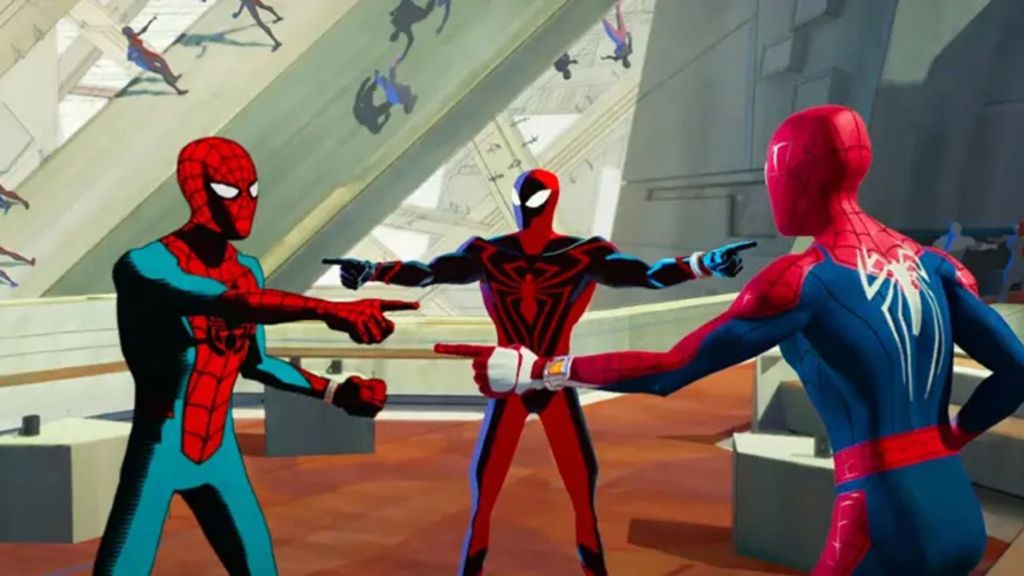
The final act of Across the Spider-Verse sends Miles Morales to the wrong dimension. After escaping Spider Society headquarters and programming their interdimensional transport to return him to Earth-1610, Miles is redirected to Earth-42 instead. The machine uses spider-DNA to locate the user’s home universe, and because the spider that bit Miles originated from Earth-42 rather than his own world, the machine reads that signature and sends him there. When Miles arrives in the dimension he thinks is home, he is captured by an alternate version of himself who had become the Prowler in that universe. The film ends there, just as a major twist emerges, and before the movie can solve the conflict with Spider Society, or allow Miles to stop The Spot (voiced by Jason Schwartzman).

Films ending mid-story rather than on a true conclusion have precedent. Avengers: Infinity War concluded with Thanos successfully wiping out half of all life before Avengers: Endgame assembled Earth’s Mightiest Heroes to revert the Snap. Likewise, The Empire Strikes Back left Han Solo frozen in carbonite, and audiences devastated for three years until Return of the Jedi. Even Back to the Future Part II resolved its central plot before closing on Doc Brown (Christopher Lloyd) stranded in 1885. The difference with those films is that each delivered some form of resolution to its central conflict before the cut. Across the Spider-Verse does not.

At the time of its release, audiences largely accepted the abrupt ending because the third installment, Spider-Man: Beyond the Spider-Verse, was officially slated to debut in theaters in March 2024, meaning fans only needed to wait nine months for the conclusion. However, shortly after the sequel premiered, a detailed investigative report published by Vulture exposed grueling conditions within the animation department. According to the piece, animators endured eleven-hour workdays and seven-day workweeks to accommodate constant narrative revisions from producer Phil Lord, resulting in approximately 100 artists quitting the project due to exhaustion. This internal turmoil, combined with the subsequent Hollywood actors’ and writers’ strikes that halted voice recording sessions, forced Sony to pull the final film from its 2024 release.
The situation only grew more complicated as months became years. Sony briefly floated a 2025 window before confirming, in late 2024, that the film would not arrive that year either. A 2026 release was theoretically possible but ran into Tom Holland’s Spider-Man: Brand New Day being released in the summer of 2026. That left 2027 as the only viable landing zone, and at CinemaCon 2025, Sony made it official with a June 4th date. That date then shifted three weeks to June 25th. It was then pulled forward one week to the current confirmed date of June 18, 2027. What the audience was promised as a nine-month wait has stretched into one of the longest gaps between a cliffhanger and its payoff in the history of cinema.
Spider-Man: Beyond the Spider-Verse opens in theaters on June 18, 2027.
Given everything that has piled up since that abrupt cut to black, does a four-year wait change what you expect from Spider-Man: Beyond the Spider-Verse? Leave a comment below and join the conversation now in the ComicBook Forum!
More Movies
-

Courtesy of The Walt Disney Company