Since the early 21st century, biopics have moved away from being just feel-good stories of overcoming adversity, full of predictability and formulas that seem tailor-made for awards season. Movies like Bohemian Rhapsody, Walk the Line, The Theory of Everything, The Imitation Game, and A Complete Unknown proved that the genre can deliver big box office numbers, but they also exposed its limits: cliched classic narratives, excessive idolization, and very little creative risk. On the other hand, other productions began using real lives as a starting point for something bigger, portraying their subjects as flawed, contradictory people who make questionable decisions, rather than untouchable historical monuments. Others leaned into bolder, more creative approaches to make the biopic experience genuinely more engaging to watch.
Videos by ComicBook.com
But have you ever stopped to think about which ones really stood out in recent years? We’ve put together a list of the 10 best biopics of the 21st century so far. These films understand that telling a true story isn’t about covering someone’s entire life, but about choosing the right slice of it and turning that into something actually compelling to watch.
10) The King’s Speech
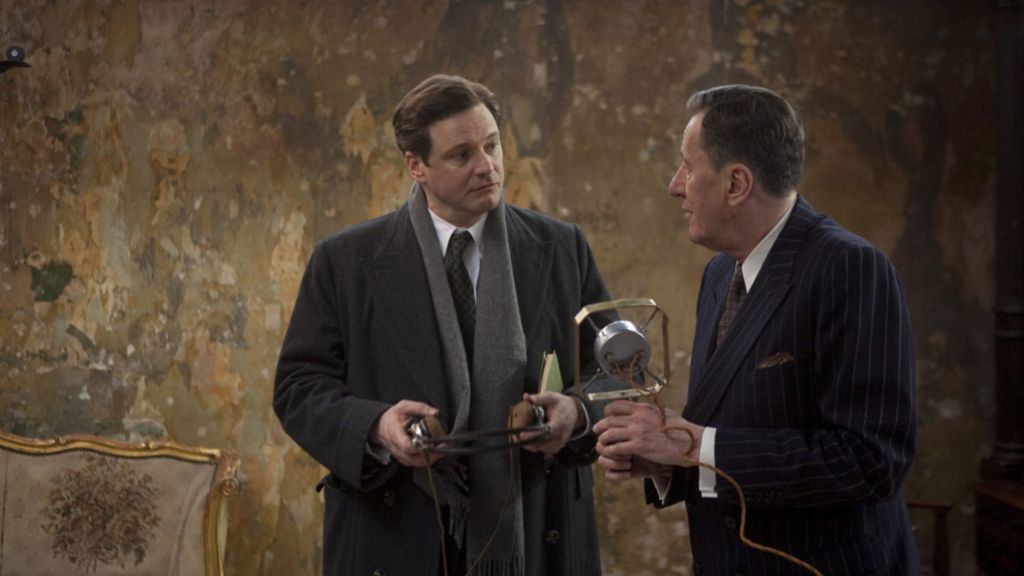
Not every biopic needs to be big or constantly trying to stand out and compete for buzz and popularity, and The King’s Speech works exactly because it avoids that approach. Instead of covering the entire history of the British monarchy, the movie focuses on a very specific problem: the future King George VI (Colin Firth) must learn how to speak in public at a time when England is on the brink of war. The premise centers on the relationship between the deeply reluctant monarch and his speech therapist, Lionel Logue (Geoffrey Rush). And what really makes it work is that the film never tries to be more than that, which naturally pulls the audience in.
As a result, what you get is a highly effective drama that knows exactly what story it wants to tell and sticks to its purpose without unnecessary detours. And yes, The King’s Speech doesn’t take many risks because of that choice. Still, that restraint ends up being a strength, since the goal is simply to turn something that seems small into genuine dramatic tension. There’s nothing revolutionary here, but it’s a strong example of how focus and restraint can sometimes be far more engaging than aiming for grandeur without having enough substance to back it up.

9) Hidden Figures
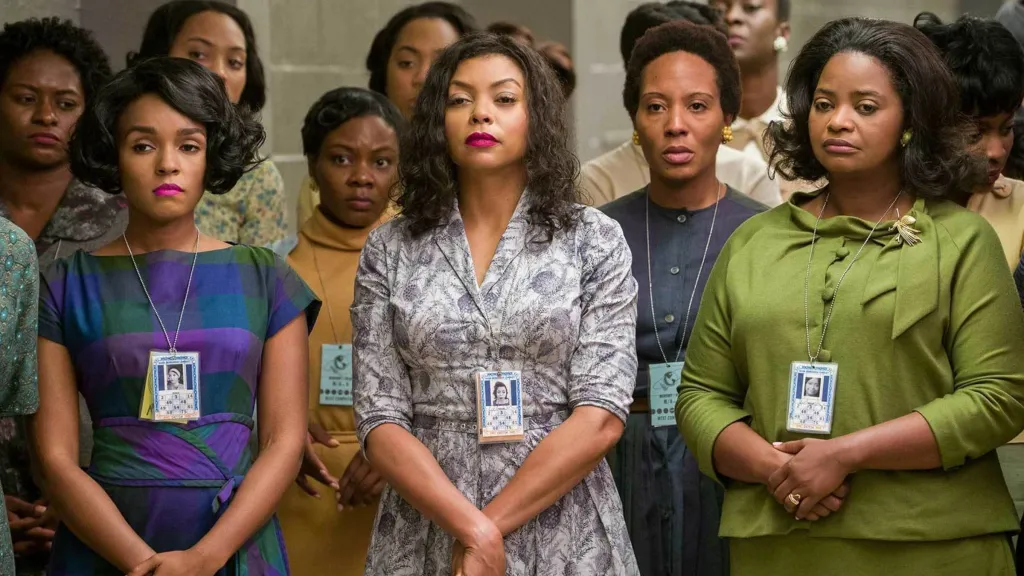
Hidden Figures starts from a simple but genuinely powerful idea: telling the story of the American space race through the perspective of the Black women who did the math no one wanted to see or properly credit. The movie follows Katherine Johnson (Taraji P. Henson), Dorothy Vaughan (Octavia Spencer), and Mary Jackson (Janelle Monáe) as they work at NASA in the ’60s, dealing with institutional racism and sexism along the way. It’s a very clear, straightforward narrative, easy to follow, without unnecessary flourishes or attempts to overcomplicate what it’s trying to say.
Hidden Figures doesn’t try to reinvent the genre; it doesn’t place anyone on a pedestal and remains fairly transparent about the story it’s telling. Its biggest strength is that it works as more than just a biopic, using a real historical moment in a way that’s accessible, didactic, and emotionally effective (sometimes a bit too much). Still, it never loses sight of its protagonists as highly skilled professionals rather than distant historical symbols. Structurally, it may be predictable, but it hits the mark by putting stories that truly deserve the spotlight front and center, instead of leaving them as footnotes in history.
8) Ray
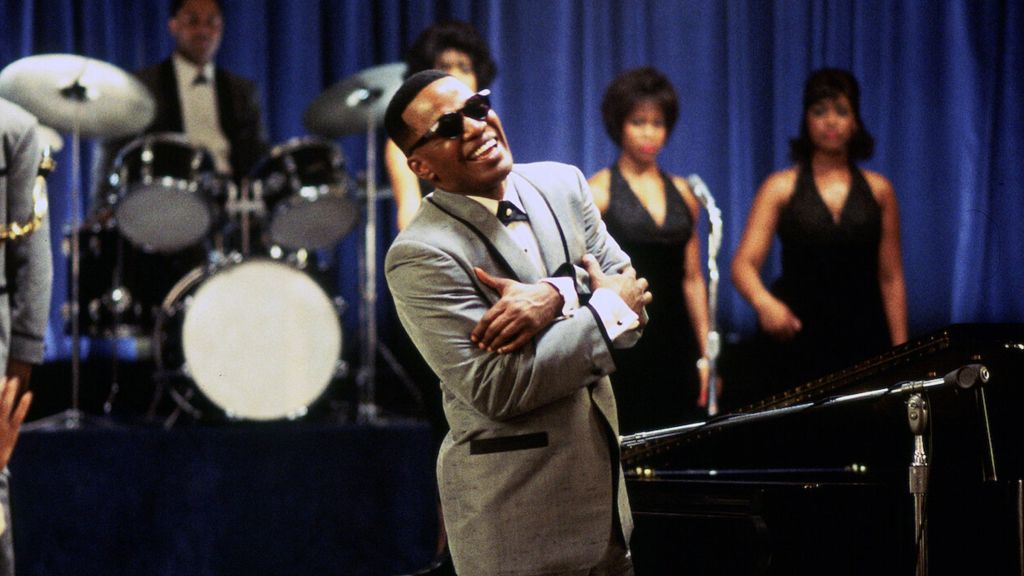
When it comes to portraying one of the greatest musical artists of all time, Ray is a fairly classic biopic that follows Ray Charles’ (Jamie Foxx) journey from a trauma-filled childhood to his rise as one of the most influential figures in the 20th-century music industry. It covers everything you’d expect: artistic success, addiction, complicated relationships, and clashes with an industry that constantly tried to box him in. It’s an open portrayal that doesn’t hide phases or soften events. But the difference lies in how the movie handles all of this, as it refuses to turn the musician into a sanctified figure. Above all, he’s presented as human.
Here, the protagonist isn’t treated as an untouchable legend, but as someone both brilliant and deeply flawed. Ray leans heavily into contradiction: a genius, charismatic, innovative artist who is also selfish, self-destructive, and emotionally distant. The film doesn’t push the audience toward easy empathy or try to justify his mistakes. Instead, it makes it clear that talent isn’t an excuse for anything (that alone places it above many biopics in the genre). It ultimately holds up because of how honest it is with the viewer about the story it’s telling.
7) Dallas Buyers Club

In the 2010s, Dallas Buyers Club was widely praised mainly for its performances, which is no surprise considering it won both Best Actor and Best Supporting Actor at the Oscars the year it was nominated. The film follows Ron Woodroof (Matthew McConaughey), a Texas electrician diagnosed with AIDS in the ’80s, who begins smuggling and distributing alternative medications after realizing the healthcare system isn’t on his side. It’s a story that’s inherently strong, and when it comes to tackling this subject, the film fully commits to it, especially by refusing to turn its protagonist into a conventional hero from the start.
The story introduces its main character as someone hard to like: he’s prejudiced, selfish, and resistant to change — and that’s essential to what the film is trying to say. The impact comes precisely from the fact that everything here is about transformation driven by survival, not some sudden moral awakening. What Dallas Buyers Club focuses on is portraying the AIDS crisis with urgency and discomfort, staying true to the reality of that moment. It doesn’t rely on an easy-to-digest ending or overly explanatory speeches. It’s raw.
6) Elvis
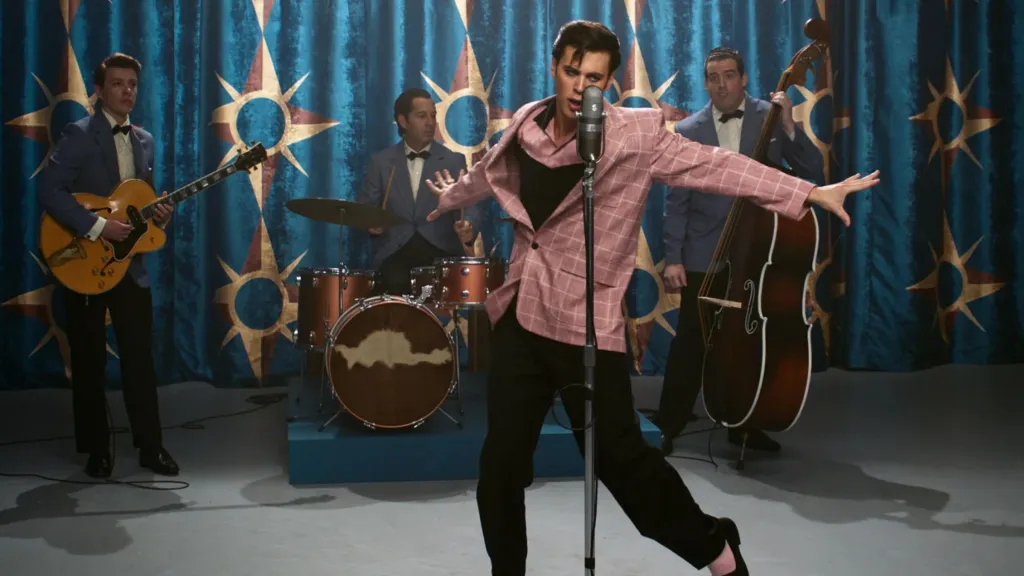
Breaking away from the predictable, Elvis is a movie that genuinely pulls you in. Instead of aiming to be the definitive portrait of the King of Rock, it’s far more interested in capturing what it felt like to be inside the Elvis Presley phenomenon. The story covers his meteoric rise, his global impact, and his toxic relationship with manager Colonel Tom Parker (Tom Hanks). The audience follows Elvis (Austin Butler) from childhood through the final years of his career, but the focus is always on spectacle. The structure isn’t divided into neat phases, but rather unfolds as a rush of moments, stimuli, and excess.
Because of that, Elvis sustains the same level of energy throughout, and viewers are rarely able to look away (largely thanks to the film’s aggressive, kinetic editing). However, that approach does come at a cost when it’s time to dig deeper into the character. We don’t often see Elvis outside of his public image, but since that part is also essential to his story, the film knows when to tap into it at the right moments. Some may feel closer to the myth than the man, so the production won’t work for everyone. Still, the biopic ultimately succeeds by being visually striking and clearly communicating the idea of exploitation. Taken as a whole, the feature is strong.
5) Selma
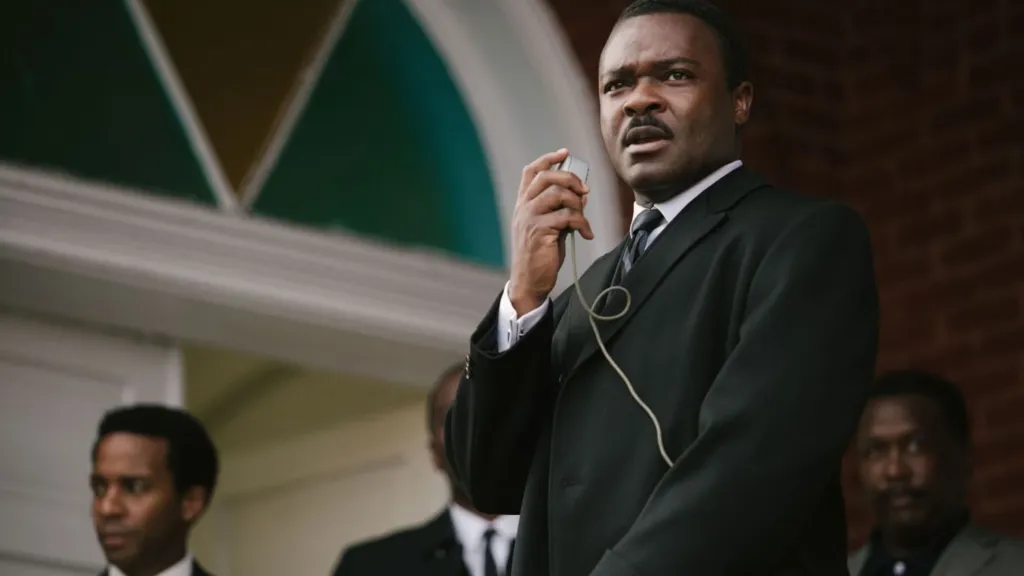
Martin Luther King Jr. is a historic figure, but his biopic doesn’t try to cover his entire life. Instead, it zeroes in on a specific moment: the fight for voting rights that led to the Selma-to-Montgomery marches. Selma follows those crucial weeks, diving into the political backroom deals, internal divisions within the movement, the constant pressure tactics, and the state’s violent response. Nothing is rushed or glossed over here, because the film understands that historic victories aren’t easy or quick; they’re built through friction, persistence, and real struggle.
And what truly sets Selma apart is how it portrays Martin Luther King (David Oyelowo) as a leader under relentless strain. He’s never framed as a distant icon, but as someone forced to make unpopular decisions, manage disagreements among allies, and live with the weight of knowing that every choice he makes could cost lives. Much like Ray, the film refuses to sanctify its protagonist, while still never diminishing his historical importance. That balance makes the portrait more human, and it leaves the audience feeling like they’ve witnessed something meaningful. It’s a politically mature biopic that respects history precisely because it refuses to simplify it.
4) The Social Network

For Millennials, The Social Network was a defining moment (and it’s no coincidence that a sequel is now in development). But there’s a clear reason for that: the film managed to turn the origin of a simple social network into a sharp drama about ambition, belonging, and power, released right when the internet was becoming a major force in society. By tracing the creation of Facebook, it follows Mark Zuckerberg (Jesse Eisenberg) from his Harvard days to controlling a billion-dollar company. The narrative is built around lawsuits, betrayals, and power struggles, using those conflicts as its driving force.
What elevates the film, though, is that it doesn’t frame Zuckerberg as a distant genius, but as a young man shaped by the same competitive, insecure, hyperconnected environment that defined an entire generation. The Social Network isn’t interested in psychologically explaining him or making the audience like him. It observes, analyzes, and lets viewers draw their own conclusions. That’s exactly why the film has aged so well: it’s not just about social media, but about how ambition and resentment can shape structures that end up affecting millions of people. Even with Facebook being less dominant today, the movie still captures the inner workings of internet power and app culture remarkably well.
3) Lincoln
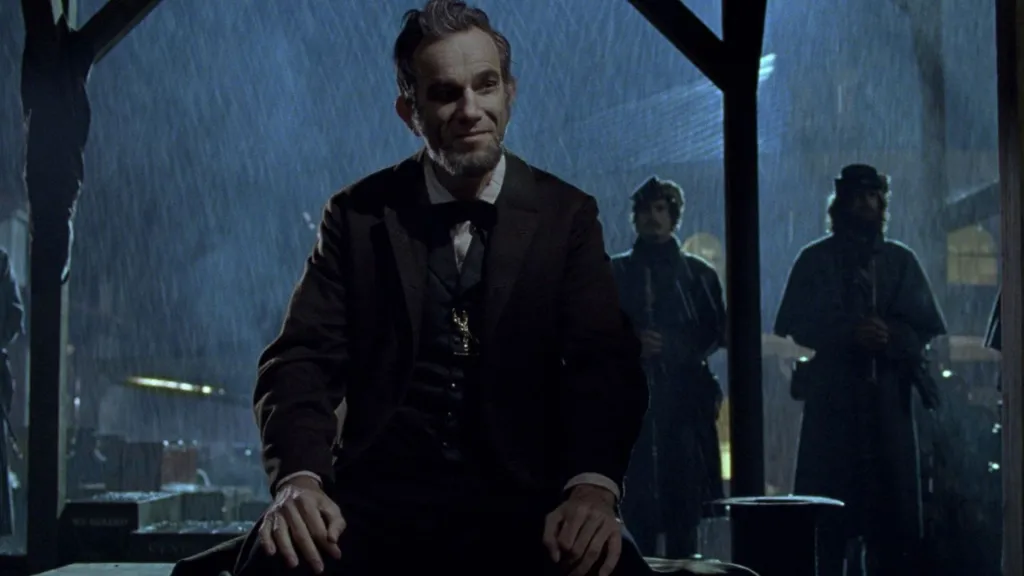
Here, the biopic is far more interested in process than heroism. What does that mean? Lincoln focuses on the final months of the famous president’s life (Daniel Day-Lewis), as he works to pass the 13th Amendment and officially abolish slavery in the United States. Much like Selma, it limits itself to a specific historical moment, trading speeches and battles for debates, negotiations, and political deals behind closed doors. The idea is to follow Abraham Lincoln’s almost obsessive effort to secure enough votes in Congress, showing how abolition wasn’t just a moral issue, but also a strategic game filled with uncomfortable compromises.
Because of that, the protagonist is portrayed as someone willing to manipulate, negotiate, and even contradict allies when necessary, even if that clashes with the idealized image history has preserved. This approach pulls the president off the pedestal and makes the portrait far less celebratory. As a result, Lincoln becomes a serious film that demands attention from its audience. In the end, it pays off by treating historic decisions as complex, high-pressure situations rather than framing them as effortless acts of brilliance.
2) The Pianist

Cinema has already produced several portrayals of the Holocaust, but very few compare to The Pianist, which narrows its focus to the experience of a single individual. The biopic chooses to depict the survival of Władysław Szpilman (Adrien Brody) during the Nazi occupation of Warsaw, centering on his attempt to stay alive as everything around him collapses. There’s no room for softening anything here — the film is openly brutal in its decision to frame the story purely around survival. As a result, viewers are faced with a movie that never comes close to turning this experience into something uplifting in the traditional sense.
The Pianist stands out as one of the strongest historical films because it avoids excessive dramatization of suffering. The goal isn’t to deliberately move the audience or deliver a clear moral lesson; it’s to present reality as it is, with the viewer’s reaction coming naturally from that. There are no grand speeches or manipulative musical cues. Watching the film is a solitary, quiet, heavy, and deeply uncomfortable experience, largely because it follows a protagonist who moves through the entire period almost invisibly — effectively capturing the sense of human erasure caused by the Holocaust. Is it impactful? Yes. But the production truly shines because it speaks about existence at its most basic level.
1) Oppenheimer

Widely praised upon release and an Oscar winner, Oppenheimer sets itself apart from other biopics by rejecting the genre’s more comfortable structure. Instead of organizing J. Robert Oppenheimer’s (Cillian Murphy) life as a clear arc of rise, fall, and possible redemption, the movie is built around the idea of continuous consequence. The narrative moves through the Manhattan Project, the use of the bomb, and the post-war fallout not as closed chapters, but as overlapping events that stack on top of each other, making it clear that the past doesn’t simply stay in the past — every action carries weight in the present.
And most importantly: the film knows how to emphasize the protagonist’s emotional state, presenting him as human rather than an misunderstood genius or a purely political victim. It makes a point of highlighting his vanity, his hunger for recognition, and his naivety in believing he could maintain control once his invention was unleashed into the world (forcing the audience to feel, firsthand, the weight Oppenheimer carried). And there’s no clean emotional resolution either, because the physicist’s legacy itself remains unresolved. And that refusal to offer synthesis or redemption is exactly what makes the movie stand out: it doesn’t try to explain history, but to expose the people within it.
What do you think of these biopics? Is there another one you think should have made the list? Leave a comment below and join the conversation now in the ComicBook Forum!
Most Viewed
-

Image Courtesy of Disney+ -

Image courtesy of HBO -

Image Courtesy of Hakusensha