Most arguments about horror remakes are arguments about whether a good film should be touched at all, which is why they never go anywhere and why everybody leaves said arguments annoyed. A better question is narrower and more useful: which films had an idea their budget could not deliver? The 1980s produced an enormous number of such films because it was a decade when a premise could be written in an afternoon and then handed to an effects crew working with foam latex, a tilting set, and whatever the lab could composite optically. Some of those films are untouchable precisely because the seams are the charm, and stripping the seams out would leave nothing behind worth watching. Others are sitting there right now with a concept nobody has ever actually managed to successfully make, held back by money rather than by taste which is the only version of this argument that leads anywhere useful.
Videos by ComicBook.com
This site has argued before about which ’80s horror films deserve another pass and about which ones should be left alone forever, and the four below appear on neither list. They have something in common that the usual suspects do not, which is that in every case the script is reaching for something the movie could not afford to show, and in every case nobody has claimed the rights yet. That last part matters more than it sounds. Half the obvious candidates are already spoken for, which is why the same handful of titles keeps circulating through these conversations without anything ever coming of it. Each entry below names the specific thing the original could not shoot and what a remake would actually have to get right. None of them are sacred, all of them are available, and all four have been waiting a long time for somebody with the money to finish the job the original started.
4) Prince of Darkness Has The Biggest Idea John Carpenter Ever Had And The Smallest Budget To Shoot It
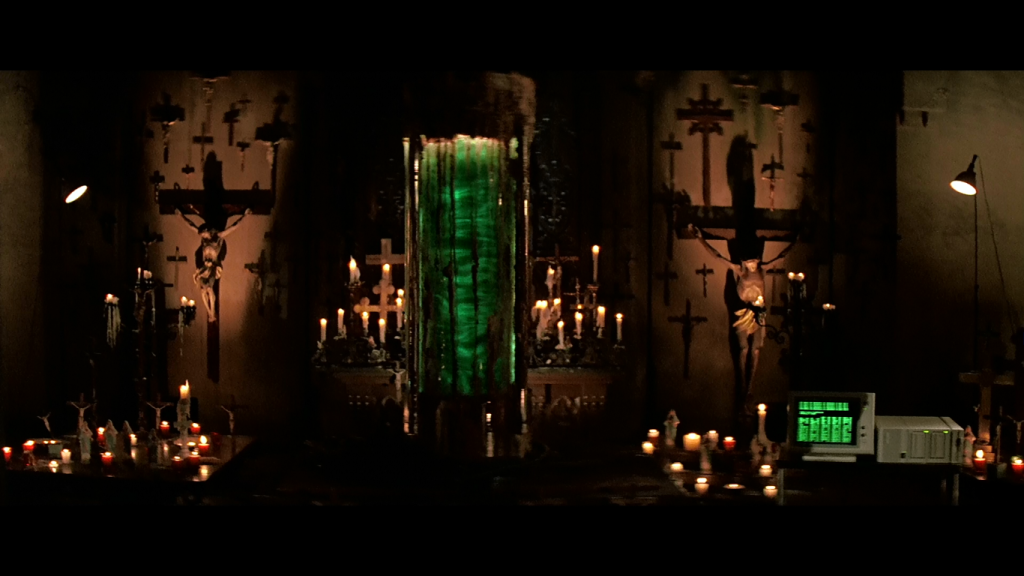
John Carpenter wrote this one under the pseudonym Martin Quatermass, which tells you what he thought he was making: a science-fiction film about physics, dressed as a horror film about the devil. A group of graduate students and a priest, played by Donald Pleasence, are called to a derelict Los Angeles church where a cylinder in the basement holds several tons of swirling green liquid. The liquid is not a symbol of the Anti-God. It is the Anti-God itself, a pre-Christian entity whose son is trying to pull the Father through a mirror into our reality. While the characters sleep they all receive the same transmission, a warning broadcast backwards through time from the year 1999.
That is one of the most ambitious premises anyone attempted in 1980s horror, and Universal gave Carpenter roughly $3 million to shoot it. What is on screen is a fish tank, a snake, a very good Alice Cooper cameo, and a great deal of insects. Reviews were poor, Vincent Canby called it cheesy, and it still sits at 59% on Rotten Tomatoes. Nobody has ever made the film the script is describing, and the theme has quietly become the most relevant thing about it: a room full of scientists who can measure a catastrophe and cannot make anyone believe it is coming.
3) Lifeforce Spent $25 Million And Still Ran Out Of Money Exactly Where It Mattered
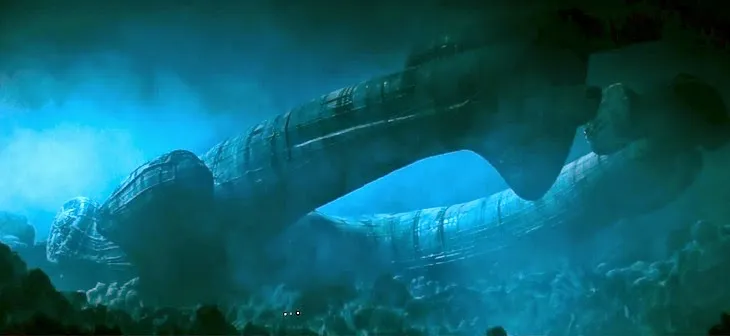
Tobe Hooper followed Poltergeist with this, an adaptation of Colin Wilson’s novel The Space Vampires, and it is one of the strangest expensive films ever released. A space shuttle investigating Halley’s Comet finds a 150-mile alien artifact containing three humanoids in suspended animation. Brought back to Earth, they drain the life-force out of people, and the drained become vampires themselves on a two-hour cycle, which means the infection compounds rapidly until London collapses. It cost $25 million and made under $12 million, and the reviews were not kind about it either, with one calling it hysterical vampire porn and another admitting it was too peculiar to get a handle on at all.
The citywide collapse is the entire payoff of the premise and it is precisely where the budget gave out. The desiccation effects are genuinely superb and the derelict ship is a matte painting. A remake would not be fixing a bad film, it would be finishing one, and it would get to resolve the tonal split the original never could because Lifeforce cannot decide whether it is a serious story or a camp spectacle. Arrow put out a 4K restoration carrying both cuts in 2025, which is not something that happens to films nobody cares about.
2) The Stuff Was A Satire About Advertising That Now Reads As A Documentary
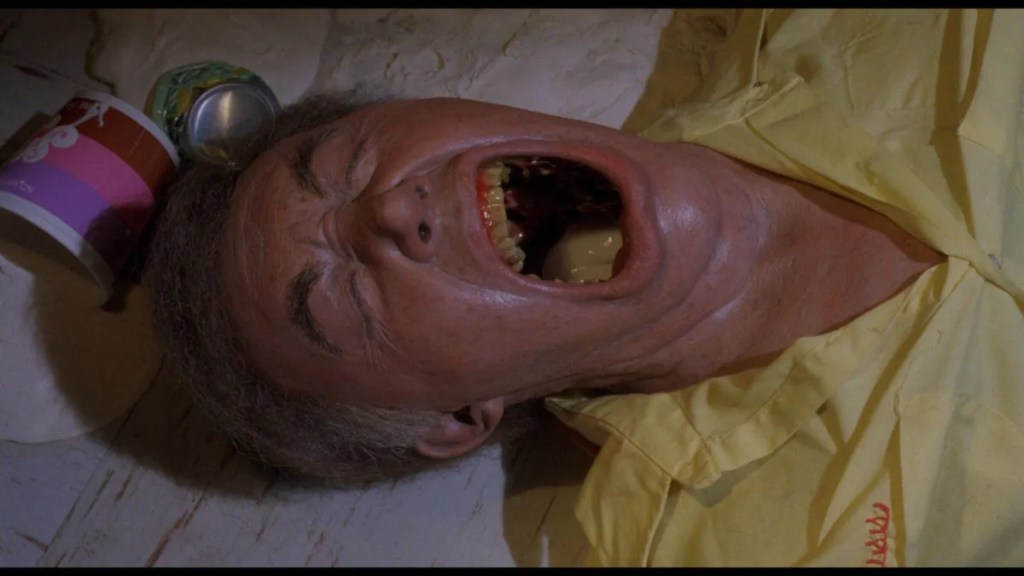
Larry Cohen made this for about $1.5 million and it is the pick here with the sharpest modern relevance. Something white and sweet is found bubbling out of the ground. A company bottles it, calls it The Stuff, and sells it as a dessert. It is delicious, it has no calories, and it is alive. People who eat it want nothing else, then stop eating anything else, then stop being people, because the product is consuming its consumers from the inside while they smile about it. In 1985 that was a satire of advertising and the FDA, and critics who bothered to review it, all 19 of them, largely got the joke.
Read the same premise now against ultraprocessed food engineered for craving, wellness marketing, supplement culture, and every product designed to be impossible to stop using and Cohen looks less like a satirist than a forecaster. The execution is where it dies. The Stuff itself is shaving cream and hair product pumped through tilted sets, and the film physically cannot render the thing it is about. That is the definition of a premise that outran its money, and it is the reason a rediscovered30 minutes of footage and a 4K release still could not make the 1985 version deliver.
1) The Hidden Built A Chase Movie Where The Villain Is Never The Same Person Twice

This one is different from the other three because it is genuinely a good film. Roger Ebert gave it three stars. It holds 76% on Rotten Tomatoes and it still ended up a cult movie because New Line’s theatrical run was too short for anyone to find it and it survived on video instead. A parasitic alien moves between human hosts and each new body it takes is louder, faster, and hungrier than the last, obsessed with sports cars, heavy weapons, and volume. Hunting it is a second alien wearing the face of an FBI agent, played by Kyle MacLachlan a full year before Twin Peaks made him famous.
The concept is a pursuit thriller in which the audience never knows what the antagonist looks like, and 1987 could stage that only through practical transitions and stunt driving. There is also an unusually specific invitation to try again, because the warmest reviews at the time still singled out the finale as the conventional part, which is a rare case of a cult classic having its weak spot identified for it on the way in. Note that a disowned direct-to-video sequel exists from 1993 and can be safely ignored.
The reason these four and not the obvious movies make the list is simple, and it is worth stating plainly: most of the obvious ones are gone. Return of the Living Dead has a remake in production. Near Dark is an A24 series with Kathryn Bigelow attached. Angel Heart is going to HBO with Zac Efron. Videodrome, They Live and Re-Animator all have projects in various states of announced. The genuinely unclaimed 1980s horror films with concepts worth reviving is a much shorter list than the internet assumes, and remakes have a famously mixed record even when the material is right. But the case for these four does not rest on nostalgia, and it does not rest on anyone’s affection for the versions that exist. It rests on four scripts that described something nobody has yet managed to put on a screen, and on the fact that all four are still sitting there unclaimed.
More Movies
-
Image Courtesy of New Line Cinema -

Orion Pictures – Amazon MGM -

Courtesy of Warner Bros. Pictures