Audiences tend to assume that quality and commercial success go hand in hand, but cinema history is full of brilliant films that people ignored in theaters. For instance, The Shawshank Redemption earned seven Oscar nominations, yet it couldn’t pull in $30 million worldwide during its initial run, crushed by a crowded fall season and a title nobody could remember. More dramatically, Blade Runner landed with a thud in 1982, outgunned by E.T. and dismissed by critics for its slow-burn existential noir, before becoming the essential cyberpunk movie. Decades later, its sequel Blade Runner 2049 was hailed as a visionary masterpiece by reviewers, yet it failed to catch fire at the box office.
Videos by ComicBook.com
Fantasy, in particular, seems cursed with this disconnect. The genre asks audiences to take leaps of imagination, and when a studio misjudges the marketing or botches the release date, even the most enchanting works can flatline. The Wizard of Oz is now one of the most beloved films ever made, but in 1939 it lost money at the box office and was considered a financial letdown for MGM. The Princess Bride charmed almost everyone who saw it, yet it debuted at a modest fifth place at the box office and took years of cable airings and VHS rentals to become the endlessly quotable phenomenon we know today. Sadly, these are not outliers, as many great fantasy movies struggle in their theatrical release.
5) Masters of the Universe

Masters of the Universe, directed by Travis Knight, adapts Mattel’s sword-and-sorcery property with Nicholas Galitzine as He-Man and Jared Leto as Skeletor, following the prince of Eternia as he races to stop the sorcerer from seizing a reality-altering cosmic key. Despite skepticism about the property’s toyetic origins, the movie landed in theaters with positive reviews, as critics praised the practical creature work and Leto’s theatrical take on Skeletor. However, that critical enthusiasm didn’t translate into box office performance, since Masters of the Universe hauled $29 million domestically and $25 million internationally in its first weekend, for a $54 million global debut.

While that’s a respectable sum for a non-franchise opener, it’s not nearly enough to cover the massive costs of the movie, which has its budget estimated between $170 million and $200 million. With good word-of-mouth, the movie can stop a massive drop in the box office for the upcoming weeks, but since its break-even point cannot be inferior to $350 million when factoring in marketing and the theaters’ cut of tickets, Masters of the Universe would need a miracle to pay for itself.
4) Labyrinth
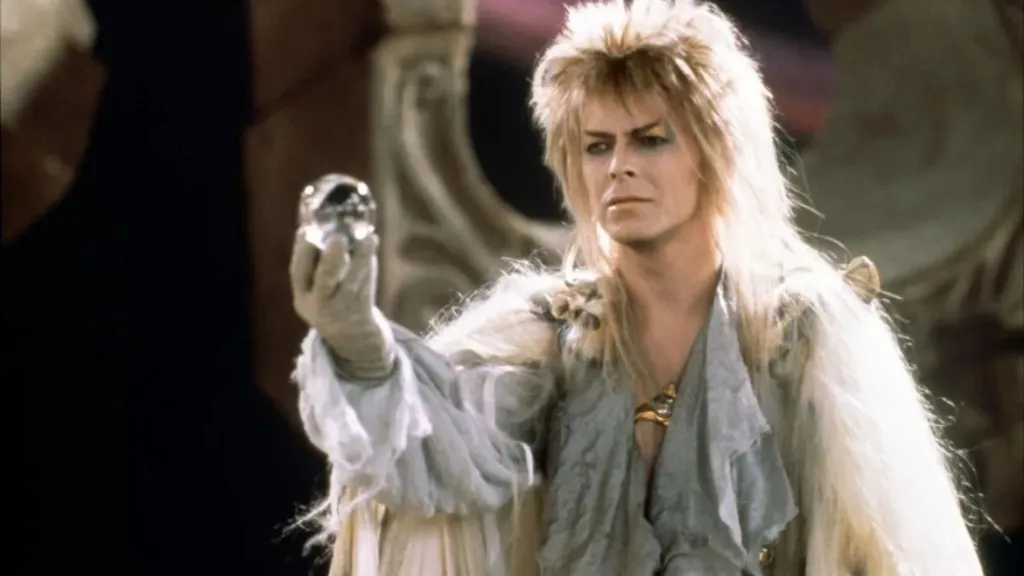
Jim Henson’s Labyrinth is now cherished as a cult coming-of-age fantasy, a handmade dreamscape where Jennifer Connelly’s teenage Sarah races through a shifting maze of goblins, talking doors, and David Bowie’s magnetic Goblin King to rescue her baby brother. Fantasy fans praise Labyrinth for its astonishing practical creature effects and Bowie’s original songs, both of which helped the movie find its audience through home video and midnight screenings. Yet Labyrinth‘s reputation was forged in the ashes of a theatrical disaster.
Released in the summer of 1986 against the likes of Top Gun and Aliens, Labyrinth limped to a worldwide total of $22.7 million — less than the $25 million budget. Critics at the time were sharply divided, dismissing the film as too dark for children and too juvenile for adults, while the marketing never quite settled on who the movie was for. The result was a painful financial loss that soured Henson on directing feature films for the rest of his life. Labyrinth would eventually find its way back to audiences through VHS and cable, with Robert Eggers currently attached to a highly anticipated remake.
3) The Dark Crystal
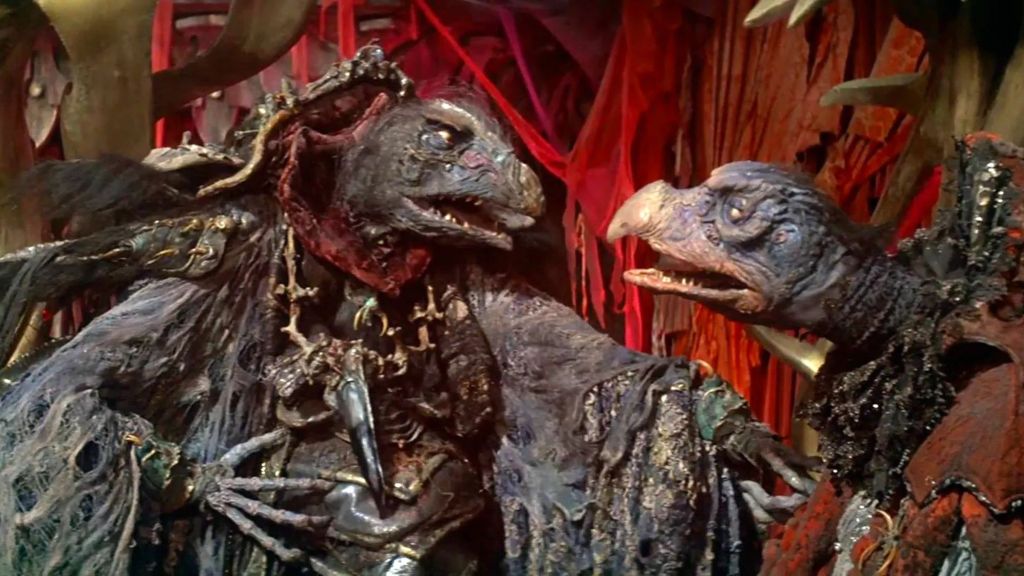
Jim Henson and Frank Oz’s The Dark Crystal is now revered as a landmark of practical effects. With no human actors on screen, every frame is filled with intricate animatronic creatures and lush matte paintings, resulting in a handcrafted atmosphere that still feels unique more than four decades later. The Dark Crystal keeps influencing new filmmakers and fantasy storytellers, but the movie famously crumbled at the box office. Released over the 1982 holiday season, The Dark Crystal earned a worldwide total of $40.8 million against a production budget of $25 million, a sum that fell well short of the roughly $50 million break-even threshold once marketing gets factored in.
Many admired the technical wizardry of The Dark Crystal, but its tone was too terrifying for young audiences, leaving the film stranded between demographics. Over time, VHS and cable airings turned the film into a cult treasure, a legacy that eventually led to the Emmy-winning Netflix prequel series The Dark Crystal: Age of Resistance. However, when The Dark Crystal was released, the commercial disappointment shook Henson’s company and tempered the industry’s appetite for all-puppet features.
2) The Black Cauldron
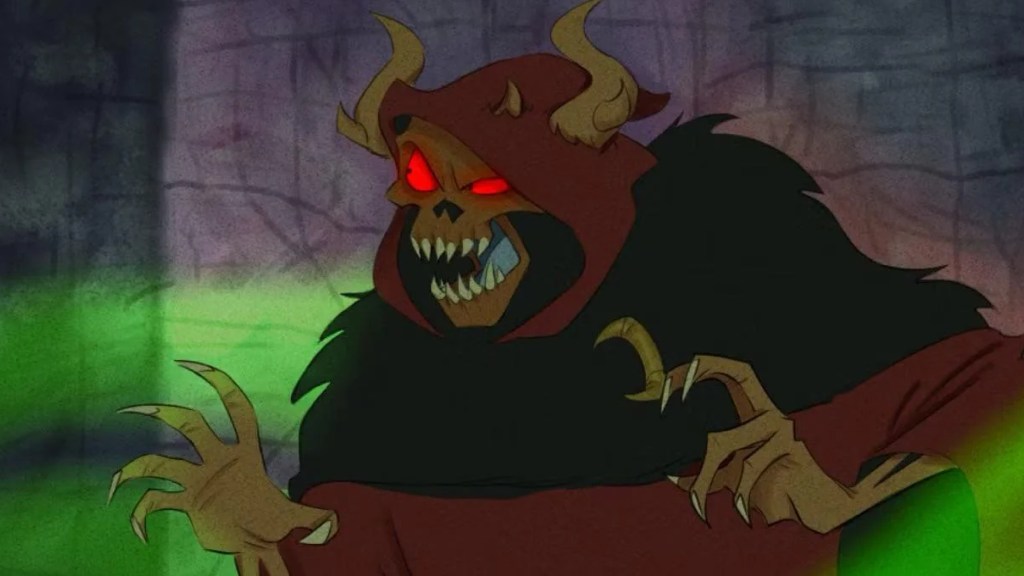
In 1985, The Black Cauldron nearly took the entire Disney animation division down with it. Desperate to prove animation could be more than fairy-tale princesses, Disney poured roughly $44 million into adapting Lloyd Alexander’s books, pushing for a PG rating with a horned lich-like villain and horror-inspired sequences. In addition to a controversial tone, the production of The Black Cauldron had been a chaotic handoff between old-guard animators and a new generation, ballooning costs with experimental multiplane effects while the story lost coherence in the edit.
Released against Back to the Future, the film pulled in a meager $21.3 million at the box office, a number so grim that executives slashed the department to a skeleton crew and seriously considered shuttering it entirely. The failure of The Black Cauldron forced Disney to overhaul its animation department, eventually leading to the Renaissance of the 1900s. In the decades since, The Black Cauldron has found a strange half-life as the odd, gothic black sheep of the Disney canon.
1) Dungeons & Dragons: Honor Among Thieves

Dungeons & Dragons: Honor Among Thieves earned the kind of critical reception that studios dream of, with a 91% on Rotten Tomatoes and an A- CinemaScore from audiences who praised its sharp script, game-aware humor, and the ensemble chemistry of Chris Pine’s party of misfits. The movie translated a rules-heavy tabletop hobby into an emotionally grounded fantasy heist, and word-of-mouth helped it cross the $208 million worldwide, even as The Super Mario Bros. Movie arrived one week after its release date and consumed the family and four-quadrant audience.
Sadly, against a $150 million production, the film’s $208 million worldwide gross left it well short of the $350–$400 million break-even range. The result was a stark financial loss for Paramount and eOne, and despite a post-theatrical surge on Paramount+ and a visible fan campaign for a sequel, producer Jeremy Latcham acknowledged that any follow-up would have to be made for radically less money. In that sense, Dungeons & Dragons: Honor Among Thieves is like Masters of the Universe, as both are great movies with budgets too ambitious considering the core audience of their brand.
Which of these unjustly overlooked fantasy films do you think deserved a better fate at the box office? Leave a comment below and join the conversation now in the ComicBook Forum!
More Movies
-

Image Courtesy of Marvel Comics -

Image Courtesy of Universal Pictures -
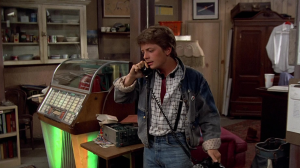
IMAGE COURTESY OF UNIVERSAL -
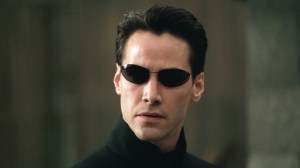
Image Courtesy of Warner Bros. -

Image Courtesy of Netflix -

Image Courtesy of Netflix