The fantasy genre is notoriously difficult to get right, and even the most ambitious productions often struggle to withstand the test of time. Movies that rely heavily on cutting-edge computer-generated imagery frequently look dated within a few years as technology marches forward, turning once awe-inspiring spectacles into muddy cutscenes. Beyond the visual decay, fantasy films often fall victim to the narrative tropes of their specific era. What passes for a charming hero or a shocking twist in one decade can easily become a cringe-inducing cliché or a problematic stereotype in the next. As a result, revisiting childhood favorites can sometimes be a disappointing exercise in nostalgia that reveals the cracks in the armor.
Videos by ComicBook.com
However, there is a specific echelon of fantasy cinema that manages to defy this aging process completely. These films usually prioritize practical effects, tangible production design, and strong character work over fleeting technological trends. By building worlds that exist physically on a soundstage rather than purely on a hard drive, filmmakers create a texture and weight that digital effects still struggle to replicate.
7) Legend
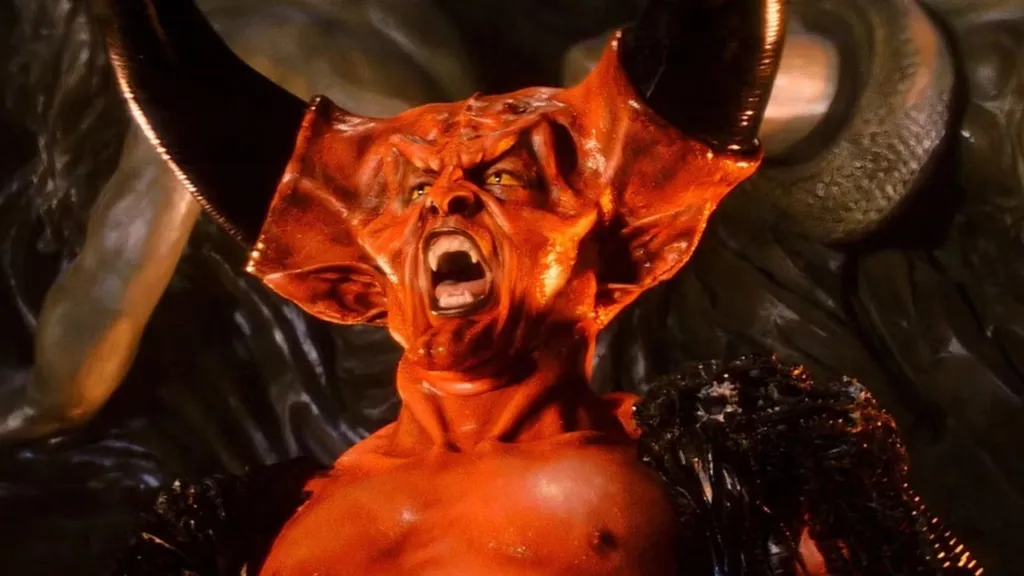
Ridley Scott is primarily known for his sci-fi contributions, yet his foray into high fantasy with Legend remains a feast for the eyes that modern cinema rarely matches. The story is a simple fairy tale involving Jack (Tom Cruise) attempting to save the world from eternal winter and rescue Princess Lili (Mia Sara) from the Lord of Darkness (Tim Curry). While the plot is admittedly thin, the film ages beautifully because of its overwhelming commitment to atmosphere and practical makeup effects. For instance, the production design created a dreamlike forest environment filled with floating pollen and shimmering light that feels more like a moving painting than a movie set.

The true longevity of Legend rests on the shoulders of Rob Bottin’s incredible prosthetic work. The design for the Lord of Darkness is arguably the greatest demon makeup ever committed to film. With it, Curry transforms into a towering, red-skinned nightmare with massive horns and hooves, delivering a performance that is both terrifying and strangely seductive. Because this character exists in the room with the actors rather than being a motion-capture creation, the lighting interacts with his skin in a way that CGI cannot perfectly emulate. The sheer physicality of the villains and the creatures gives the film a tactile quality that keeps it visually stunning decades later.
6) Willow
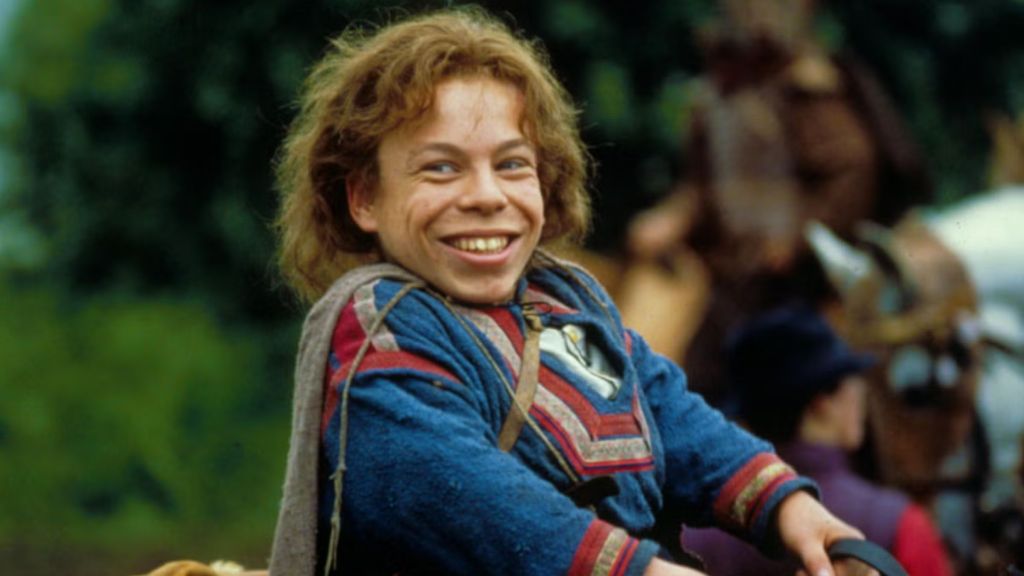
Before Peter Jackson returned fantasy to the mainstream, Ron Howard and George Lucas teamed up to deliver Willow, a film that captures the spirit of adventure with a unique charm. The movie follows a Nelwyn farmer named Willow Ufgood (Warwick Davis) who teams up with the rogue swordsman Madmartigan (Val Kilmer) to protect a baby prophesied to destroy an evil sorceress. Willow succeeds because it balances its darker elements with a genuine sense of fun and heart. Plus, the chemistry between Davis and Kilmer is electric, grounding the magical elements in a friendship that feels authentic and earned.
Visually, Willow stands as a testament to the transition period between practical effects and the digital revolution. While it features the first use of digital morphing technology, the film relies heavily on matte paintings, models, and creature suits to build its world. The Eborsisk dragon, a grotesque two-headed monstrosity, is a stop-motion creation that possesses a gritty texture often missing from smooth digital monsters. Furthermore, the decision to film on location in New Zealand and Wales gives the landscapes a majestic scope that provides the perfect backdrop for the action.
5) The Dark Crystal
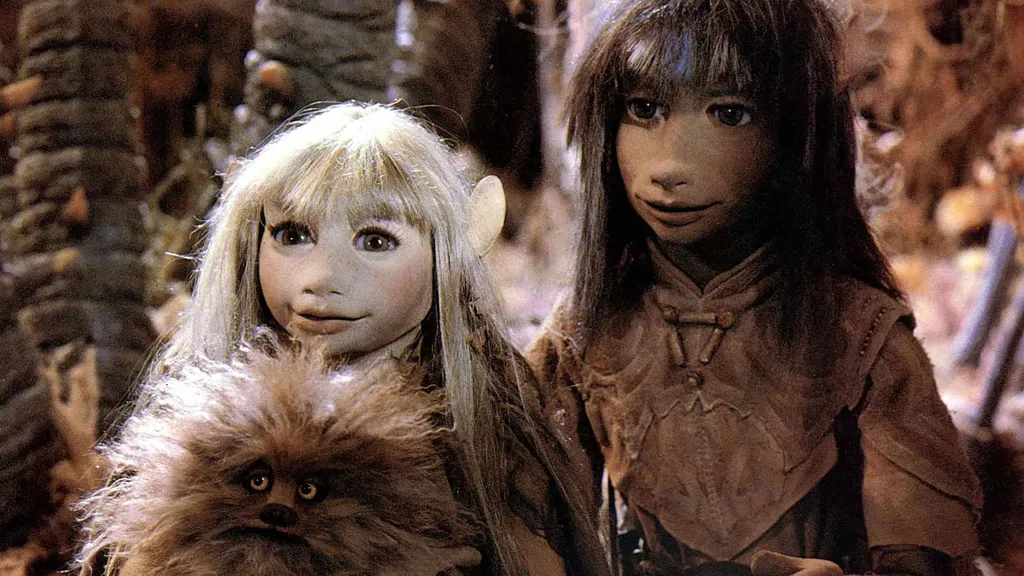
Jim Henson co-directed The Dark Crystal with Frank Oz, creating a film that was shockingly dark for a “family” movie and entirely devoid of human actors. The narrative takes place on the planet Thra, where a Gelfling named Jen (voiced by Stephen Garlick) must heal a magical crystal to overthrow the tyrannical Skeksis. The film is a masterpiece of puppetry and animatronics, creating an alien ecosystem that is completely immersive. Every plant, creature, and rock feels like it belongs to a cohesive biological history, a feat of world-building that rivals the best science fiction.
The reason The Dark Crystal ages so well is that its creatures have a physical presence that commands respect. The Skeksis are marvels of design, looking like rotting, reptilian vultures draped in opulent robes. Their movements are jerky and unsettling, which adds to their grotesque nature in a way that smooth animation never could. In addition, because the film is entirely practical, there are no bad compositing shots or low-resolution textures to break the immersion. The darkness of the story also helps it endure, as it refuses to talk down to its audience, treating the themes of genocide and environmental balance with the seriousness they deserve.
4) Excalibur

John Boorman’s Excalibur is a fever dream of a movie that condenses the entire Arthurian legend into a single epic. The film spans the life of King Arthur (Nigel Terry) from his conception to his death, featuring the wizard Merlin (Nicol Williamson) as a chaotic and manipulative force of nature. Unlike the sanitized versions of the legend often seen in Hollywood, Excalibur is bloody, sexual, and weird. Plus, the characters wear full plate armor that shines with a blinding chrome finish, a stylistic choice that makes the knights look like gods walking among men.
This stylistic boldness is exactly why Excalibur remains so watchable today. It does not attempt to be a gritty historical drama but rather operates on the logic of a myth. The green lighting and the heavy use of Wagner’s music create an operatic atmosphere that sets it apart from generic medieval action films. Furthermore, the violence is raw and messy, emphasizing the brutality of sword combat rather than turning it into a graceful dance. By fully committing to its own heightened reality, Excalibur avoids the trap of looking like a standard period piece, existing instead as a unique piece of visual art that feels ancient and powerful.
3) Conan the Barbarian

Few films have defined a subgenre as completely as Conan the Barbarian defined sword and sorcery. Directed by John Milius, the film stars Arnold Schwarzenegger as the titular Cimmerian who seeks revenge against the cult leader Thulsa Doom (James Earl Jones). The movie is surprisingly sparse on dialogue, relying instead on Basil Poledouris’s thunderous score and the physical expressiveness of its cast to tell the story. This decision gives Conan the Barbarian a primal energy that connects directly with the audience, bypassing the need for complex exposition.
Conan the Barbarian ages incredibly well because of its production design and its reliance on real locations. The sets look heavy and lived-in, constructed from stone and wood rather than styrofoam. The stunts are dangerous and visceral, with actors performing feats of strength that look genuinely exhausting. Schwarzenegger’s physique serves as a special effect in itself, embodying the Frank Frazetta illustrations that inspired the character. This commitment to a gritty tone makes it feel more substantial than the dozens of cheap imitators that followed in its wake.
2) Labyrinth
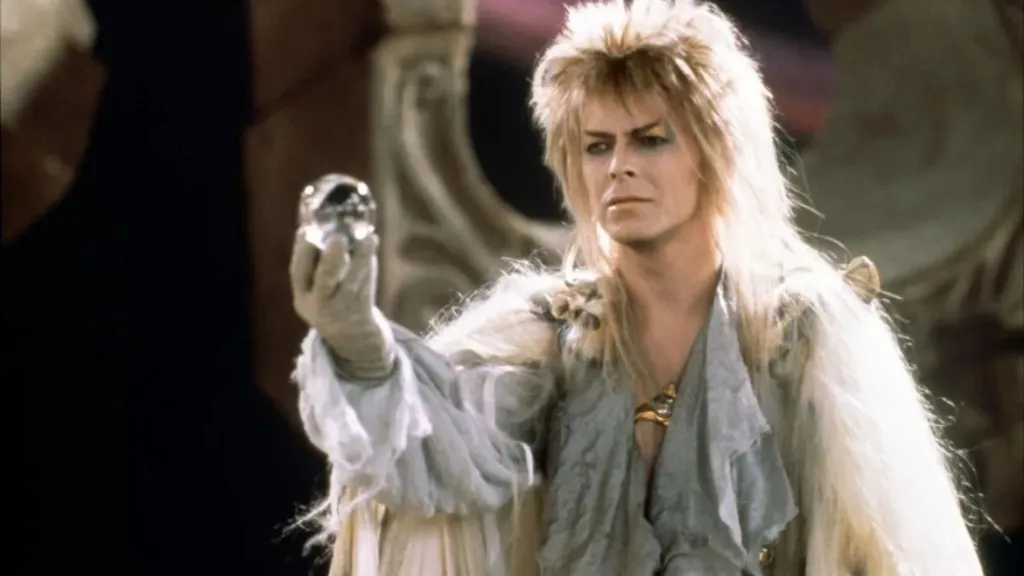
Labyrinth combines the genius of Jim Henson with the star power of David Bowie to create a coming-of-age story that is equal parts whimsical and unsettling. Jennifer Connelly stars as Sarah, a teenager who must solve a magical maze to rescue her baby brother from the Goblin King Jareth (Bowie). The film is a triumph of set design, with the labyrinth itself serving as a character that shifts and changes constantly. From the oubliette to the Escher-inspired stairwell finale, the environments are built to disorient and delight, utilizing forced perspective and practical construction to achieve their effects.
The cultural footprint of Labyrinth has only grown over time, largely due to Bowie’s charismatic and eccentric performance. He brings a rock-star swagger to the fantasy villain archetype, making Jareth a complex figure who is both a threat and a temptation. The puppetry is top-tier Henson Creature Shop work, with Hoggle and Ludo displaying a range of emotions that make them feel like living beings. Labyrinth‘s unique blend of musical numbers, dark fantasy, and surreal humor ensures that there is still nothing else quite like it.
1) The Princess Bride

Topping the list is The Princess Bride, a film that is practically immune to aging because it is built on a foundation of perfect screenwriting. Directed by Rob Reiner and adapted by William Goldman from his own novel, the movie is a fairy tale that knows it is a fairy tale. The story features Westley (Cary Elwes) trying to rescue Buttercup (Robin Wright) from Prince Humperdinck (Chris Sarandon), but the narrative framing of a grandfather reading to his grandson adds a layer of meta-commentary that keeps the tone sharp. The dialogue is endlessly quotable, and the humor relies on wit and character dynamics rather than pop-culture references that would expire.
The Princess Bride also uses its budget limitations to its advantage, creating a storybook aesthetic that feels cozy and inviting. The Cliffs of Insanity and the Fire Swamp are realized through matte paintings and sets that look theatrical in the best possible way. The practical Rodents of Unusual Size are frightening enough to work for the story but goofy enough to fit the film’s comedic tone. Every performance is pitch-perfect, from the vengeful Inigo Montoya (Mandy Patinkin) to the giant Fezzik (André the Giant). The Princess Bride is a movie that balances romance, action, and comedy with such precision that it remains the gold standard for the genre.
Which fantasy classics do you think have aged the best? Leave a comment below and join the conversation now in the ComicBook Forum!
More Movies
-
Image courtesy of Warner Bros. Pictures -

Image Courtesy of Marvel Comics -

Kylo Ren with lightsaber drawn