Adapting a book for the screen might seem easy, but it’s actually one of the toughest challenges in filmmaking. Sometimes you have to make cuts or decisions that change something important from the original material for a specific reason. The problem is when these changes end up interfering so significantly that the entire film drifts away from the source material and turns the audience’s experience into a disappointment. Everyone has come across at least one classic case of this, especially when it involves books that are popular, beloved, and widely considered cult favorites. So when a new adaptation gets announced, a sense of fear inevitably kicks in for everyone.
Videos by ComicBook.com
With that in mind, we’ve picked some examples that people today almost cringe at when they remember how badly the films turned out. It’s frustrating to come across productions with such strong names behind them, but that ultimately failed to deliver where it mattered most: in the story they were trying to tell.
7) The Hobbit Trilogy
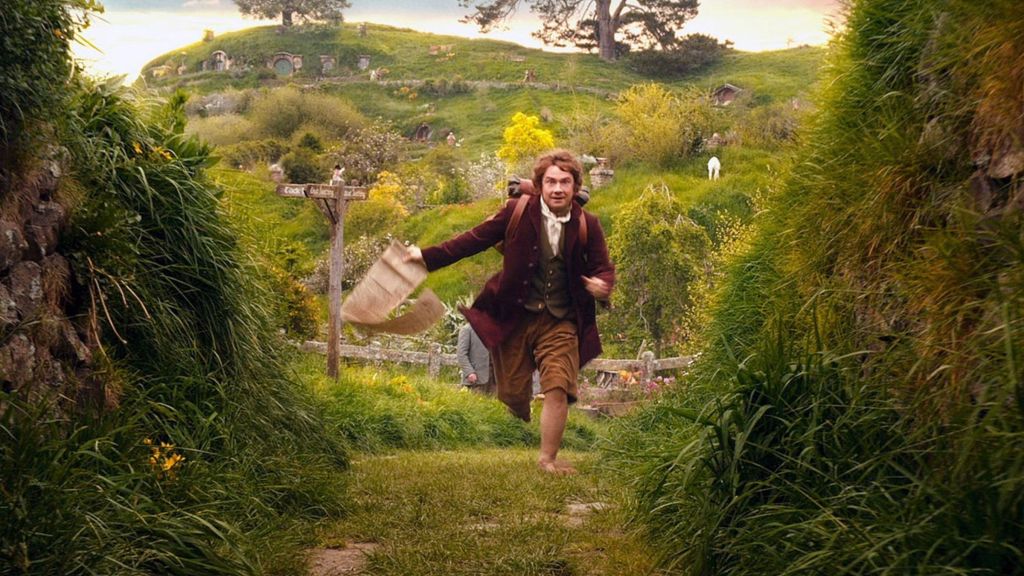
J.R.R. Tolkien’s world is dense and richly detailed, but The Hobbit itself is a relatively simple, self-contained adventure. In it, we follow Bilbo Baggins (Martin Freeman) as he’s taken by a group of dwarves to reclaim Erebor from the dragon Smaug. The thing is that when it was adapted for the big screen, the decision was made to turn it into a trilogy, and that’s where the problem starts: these are movies that inflate the entire story for no real reason other than doing exactly that.
What you end up watching is an expansion that doesn’t actually justify itself, with added scenes and subplots that don’t exist in the original material, and breaks the pacing instead of enriching the story. The biggest impact of this is that the tone of the book, which is lighter and more focused on Bilbo’s personal growth, gets lost in the middle of an overemphasis on scale. At every turn, it feels like The Hobbit is more interested in repeating the success of The Lord of the Rings films than in staying true to what made the book work.
6) A Wrinkle in Time

A Wrinkle in Time is an adaptation that hurts to think about, because the source material had so much potential that was ultimately wasted. The story follows Meg Murry (Storm Reid), a young girl who travels through space and time with her brother and a friend to find her missing father. Along the way, she faces a force that represents conformity and emotional control. It’s a book that works because it balances fantasy with much more abstract ideas about identity, faith, and individuality.
However, when Disney decided to bring it to the screen, the movie struggled to understand that what makes the story work shouldn’t be stripped away in the process. Instead of trusting those core themes, the film prioritizes aesthetics and inspirational moments that feels pretty generic within the genre. A Wrinkle in Time should have felt emotionally specific and grounded in its ideas, but it just gets diluted almost entirely.
5) The Golden Compass

Although often overlooked, His Dark Materials tends to be the more faithful and richer adaptation of Philip Pullman’s books. But before it, there was The Golden Compass, which brought the first installment to the screen with plans to launch a full trilogy. The story follows Lyra Belacqua (Dakota Blue Richards), a young girl living in a parallel world where children are disappearing, and powerful institutions hide secrets tied to a mysterious substance called Dust. It’s an adventure, but it also carries a strong religious and philosophical critique underneath it.
What happens in the film, however, is a consistent softening (and sometimes outright avoidance) of the very elements that, while controversial, are essential to the source material. Overall, The Golden Compass is visually impressive and has good foundational ideas, but fidelity becomes a serious issue here. It ends up in a similar situation to A Wrinkle in Time, where the narrative loses relevance because it feels like it’s always holding back, afraid to fully commit to what the story actually is.
4) Jumper
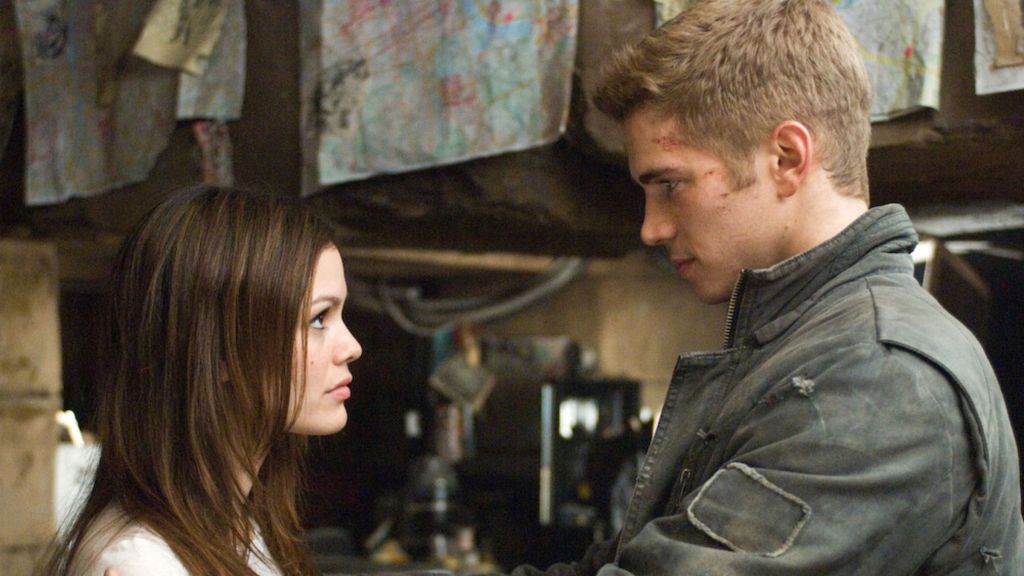
Who remembers Jumper? The movie was meant to kick off an entire franchise. The story follows David Rice (Hayden Christensen), a young man who discovers he can teleport and starts using that ability to escape his own life and the consequences of his past, while being hunted by an organization that tracks people with this power. And in the book it’s based on, the main idea is precisely to explore the psychological impact of that ability such as isolation, escapism, and the consequences that come with it.
However, in this case, what made Jumper fall so flat upon release is that it completely abandons the focus of the story in favor of something else. The film turns into just another action movie, with globe-spanning chases and conflicts that never really explore the potential of the premise. On an action level, it works as entertainment, but as an adaptation, it’s a disappointment. In the end, it’s a blockbuster that has been totally forgotten.
3) The Dark Tower

For Stephen King fans, there’s some good news: The Dark Tower is getting a proper reboot, because it’s hard to even treat the first attempt as a real adaptation. What we’re dealing with here is a complex saga that was condensed into a single movie — and there’s really no version of that decision where the outcome makes sense. The story follows Roland Deschain (Idris Elba), the last Gunslinger, on his quest to reach the Dark Tower, a structure that holds all of reality together, while he pursues the Man in Black.
In short, the biggest issue with The Dark Tower is that it simply can’t handle the scale or complexity of the source material, and instead flattens everything into a basic hero-versus-villain structure. In doing so, it strips away most of the weirdness, the existential weight, and the layered world-building that define the books. What you’re left with is basically a heavily compressed version of the universe that feels like it was made for no real reason.
2) Queen of the Damned

In one of the books from Anne Rice’s The Vampire Chronicles universe, Queen of the Damned, we follow the iconic vampire Lestat (Stuart Townsend) as he becomes a rock star while also drawing the attention of Akasha (Aaliyah), the ancient queen of the vampires. The book is focused on mythology, atmosphere, and the internal conflicts of multiple characters, but the adaptation ends up mixing elements from other books in the series, and the whole thing loses cohesion in the process.
It’s not necessarily a problem to combine material from different books, especially since the Interview with the Vampire TV series shows that this can work when done properly. The problem is doing it while still failing to stay faithful to the established universe and its internal logic. Queen of the Damned can work as a standalone film if you ignore the source material, but as an adaptation, it’s one of the weakest examples out there, prioritizing aesthetic and music over narrative clarity. And that choice makes it feel disconnected from what actually made the original work resonate with fans in the first place.
1) Eragon
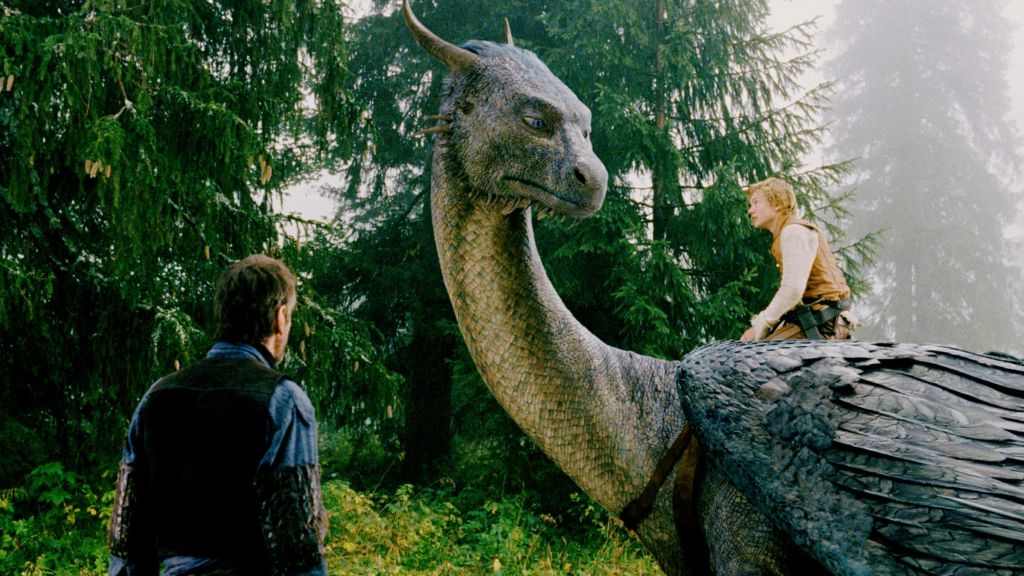
It’s pretty hard to defend Eragon, since out of all the book-to-film adaptations ever made, it’s still one that constantly comes up in discussions and rarely in a positive way. The story follows a young farm boy (Ed Speleers) who finds a dragon egg and gets pulled into a war against an oppressive empire. It’s a classic fantasy setup that, in the book, relies on gradual world-building and proper development of the protagonist. But does the film actually do that? Absolutely not.
The adaptation rushes through everything at a very aggressive pace: training, character progression, the rules of the world, and even important supporting characters are either compressed or completely removed. In a fantasy story, that’s basically fatal, because it makes the entire experience of discovering Eragon‘s world feel shallow and unconvincing. You never really get a chance to understand the world, let alone the character’s transformation within it. So it ends up failing twice over: it doesn’t work as a faithful adaptation, and it doesn’t hold up as a standalone fantasy film either.
What do you think of these adaptations? Leave a comment below and join the conversation now in the ComicBook Forum!
More Movies
-

Courtesy of The Walt Disney Company -
A Still From Masters Of The Universe (1987) -
Image Courtesy of Columbia -
IMAGE COURTESY OF MARVEL -
IMAGE COURTESY OF WARNER BROS.