The 1980s were a great decade to be a kid watching TV. Following the rollback of FCC rules on advertising in children’s programming in the early 1980s, toy companies flooded the animation market with colorful, attention-grabbing, and most importantly well-funded and market-tested shows. While the ethics behind this sudden flood of funding are questionable at best, the result cannot be argued with— cartoons as a medium received a writing, pacing and aesthetic jump-start, transforming what was previously a fairly limited and tight-budget TV animation landscape into a vibrant series of memorable shows packed with heroes, swords, space, monsters, pop idols, talking turtles and just about everything else.
Videos by ComicBook.com
One of the first companies to see the opportunities inherent to the decade was Mattel, who, looking to get airtime for their Masters of the Universe action-figure line in wake of the FCC rollbacks, worked with Filmation Studios to produce He-Man and the Masters of the Universe, an animated series with a muscle-bound titular protagonist, a hero team, a menacing skeletal villain, and whatever Orko is. He-Man and the Masters of the Universe would go on to dominate Television, the toy aisle and pop culture alike for 130 episodes, leaving a cultural legacy that continues to this day— despite a seeming total inability to be functionally, or profitably, adapted into a feature film.
He-Man Brought The Gritty Sci-Fantasy Of The 1980s To Saturday Morning Cartoons

He-Man and the Masters Of The Universe existed within an aesthetic that is quintessentially 1980s. Combining the prior decades’ boom in interest in fantasy properties such as Lord Of The Rings and Dungeons & Dragons with the culture-altering popularity of 1977’s Star Wars Episode IV: A New Hope and the rising musical phenomena of hair metal and glam rock, 80s sci-fantasy was all muscle, leather, glitter, glowing swords, freaky space monsters, cyborg armor, warrior princesses and ragtag teams— and, until He-Man, it had been largely relegated to stories with older target audiences.
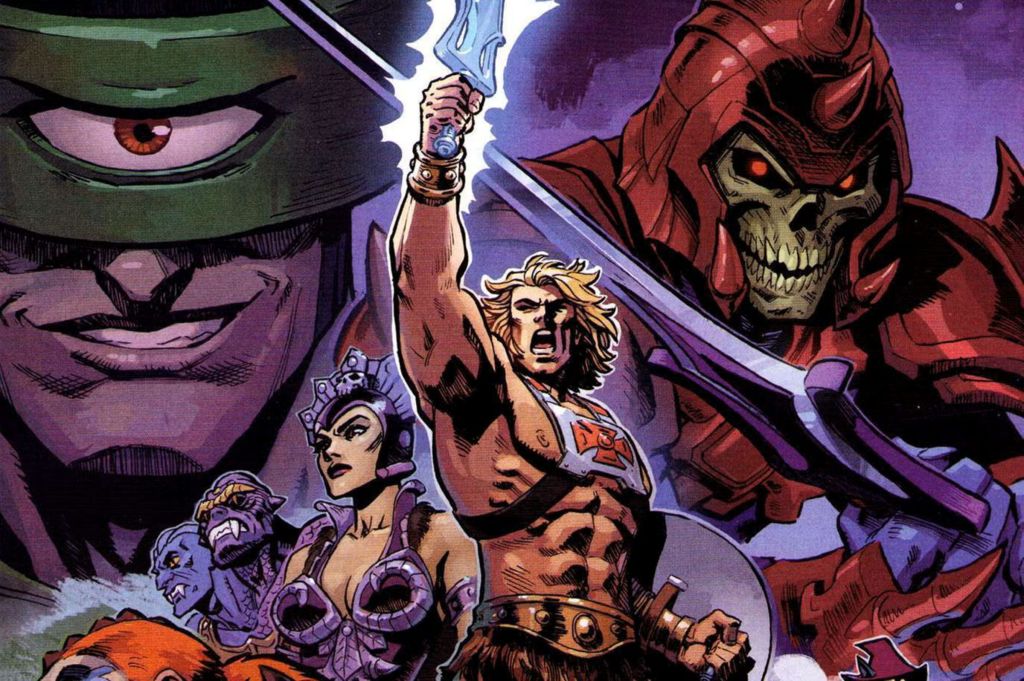
That would change, as He-Man and the Masters Of The Universe introduced Prince Adam of the planet Eternia, who, transformed by his Power Sword and the Power of Castle Grayskull into the superhuman warrior He-Man, joined by his steed Battlecat (aka Prince Adam’s cowardly pet tiger Cringer) and his friends Man-At-Arms, Teela, Orko, Fisto, The Sorceress, and many more (remember, this is a show about an action figure series) to defend Castle Grayskull from the villainous, skull-faced Skeletor and his rogue’s gallery of monstrous goons.
This formula stayed fairly constant over the show’s run, with Skeletor plotting, and He-Man and friends thwarting the evil plan. There was action, risk, creatures, swords brought to gunfights, and guns brought to sword fights. Now and then an episode would be taken to explore Prince Adam’s more mundane life as Eternian royalty. The occasional introduction of a new character, vehicle, or playset— sorry, location— kept things fresh. Some episodes ended with the characters directly addressing the audience with a moral or a public service announcement. Thus He-Man And The Masters Of The Universe chugged along for 130 episodes, cementing itself in the hearts, imaginations, and Christmas lists of a generation.
Despite Success As A TV Show, He-Man Struggles When Adapted To Feature-Film Length
Given the overwhelming success of the television series, it was only a rational next step to take He-Man to the big screen. However, this decision proved disastrous not once but twice. Interestingly, the two attempts to adapt the property to feature-film were separated by nearly four decades and fairly distinct in their approach to adapting the story, making it clear that the He-Man property itself was the only common factor in their spectacular box-office failures.
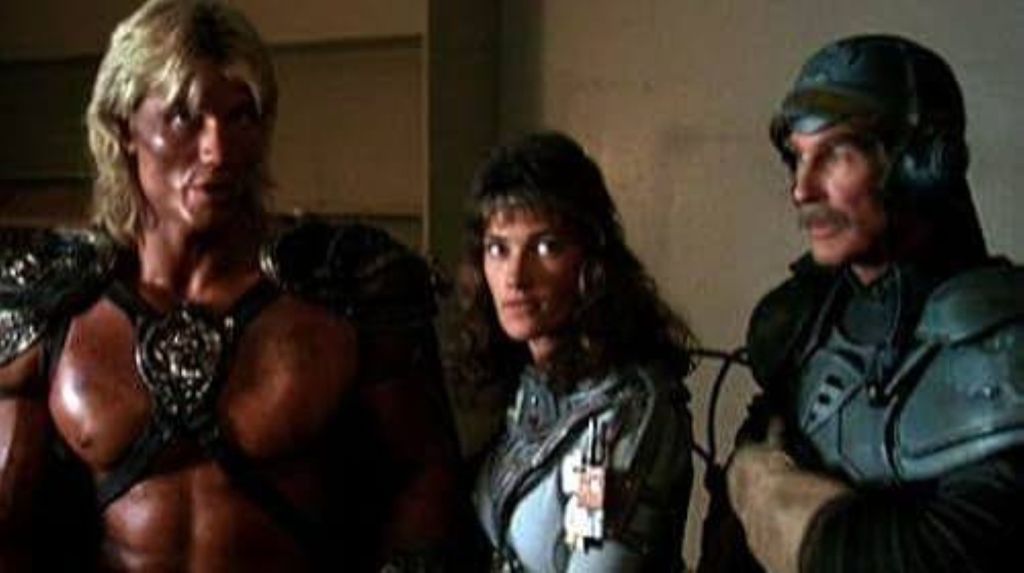
The first of the films attempting to adapt He-Man, 1987’s Masters Of The Universe, broke drastically from the show’s established format as an Eternian artifact is sent to Earth, ending up in the possession of two human teenagers who are then entangled in the cosmic war between the forces of He-Man and Skeletor. Widely panned for its choppy writing, strange plot choices (especially around one of the teen characters’ dead parents) and overall poor quality, Masters Of The Universe (1987) failed to hold a spot on the highest-grossing film charts during its run and is widely regarded as a flop.
The second attempt, 2026’s Masters Of The Universe (not confusing at all…), switches up its approach to the inclusion of Earth, instead sending a young Adam to earth to assume a human identity, Clark Kent Style, before eventually recovering his lost Power Sword and returning to Eternia to free his people and take the title of He-Man. While not nearly as poorly received as its predecessor— in fact many of its reviews are strongly positive— Masters Of The Universe 2026 simply did not do especially well either. Released on the same week as blockbusters like surprise success Obsession and taking few creative liberties (at least, few not taken by the prior movie) in its retelling of a story that is at its heart repetitive and meant for monster-of-the-week style television programming, it did not have enough going for it to stand out from the crowd.
Box-Office Failures Haven’t Tarnished The Legacy Of Eternia’s Hero
Thankfully for He-Man, another thing shared by his failed attempts at movie stardom is that they were both, apparently, utterly forgettable. Each film adaptation was largely lost in terms of cultural memory soon after release, leaving He-Man and his friends to charge fearlessly into the future free of the burden (sadly suffered by some long-running properties) of an infamously awful adaptation.
He-Man has continued to pop up in various forms ranging from comic book runs (including a crossover with his fellow 1980s heroes the Thundercats) to the ultra-viral proto-meme that was “HEYYEYAAEYAAAEYAEYAA (What’s Going On)” to short-lived animated series on Cartoon Network and Netflix. Suffice to say, it is certain that the Masters of the Universe survive to fight another day.