
Alternate reality is one of sci-fi’s best means of exploring themes like identity, destiny, and the branching paths of choice. Given that matrix and multiverse theories about our real world are gaining popularity, it’s no surprise that sci-fi fans are seeking out alt-reality movies. Whether they take the concept literally or use the idea of parallel worlds as a metaphor, a great alternate-reality film isn’t afraid to challenge our understanding of ourselves.
Videos by ComicBook.com
In this list, we’ve ranked seven of the best films that explore the subgenre in all its forms. We’ve got multiverses, tangent universes, branching timelines, parallel Earths, and more. These movies speculate hard enough to bend space-time, and whether you’re seeking a crowd-pleaser or a lo-fi sci-fi indie, you’re in the right place if you want your mind blown.
7) Another Earth

Another Earth, directed by Mike Cahill and starring Brit Marling (who also co-wrote the screenplay), follows Rhoda Williams, a promising student whose life is derailed after a tragic accident that happens the same night a duplicate planet appears in the sky. “Earth 2” is a theoretical mirror in which alternate versions of every person might have made different choices. The hook arrives during a televised conversation with scientists on Earth 2, revealing that the planets may have been perfectly in sync until the moment Rhoda’s tragedy occurred. Another Earth uses its parallel-world concept to probe Rhoda’s guilt and redemption, and to this day, fans are still debating the film’s final scene.
6) Source Code
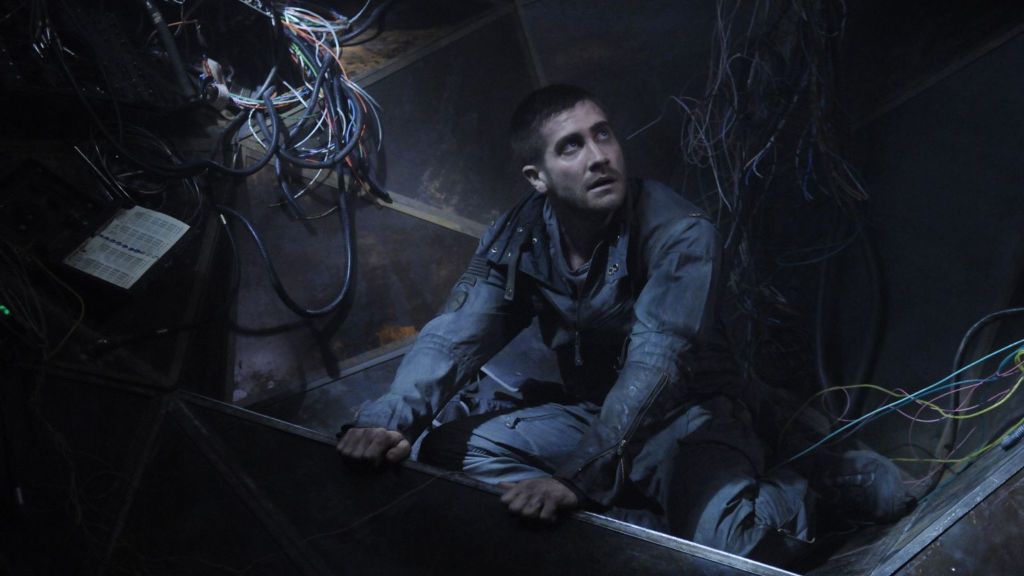
Source Code stars Jake Gyllenhaal as Captain Colter Stevens, who wakes up in another man’s body and finds himself trapped in a constantly resetting eight-minute time window aboard a doomed Chicago commuter train. The “Source Code” program is described as accessing a parallel reality formed at the moment of death, meaning each reset may actually be birthing a new alternate timeline. As Colter digs deeper, he not only tries to stop the bombing but also wrestles with the revelation that he may be living permanently in one of the splinter universes. Duncan Jones’ sci-fi action thriller is somewhat underrated today, but remains a critic’s favorite, boasting a 92% rating on Rotten Tomatoes.
5) Donnie Darko
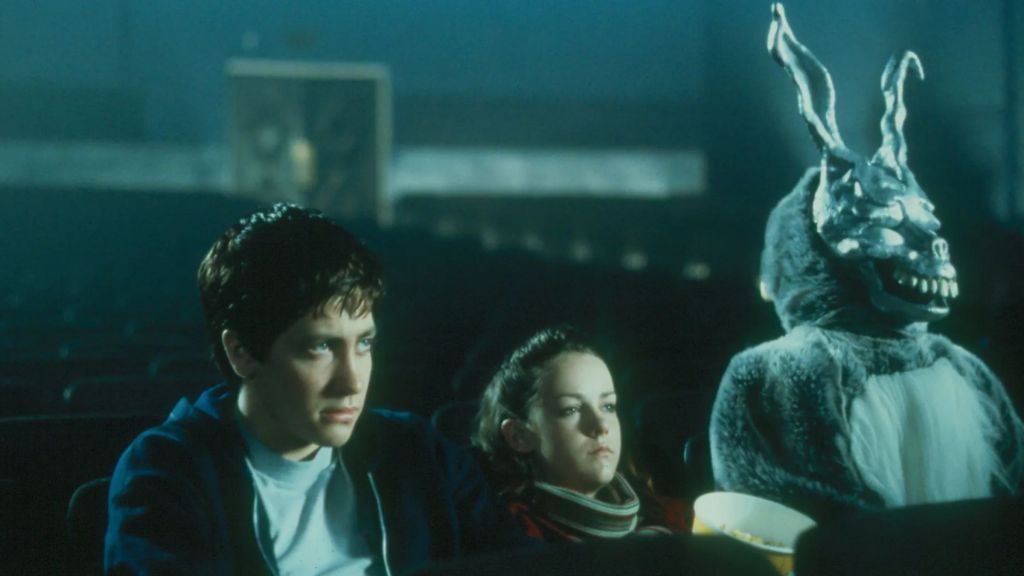
Richard Kelly’s Donnie Darko also stars Gyllenhaal (then ten years younger) as a troubled teen who begins receiving warnings from a strange figure in a creepy rabbit suit named Frank. The film’s alternate-reality component hinges on the concept of a “Tangent Universe,” or a temporary, unstable branch of reality created after an artifact (the jet engine) appears where it shouldn’t. Donnie becomes the “Living Receiver,” chosen to correct the anomaly before the tangent collapses and destroys the Primary Universe. The film builds its cosmology through cryptic visual cues, physics metaphors, and the in-universe text The Philosophy of Time Travel. Though critics were initially unsure how to categorize the movie, fans went wild for the 80s Americana surrealism and cosmic fatalism. Since its 2001 release, Donnie Darko has become a cult classic, still filling seats in revival house screenings.
4) Primer
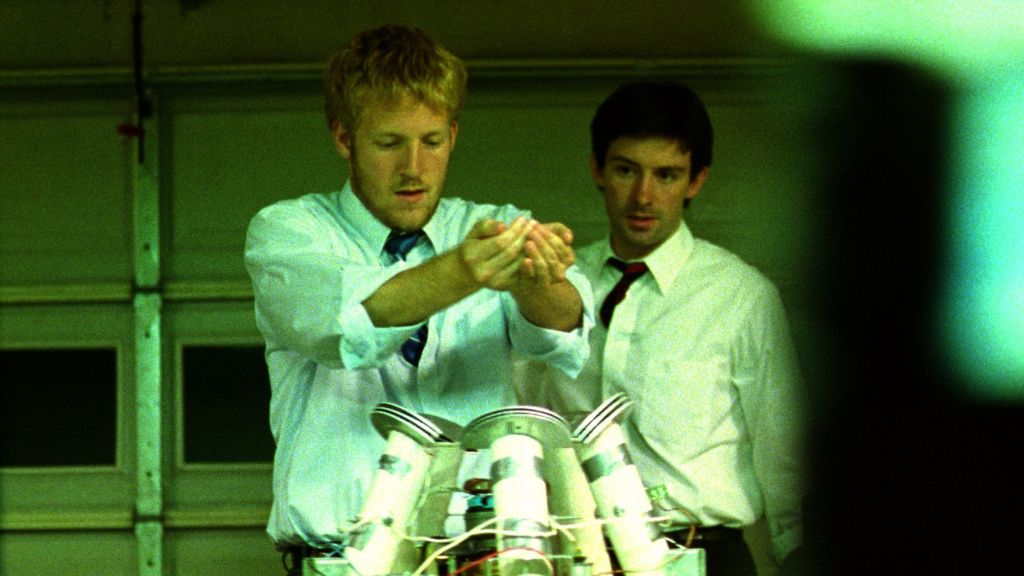
Directed by indie film legend Shane Carruth (who also stars, edits, and composed the score), Primer is famous for presenting one of the densest alternate-timeline structures of all time on a budget of only $7,000. The story follows two engineers who accidentally build a time-altering device in their garage. Rather than creating loops, however, the machine generates branching copies of the characters every time it is used, leading to multiple overlapping versions of Aaron and Abe who interact with, avoid, or sabotage each other across the increasingly tangled threads. Hardcore sci-fi fans praised Primer for refusing to handhold the audience and treating its physics with clinical realism. The film’s now-famous fan-made flowcharts (designed to track which version of each character is on-screen) can be a great visual aid for first-time viewers.
3) Spider-Man: Into the Spider-Verse
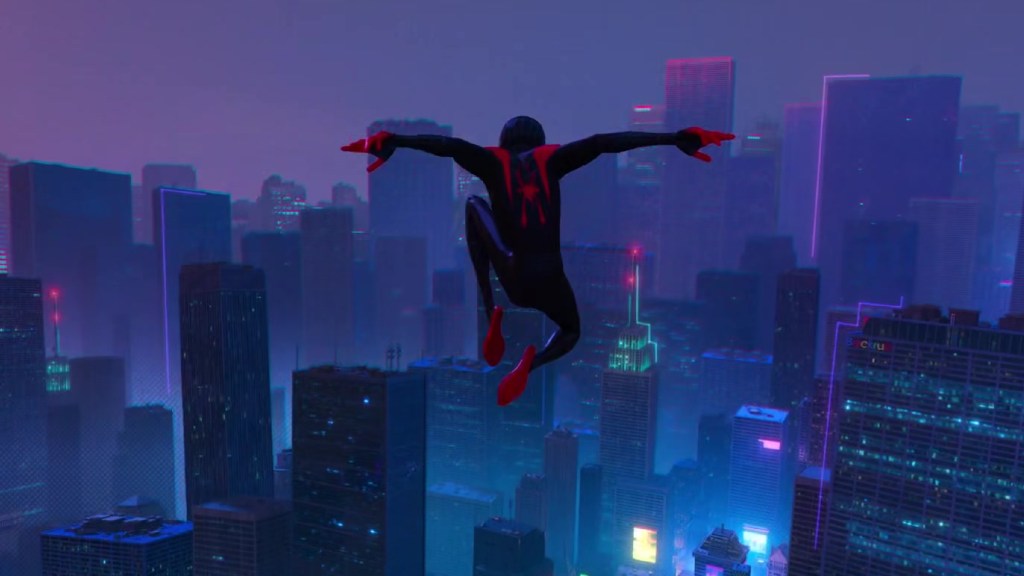
Created by Phil Lord and Christopher Miller, Into the Spider-Verse sees Miles Morales thrown into a multiverse collision triggered by Kingpin’s super-collider. The event rips open portals that bring alternate Spider-people (including Spider-Gwen, Spider-Man Noir, Peni Parker, and Peter B. Parker) into Miles’ Brooklyn. Each universe comes with its own animation style: Noir’s is monochrome, Peni’s is anime-inspired, and Miles’ is graffiti-esque, but they all coexist inside the comic book come to life. In addition to the mix of hand-drawn and CG animation, critics also applauded Into the Spider-Verse for injecting its high-concept into a human story. Accessible and enjoyable for all ages, the movie became an instant classic and is a must-watch for any sci-fi fans, even if they initially balked at its comic-book origins.
2) Coherence

Coherence takes place during a single dinner party on the night a comet passes over Earth. As the comet fractures reality, identical houses from parallel timelines begin bleeding into each other, causing versions of the same eight people to wander between universes without realizing it. The film’s improvised performances and lack of a traditional script allowed the alternate-reality reveals to unfold organically, with the utmost realism, providing a brilliant juxtaposition to the high concept. Without a single special effect, James Ward Byrkit’s Coherence relies on its tight script and stellar performances to create psychological tension and escalating paranoia. Many viewers still compare it to a Twilight Zone episode, complete with a mind-boggling conclusion.
1) Everything Everywhere All at Once

Directed by the Daniels (Kwan and Scheinert), Everything Everywhere All at Once follows Michelle Yeoh’s Evelyn Wang as she learns to verse-jump into countless versions of herself, including hibachi chef Evelyn, movie-star Evelyn, kung fu-master Evelyn, and rock Evelyn, each representing a different life path. Beyond humor, the visually distinct universes give glimpses into Evelyn’s unfulfilled hopes and dreams. Meanwhile, the villain, Jobu Tupaki, looms over the multiverse where meaning collapses under infinite possibility. Upon its 2022 release, the film became a cultural phenomenon, resonating deeply with fans and even winning the Oscar for Best Picture. If you missed it, Everything Everywhere is an alternate reality movie in the purest sense. It’s fun, funny, and poignant enough to provide a new perspective on finding peace in the chaotic modern world.
What do you think? Leave a comment below and join the conversation now in the ComicBook Forum!
