The Marvel Cinematic Universe has always treated comic book history as a pick-and-choose buffet, borrowing the names and broad strokes of iconic storylines without feeling obligated to replicate them panel for panel. When that approach works, it reminds everyone why the MCU became a cultural juggernaut in the first place. For instance, Captain America: Civil War jettisoned the comics’ sprawling superhuman registration act in favor of a leaner conflict between Steve (Chris Evans) and Tony (Robert Downey Jr.), yet it preserved the essential conflict between the freedom hero’s need to act and their lack of accountability. Likewise, Avengers: Infinity War and Endgame streamlined Jim Starlin’s cosmic melodrama into an operatic two-part saga that stands as the franchise’s crowning achievement, proving that a loose adaptation can feel utterly definitive when it captures the spirit of the source material.
Videos by ComicBook.com
Sadly, for every MCU adaptation that soars, many Marvel tales were strip-mined for name recognition and drained of their narrative power. Too often, the studio seizes on a recognizable event title while discarding the thematic core that made those stories resonate in the first place, reducing decades-old watershed moments to hollow Easter eggs or tonal misfires. The result is a pattern of creative waste that leaves comic fans mourning what could have been.
7) Kree-Skrull War (Captain Marvel, Secret Invasion, and The Marvels)
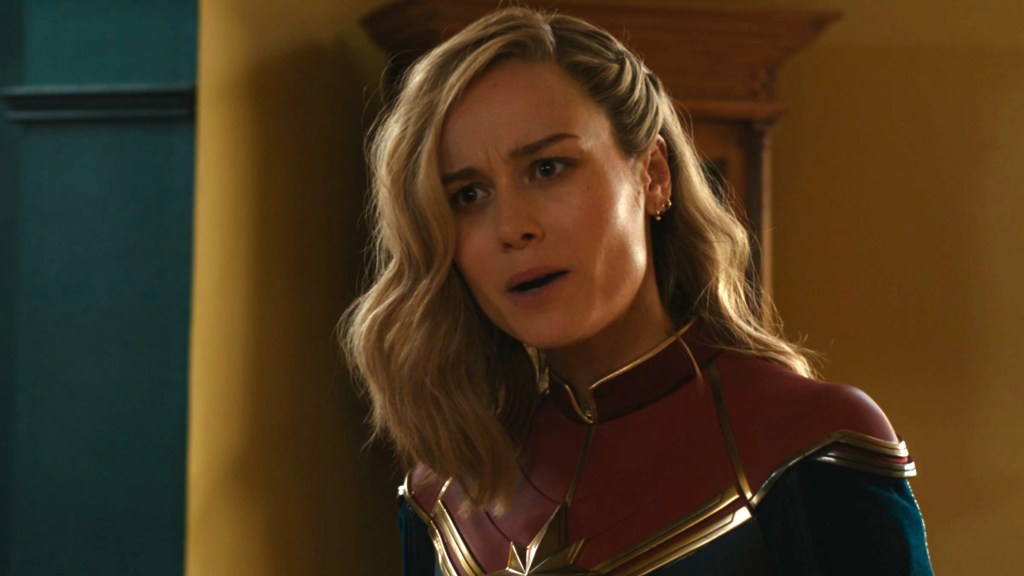
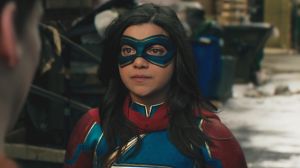
The “Kree-Skrull War” storyline ran through Avengers in 1971 and established the blueprint for the epic superhero crossover, weaving intergalactic politics and the fate of Rick Jones into a single continent-spanning powder keg. The comic derives its power from the Avengers being caught between two monstrous empires that both view Earth as disposable, forcing the team into morally compromised choices that still reverberate in the lore today. The MCU, by contrast, spent Captain Marvel reimagining the Skrulls as sympathetic refugees fleeing Kree genocide, a genuinely intriguing inversion that could have set up a morally layered adaptation of the classic conflict. Instead, the franchise squandered that setup by funneling everything into the Secret Invasion series, where a rogue Skrull faction boiled the war down to a generic terrorist plot with a single super-powered showdown in a Russian compound, completely erasing the Avengers’ involvement. Then, The Marvels walks back on that setting, and the Skrulls are shown as defenseless victims of the evil Krees.

6) Demon in a Bottle (Iron Man 2)

When David Michelinie, Bob Layton, and John Romita Jr. crafted “Demon in a Bottle” in 1979, they showed Tony Stark, the armored Avenger, in the grip of a realistic descent into alcoholism. The storyline spans multiple issues as Tony’s drinking costs him his company, his relationships, and nearly his life, culminating in a raw confession and the long road toward recovery. Iron Man 2 swiped the silhouette of that struggle and flattened it into a single birthday-party montage where a drunk Tony pees in the suit and blasts a watermelon, followed by a brisk fridge-sitting pep talk from Nick Fury (Samuel L. Jackson) that solves the crisis off-screen. That means the MCU turned a landmark mental-health narrative into a slick tantrum that served mostly to advertise a Black Widow (Scarlet Johansson) introduction, leaving the genuine pathos of Stark’s addiction as nothing more than an abandoned footnote.
5) Extremis (Iron Man 3)

“Extremis” redefined Iron Man for the twenty-first century, introducing a bio-technological virus that rewrites the human body and grants Tony Stark a transhuman neural interface with his armor. Created by Warren Ellis and Adi Granov, the story grounds its body-horror conceit in a philosophical debate about whether human evolution needs a forced accelerator, all while re-establishing Tony’s origin as a weapons designer forced to confront the ultimate weapon: himself. Iron Man 3 retained the term “Extremis” and the visual of glowing lava-like veins but handed the actual upgrade to a vengeful Aldrich Killian (Guy Pearce), who breathed fire and regrew limbs while Tony’s suits became disposable remote-controlled props. The film further wasted a monumental villain by revealing the Mandarin (Ben Kingsley) as a drunken actor, a twist that robbed the MCU of its best chance to give Tony a charismatic arch-nemesis. The Mandarin twist was so controversial that Shang-Chi and the Legend of the Ten Rings changed canon by introducing the real villain, albeit in a quite different form.
4) Age of Ultron (Avengers: Age of Ultron)

Brian Michael Bendis and Bryan Hitch’s Age of Ultron was a time-shattering nightmare in which Ultron has already conquered Earth, reducing the surviving heroes to a desperate resistance that must break the timestream itself to undo his victory. The miniseries traded on a suffocating atmosphere of hopelessness, using shattered cities and fallen icons to argue that certain technological horrors can never be fully erased once unleashed. Joss Whedon’s film borrowed the ominous title and then confined the “age” to a single week of localized havoc in a fictional Eastern European country, presenting Ultron (James Spader) as a one-movie villain whose global threat is quickly contained. The movie’s greatest sin is that its Ultron feels less like a species-ending intelligence and more like a slightly menacing robot, wasting one of Marvel’s most terrifying antagonists on a mid-tier MCU entry.
3) Planet Hulk (Thor: Ragnarok)
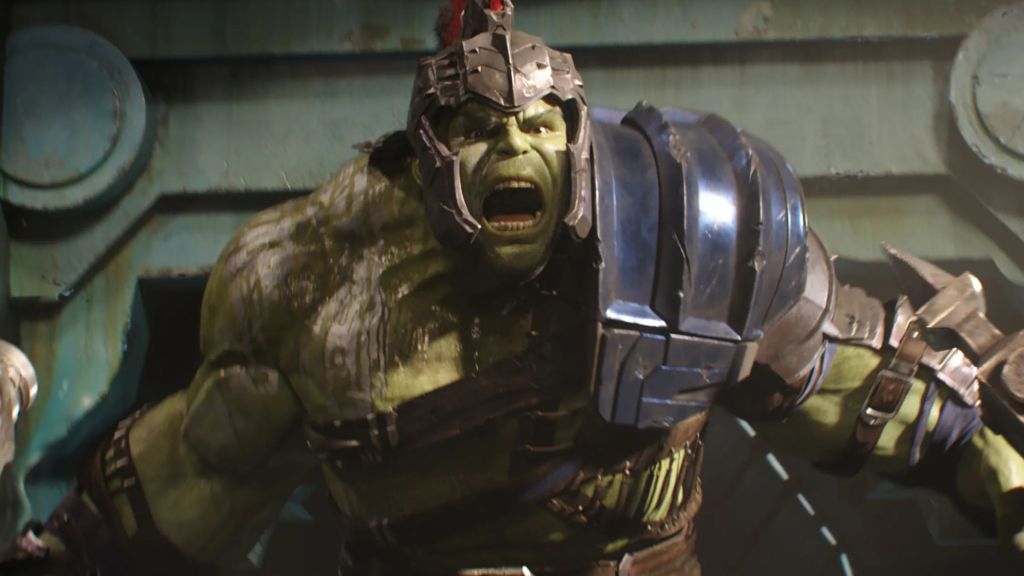
In the “Planet Hulk” arc, Greg Pak and Carlo Pagulayan exiled Bruce Banner’s monstrous alter ego to the alien gladiator world of Sakaar, where he transforms from a mindless brute into a revolutionary leader who forged bonds with a surrogate family of enslaved warriors. The saga’s emotional weight comes from watching the Hulk find a rare sense of belonging, only for the story to build toward the catastrophic revenge of “World War Hulk” after that new home is destroyed. Taika Waititi’s Thor: Ragnarok lifted Sakaar and a sliver of the gladiator aesthetic but grafted them onto a buddy comedy in which the Hulk (Mark Rufallo) is mostly a punchline who speaks in third-person toddler phrases. By allowing Bruce Banner to skip the entire Warbound arc and then resolving his dual-identity crisis off-screen between films, the MCU gutted the narrative elements that could have powered a devastating Hulk solo saga.
2) The God Butcher (Thor: Love and Thunder)
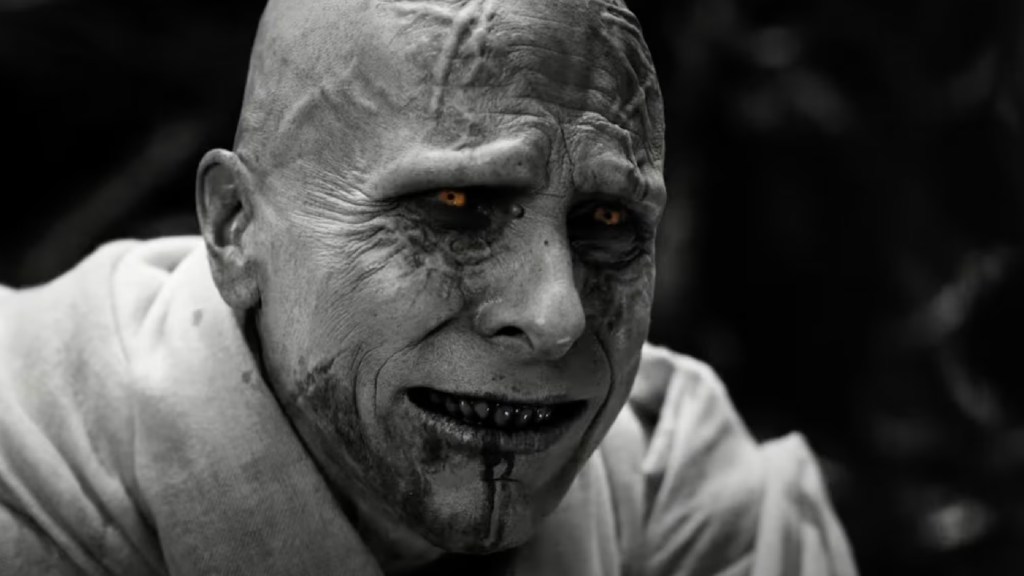
Jason Aaron and Esad Ribić’s “God Butcher” and “Godbomb” arcs introduced Gorr, a scarred alien driven to slaughter deities across time after the beings he worshipped ignored his family’s suffering. The story spans millennia, presenting three different versions of Thor who confront Gorr’s nihilism with varying degrees of weariness and hope, culminating in a philosophical clash inside a bomb designed to exterminate every god that ever existed. Thor: Love and Thunder condensed that sprawling nightmare into a candy-colored romp in which Gorr kidnaps a group of Asgardian children, mumbles his way through a few scenes in a desaturated shadow realm, and mostly leaves Christian Bale’s chilling performance stranded in a movie obsessed with screaming goats and jealous-axe gags. The MCU had both the perfect actor and a genuinely scary central premise. Yet, it smothered them under an avalanche of Waititi’s self-parodic humor, turning one of the most acclaimed Thor tales of the century into a tone-deaf farce.
1) Secret Invasion (Secret Invasion)
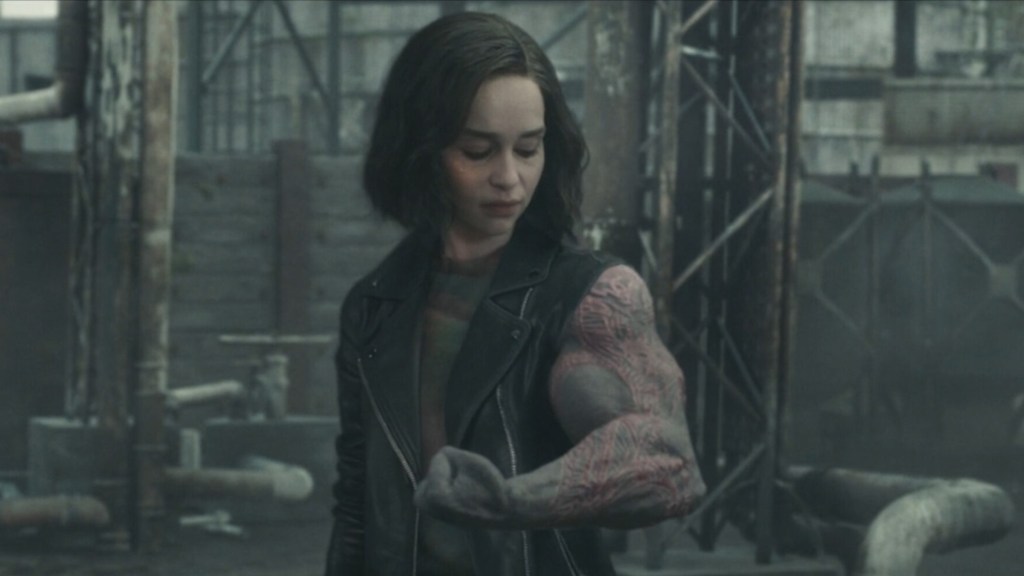
In the 2000s, Brian Michael Bendis and Leinil Francis Yu seeded paranoia across every Marvel title before exploding into the Secret Invasion event, in which shape-shifting Skrulls had secretly replaced major heroes, political figures, and even Avengers, leaving readers unable to trust any familiar face. The storyline worked because it weaponized the regular continuity, using the emotional gut-punch of discovering that beloved characters were impostors to create a sustained climate of suspense and betrayal. The Disney+ series that appropriated the name stripped away virtually every element that gave the comic its identity, featuring no shocking reveals of infiltrated icons, and a finale that replaced clandestine infiltration with a crude Super-Skrull punch-up between Gravik (Kingsley Ben-Adir) and G’iah (Emilia Clarke). Even James Rhodes (Don Cheadle) being a Skrull happens only after his movie appearances, so the potential betrayal can be most ignored. By scaling a global infiltration saga down to a joyless miniseries with no recognizable stakes, the MCU definitively proved that slapping a famous title onto an entirely unrelated story is the surest way to waste a cultural phenomenon.
Which Marvel storyline wasted by the MCU do you think was the most disappointing? Leave a comment below and join the conversation now in the ComicBook Forum!
More Movies
-

Image Courtesy of Marvel Studios -
Image Courtesy of DC Comics -

Courtesy of United Artists