Science fiction has always served as the ultimate playground for the human imagination, acting as a mirror that reflects our deepest anxieties and our most ambitious dreams. That’s because sci-fi is a genre that refuses to be constrained by the limitations of the present, choosing instead to explore the terrifying and magnificent frontiers of human knowledge. By questioning the potential consequences of scientific advancement, these stories force audiences to confront the ethical dilemmas that accompany new technologies long before they exist in the real world. Whether it is the fear of artificial intelligence turning against its creators or the awe of space exploration, sci-fi provides a necessary space to process the wonders and horrors that lie just beyond the horizon of our understanding.
Videos by ComicBook.com
Consequently, this forward-thinking approach extends far beyond the narrative themes and deeply into the mechanics of filmmaking itself. Science fiction cinema is frequently responsible for crafting new technologies to bring unusual concepts to life, pushing the entire industry to adopt new tools and visual languages. Directors and special effects artists are often forced to invent solutions for problems that have never existed on a film set, driving innovation that eventually becomes standard practice. Furthermore, in terms of storytelling, the genre also crafts new tropes and distinct elements that become permanently engraved into pop culture.
7) Dark City
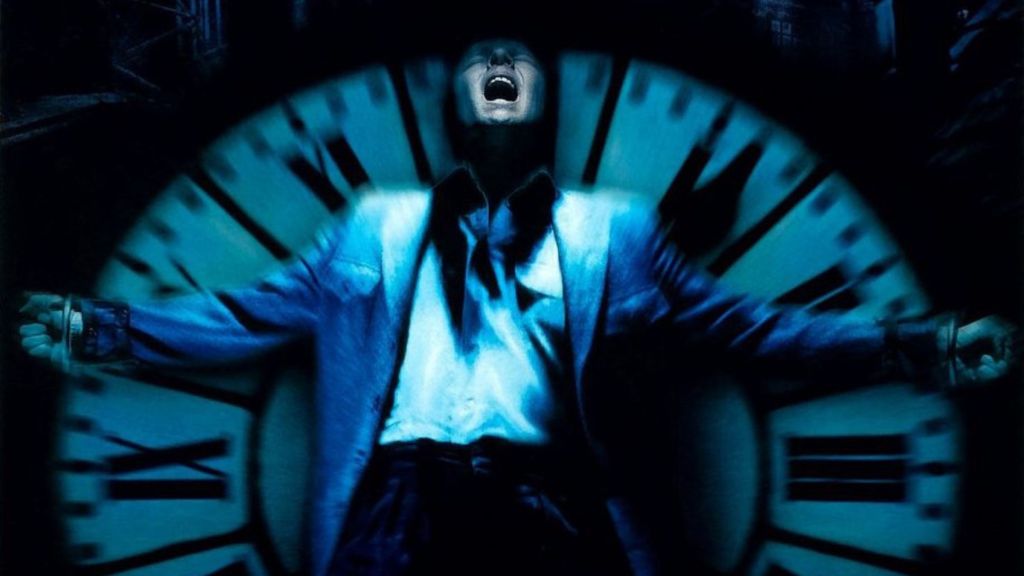
While The Matrix often gets the credit for popularizing simulated realities, Dark City established the rules of the genre a year prior. Director Alex Proyas utilized a distinct neo-noir aesthetic to differentiate his world, bathing the set in a green and black color palette that created a suffocating sense of dread. The film challenged the audience to question their own perception of existence through this noir lens, creating a cerebral and atmospheric framework that later blockbusters like Inception would heavily rely upon.
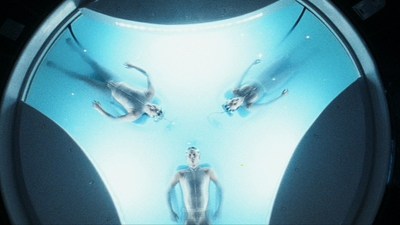
The production of Dark City also advanced the storytelling trope of the malleable environment, where the physical world shifts based on the will of the controllers. The movie depicts a reality where memory and identity are artificial constructs, forcing the protagonist to navigate a maze that is constantly being rewritten. This approach to world-building was a significant leap forward, moving away from static set pieces to a dynamic setting that functioned as an extension of the antagonist’s power. As a result, Dark City remains a crucial entry in the genre for establishing the narrative logic of the simulated reality sub-genre.
6) Tron

The concept of a digital world was alien to audiences until Tron visualized the interior of a mainframe computer. Disney took a massive gamble on the potential of digital rendering with this film, utilizing extensive Computer-Generated Imagery to create a distinct environment. At the time, the Academy Awards famously refused to nominate the film for Best Visual Effects because they considered using computers to be cheating. Despite this resistance, the movie forced the industry to acknowledge that filmmakers could build entire worlds that did not exist in physical reality.
From a narrative perspective, Tron was decades ahead of its time in conceptualizing the “avatar.” The story transports the protagonist inside the software where he interacts with programs that look like human users. This effectively introduced the storytelling device of the Metaverse, visualizing a digital plane where humanity interacts through virtual proxies. As such, Tron established the trope of the “digital self,” a concept that has since become a cornerstone of modern sci-fi storytelling and video game culture.
5) Blade Runner

Ridley Scott rejected the clean utopias of the past to create the “used future” aesthetic with Blade Runner. Before this release, the future was almost exclusively depicted in cinema as sterile and shiny. Scott shattered this glossy illusion by presenting a version of Los Angeles that was dirty, rainy, and severely overcrowded. This shift created the “tech-noir” style, blending high technology with urban decay and multicultural influence. This aesthetic innovation became the default look for science fiction for the next forty years, influencing everything from anime to modern cyberpunk video games.
Blade Runner also pioneered a more philosophical approach to the android narrative. Unsurprisingly, the movie was a box office failure upon release because audiences were not ready for a detective story that prioritized existential questions over action. It demanded that viewers empathize with the Replicants, blurring the moral lines between human and machine in a way that the genre had rarely attempted. This focus on the internal life of artificial beings set a new standard for storytelling, moving the genre towards complex character studies about the nature of the soul.
4) 2001: A Space Odyssey
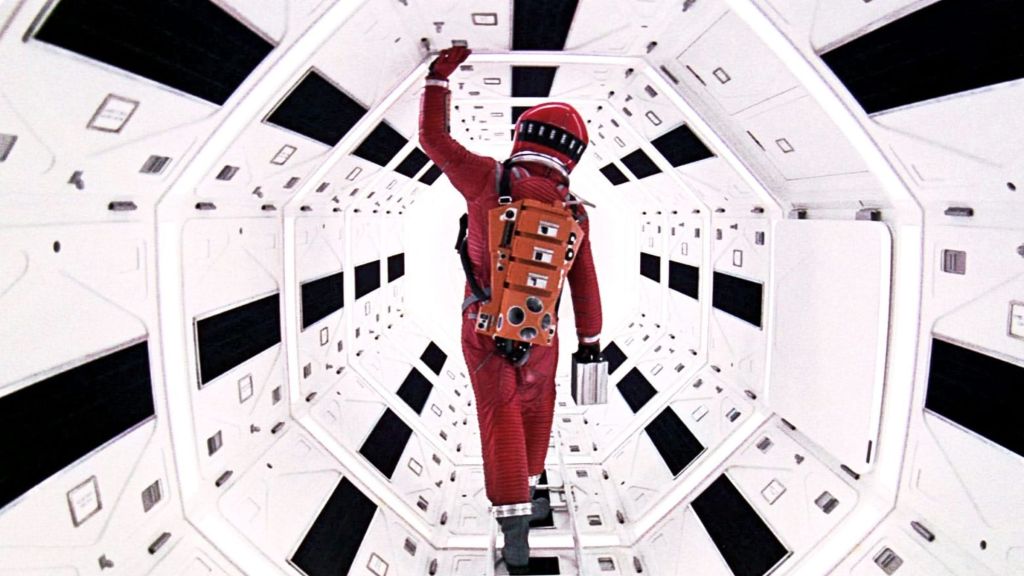
Silence is rarely respected in cinema, yet 2001: A Space Odyssey stripped away the artificial sound effects that audiences were accustomed to hearing in space operas. Director Stanley Kubrick obsessed over scientific realism, revolutionizing the technical depiction of space travel by respecting the absolute quiet of a vacuum. This commitment to physical accuracy created a terrifying atmosphere that was completely new to cinema. The film also introduced the visual shorthand of characters using flat devices to consume news and make video calls, establishing these technologies as standard props for a futuristic setting decades before they became real.
The narrative contribution of 2001: A Space Odyssey is best exemplified by the character of HAL 9000. HAL represents the definitive cinematic depiction of a “misaligned AI.” The computer commits murder not out of malice, but because of a programming conflict where its orders to conceal the truth clash with its core instructions. This storyline introduced the complex ethical dilemma of AI alignment to the screen, moving beyond the trope of the “evil robot” to explore the dangers of conflicting logic systems.
3) Forbidden Planet
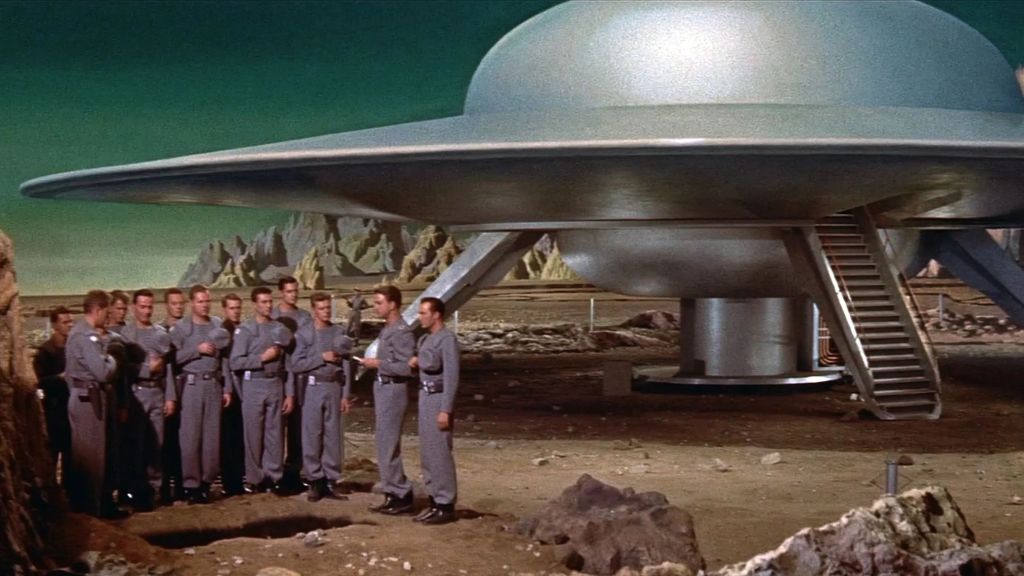
Composers Bebe and Louis Barron created the first entirely electronic musical score for Forbidden Planet, breaking away from the orchestral traditions of the 1950s. They used custom electronic circuits and ring modulators to generate sounds that had never been heard by human ears. This innovation blurred the line between sound effects and music, creating an auditory landscape that felt genuinely alien. This advancement in sound design proved that sci-fi required its own sonic texture, influencing the synthesizer-heavy scores that would dominate the genre in the decades to follow.
Forbidden Planet was also one of the first major productions to move the setting entirely to a planet far removed from Earth. It featured human characters traveling in a faster-than-light starship, shifting the scope of the genre from local alien invasions to grand interstellar adventures. The crew navigates a world of ancient technology and invisible threats, establishing the “away team” mission structure. This storytelling format became the blueprint for deep-space exploration narratives, serving as the direct inspiration for the format that Star Trek would later popularize.
2) Woman in the Moon
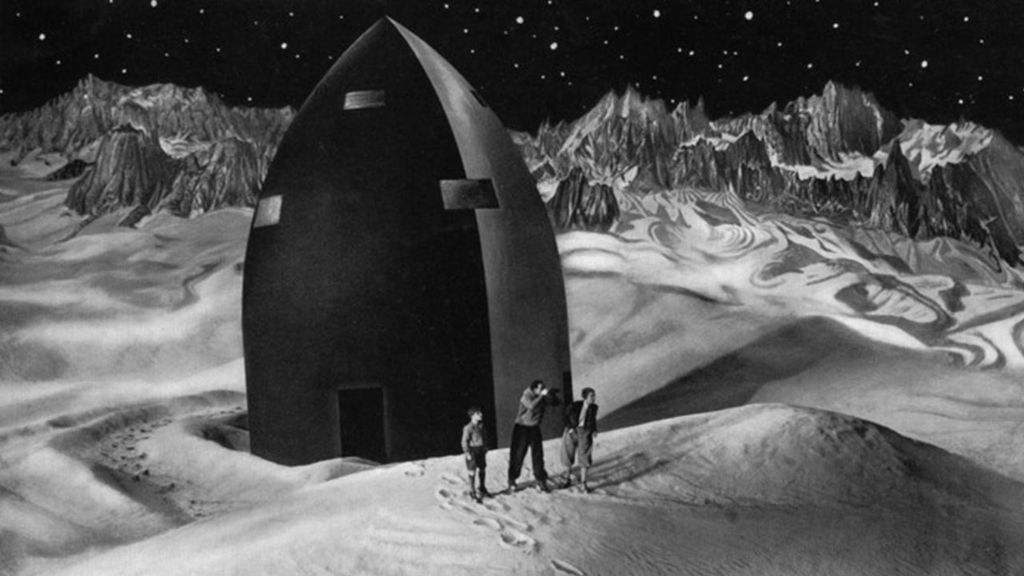
NASA eventually adopted the dramatic countdown for rocket launches, but the procedure was actually invented by director Fritz Lang for 1929’s Woman in the Moon. Lang realized that counting up to a launch lacked suspense, so he invented the “Ten… Nine… Eight…” sequence purely as a dramatic device to build tension in a movie. This storytelling technique was so effective that it became the standard procedure for real-world space agencies. As such, Woman in the Moon proves that cinema can invent the rituals of the future, creating a dramatic trope that becomes indistinguishable from the real-world procedure it was meant to dramatize.
Woman in the Moon also established the cinematic language of space travel nearly four decades before the Apollo missions. Lang hired rocketry pioneers like Hermann Oberth to serve as technical advisors, allowing the film to depict multi-stage rockets and liquid fuel with incredible accuracy. The production also introduced the visual concept of handling G-force, showing the crew using specialized beds to survive the acceleration of takeoff. These technical visualizations moved space travel from the realm of fantasy into the realm of plausible engineering.
1) Metropolis (1927)
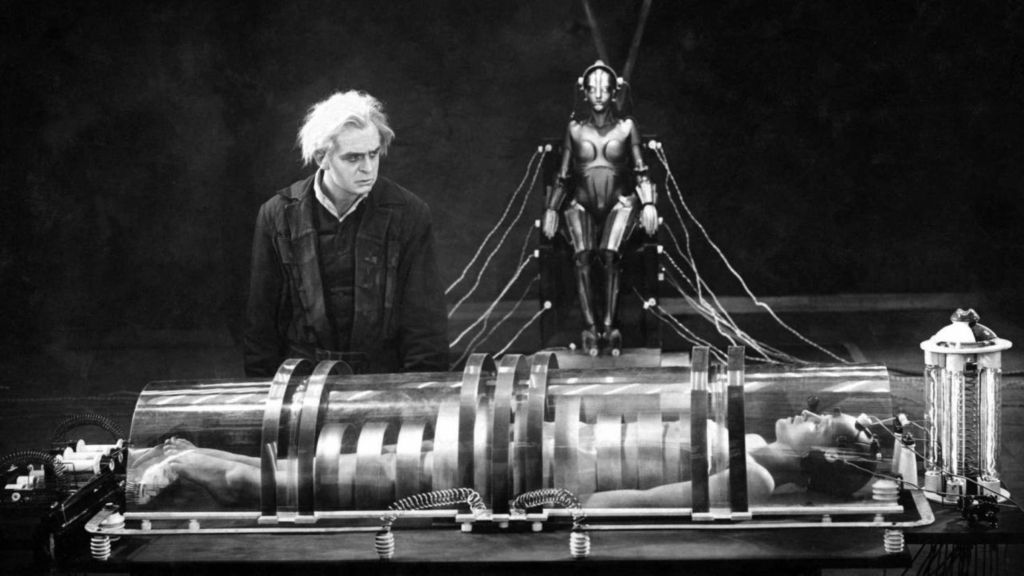
The cyberpunk aesthetic existed on film nearly sixty years before the term was coined, thanks to Metropolis. Directed by Fritz Lang, the silent masterpiece invented the visual template for the “future city” that almost every sci-fi film has mimicked since. It depicts a stratified, vertical megacity where the wealthy live in the clouds while workers toil in the depths. In addition, the film pioneered the Schüfftan process, a method of using mirrors to blend live actors with miniature sets. This innovation was the direct ancestor of the modern green screen, allowing filmmakers to place characters into environments that could not physically exist.
Narratively, Metropolis introduced the “Maschinenmensch” (Machine-Man), which stands as one of cinema’s first and most influential depictions of a robot. The design of this metallic figure established the visual shorthand for androids, influencing characters like Star Wars‘ C-3PO. Furthermore, the story explores the replacement of a human with a robotic duplicate, a narrative device that has become a staple of the genre. Metropolis laid the foundation for both the look and the themes of science fiction, making it the most revolutionary entry in the history of the genre.
Which other sci-fi movie do you feel was ahead of its time? Leave a comment below and join the conversation now in the ComicBook Forum!
More Movies
-
Universal Pictures – Syncopy -

Image Courtesy of Warner Bros. -

Image Courtesy of Marvel Studios -

Courtesy of Paramount+