The Marvel Cinematic Universe has struggled a lot since Avengers: Endgame, and the wounds have often (but not always) been self-inflicted. It’s true that Marvel’s reputation for planning out the Infinity Saga is exaggerated – The Avengers and Guardians of the Galaxy even set up a more comic-book-accurate Thanos, which Infinity War ditched. But the lack of an overall post-Phase 3 plan, coupled with putting out far too much content at speed, did real damage to the MCU’s overall damage. It also resulted in diminished quality.
Videos by ComicBook.com
We tend to forget that Marvel cancelled the old one-shots because they feared over-committing. Then, in Phase 4, the MCU wound up pushed to produce a steady stream of blockbuster movies and Disney+ TV shows, and quality dropped as a result. Even Disney now admit the brand became “diluted,” and recent releases have been of a noticeably higher-quality; there’s a reason Spider-Man: Brand New Day looks like the best MCU Spidey film to date. Still, casting a critical eye back over the past, Marvel have major lessons to learn from their worst moments since Avengers: Endgame.
7. Thor: Love & Thunder’s Screaming Goats
Let’s start with Thor: Love and Thunder‘s screaming goats, Toothgnasher and Toothgrinder. Marvel had high hopes for Love and Thunder after the success of Ragnarok, but director Taika Waititi doubled down a little too much on the humor. The screaming goats feel symptomatic of this, with the idea turned into a repeated gag that almost nobody found funny. They became a symbol of the entire film’s tonal mismatch, where ill-considered jokes undermined every attempt at drama.
There’s a key lesson here; the importance of balance. Marvel has a reputation for humor and wit, and justifiably so. But skilled writers and directors balance that against drama, creating a sense of pacing that’s much more compelling. Love and Thunder as a whole failed to achieve that, doubling down on jokes at the worst possible moments. Waititi had form; the destruction of Asgard itself was undermined in Ragnarok, after all. But Marvel need to make sure future writers and directors don’t repeat that mistake.
6. WandaVision’s Ralph Bohner Reveal
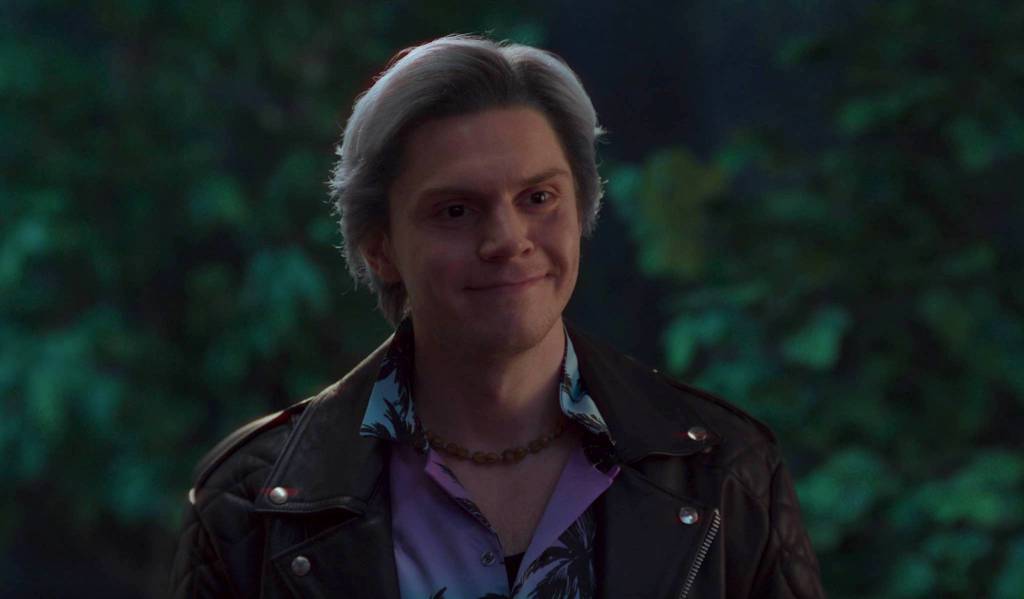
WandaVision was undoubtedly one of Marvel’s best post-Endgame reveals, but few moments have been quite so divisive as its Ralph Bohner twist. The show introduced Evan Peters as a “recast” Quicksilver, shocking viewers given Peters played the same character in Fox’s X-Men films. It felt like the earliest setup for the Multiverse Saga, which would go on to play this kind of reveal straight so many times. There was just one problem: WandaVision then undermined it. In reality, Peter was playing a random guy called Ralph Bohner who’d been brainwashed into the role by Agatha Harkness.
As good as WandaVision may be, Bohner became one of the MCU’s most controversial characters. The misdirection was a little too extreme to quite work, making the reveal utterly anticlimactic rather than emotionally fulfilling. To be fair to Marvel, the studio underestimated interest in WandaVision‘s central mysteries, so the impact was probably amplified. But the point remains: if you set something up, you have to deliver it in a satisfying way, even if the resolution does involve a twist. Here, the payoff didn’t work.
5. Scarlet Witch’s Abrupt Villain Turn in Multiverse of Madness

WandaVision‘s success caused further problems going forward, because it really does feel as though Marvel struggled to make the most of it. Elizabeth Olsen’s Scarlet Witch returned to the big screen in Doctor Strange and the Multiverse of Madness, but it quickly became clear the character had regressed. WandaVision was principally about Wanda Maximoff confronting her grief and trauma, and the resolution – in which she allowed the hex to dissipate – closed the book on that arc. She was scarred and wounded, but she’d healed.
From her very first scene in Multiverse of Madness, when Wanda reveals her villainy to Strange, the character has stepped backwards. It was clumsily done, excused away because of the Darkhold’s influence, but that in itself robbed Scarlet Witch of any sense of agency. In truth, Marvel needed to put a lot more care into Wanda Maximoff’s ongoing narrative, and should have redrafted to ensure consistency. Sometimes, a shared universe can be a problem when you don’t join the dots properly.
4. M.O.D.O.K.’s Worst Moment in Ant-Man & the Wasp: Quantumania
On the subject of character arcs, I don’t think I’ve ever been more bemused than by M.O.D.O.K.’s in Ant-Man & the Wasp: Quantumania. Beaten up by Cassie Lang, the villain was told to stop being a dick. Incredibly, this turned into a major Act 3 moment for the Mental Organism Designed Only for Killing, because he turned on Kang the Conqueror with the triumphant cry that he was not a dick. Like the screaming goats, this scene shows the tonal mismatch we saw with some of the MCU’s post-Endgame films.
Matters were made worse by the fact Quantumania was supposed to be a big deal in the Multiverse Saga. This featured Jonathan Majors’ Kang the Conqueror, after all, envisioned as the next Thanos. The film should have been full of drama and pathos, everything underlining how dangerous Kang and his allies were, but M.O.D.O.K. is utterly underwhelming. The MCU desperately needs to avoid undermining its villains like this again.
3. Kang Defeated By Ants in Quantumania
M.O.D.O.K. is only part of the problem with Quantumania, though, because the entire film is fundamentally flawed. In truth, the idea of introducing the Multiverse Saga’s big bad in an Ant-Man movie always seemed odd; as Kang himself noted, Scott Lang is no Thor, no Captain Marvel. The MCU was trying to set Kang up as a big deal, a terrifying threat to everything we know and love, the next Thanos. And then, he’s defeated by an army of ants.
The contrast is striking. Imagine the portals scene in Avengers: Endgame, but Thanos’ entire legion is destroyed simply by Ant-Man calling in an ant army, with no other heroes involved. It would be absolutely impossible to take the Mad Titan seriously ever again. Even more incredibly, there was no cost to Kang’s defeat. Ant-Man – a single Marvel superhero – took on Kang with an army of ants, and won. There was no coming back for Kang, regardless of temporal mechanics.
In the end, Marvel dropped Kang – partly because of this, partly because of Jonathan Majors’ conviction. Now, the MCU has instead brought Robert Downey Jr. back as Doctor Doom, and Marvel has been notably wary of over-showing him ahead of his main debut. We can only hope the studio has learned its lesson with the Mutant Saga, and doesn’t do anything quite so stupid again.
2. Maria Hill’s Death in Secret Invasion
Cobie Smulders’ Maria Hill is an important secondary character, one of the few established allies in Nick Fury’s world. Then, shockingly, Marvel killed Maria off in the Secret Invasion premiere. It was a “shock value” death, given Maria had seen very little character development since her debut in 2012; in functional terms, she both lived and died to have an impact on Nick Fury. This is called “fridging,” after a horrific Green Lantern tale where Kyle Rayner’s girlfriend was killed and stuffed in a fridge, purely to shock the male hero and give him trauma. Given Maria is so well-developed a character in the comics, the decision was an utter waste.
Even more shockingly, Maria’s death didn’t really have much of an impact on Nick Fury either. She only existed in Secret Invasion to die, and the story then trundled on in a singularly un-dramatic manner. It all contributed to an uncomfortable “checkbox” sense to Secret Invasion, as though the script had a list of things to do that would hopefully give it momentum, and ticked them off without ever really understanding how to do them effectively. There’s a reason Secret Invasion isn’t rated fresh on Rotten Tomatoes, and this is a big part of it.
1. Secret Invasion’s Super-Skrull Final Battle
Secret Invasion is easily one of the worst Marvel TV shows ever released. It culminates in a brutal Super-Skrull showdown between Gravik and G’iah, one that feels largely unearned given the meandering, sort-of grounded plotline that led to such a high-scale, high-stakes conflict. Looking back, this is the ultimate illustration of the power creep running throughout the Multiverse Saga; heroes and villains becoming increasingly all-powerful, until the stakes just didn’t feel at all real. The two Super-Skrulls possessed so many powers, meaning there was no strategy or emotion here; just two all-powerful beings pounding each other until one died.
It certainly doesn’t help that the scene features some of Marvel’s worst visual effects. The frenetic pace of Marvel releases meant VFX teams weren’t given the time they needed to work on things, and G’iah’s final transformations were roundly mocked online. As powerful as this Super-Skrull may be, it’s doubtful Marvel will ever do anything with her again, because the character became so unpopular and her supposed hero moment was such a letdown. Looking back, Secret Invasion really does feel like the entire MCU’s low point, and we can only hope Marvel learned a lot from this stumble.
What do you think? Leave a comment below and join the conversation now in the ComicBook Forum!