And by reboot, we mean revitalize. Thunderbolts* had an incredible amount of potential to pave the way for what the MCU could become, turning an about face on the focus placed so heavily on visual spectacle and once more shining the spotlight on incredibly flawed and real characters navigating this post-blip world, while at the same time trying to find their place in it.
Videos by ComicBook.com
The characters centered in Thunderbolts* weren’t average, street-level heroes. These were characters that had proven their worth and helped save the world at one time or another. And they were each deeply flawed, either because of what they had endured in the process of saving the world, or things that came before and after it. At its core, Thunderbolts* was a story of overcoming trauma to literally stare your demons in the face and say “enough.” It was a story about acceptance, of ourselves and others, and about how to move forward after losing everything. That was the beauty of this film; it wasn’t the grand CGI set pieces or a cast stuffed to the brim with huge names—it was the fact that for the first time in so long, a Marvel movie had a central narrative that felt incredibly relatable.
Doomsday Will Be Great, But It’s More Of The Same
There is no doubt that Avengers: Doomsday is going to be a great movie. It will be fun, it will be visually stunning, and jam-packed with the characters that we’ve come to know and love over the last nearly 20 years. It will be a total nostalgia fest while keeping us on the edge of our seats as we await faces we haven’t seen in years and bite our nails over potentially losing our favorites. All in all, it’s going to be another Endgame. And while that’s fine, and even exciting to a degree, it really is just more of the same, with the only thing setting it apart being the introduction of the X-Men into the MCU.
Doomsday, and Secret Wars after it, highlight the substance-over-style approach that Marvel has become known for in recent years, pushing for less heart in their storytelling and more visual extravagance. It’s a “bigger is better” mentality that results in films that have so little to relate to. The early days of the MCU were packed with character work as genuinely tough human experiences were worked through, trauma was processed (or not, Tony Stark), and the stories portrayed on our screens felt like real people were telling them. But those days are long gone.
Saving The World Was Secondary To Saving One Another In Thunderbolts*
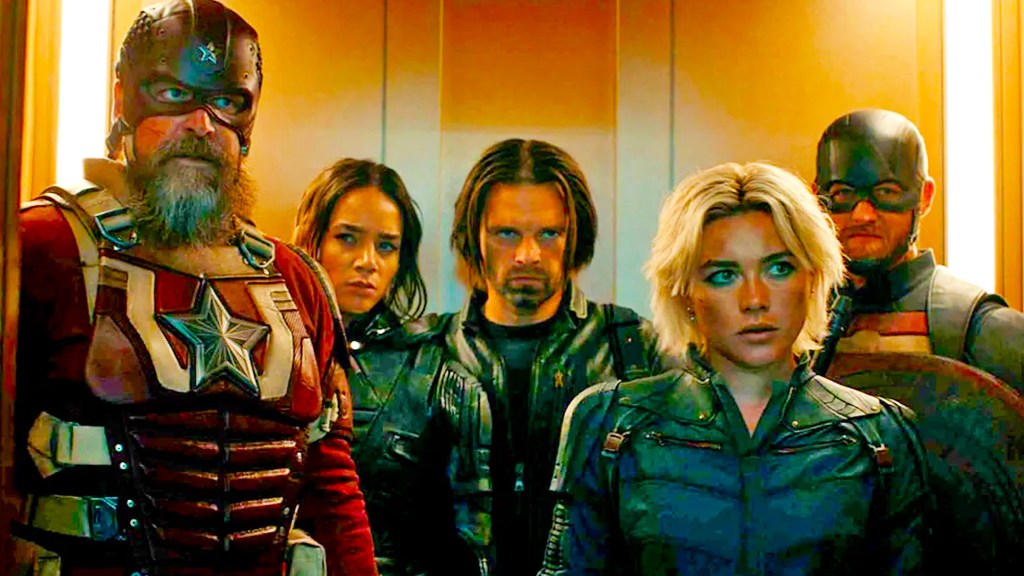
And that was the beauty of the film—a bunch of underdog, borderline losers coming together to do something that no one believed they could. We have Yelena, who struggles to cope with life after losing her sister. She drinks herself into oblivion, carries out jobs that hold no meaning for her, and has no idea what her place is in the world as she goes through the motions. There’s Alexei, who clings so tightly to the past and his glory days, desperate to recreate the feeling of not only acceptance, but belonging and celebration that he felt when at the height of his Red Guardian days. John Walker must now live with the fact that he’s no longer Captain America, suffering from PTSD after he was cast aside by the same government he sacrificed his humanity for. Bucky Barnes is now attempting politics, which feels like a desperate attempt at fitting into a life that is vastly unfamiliar to him. And then there’s Bob, who, after being experimented on, became the actual, physical embodiment of how powerful shame and trauma can be, how it can take over your life and twist you into something you no longer recognize. For a franchise that has been running nonstop since 2008, Thunderbolts* took the time to look at those living in the shadows of gods and heroes and tell their story, easily becoming the most poignant film that the MCU has ever delivered.
For the first time since Black Panther, Marvel truly said something with Thunderbolts*. There’s a vulnerability there that you aren’t going to get in the other Marvel offerings, and that very grubby and imperfect expression of vulnerability could have opened a new door for a different and incredible future for the MCU, allowing stories to be told that aren’t covered in a sheen of fan-service and nostalgia—stories that ring so much more true and relatable to the audiences viewing them.
Do you think that stories like Thunderbolts* could have been a new direction for the future of the MCU? Let us know your thoughts in the comments. And don’t forget to check out the ComicBook forum to see what other Marvel fans are saying.
Most Viewed
-
Image Courtesy of Ufotable -

Courtesy of Bones Film