
The Star Wars franchise has always extended well beyond its theatrical releases. The movies established the mythology, but the richest character work in the canon has consistently emerged from television, comics, and books, where creators have had the space to explore how specific figures arrived at their defining moments. Star Wars: The Clone Wars, which ran for seven seasons, accumulated over 130 episodes and produced story arcs that rival anything the films attempted in scale and psychological depth. For instance, the series gave Anakin Skywalker (voiced by Matt Lanter) a more textured emotional framework, built Ahsoka Tano (voiced by Ashley Eckstein) into a wholly original character who has since anchored her own live-action series, and examined the structural failures of the Jedi Order with a specificity that Star Wars: Episode III – Revenge of the Sith only gestured toward.
Videos by ComicBook.com
When Disney acquired Lucasfilm in October 2012 and subsequently cancelled The Clone Wars from Cartoon Network in March 2013, the series had an entire sixth season already in production. Rather than abandon the completed material, Lucasfilm partnered with Netflix and released thirteen finished episodes on March 7, 2014, under the subtitle “The Lost Missions.” Of the four distinct story arcs that make up “The Lost Missions,” the final one, a four-episode spiritual odyssey centered entirely on Yoda (voiced by Tom Kane), stands as the Jedi master’s most consequential story told across any format in the franchise.
Why “The Lost Missions” Is Yoda’s Best Story
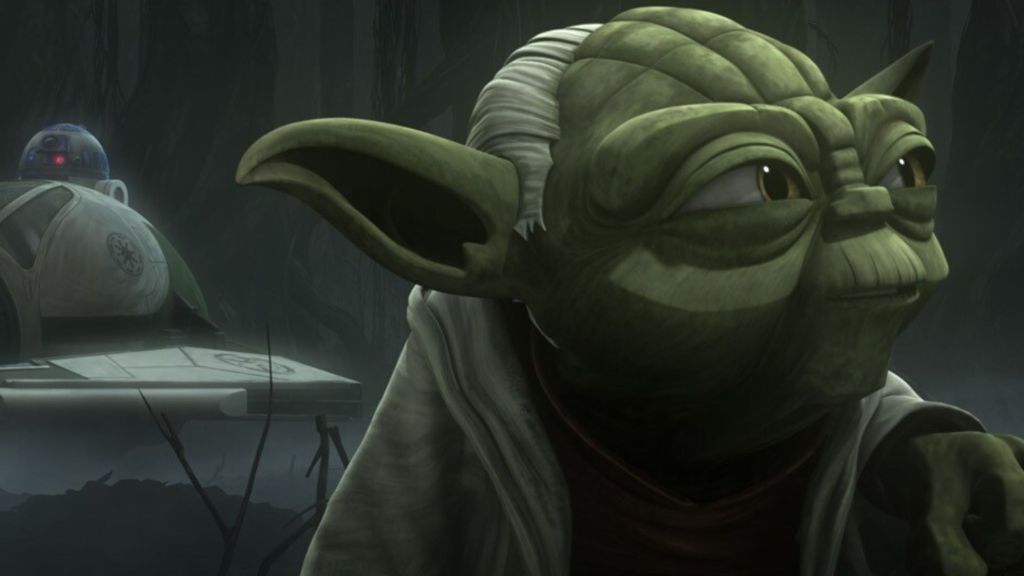
The sixth season of Star Wars: The Clone Wars explains how the Jedi Grand Master who commanded the Republic’s armies became the solitary hermit living in a Dagobah swamp by the events of Star Wars: Episode V – The Empire Strikes Back. Supervising director Dave Filoni stated that the arc was specifically designed to resolve the visible disconnect between Clone Wars Yoda and the Yoda of the original trilogy, explaining that the character “basically reaches a certain point of enlightenment” across these four episodes that no theatrical Star Wars film has ever attempted.

The story begins when Yoda, meditating alone in the Jedi Temple, hears the voice of Qui-Gon Jinn (voiced by Liam Neeson), a Jedi who died on Naboo more than a decade earlier. Every established rule of the Force holds that death dissolves individual consciousness into the broader cosmic energy field, which Yoda’s experience seems to contradict. The Jedi Council, upon learning of Yoda’s experience, treats it as potential dark side corruption rather than genuine contact from beyond death, and the series frames that institutional skepticism against Yoda’s willingness to pursue the inexplicable as the arc’s central tension. Guided by Qui-Gon’s disembodied voice, Yoda travels first to Dagobah, where a dark vision of the Sith’s future awaits him, then to the Wellspring of Life, described within the series as the origin point of midi-chlorians and living Force energy, and finally to Moraband, the ancient Sith homeworld.

At each location, the Five Force Priestesses administer trials that strip away Yoda’s institutional certainties. These tests function as psychological pressure points rather than combat challenges. On Moraband, Yoda confronts a vision of Darth Bane (voiced by Mark Hamill) and faces a fabricated reality where the Clone Wars never occurred, where dead Jedi walk the Temple halls, and where Count Dooku (voiced by Corey Burton) remained a man of principle rather than a Sith lord. Yoda’s willingness to be seduced by it, even momentarily, establishes that his attachment to the past was a genuine vulnerability, one that the films never acknowledged. The arc concludes with the Priestesses confirming that Yoda has earned the right to study under Qui-Gon Jinn to learn Force immortality, the ability to retain consciousness after physical death.
What separates this story from every other Yoda-centered narrative in the franchise is how it exposes the character’s flaws. The films, across six decades of storytelling, positioned Yoda as the moral center of the Jedi Order, the one voice that sees clearly when others are compromised. “The Lost Missions” dismantles that reading by placing him through a process of genuine uncertainty, temptation, and even defeat. Filoni described the arc’s function as establishing the two distinct phases of Yoda’s life, with the character moving from leading a failing religious institution into war toward becoming an eccentric old man who embraces pacifism and openness to the Force’s deeper mysteries. This was also the final piece of Star Wars media directly overseen by George Lucas before his full departure from the franchise, which gives these four episodes a historical significance that extends well beyond their runtime.
Star Wars: The Clone Wars: The Lost Missions is currently available to stream in its entirety on Disney+, with the Yoda arc spanning episodes 10 through 13 of Season 6.
What’s your favorite Star Wars: The Clone Wars: The Lost Missions story? Leave a comment below and join the conversation now in the ComicBook Forum!
