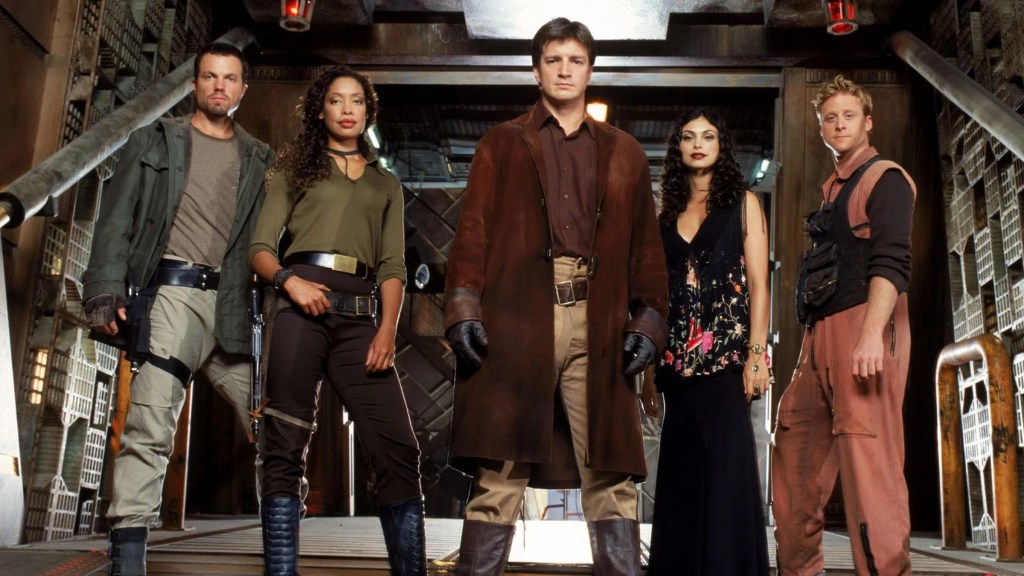
With Firefly, creator Joss Whedon merged a post-Civil War western setting with interplanetary science fiction, placing nine crew members aboard the cargo ship Serenity against the backdrop of an authoritarian government called the Alliance. The show was unprecedented at the time, which sadly meant Fox aired only 11 of the 14 produced episodes before cancelling the series over low ratings. However, the dedicated audience the show eventually built through DVD sales convinced Universal to finance a theatrical sequel, with the 2005 film Serenity giving those fans the closure they had spent years demanding. The film wraps the journey of the Serenity crew, which might become a problem as the franchise prepares its new chapter.
Videos by ComicBook.com
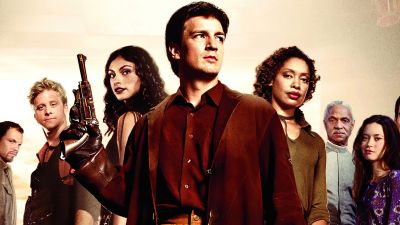
Earlier this year, Nathan Fillion announced that an animated Firefly revival is in advanced development. The animation is being handled by Oscar- and Emmy-winning studio ShadowMachine, which animated Guillermo del Toro’s Pinocchio. The series carries the working title Firefly: Still Flying, with the first episode, titled “Athenia,” already written by showrunners Tara Butters (Agent Carter) and Marc Guggenheim (Arrow). Finally, the original cast is returning to voice their characters, including Fillion, Alan Tudyk, Gina Torres, Morena Baccarin, Adam Baldwin, Jewel Staite, Sean Maher, and Summer Glau. Everything we know about Firefly: Still Flying so far makes the project sound like a fan dream come true. However, the revival is officially set between the original television run and Serenity, a placement that could harm the TV show or force major canon changes.
Firefly‘s Canon Timeline Makes Fitting a New Series a Challenge
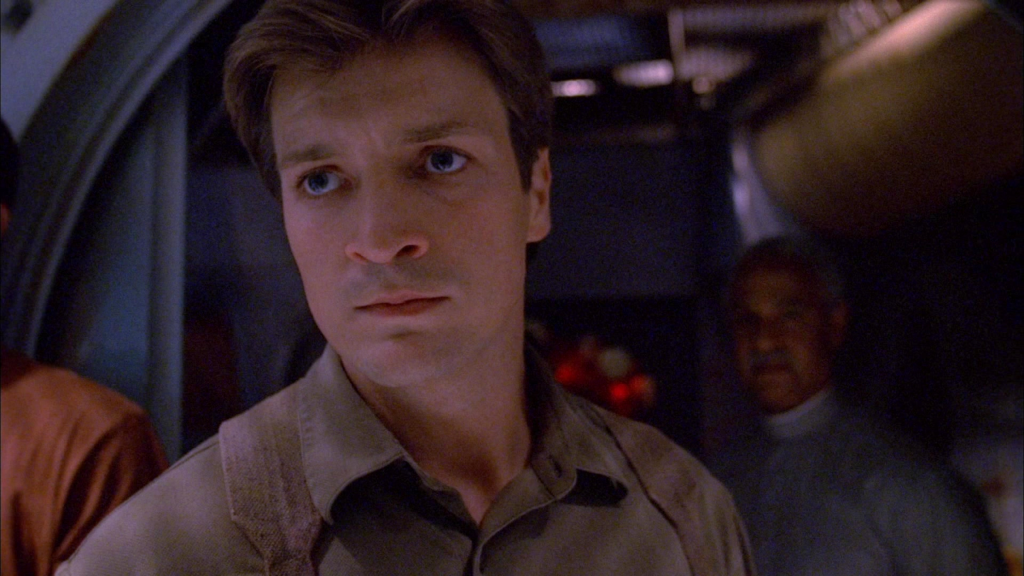
From the pilot episode of Firefly to the film’s opening scene, the in-universe timeline spans roughly eight months, and part of that space has already been occupied by the 11 episodes Fox aired in 2002. In addition, the three-issue Dark Horse Comics miniseries Those Left Behind, co-written by Whedon and published in 2005, was built specifically to fill in the months between the last events of the television series and the big-screen event movie. That bridge accounts for the departures of both Inara Serra (Baccarin) and Shepherd Book (Ron Glass) before Serenity begins. If the revival intends to respect canon, the animated series now has to tell a story in a limited time frame, with two of its central characters in the process of exiting the crew.
The good news is that Those Left Behind holds official canon status within the Firefly universe, but the franchise’s relationship with its print material has never been clean. When Boom! Studios acquired the comic license from Dark Horse in 2018 and launched an ongoing series, it failed to maintain consistency with the continuity that Dark Horse established across its earlier miniseries. The animated series is therefore entering a franchise where the definition of canon is already fractured, and that fracture is actually an asset for the creative team behind Firefly: Still Flying. A franchise that has already produced contradictory comic timelines has less standing to insist that a three-issue 2005 miniseries be treated as binding law for a new animated production. It’s likely, then, that only the original live-action series and the movie will be taken into consideration.
That doesn’t solve all problems. A single limited run of Firefly: Still Flying could resolve itself by ending before the events of Serenity, treating the movie as its dramatic horizon. However, in that case, the series would be severely damaging the possibility of a second season order. Firefly has only become more popular as years have gone by, and with animation budgets being more manageable than live-action, a renewal of Firefly: Still Flying is a realistic outcome. If that happens, the best solution might be to retcon the events of the movie.
The eight-month figure commonly cited as the gap between the television run and the film is an estimate derived from production context, fan analysis, and the narrative logic of the comics. Fan-assembled timelines even disagree with each other on the specific spacing, with some interpretations allowing only three months between the final episode and Serenity, while others stretch the gap to six. Firefly: Still Flying could push the events of Serenity even further, creating more wiggle room for the crew to share more adventures. The risk of this approach is that any deliberate adjustment to established continuity signals to the audience that the story they trusted is negotiable, which can erode confidence in future stakes. However, stretching the timeline does not erase Serenity; it simply gives Firefly: Still Flying the freedom to tell a story that can actually grow. In this case, the tradeoff seems to be worth it.
Should the creative team protect Serenity‘s canonical position and accept the timeline restrictions that come with it, or does the animated series ultimately need the freedom to push the film’s events out of the way? Leave a comment below and join the conversation now in the ComicBook Forum!
More TV Shows
-
ALF sits in front of a couch.