The 2017 adaptation of IT was a rare cinematic phenomenon. Produced on a lean $35 million budget, it shattered records with a $123.4 million domestic opening and a stunning $704 million worldwide gross, making it the highest-grossing horror film in history — a record it still holds. IT was also a critical darling, earning an 86% “Certified Fresh” rating on Rotten Tomatoes for its masterful blend of heartfelt camaraderie and atmospheric dread. Its 2019 sequel, IT: Chapter Two, failed to recapture that lightning in a bottle. Despite a much larger $79 million budget, its box office fell by over $230 million, and its critical score plummeted to a divisive 63%. Now, the prequel series IT: Welcome to Derry seeks to reignite passion for the franchise, but its premiere episode suggests it has learned the wrong lessons, risking a repeat of the sequel’s most significant mistakes.
Videos by ComicBook.com
IT: Welcome to Derry intends to expand the mythology of Pennywise, exploring the creature’s ancient bond with the town and the cycles of violence it perpetuates. In addition, by setting the narrative in the early 1960s, the series can also delve into social themes like structural racism, exploring how human evil provides the perfect environment for a supernatural predator to thrive. Finally, the first episode introduces a new group of children, a nascent Loser’s Club, each carrying their own private traumas that make them vulnerable to the monster lurking in the sewers. These elements provide a perfect framework for the kind of character-driven, psychological horror that made the 2017 film so effective. Despite this potential, the execution in the first episode immediately pivots towards the less successful formula of IT: Chapter Two.
Warning: Spoilers below for IT: Welcome to Derry, Episode 1
Why Chapter Two Faltered Where IT Triumphed
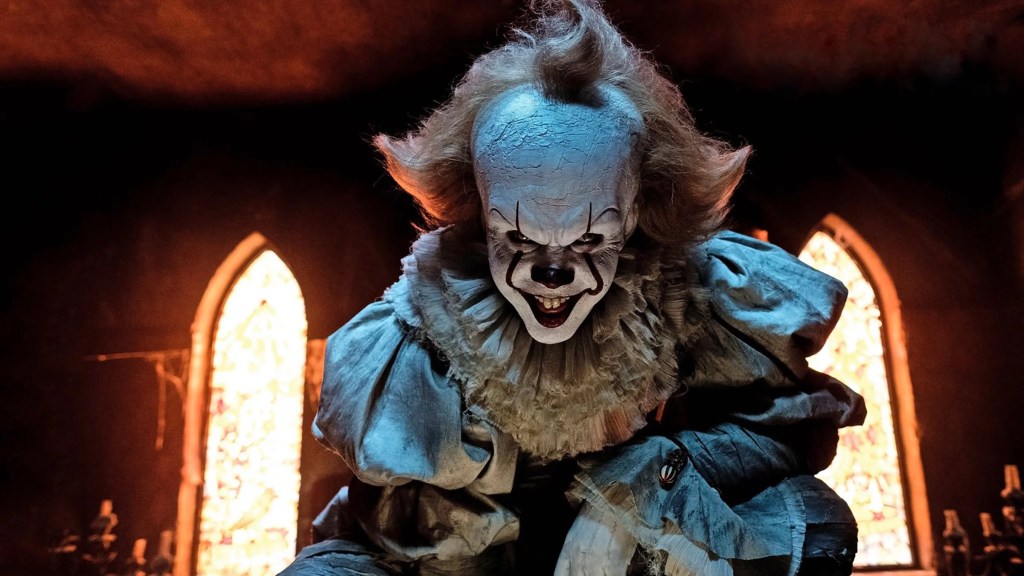
The 23-point drop in the Rotten Tomatoes score between the two films reflects a fundamental shift in their approach to horror. IT earned its universal acclaim by understanding that Pennywise was most terrifying when the horror was intimate and personal. Its most effective scares were born from the specific psychologies of its characters: the distorted Judith painting preying on the fears of Stan Uris (Wyatt Oleff), the grotesque leper embodying the hypochondria of Eddie Kaspbrak (Jack Dylan Grazer), and the haunting vision of Georgie (Jackson Robert Scott) exploiting the guilt of Bill Denbrough (Jaeden Martell). This patient approach is what resonated with viewers, earning the film a strong audience score and praise for its genuine tension.
In contrast, IT: Chapter Two was widely criticized for its overindulgence. Many reviews pointed to its bloated 2-hour and 49-minute runtime and a repetitive structure that sent each adult Loser on a solo quest, fracturing the cast chemistry that was central to the first film’s success. More importantly, the sequel abandoned psychological horror in favor of loud spectacle. Critics and audiences alike complained about the over-reliance on cartoonish CGI, citing sequences like the attack by the giant Paul Bunyan statue as moments that were spectacular but not scary. This shift to bombastic set pieces was a primary cause for its critical downfall and reduced box office.
Welcome to Derry Starts With a Bang (For Better or Worse)

The first episode of IT: Welcome to Derry opens with a sequence that demonstrates a clear commitment to the sequel’s flawed philosophy. In it, we follow a young boy named Matty (Miles Ekhardt) as he flees his abusive father on a snowy night, a black eye serving as proof of the violence he endures at home. This setup immediately connects to the source material’s core theme, as Pennywise is often a manifestation of the human evil festering within Derry.
Matty finds what appears to be a safe haven when a kind family offers him a ride. The tone shifts abruptly as the family begins to act strangely, and the scene quickly descends into a chaotic bloodbath. A winged, computer-generated baby-like creature erupts in a gory display, rupturing the entrails of the pregnant woman who so kindly picked up Matty on the side of the road.

This reliance on a flashy CGI is a direct echo of Chapter Two‘s most criticized element. While Matty’s death is supposed to mirror Georgie’s, kicking off the spinoff series plot, it pales in comparison. Matty’s ordeal goes on for too long, and instead of a feeling of increasing creepiness, as we had during the unforgettable sewer conversation between Georgie and Pennywise (Bill Skarsgård), we get a generic horror scene. The same winged creature also returns for the episode’s bloody finale of IT: Welcome to Derry, tormenting the new Loser’s Club. While that scene is more effective, especially due to the unexpected turn in the narrative, it’s still a moment that just can’t equal the best scares of the first movie.
These two set pieces are not inherently bad, but their effectiveness is undercut by the show’s decision to rush toward a big monster moment without first building atmospheric dread. The horror feels unearned because it sidesteps the creeping fear that made Pennywise such an iconic villain in the first film, opting for a visceral shock instead of a psychological chill. A single episode is certainly not enough to pass final judgment on an entire series, and IT: Welcome to Derry has plenty of time to find its footing. However, its decision to begin with a loud bang instead of tapping into the quiet dread that made the first film a masterpiece is not a promising sign.
New episodes of IT: Welcome to Derry premiere on HBO every Sunday.
What did you think of the first episode of IT: Welcome to Derry? Leave a comment below and join the conversation now in the ComicBook Forum!
Most Viewed
-

Image courtesy of Wizards of the Coast -

Courtesy of Bones Film