Warning: This article contains major SPOILERS for Spider-Noir. Prime’s new Spider-Man show, Spider-Noir, is the very definition of a surprise. Led with disarming charm – and bags of his personal brand of unhinged energy – by Nicolas Cage’s Ben Reilly, it’s a noir-drenched oddity that completely reinvents the Spider-Man formula in a refreshing and simply very entertaining way. It also packs quite a lot into its 8-episode run, including power struggles, a surprise commentary on the abuse of veterans, and some good, old-fashioned superhero action. Shockingly, it also has quite a long list of deaths, which helps mark it as consciously very separate from the world built around Tom Holland’s Peter Parker.
Videos by ComicBook.com
This is a swaggering, rewarding, grown-up show that follows Cage’s aging private detective and retired superhero, who is disaffected with life after the death of his great love, Ruby. Drawn into the violent world of gangster Silvermane (Brendan Gleeson) by alluring club singer Cat Hardy (Li Jun Li), Reilly finds himself picking up the pieces from the German military experiments that led to his own superhero transformation 15 years previously. He discovers that several other veterans – who he rescued from the German lab – have manifested powers and are being recruited by Silvermane to cement his power. Seemingly, only the help of Dr Faber, a geneticist who worked on each of the supervillains, can turn things around. So what happens, and what does it all mean?
What Happens in Spider-Noir’s Ending?
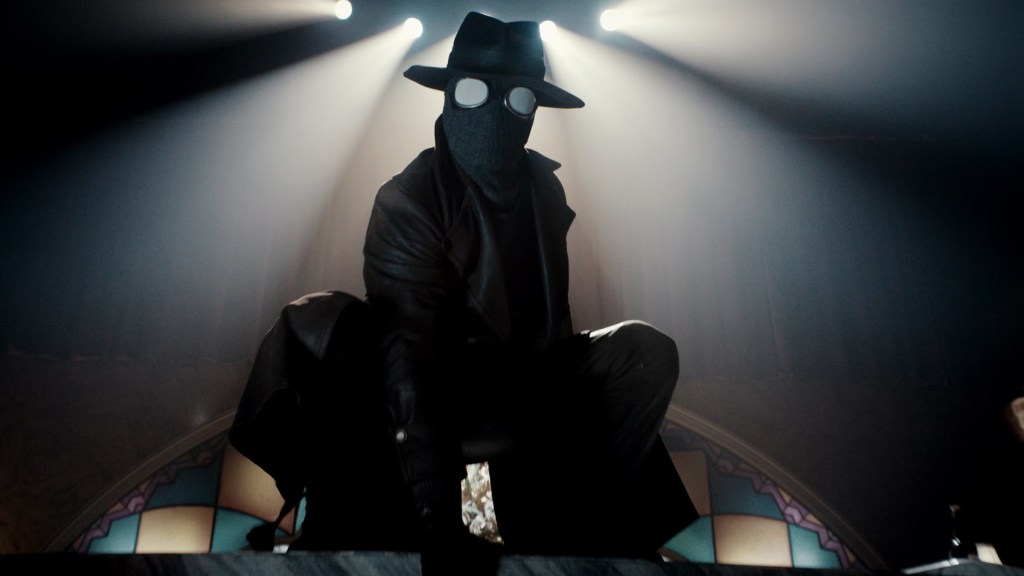
The Spider-Noir plot comes to a head when Ben retrieves a vial of antidote from the nefarious Dr Faber’s lab (which she had previously synthesized from his genetic tissue and cured her son) and sets out to cure not only himself but the three members of the Silvermane gang. That mission is designed not only to thwart Silvermane’s war on Mayor Morris but also to prevent the war veterans from dying of their advancing mutations. Ben succeeds in curing Lonnie Lincoln when Robbie Robertson (Lamorne Morris) stabs the syringe into his eyeball, and he bows out of the fight, grateful for his reprieve. Sadly, several of the syringes are broken before Ben is taken to meet Silvermane, who wishes to meet The Spider, and after Robbie is forced to pretend to be masked hero, everything comes to a head.
After Dirk Leydon turns on Silvermane, the gangster is confronted and defeated by Cat Hardy after threatening to kill her to test whether Ben is The Spider. Leydon and Ben take their battle to the streets, with Flint Marko siding with Ben, only to be catastrophically injured by Leydon. In front of a gathered crowd, Ben summons the strength to throw Leydon into the path of a train and sacrifices his own chance of being cured to give a dying Marko the last antidote. He is saved, and a small time jump reveals Cat and Flint are reunited and have rekindled their romance, while Ben has reopened his detective agency, Robbie runs a newspaper called the Harlem Herald (in competition with the Daily Bugle), and Ben is once more taking clients on.
Why Ben Really Gives Up The Antidote at the End of Spider-Noir
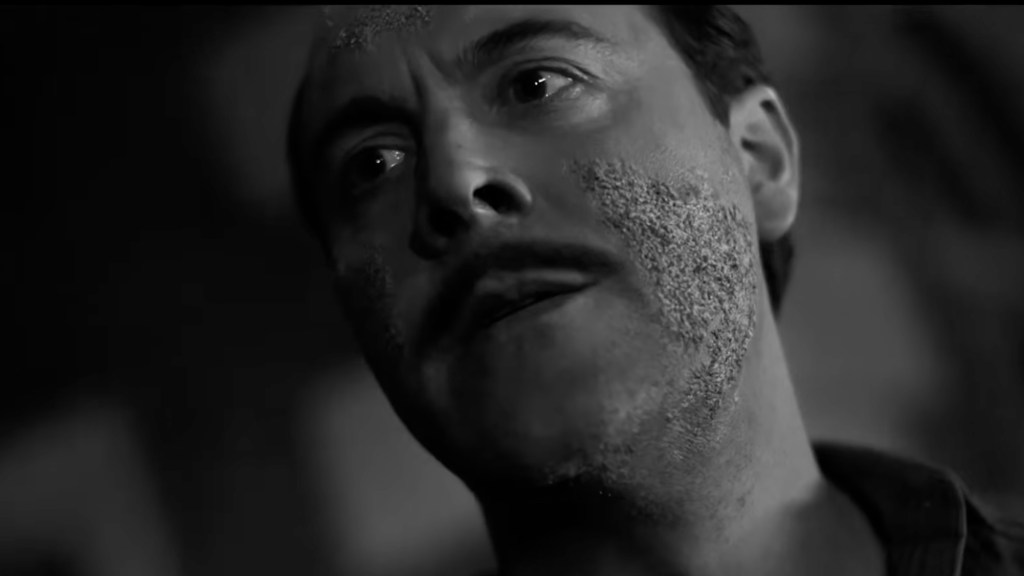
There’s a running theme throughout Spider-Noir where Ben is challenged on why he chose to take up his mask as The Spider. His response oscillates between being motivated by money (which is, he claims, why he takes on both Cat Hardy and Silvermane as clients), and because of the pure thrill of it. He vehemently rejects the idea that he is actually altruistic, to paint an image of himself as hardened, self-interested, and thus not vulnerable. It’s partly self-preservation, after the death of Ruby, but Ben is also genuinely exhausted at the idea of his responsibility as a hero, because he can’t escape it. Even when he’s initially presented with the antidote, he hesitates to take it, which Robbie picks up on quickly.
Ultimately, when Ben chooses to altruistically give up the last dose of the antidote to save Flint Marko, he is settling an internal conflict over his duty. The purely self-interested choice would have been to allow Marko to die, especially as they were rivals for Cat’s affection, but in choosing the right path, Ben finally accepts the “with great power comes great responsibility” mantra that’s been haunting him.
Who Dies in Spider-Noir?
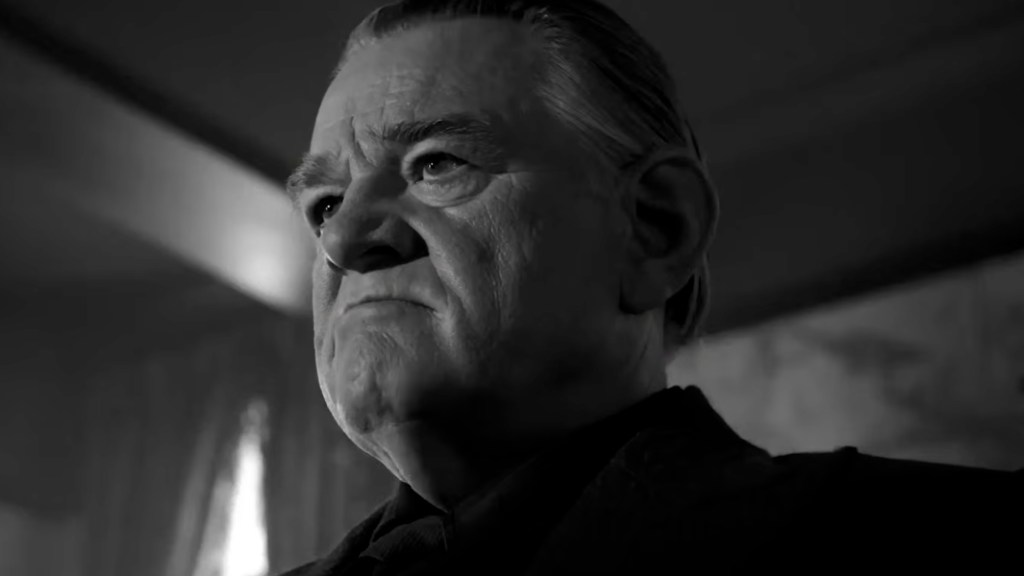
A surprising number of people, it turns out. The series is driven by the death of veteran Addison, another of Dr Faber’s patients who was experimented on by the Germans as a prisoner of war. His murder, by private detective Donegal (Cameon Britton) kicks off a series of deaths, and alongside lots of henchmen and most of Dr Faber’s “patients”, these are all the major ones:
- Donegal – Killed by Silvermane after murdering Addison (in an attempt to torture information out of him)
- Winston – Silvermane’s second in command (played by Lukas Haas), who is framed by Ben Reilly and Cat Hardy as the rat in his organization when Silvermane gets close to uncovering it’s Cat who betrayed him.
- Dr Faber & Her Son, Ogden – It’s revealed that Dr Faber’s son was one of the POWs who was experimented on, and his mutation caused rapid aging. When Dr Faber steals Ben’s genetic material to cure her son, he refuses to kill Ben and attempts to set him free, but both are killed when Silvermane arrives at the lab after Robbie Robertson publishes the story of her experiments in the paper.
- Silvermane – Brendan Gleeson’s gangster is shot and killed by Cat Hardy.
- Dirk Leydon AKA Megawatt – the aspiring thespian villain is killed after a heavy fight with Ben Reilly, thrown into the path of an oncoming train.
What Could Happen in Spider-Noir’s Future
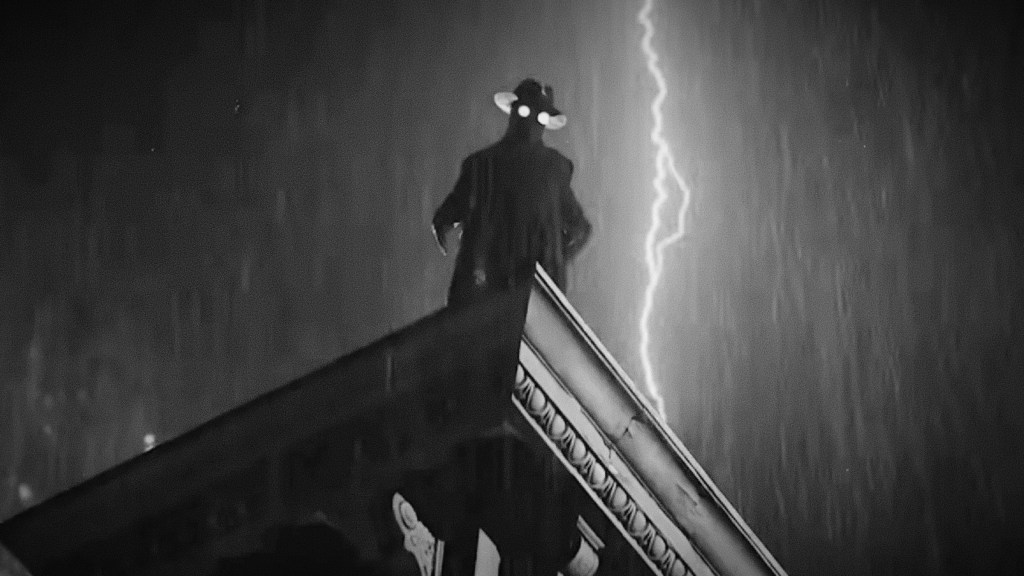
Ultimately, Spider-Noir wraps up quite tightly, in a way that would allow Amazon MGM and Sony to keep it as a one-and-done series, but there are some plot threads that could inform a second season. Obviously, Ben’s continued work as a private detective (along with new partner Janet) would be the foundation and could draw him into the worlds of other criminals, but the bigger question is whether there are still other supers who are unaccounted for. We know that most of the veterans apparently didn’t survive their mutations, but Ben’s resilience does leave open the possibility that others made it. Robbie specifically calls out that some soldiers were experimented on using the DNA of snakes and scorpions, which could set up the appearance of Scorpion and The Rattler. It would take some creative writing, but it wouldn’t be out of the question.
Then there’s the question of why Ben survives the experiments without the same level of deterioration as his fellow veterans. That could be explored – though it risks wading too far into mutant territory – and his association with Man-Spider could even be explored. Who is to say his mutation couldn’t be forced out, just as Tom Holland’s Peter Parker will face in Brand New Day? There are lots of Spider-Man villains who could enter the power vacuum left by Silvermane’s death, and hopefully, Sony will greenlight a second season to deliver more of this wild little gem of a show.
What do you think? Leave a comment below and join the conversation now in the ComicBook Forum!
More TV Shows
-

Courtesy of South Park Studios -
Image Courtesy of The CW