It would be quite simple to dismiss Amazon and MGM+’s new Spider-Man series, Spider-Noir, as a gimmick. It is, after all, a noir-soaked pastiche, starring Nicolas Cage as an aging (retired) superhero in a 1930s universe, that can be watched either in black and white or in color, with bizarro new takes on iconic characters like Sandman, Tombstone, and gangster Silvermane. But Spider-Noir is a lot more than its self-conscious quirkiness, and should be viewed as a roadmap for Sony maybe making live-action Spider-Verse projects that actually include a Spider-Man. Instead of breaking their backs to avoid doing so.
Videos by ComicBook.com
Spider-Noir is, by its own insistence, categorically not a spinoff of Sony’s exceptional Spider-Verse animated movies, despite Cage playing a very similar character, based on the same Marvel comics character, with largely the same costume, accent, gimmick, and tone. As the very first words of the series establish, the question of which universe the series is set in is complex for more casual audience members, and the only answer that matters is it’s not that one. Presumably for rights reasons, but who cares. If it walks like a duck, and quacks like a duck, and looks like a duck, it might as well be a duck. And this duck is a surprisingly good, very clever addition to the Spidey-pond.
Rating: 4 out of 5
| PROS | CONS |
|---|---|
| The cast, from Nic Cage down, are all excellent | One subplot feels slightly unearned |
| Great action sequences and a captivating story (even when it’s a little obvious) | Could have been 10% stranger |
| Excellent noir references and aesthetic | |
| The body horror inspired origin story is a masterpiece |
Nic Cage is a Strange Joy as Ben Reilly
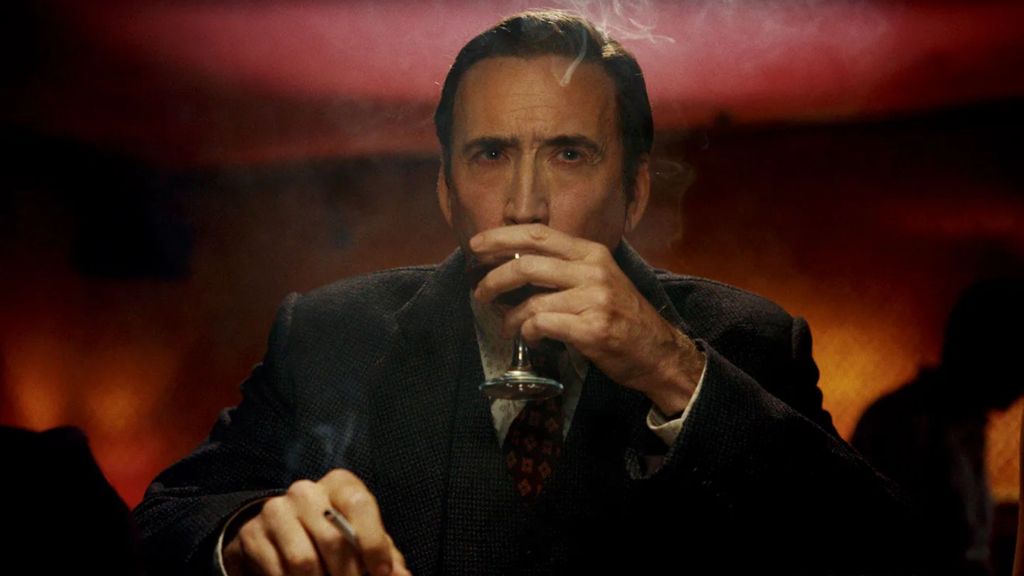
Cage is excellent: as he qualifies early, this is a different Spider to the Spider-Verse variant we first met – less of a caricature, and somewhat inevitably less funny because Cage is playing him slightly more straight. He’s less cookie, which you’d think would make the casting less logical, but, actually, Cage fits well with the idea of the flawed noir hero in the Philip Marlowe tradition. And this is still an exceptionally well-observed performance, fully aware of the noir history it draws from. There is natural humor, because hard-boiled detectives dripped with sarcasm and snark, and the eternal exasperation Reilly wears as part of his PI costume actually fits very well with what is otherwise a well-trodden trope of retired superheroes. He also brings just enough odd energy, and there are times where his a little more self-consciously off the chain (like his disguise as a handy man).
I do somewhat wish both Cage and the whole show had been given a little more license to go off the rails more often, though. When he does – particularly during one excellent drunk fighting sequence and the body horror-inspired origin episode – it’s ridiculously good fun. His version of Spider-Man Noir in Into The Spider-Verse was exceptionally funny, and even without the fish out of water context that made that so funny, he could have dialled things up a little closer. That said, you have to give him props for the Humphrey Bogart, Edward G Robinson and James Cagney impression that does manage to avoid feeling like parody. Perhaps I just wanted my cake and to eat it?
Again, this is not your conventional Spider-Man adaptation, to its eternal credit. There are some major swerves: Cage is Ben Reilly as opposed to Peter Parker, and goes by The Spider (which admittedly feels more 1930s appropriate) rather than Spider-Man. But at the same time, you get a healthy flow of fan service moments. The famous catchphrase. The villains. The easy swinging sequences through New York. It’s just that this is a different universe. And it’s pretty dark with suicide references, murder, torture, extortion and a Spider-Man variant who is willing both to kill and to threaten to kill. It’s great fun actually, and it suits as a strong testament to the potential there is to make Spider-Man projects that don’t have to be aimed at the lucrative family market.
What Worked Best in Spider-Noir
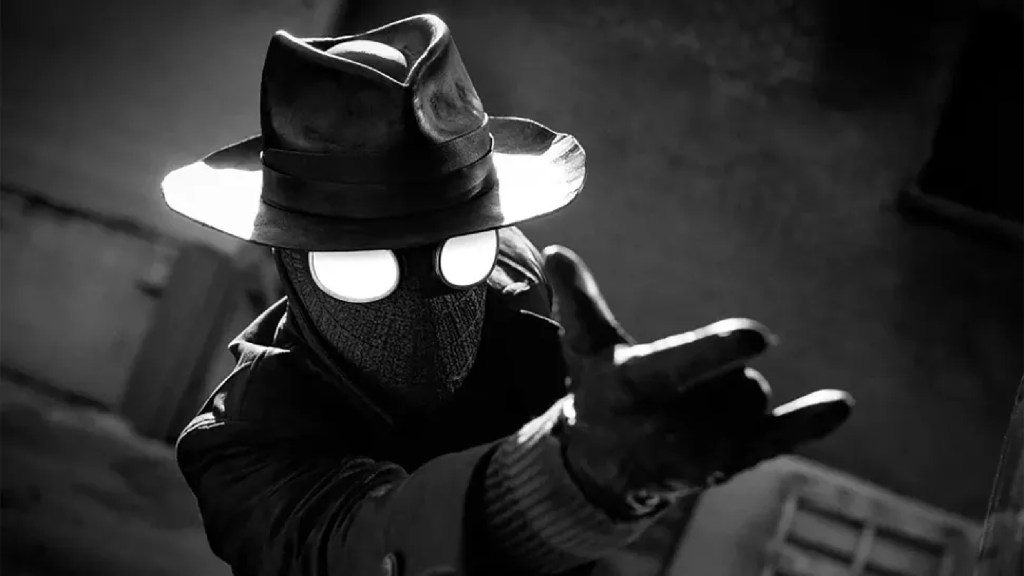
The reference points are close to immaculate, as I’ve already said, but that goes beyond character details or outright references to old noir movies. There’s also some incredibly well-observed cinematography. You can watch the show quite easily as a superhero show, but the shots will delight anyone who comes for the noir. It’s like a reward for anyone who likes that sort of thing (I do), and as Nicolas Cage said pre-release, it genuinely does feel like an open invitation to go back and enjoy the movies that inspired it. Start with The Maltese Falcon.
Part of the benefit of hiring Cage is how well he sells the idea of a sort of slightly past his best do-gooder. That’s not at all a comment on his age of physical appearance: he’s always had that sort of sad sack look to him, but here he fits the image of a retired protector who drinks a little too much, sleeps too little, and has a few cobwebs. That means the action is appropriately less glossy and choreographed, and the hand-to-hand combat feels more heavyweight than the MCU’s action. And while this is a tale of private dicks, molls, and hoodlums, it’s also a superhero show, and the action really delivers when Ben is dragged out of retirement against his wishes when a plot tying several comics villains together, including mob boss Silvermane.
The supporting cast is very good, as you’d expect from who is involved. Brendan Gleeson’s newly-Irish Silvermane (he’s Italian in the comics) is a colossus, and doesn’t feel entirely unlike his menacing Mad-Eye Moody from the Harry Potter movies. With a more vicious edge. The Irish lilt actually makes him more perversely intimidating, because there’s warmth to his voice that stands starkly at odds with his cold heart. Jack Huston looks like he was pulled out of the 1930s already, though his voice here is more stereotypical goon over silver screen icon, but he’s a great villain: almost channelling Orson Welles for his complicated take on Flint Marko.
Lamorne Morris’s Robbie Robertson belongs to the grand old tradition of journalists for justice in golden age comics. He’s got a little more swagger, and dresses incredibly well (the full effect can only be enjoyed in the color version), but he feels like the most modern of the characters at times. Abraham Popoola’s Tombstone is very different from the comics version, but he plays him with the same tragic depth as Huston brings, and both are hugely watchable. Li Jun Li simmers as the initially ice-cool femme fatale Cat Hardy who is at the center of things as they so often are in this genre, and her singing is captivating. Cage’s less so, though his song about cheese cake could be a slow-burn banger.
What Doesn’t Work So Well in Spider-Noir
I really wish this wasn’t an all-at-once release. Weirdly the first episode ends with a trailer for the rest of the season and each episode opens with a recap, neither of which actually make any sense for the release method. But shows like this deserve to be given space to breathe. The Penguin was, and I really wish Wonder Man had, and it feels like Spider-Noir has enough about it to have carried the audience through weekly releases. I’m not going to mark the quality down for that, obviously, because release methods have their own politics, but if you can resist the urge to hurtle through it all at once, it’ll play better.
Some of the story beats are a little obvious too, given how signposted they are. And I had some issues with the blossoming romance that sort of just jumps out of nowhere. Perhaps it’s a comment on how noir PIs seem illogically irresistible to every femme fatale they encounter, but it still doesn’t work. I think that may come down to the occasional issues in tone where the very well-observed noir references part and you see a little too much modern production gloss. If everything had just been made a touch more grubby, the seams won’t have shown as much.
And as a final point, the question of how to watch it. Should you choose the black and white version or the colorised one? Well, naturally, I tested both, and I have to say the black and white works better for the aesthetic and because it fits the tone and the pastiche element. The whole series is shot in a way that favours extremes of light (if you’re an art nerd, think Caravaggio), and the lighting works better in monochrome. At the same time, some of the production elements and the costumes – particularly Lamorne Morris’ illogically lavish outfits – deserve to be enjoyed in full color. So I don’t know, maybe just watch it twice?
All 8 episodes of Spider-Noir debut on MGM+ on May 25, and on Prime on May 27. What do you think? Leave a comment below and join the conversation now in the ComicBook Forum!
More TV Shows
-

Courtesy of South Park Studios / Shueisha