Star Trek creator Gene Roddenberry was notorious for implementing a set of “rules” on the Trek franchise. Banning many genre staples outright, demands for his utopian future included no rocket ships with flaming exhaust trails or Buck Rogers-style ray guns; no religion or superstition; no petty arguments among crew members. Roddenberry even had a list of mandates just for starship design. Writers did their best to adhere to these rules throughout The Original Series and The Next Generation.
Videos by ComicBook.com
However, when it came time to make Deep Space Nine in the early 90’s, the Trek creators were feeling restricted. As executive producer Rick Berman later explained in the Star Trek: Deep Space Nine Companion, Roddenberry’s “major rule” outlawed any substantial conflict among 24th-century human characters, which put a limitation on creating interesting narratives. Thankfully, the Deep Space Nine team bent the rules a bit, centering conflicts between Starfleet and non-Starfleet humans, as well as between 24th-century humans and their environment.
Why Deep Space Nine Broke Roddenberry’s No-Human Conflict-Rule

According to Berman, the DS9 creators were banging their heads against the wall, struggling to conjure anything exciting while relying solely on outside villains, explaining, “Gene’s major rule was to avoid conflict among his twenty-fourth-century human characters… But we needed this conflict for decent drama.” Rather than abandoning Roddenberry’s philosophy completely, however, the producers simply restructured the edict to mean no conflict among Starfleet humans. By setting the series aboard a former Cardassian mining station orbiting Bajor, they created a new atmosphere where Starfleet humans were no longer surrounded solely by like-minded officers. Unlike the Enterprise, Deep Space 9 was politically unstable, divided, and volatile.
In a station populated with civilians and non-Starfleet authorities, Commander Benjamin Sisko represented the Federation, but some of the tension comes from his interactions with humans who aren’t drinking the Starfleet Kool-Aid. Sisko even had some tension with his own son, Jake, over Jake’s decision to become a journalist rather than join Starfleet (as explored in episodes like “The Visitor” and “Nor the Battle to the Strong”). Other Federation civilians introduced even more friction. Kasidy Yates, for example, was an independent freighter captain, operating outside Starfleet protocol, and her relationship with Sisko created conflict, particularly regarding her involvement with the Maquis.
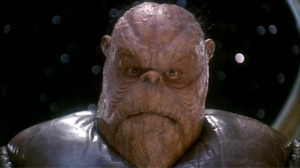
DS9 Would Be a Different Show if Producers Had Stuck to Roddenberry’s Doctrine
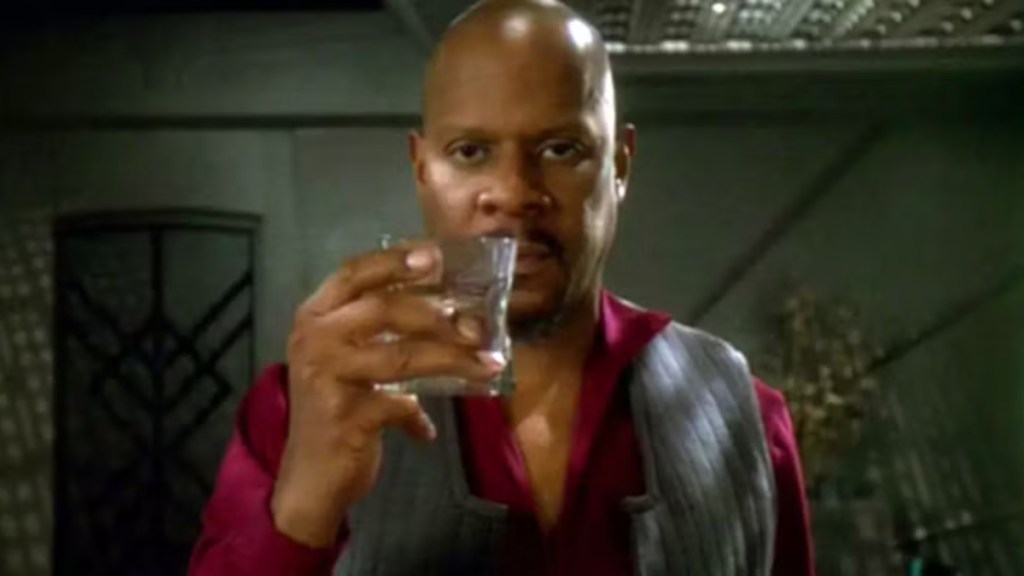
Though the rule was broken, there is also plenty of standard human vs. non-human conflict in DS9. Producer Michael Piller described their ultimate goal, saying “We really set out to create conflict on every level of this show … conflict between the Federation and Bajor; conflict between Starfleet and the environment … conflict with the religious aspects of the Bajoran people.” With characters like Quark, Kira, and Odo, this “inhospitable” environment became a source of conflict itself. Religion, another Roddenberry no-no, also reared its head, though in a way it actually reinforced the Federation’s (and therefore Roddenberry’s) position on the issue.
The station reached a crossroads with the discovery of the Bajoran wormhole, and the show introduced the Dominion to further drive up the stakes. Unlike earlier panet-of-the-week style Trek, the layered consequences of DS9’s serialized storytelling accumulated over time. It’s only because of this mounting pressure that we got masterpiece episodes like “In the Pale Moonlight,” where Sisko manipulates events to bring the Romulans into the Dominion War, going deeper in confronting his own moral compromises than any Trek captain before him. Without DS9 thinking outside the Roddenberry box, we would never have reached such a key pressure point.
Yet while the show is widely known as a fan-favorite today, Berman recalled resistance from viewers who felt it strayed too far from the franchise they knew and loved. “People talked about the show being ‘edgier,’ a word I hate,” Berman said. “They didn’t see that group of loving family members that existed on the first two Star Trek shows.” Over time, audiences have come to appreciate the bold storytelling of DS9, which actually looks more like the prestige sci-fi shows of today than TOS or TNG. Though, despite being a bit of a rebel, Deep Space Nine still retains the spirit of Roddenberry’s optimism.
Is Deep Space Nine the best-written Star Trek series? Leave a comment below and join the conversation now in the ComicBook Forum!
Most Viewed
-

Courtesy of Sony Pictures Animation / McDonald's -

Courtesy of Sony Pictures Animation / McDonalds -

Image Courtesy of HIDIVE