When Star Trek: Voyager hit our screens in 1995, it had a lot to live up to. By this point Star Trek had truly established itself in the public consciousness, fans had come to love quality spin-off The Next Generation, which had revived the franchise for a whole new audience and Deep Space Nine, widely regarded as one of the most well written and impactful Star Trek shows was still on the air when Voyager began, meaning it was being broadcast alongside a direct, highly successful comparison. Luckily, execs saw the need to bring something new if Voyager was to cement itself in Star Trek history, and the show was imbued with one of the franchise’s most tantalizing premises: how would a Starfleet crew fare stranded 70,000 light-years from home, forced to survive without Federation support and cut off from everyone and everything they knew?
Videos by ComicBook.com
Combined with Starfleet’s first female Captain portrayed by the formidable Kate Mulgrew, it was a promising idea. Yet much to the disappointment of many, for much of its run, Voyager entirely failed to deliver on its promise. Rarely did it seem to embrace its full potential and explore the true consequences of finding yourself stranded on the other side of the galaxy. Any damage to the ship seemed relatively easily repaired despite being in the middle of nowhere; resources were replenished seemingly fairly painlessly, and despite a crisis or two, these were often resolved within a single episode and not exactly unusual for the franchise. In short, there was little that smacked of the sense of isolation and desperation that viewers might have been expecting, and episodes could go by with barely a mention of the crew’s precarious situation – with one major exception.
“Year of Hell,” Voyager’s two-part epic from Season 4, still shines as one of the show’s boldest and darkest storylines — but why does this particular plotline continue to capture viewers’ imagination all these years later?
A Glimpse of the Voyager We Rarely Saw

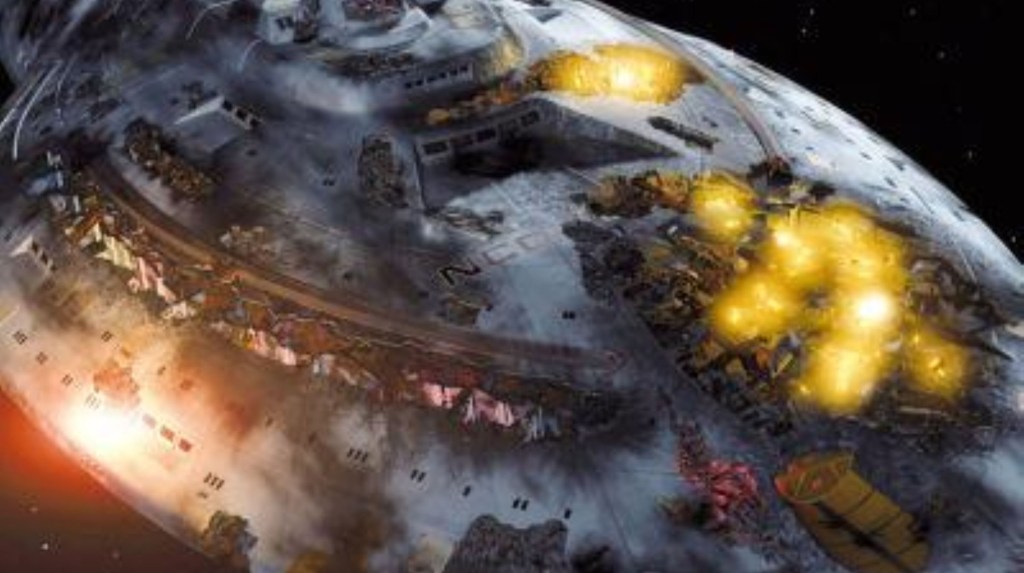
“Year of Hell” was perhaps the first-time audiences truly saw the precariousness of Voyager’s situation. By the end of Part 1, the ship and more importantly its crew is battered, scarred, and barely holding it together after months of relentless conflict with the Krenim, a species capable of literally rewriting history to erase their enemies from existence through temporal weapons to make themselves victorious – imagine being able to wipe someone from existence just because they looked at you funny… Hull breaches remain unfixed. Tuvok is out of action, severely burned, Chakotay and Paris are abducted by the Krenim. Janeway is pushed to the brink, her leadership abilities pushed to the limits, becoming something of a hardened, desperate leader willing to sacrifice almost anything to keep her ship alive.
All these years later, Year of Hell continues to rank highly on multiple Voyager episode lists and has even been spoken of by critics as being some of the best episodes of Star Trek full stop. Perhaps this two-parter has become so engrained in the psyche of Star Trek fans because this is the Voyager many fans were hoping to see from the very start: a ship visibly worn by time and trauma, its crew shaped by continuous loss and trauma rather than seemingly adapting without much trouble to the potential of spending the rest of their life lost in the vastness of space.
These episodes lean into the sense of utter hopelessness, exhaustion, and the impossible ethical decisions faced by a leader in such a precarious situation, in ways the series rarely managed to truly capture. But “Year of Hell” is even more intriguing when you consider that it was originally conceived not just as a two-parter, but as a full season.
The Original Plan: A Season of Suffering
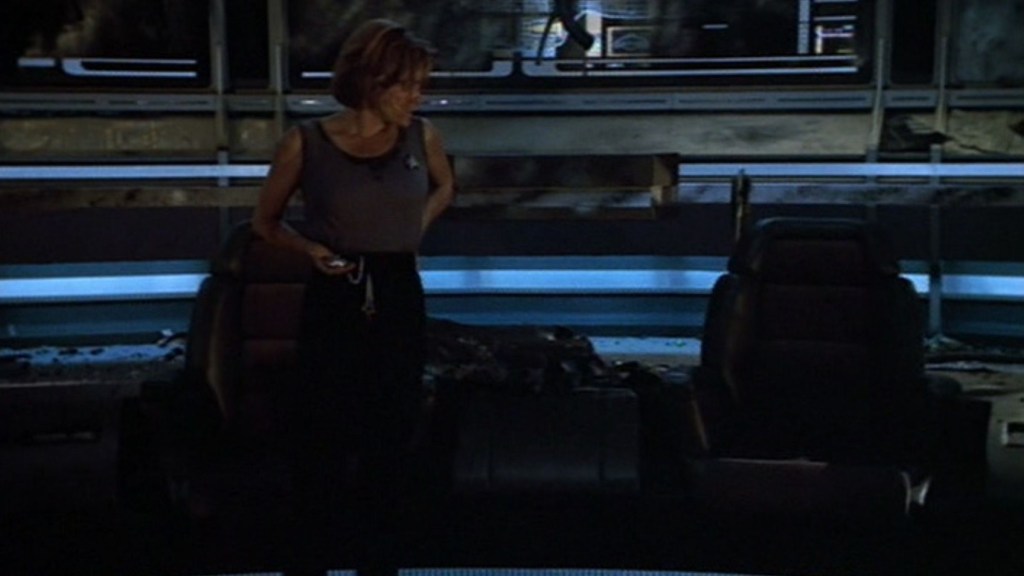
The writers had initially seen the “Year of Hell” concept as having potential for an entire season arc on the show. Instead of just two episodes, the conflict with the Krenim could have unfolded more gradually across months of gripping storytelling full of twists and turns. You can almost picture it: Voyager would limp from one disaster to the next, barely surviving with damage to the ship slowly reaching critical levels, and characters lost in shock exits along the way. The idea sounds like the ultimate fulfilment of what should really have been Voyager’s core concept across every episode. In theory, it would have been an absolute belter of a season had the plan been pulled off. And pretty revolutionary for a Star Trek series airing in the late 1990s.
In practice, however, it’s probably for the best that the plan was scaled back. Serialized storytelling across a whole season of a show was still a big risk in a time before streaming and catch-up services, where people were more likely to dip in and out and shows relied on casual viewers. A season-long descent into despair might have alienated audiences accustomed to traditional monster-of-the-week storytelling, and such a concept might have been off-putting to Trekkies who preferred a more upbeat, optimistic feel to the show.
The condensed storyline, playing out over just two episodes, delivers maximum impact because it doesn’t take the admittedly bleak vision too far past the point of no return — especially given how the story ends.
Star Trek’s Reset Button Problem

The eventual twist of “Year of Hell” is that none of it technically happens. In a last-ditch attempt to save the day, a desperate Janeway makes the decision to fly a beat-up Voyager directly into the Krenim time ship. Voyager is obliterated, but the time ship’s temporal core is also blasted to smithereens, restoring the original timeline. All the suffering, the losses, the catastrophic damage, none of it actually happened in the first place. Voyager emerges unscathed, its crew none the wiser and blissfully unaware of the fate that befell them in an aborted timeline.
Despite some complaints amongst critics about the use of the admittedly predictable reset/ ‘it was all a dream’ trope, for the ending of a brilliant two-part episode, this reset works. Is it perhaps the easy way out – a neat and tidy way to avoid examining any long-term effects and skip merrily to the next adventure? Possibly, yes. But it’s an ending that works, that makes sense – it’s satisfying even. It feels earned, viewers understand that the true emotional weight of the storytelling comes from what could have been, after all, we still saw it, our favourite characters still experienced all of it, somewhere, sometime…
If you think about being served that same ending after watching an entire season, however, the effect changes dramatically. Imagine dedicating 20-plus hours of your time to watching the Voyager crew battle their way through, suffering loss after loss but still finding a way to go on, rooting for them and watching them develop as characters in the face of adversity, only for the writers to turn around and say ‘Syke – only joking!’ you’ll likely feel pretty put out — cheated even. The audience’s emotional investment would be undercut by the knowledge that none of it really mattered because an entire season’s worth of events never actually happened – you may as well have skipped the season.
Of course, perhaps a series-long arc could have had a different ending, but the decision to tell this particular story over a shorter timeframe may well have saved “Year of Hell” and indeed the entire series from collapsing under its own ambition.
Why “Year of Hell” Endures
By condensing the idea into two episodes, the writers distilled the concept to its purest, most effective form. Every scene reinforces the central themes: the cost of survival, the danger of obsession, and the arrogance of trying to control time itself. Kurtwood Smith’s Annorax is crucial here. Unlike many Voyager antagonists, he isn’t motivated by conquest or malice but by grief and rationalization. His belief that restoring his lost wife will justify the erasure of entire civilizations mirrors Janeway’s own willingness to make extreme sacrifices.
The visual storytelling is breathtaking as well. Voyager’s damaged sets, the tense atmosphere, and grim lighting are brilliantly done and feel shocking precisely because they’re temporary departures from the norm. If the entire season looked like this, the aesthetic impact would inevitably diminish.
Today, in the streaming era where viewers are more used to overarching and often bleaker plotlines, a season-long “Year of Hell” experiment might be more feasible. But Voyager was never designed to sustain that level of narrative darkness without fundamentally reinventing itself. In the end the two-part story showed us the most extreme version of Voyager’s premise, then pulled back before it became too much. It asks the question ‘how bad could things possibly get?’ without forcing the audience to live in that reality indefinitely.
“Year of Hell” works because it’s a warning, not a new status quo. It reminds us of the fragile line Star Trek walks between cheery optimism and gritty moral storytelling— and how, sometimes, the darkest future is more powerful when we only glimpse it briefly. Ultimately, Voyager delivered two of its finest hours — and wisely chose not to test how much hell its audience could endure.
What do you think? Leave a comment below and join the conversation now in the ComicBook Forum!
Most Viewed
-

Sony Pictures -

Image courtesy of The Pokemon Company -
Image Courtesy of Marvel Comics -

Courtesy of Crunchyroll -

Image Courtesy of HIDIVE