Anyone who’s been following the entertainment industry for a while knows that Netflix and movie theaters have a relationship that could be described as tenuous at best, which is why people are concerned about Netflix’s pending acquisition of Warner Bros. Netflix CEO Ted Sarandos has drawn the ire of many cinephiles by making controversial comments about the current state of movie theaters, calling the concept of venturing out to watch something on the big screen “outdated.” Sarandos has been in favor of shorter theatrical windows, believing that model to be more consumer-friendly in an ever-changing landscape.
Videos by ComicBook.com
Sarandos has pointed to declining box office numbers as proof Netflix’s approach is the correct one. “What is the consumer trying to tell us? That they’d like to watch movies at home, thank you,” he said during an appearance at the Time100 summit last spring (via Variety). However, Netflix releases are arguably proving that sentiment wrong. Over the holiday season, the streamer turned the finale of Stranger Things into a special cinematic event, and it paid off in spades — sending a different kind of message.
The Stranger Things Finale Was a Box Office Hit
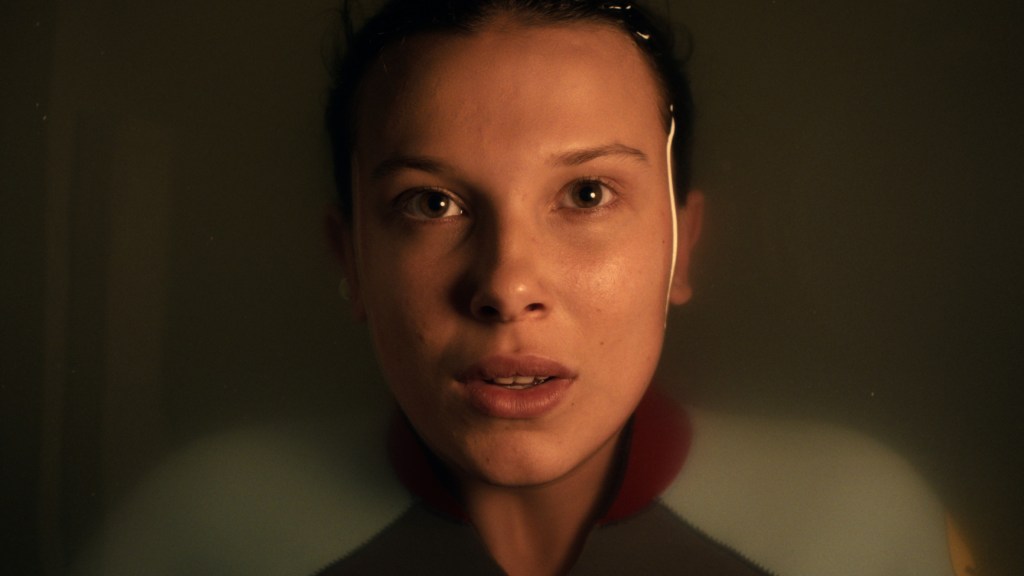
To commemorate the ending of its flagship series, Netflix decided to release the Stranger Things finale in theaters, booking screenings over a two-day window. The feature-length episode played at multiplexes on New Year’s Eve and New Year’s Day, earning in excess of $25 million. What’s notable about this is that instead of buying tickets, fans purchased theatrical concession vouchers to reserve their seats (a workaround due to the cast’s contract stipulations regarding residuals). Prices varied by location; some theaters charged $20, while others fittingly set the cost at $11. As an added bonus, theaters did not have to split the revenue with Netflix.
In many ways, the Stranger Things finale was another boon for movie theaters over the holiday season. For context of just how big of a draw the episode was, Avatar: Fire and Ash grossed $23.7 million domestically during the same two-day time period Stranger Things was in theaters. So, Stranger Things outgrossed a James Cameron sci-fi blockbuster even though it was only playing in over 620 theaters across the country. In contrast, Fire and Ash was playing in 3,800 theaters. That’s an extremely impressive performance for Stranger Things. It clearly would have been a much bigger hit if Netflix had expanded the number of locations.
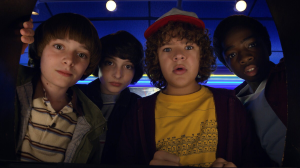
What makes Stranger Things‘ box office all the more remarkable is that the theatrical screenings coincided with the finale’s release on Netflix. Fans had the option to just stay at home and watch the episode on TV, but instead they came out in full force to watch it on the big screen. Essentially, this means Sarandos’ evaluation of moviegoing habits is wrong. People are still interested in going to the theater — particularly for massive, zeitgeist-defining events. If viewers didn’t care about the format, then the Stranger Things theatrical release wouldn’t have been as big as it was. Sure, there would still be some die-hard fans making the trek, but casual audiences would have been fine pushing play in their living room. A haul of $25+ million (some outlets estimate it could be closer to $30 million) from just hundreds of locations implies a wide range of viewers turned out.
Stranger Things isn’t even the only box office hit Netflix had in 2025. The extremely popular film Kpop Demon Hunters (which has broken Netflix viewership records) got a similarly limited theatrical release over the summer after it had already been streaming for months. It became the first Netflix movie to earn the No. 1 spot at the box office, earning around $18 million (it brought in another $5.3 million during another limited release over Halloween weekend). Kpop Demon Hunters is another case of people opting for the big screen over small, highlighting fans still enjoy the communal experience of seeing something in a theater with a bunch of other like-minded people.
Will Netflix Change Its Stance on Theatrical Windows?
Assuming the Netflix/Warner Bros. deal goes through, Netflix has promised it will continue to release WB movies in theaters. After fulfilling any contractual obligations for films that pre-date the merger, the biggest question concerns the length of those theatrical windows. Netflix typically gives its features a limited release in order to qualify for awards, a strategy that ensures a majority of the general public will watch the title on the streaming service instead. This past year, Netflix movies like Frankenstein, Jay Kelly, and Wake Up Dead Man were in theaters for just weeks before they hit streaming.
More recent reports (via Deadline) indicate Netflix is in favor of a 17-day theatrical window, which would be detrimental for theaters in both the short and long terms. Multiplexes rely on popular tentpoles like Superman and A Minecraft Movie (both Warner Bros. releases) to keep the lights on. The COVID-19 pandemic already had a drastic impact on the industry by shortening theatrical windows (and that genie is never going back in the bottle), so things would become even harder for theaters if the windows were shortened even more. Additionally, it’d become tougher for movies to turn a profit from box office grosses if they were only in theaters for two weeks before being pulled.
Warner Bros. just posted one of its strongest years at the box office, with a varied slate that included A Minecraft Movie, Superman, Sinners, Weapons, F1, and more all becoming hits. When you couple that with the performances of Stranger Things and Kpop Demon Hunters, one would hope Netflix will realize there’s still a market for the theatrical experience, encouraging them to shift to longer exclusive windows. Unfortunately, history is full of examples of studios and companies learning the wrong lessons and doubling down on them, so it remains to be seen how this’ll all turn out. Rather than daydreaming about the money an extended run for Stranger Things could have made, Netflix could take this as a sign that two-day events is the blueprint to follow. Their stance on shorter windows might be emboldened as they try to manufacture a sense of excitement and exclusivity around theatrical releases.
There’s no denying that moviegoing habits have changed dramatically. With shorter windows, it is easier to wait for something to hit streaming, and films that might have been genuine hits in another era (think a star-driven vehicle like Roofman) achieve greater success on home media formats. But there’s still a place for theaters. Premium formats in particular give audiences experiences that are impossible to replicate at home, full engulfing them in a director’s ambitious vision that was designed for the largest canvas possible. Few things can beat watching an anticipated release with an excited crowd (likely a driving force behind the strong Stranger Things numbers). So while box office numbers have gone down, there are still certain types of films that benefit greatly from being on the big screen first. Ideally, Netflix will listen to the audience and make sure their movies stick around in theaters.
What do you think? Leave a comment below and join the conversation now in the ComicBook Forum!
Most Viewed
-
Image courtesy of Amazon MGM Studios -

Image Courtesy of MAPPA -

Image courtesy of Tor Books/Macmillan