You’ve watched every episode of every spin-off 10 times, you can recite every movie by heart, but now there’s no more Star Trek for a while, and all you can do is wait patiently for the next series to drop… how will you possibly cope in this dark time? It’s a very real struggle that many a Trekkie has found themselves in… Thankfully, there is a plethora of extended media, including fantastic books, comics, and graphic novels for fans to enjoy to see them through and scratch the Trek itch.
Videos by ComicBook.com
But despite their popularity amongst hard-core fans, for decades, Star Trek novels have occupied something of a confusing space in Trek lore. They are officially licensed, often deeply thoughtful, offering fresh takes on characters and storylines and sometimes they even bring us new relationships or make us see our favourite crewmembers in a whole new light — but they traditionally exist outside of official canon, free to explore a whole range of ideas that the TV shows and movies either couldn’t or wouldn’t without drastically affecting the ‘true’ Star Trek timeline of events. Every once in a while, however, a book comes along that captures the imagination so completely it forces fans (and eventually creators) to reconsider what counts as canon.
Written by Andrew Robinson — the actor who portrayed Elim Garak on Star Trek: Deep Space Nine, A Stitch in Time didn’t just expand one of Trek’s most beloved characters, it quietly reshaped how the ex-Cardassian spy was understood on-screen. The 2000 novel retroactively enriched his motivations, his contradictions, and his moral complexity, and in doing so, it became one of the rare Star Trek novels whose influence began to cement it into canon itself.
A Star Trek Character Built From the Inside Out

From his very first appearance in DS9’s third episode, “Past Prologue,” Garak became one of the franchise’s most fascinating characters. Neither villain nor ally, it was never quite clear where his loyalties and motivations lay. In fact, he seemed to thrive off keeping everyone — including us viewers— on their toes. But much of that depth, it turns out, came not just from the script, but from work actor Andrew Robinson was doing of his own accord behind the scenes.
Early in DS9’s run, after he finally landed the recurring role as Garak, Robinson began writing a biography (essentially glorified character notes), for Garak in his own time, something he described as an “old actor’s trick,” to help when playing a character you don’t know much about. It was initially unclear whether the role would be a recurring one, and so, given little concrete backstory by the writers, Robinson decided to have a bit of fun and fill in the gaps himself. In the biography, he imagined Garak’s childhood, his complicated relationship with his father Enabran Tain, and the emotional scars left behind by the Dominion war.
Crucially, Robinson framed all of this from Garak’s sometimes unreliable perspective, presenting the biography in the form of a diary. The work was a series of half-truths, confessions, and carefully curated memories. This internal exploration of his character began to heavily inform Robinson’s performance on screen, even though most of it never appeared or was mentioned explicitly in the series.
From Convention Readings to Published Ponderings
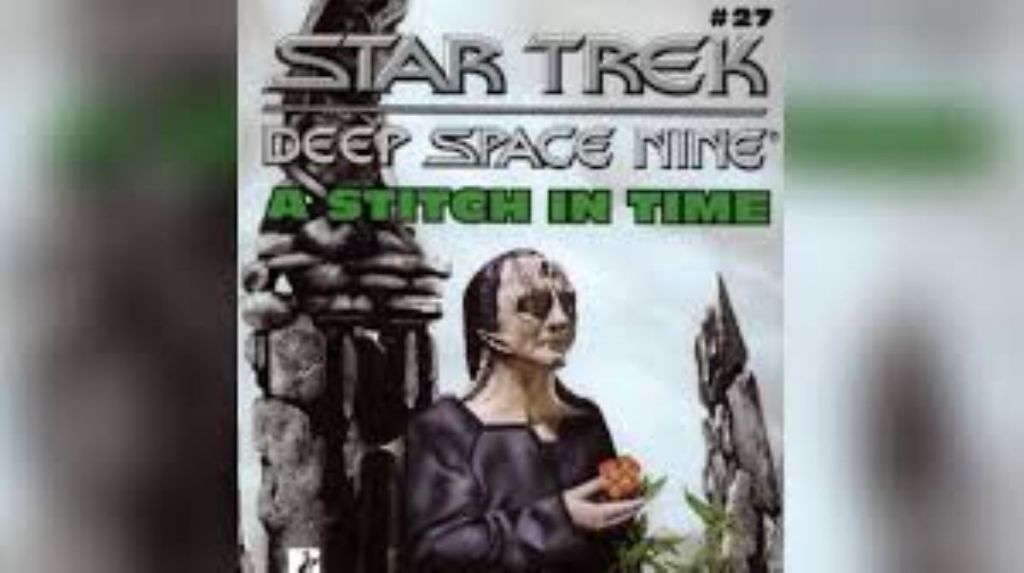
Initially, Robinson hadn’t ever planned on publishing any of this material, seeing it as nothing more than a character exercise for himself, a way to be a better actor. But everything changed when he began reading excerpts at conventions as a way of giving fans a glimpse into his acting process and something hopefully a little more interesting than your average Q&A answers. The in-depth explorations into Garak’s mind delighted fans, and these impromptu readings eventually caught the attention of novelist David R. George III (fresh from working on another Star Trek novel The 34th Rule, with Quark’s actor Armin Shimerman). George immediately saw the potential and convinced Robinson that he simply must get it to a publisher.
After using The Star Trek Encyclopedia as a guide and painstakingly combing through his notes to ensure that any references to other canonical events were accurate (now that’s dedication for you), Robinson eventually produced A Stitch in Time, presented as a letter from Garak to Dr. Julian Bashir. Structurally, it’s an inspired choice: the epistolary format allows Garak to still control the narrative while letting his unreliability peek through at times. He confesses a multitude of sins, but always on his own terms. The novel carefully and cleverly unfolds Garak’s memories of a life shaped by violence, political upheaval, and espionage.
A Stitch in Time Retroactively Changed Star Trek
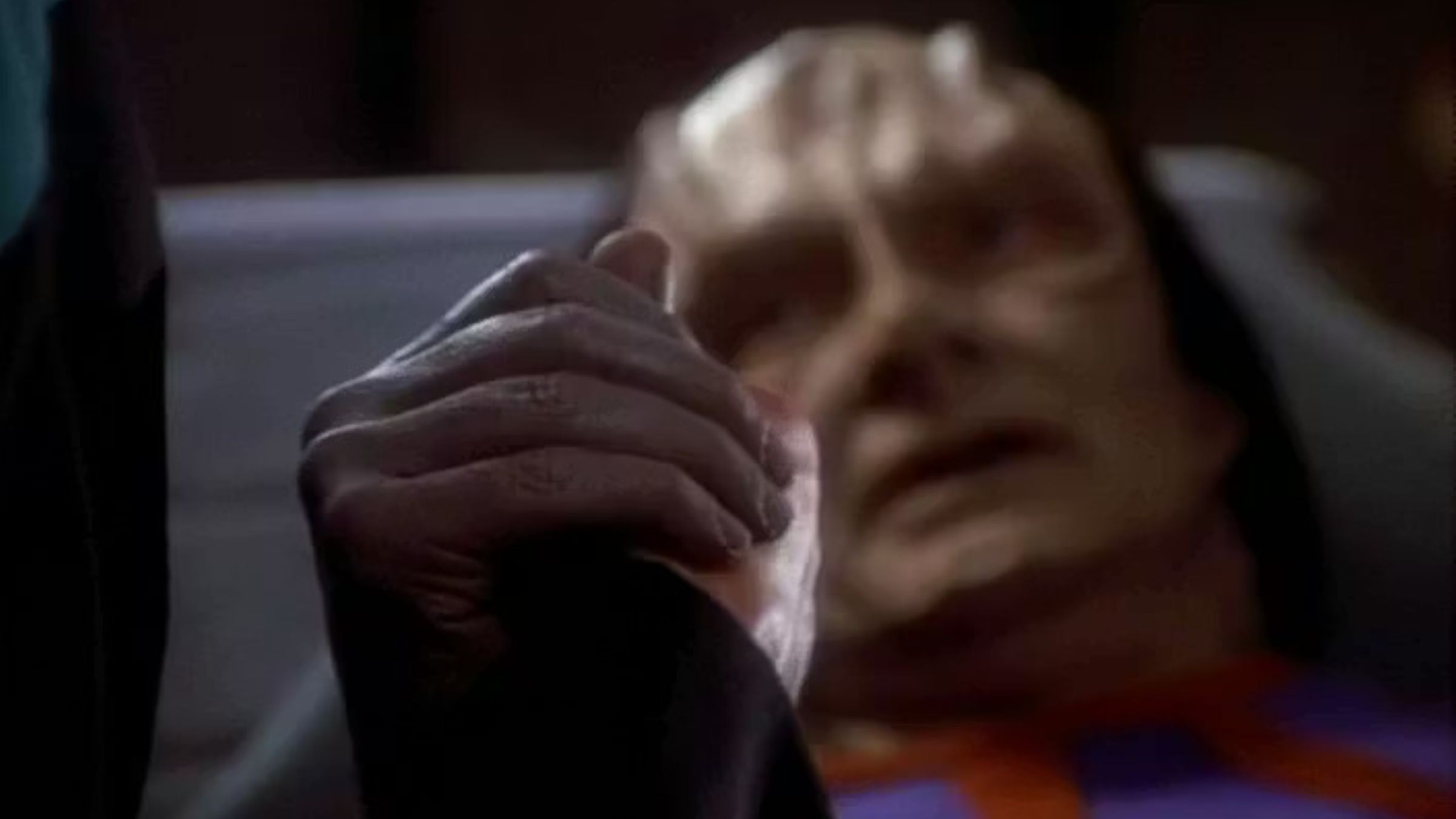
What makes A Stitch in Time so unputdownable isn’t just its quality or its insightfulness. It’s how seamlessly it interweaves new details about Garak’s character into the existing narrative without disrupting or disrespecting it.
Robinson didn’t just clumsily overwrite and contradict existing canon the way many novels do (assuming that it won’t matter since the novel won’t be taken as canon anyway); instead, he respected the canon and built on it. Moments that once played out as simply character quirks or Garak being Garak or amusing contradictions — suddenly seemed to have a lot more to them, bubbling beneath the surface. Fans began rewatching and experiencing scenes and episodes in a whole new light, given what they had been told in the novel, finding a whole hidden world of meaning that had always been there, just never tapped into.
In some cases, the influence worked both ways. DS9 writers were very much aware of and sampled some of Robinson’s backstory work, and while they didn’t adapt it directly, the novel wasn’t completed and published until after DS9 ended, it began to play how they wrote Garak in later seasons. His guilt, his nationalism, and his character development all feel like natural extensions of the complex and rich character revealed in A Stitch in Time. It’s as close as a Star Trek novel has ever come to “changing canon” without an official retcon.
The Gold Standard for Star Trek Tie-In Fiction
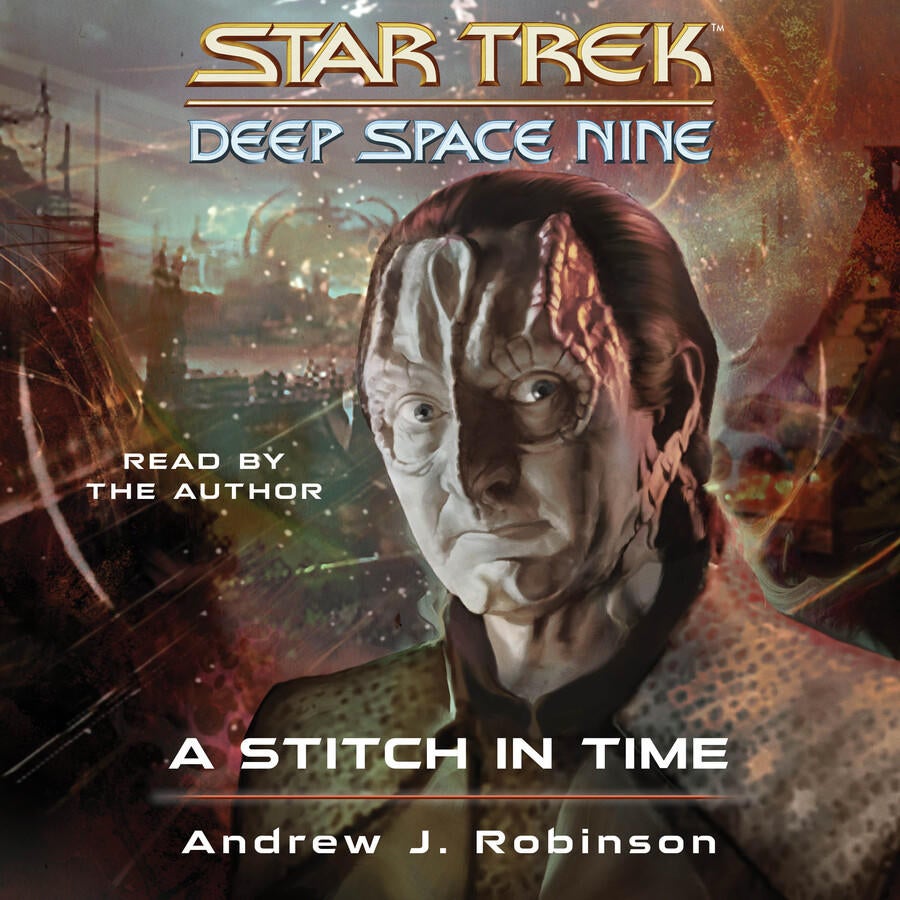
There are plenty of excellent Star Trek novels out there that are well worth a read but very few feel this intimate and can inspire such emotion in a reader, and that’s likely down to its talented author.
Robinson’s unique perspective on the character, having spent so many years inhabiting Garak, quite literally donning the character’s clothes and walking in his footsteps, gives the book a sense of genuineness and authenticity that’s hard to replicate. He truly understood the character inside and out, in a way no one else could, and the novel’s prose even mirrors the character’s speech patterns, occasionally devastating in its honesty.
Robinson also pushed boundaries that television couldn’t. Garak’s sexuality, which although hinted at, was rarely explored in detail on DS9, is dealt with more openly in the book, even if the content, unfortunately, still had to be toned down to meet publishing guidelines. The result is a portrayal that feels somehow even truer to the character than what we saw of him on the screen, which, after all, was only brief moments of his life – this is the untold story, from his perspective.
Robinson has said one of his motivations for writing the novel was to get “total closure.” It’s easy to imagine what an intense and all-consuming experience inhabiting a character for so many years must be. In that sense, A Stitch in Time functions almost like an eighth season of DS9 for Garak alone, answering questions the show never had time to, while respecting everything that made the character compelling.
Later references to Garak in expanded materials, and even fan discussions around DS9, often treat the novel’s events as the accepted official ‘ending’ for the character. The 2023 audiobook release, narrated by Robinson himself, only reinforced that status.
Twenty-five years on, A Stitch in Time remains the benchmark by which all Star Trek novels are judged. It’s more than just another book; it’s a genuinely great piece of science fiction and political literature in its own right, that, lucky for us, just so happens to exist within the Star Trek universe.
Most importantly, the novel demonstrates what can be produced when an actor, a character, and a franchise align perfectly. Garak was always one of DS9’s best creations. A Stitch in Time ensured he would be remembered as one of Star Trek’s most influential characters.
What do you think? Leave a comment below and join the conversation now in the ComicBook Forum!
Most Viewed
-

Sony Pictures -

Courtesy of Crunchyroll -

Image courtesy of The Pokemon Company -

Image Courtesy of Marvel Comics -

©Tsuyoshi Takaki/Shueisha, Project BLACK TORCH