South Park is built to be made fast. The production runs on roughly a six-day turnaround, the construction-paper look was chosen partly because it could be produced at speed, and the show’s whole competitive advantage has always been that it can react to something on a Monday and have it on television by Wednesday. That is the formula, and across 29 years and more than 330 episodes it has barely moved. Everything about the operation is arranged to protect it, from the small writing staff to the deliberately simple animation, and the result is a series that can turn a news cycle into a broadcast faster than anything else on television. Which makes the exceptions worth looking at closely, because every one of them cost Trey Parker and Matt Stone the exact thing the whole machine exists to defend. Every time they have thrown out the process, they have traded away speed, and they have only done it when the idea was worth the trade.
Videos by ComicBook.com
The four below are the biggest of those trades, and they are spread across 15 years rather than clustered in one experimental phase. One of them replaced the animation with footage captured live inside a video game. One put real animals on screen in costumes. One abandoned the standalone episode entirely for a full season, then had to write itself out of a corner overnight when the news refused to cooperate. One changed how long an episode of South Park even is, and shrank the seasons to pay for it. What links them is not ambition for its own sake, because this is not a show with much patience for that. It is that in each case the normal method could not produce the joke. Exactly one of the four won a Primetime Emmy, and it is the one that nearly did not air, because the day before broadcast its creator was asking the producer to pull it.
4) The Paramount+ Specials
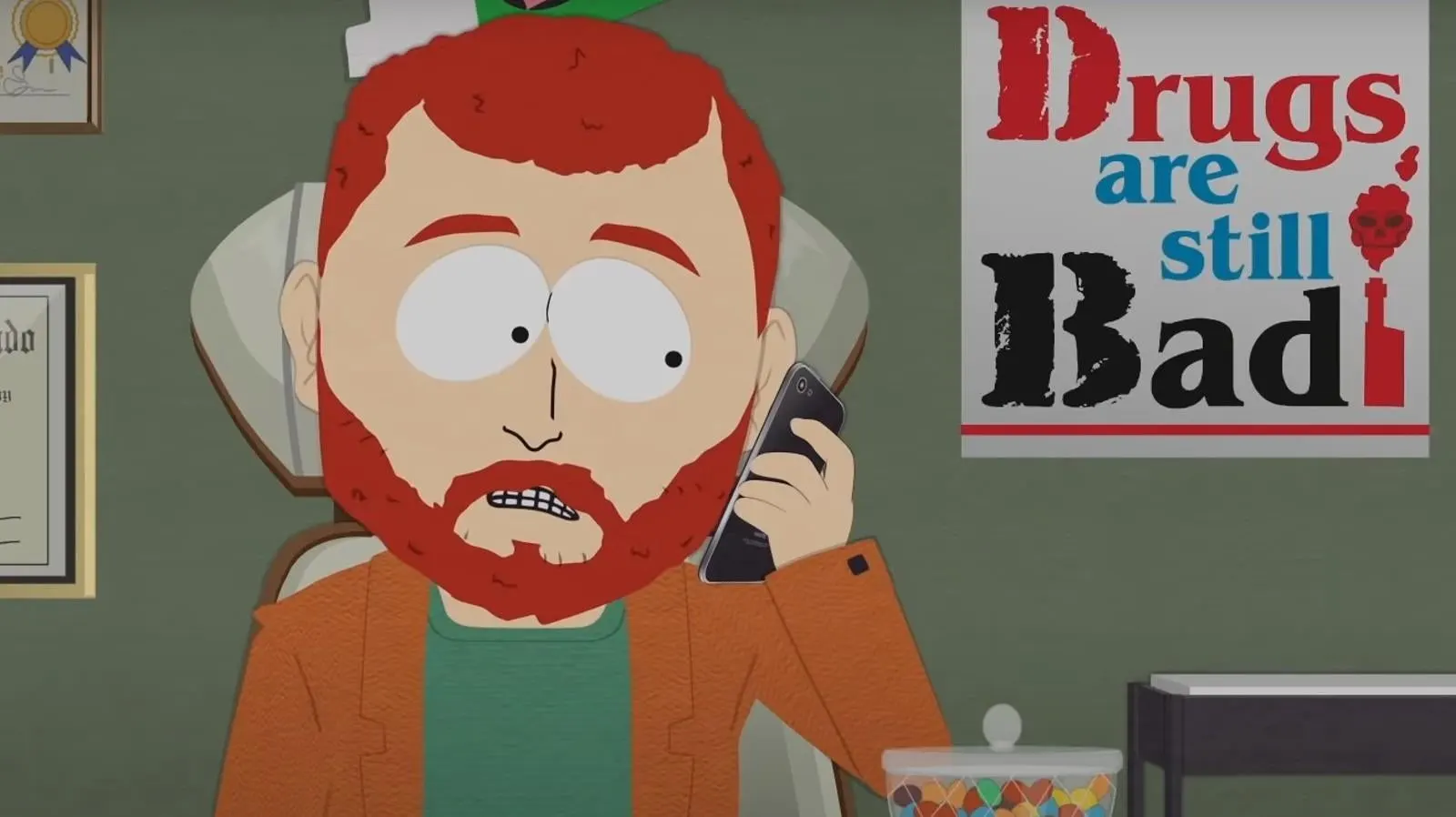
The least discussed format change is the one that altered the basic unit of the show. In August 2021 Parker and Stone signed a deal reported at $900 million that ran the series through 2027 and committed them to 14 exclusive streaming films, later clarified as television specials rather than theatrical features. The first, South Park: Post COVID, arrived that November and ran 59 minutes. A standard episode is 22. That is roughly two and a half times the length, and it is the first time in the show’s history that the runtime was not fixed.
The knock-on effect is the part that gets missed. The seasons shrank to pay for it. Season 24 was two episodes. Seasons 25 and 26 were six each. Season 27 was five. The show did not simply add specials on top of its usual output, it redistributed the same two-man writing capacity across a longer form, and the weekly rhythm that defined South Park for two decades became something closer to an event schedule. Stone framed the appeal as wanting to get back to being able to do something completely different each week, which is a revealing thing to say about a format that was built on exactly that.
3) Season 20
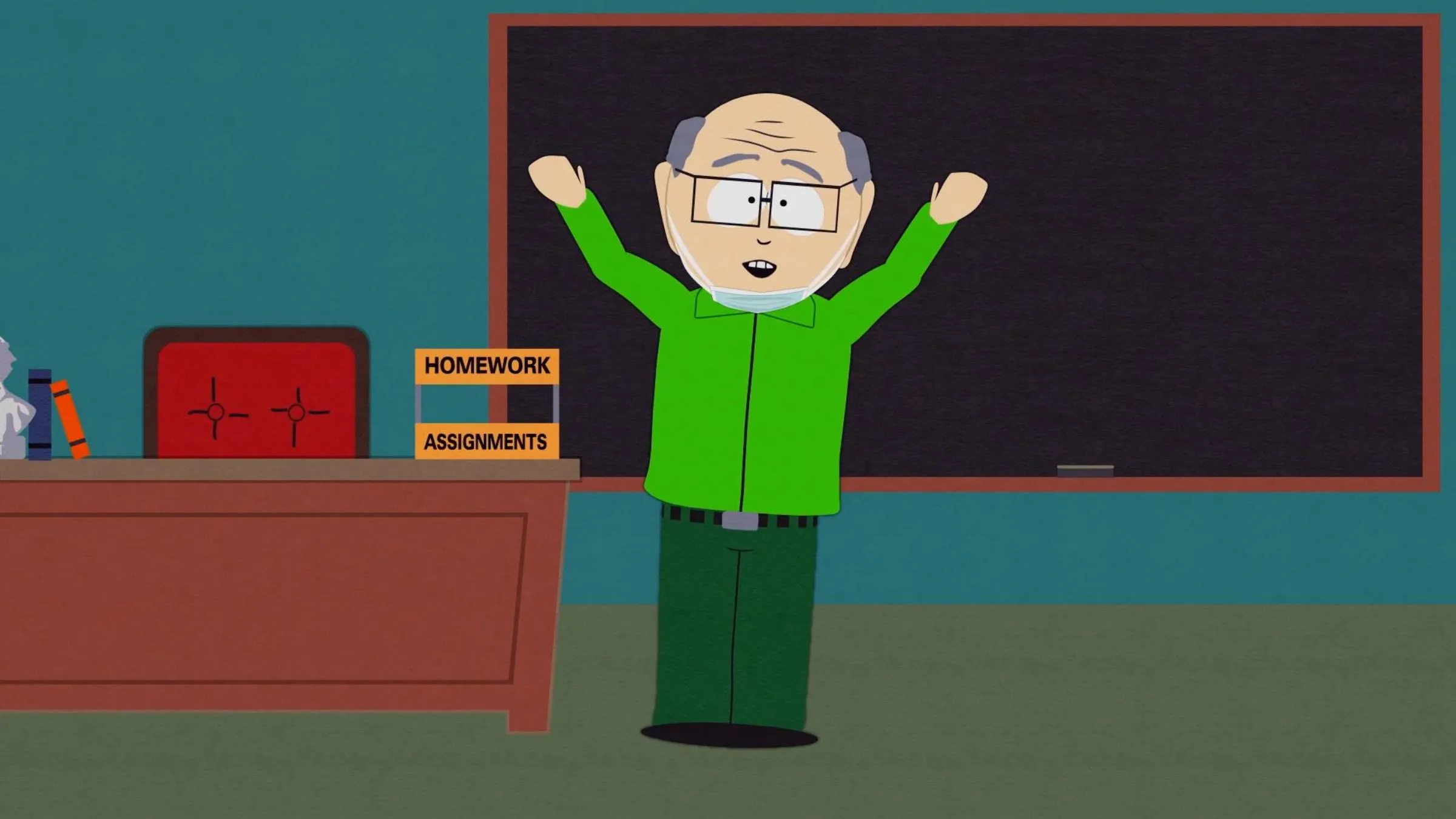
Then there is the season that stopped being a collection of episodes. Season 20 ran ten installments from September to December 2016 as a single continuous arc, with member berries, the trolls, Mr. Garrison’s campaign and Denmark all braided into one story. The show had been edging toward this for two years, and Parker described the prior season’s approach as serialized lite, but Season 20 is where the standalone episode was properly abandoned. For a series whose entire method depends on being able to bin an idea and start over on Tuesday, committing to a plot ten weeks out is close to reckless.
It nearly went wrong in the most public way available. Episode seven, “Oh, Jeez,” aired on November 9, 2016, the night after the election, and it had been written and built around a Clinton victory under the title “The Very First Gentleman.” When the result went the other way the episode was rewritten so that Garrison wins, and production finished hours before it went to air. The season then closed with an episode titled “The End of Serialization as We Know It,” which is about as clear a signal as a show can send. Parker later said satire had become reality and they could not keep pace, so they stopped trying. The idea never fully went away, though: the show has since carried a single story across a season break again.
2) “Pandemic” and “Pandemic 2: The Startling”

This is the entry where the show put something real on screen. Across two episodes in October 2008, the monsters terrorizing the world are live-action guinea pigs in costumes, filmed and composited into the animation. Not drawn as guinea pigs. Actual animals, in tiny outfits, shot on camera. The reported production experience is exactly what anyone who has met a guinea pig would predict: once costumed, they refused to move, and it took hours of filming to get a single usable shot.
The other half of the experiment is the camerawork. The whole two-parter is staged as found footage in the Cloverfield style, with a handheld camera, constant lurching zooms and audible breathing on the track, which is a strange thing to attempt in a medium where there is no camera and every shot has to be built deliberately. ComicBook.com has ranked the duology ninth of fourteen multi-part stories, conceding the conceit wears thin while defending the sheer absurdity of the premise, and that is a fair verdict. It is not the show’s best story. It is one of the few times it built something it could not simply redraw.
1) “Make Love, Not Warcraft”

The Emmy winner, and the most extreme version of the trade. For the October 4, 2006 episode, Parker wrote and directed a story in which roughly the entire middle section plays out inside World of Warcraft, and rather than animate it, the studio captured it live from the game. Twelve rented PCs were installed in the South Park Studios lobby and production staff played the characters as puppeteers. Blizzard supplied models and rigging and handed over access to the alpha server for the Burning Crusade expansion. Machinima maker Tristan Pope ran the capture, with Parker blocking the action and Pope relaying it to the Blizzard crew.
What it cost is the part worth sitting with. The in-game material took about three weeks, against a show that normally builds an entire episode in six days, while the conventional animation was still being finished within roughly 12 hours of broadcast. The day before it aired, Parker asked producer Anne Garefino to kill it, telling her he had lost it and that this episode was going to ruin the show’s legacy. It drew 3.4 million viewers, Comedy Central’s best midseason premiere since 2000, and it took the 2007 Primetime Emmy for Outstanding Animated Program, generally recorded as the first machinima work to win one.
None of the other three won anything, which is its own small lesson about what gets rewarded. South Park has a sixth win in the category from a nineteenth nomination after taking the 2026 award, and the site has separately argued that the style breaks produced some of its best episodes. The pattern across all four is the same regardless: the show is at its most interesting when it gives up the thing that makes it fast, and it has never once done that by accident.
More TV Shows
-
Courtesy of South Park Studios / Toho