Rod Serling’s The Twilight Zone ran for five seasons on CBS from 1959 to 1964, producing 156 episodes that mixed science fiction, horror, and fantasy with the kind of moral and political allegory that network television rarely attempted at the time. Serling himself wrote 92 of those 156 episodes, acting as creator, narrator, and head writer simultaneously to ensure The Twilight Zone kept true to its core themes. Three revival series followed in 1985, 2002, and 2019, but while they were commendable homages, none of them replicated the cultural weight of the original run, underlining how important Serling was for The Twilight Zone.
Videos by ComicBook.com
Over six decades after The Twilight Zone aired its final episode, the series remains highly rewatchable. That’s thanks in part to its anthology structure, which eliminates the continuity obligations that make long-form serialized television harder to revisit. Each episode is complete in itself, equally accessible to newcomers and genre fans willing to enjoy once more one of the most important genre productions in the history of television. That said, some of the episodes in the original series are more rewatchable than others.
5) “The Monsters Are Due on Maple Street” (Season 01, Episode 22)
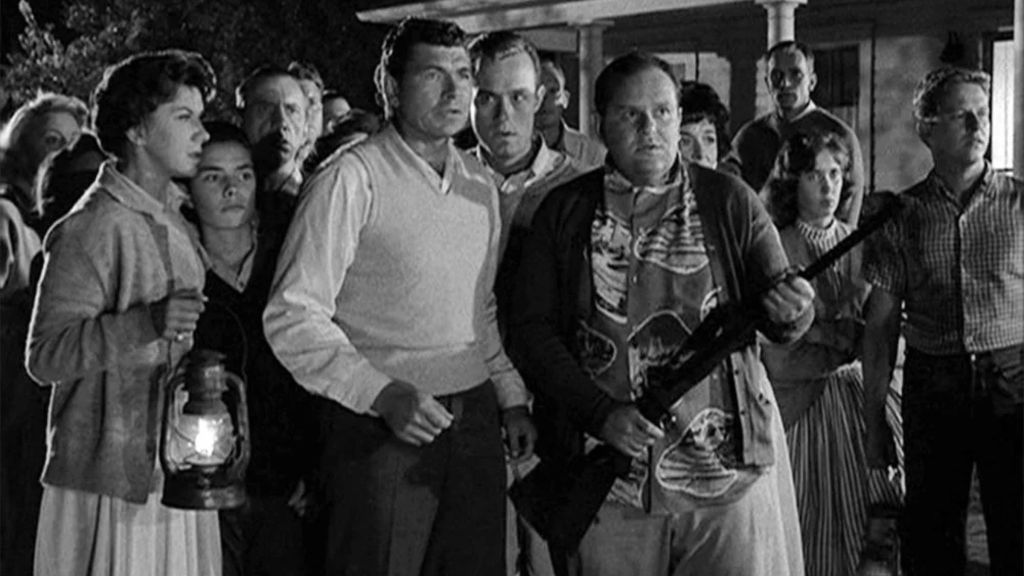
In “The Monsters Are Due on Maple Street,” a power outage hits a suburban street on a summer afternoon, and the residents, nudged by a child’s theory about alien infiltrators, go from innocent curiosity to mob violence within the span of a single evening. The twist that the outage was, in fact, engineered by actual aliens to provoke this collapse is one that The Twilight Zone earns completely, because Serling has spent the previous twenty minutes showing exactly how little external pressure it takes to dismantle a community’s trust in itself.
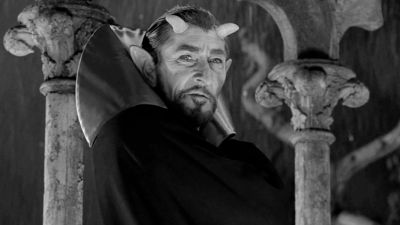
The episode doesn’t lose much once you know the twist. On the contrary, watching the residents of Maple Street turn on each other becomes more disturbing when we already know the aliens barely had to do anything. Plus, Serling’s closing narration, in which he identifies the “thoughtless, frightened search for a scapegoat” as the real weapons against humanity, remains tragically relevant nowadays. The 2002 revival of The Twilight Zone even remade this episode, shifting the Cold War paranoia to a terrorism-era update that nevertheless confirmed the story’s universal message.
4) “Time Enough at Last” (Season 01, Episode 08)
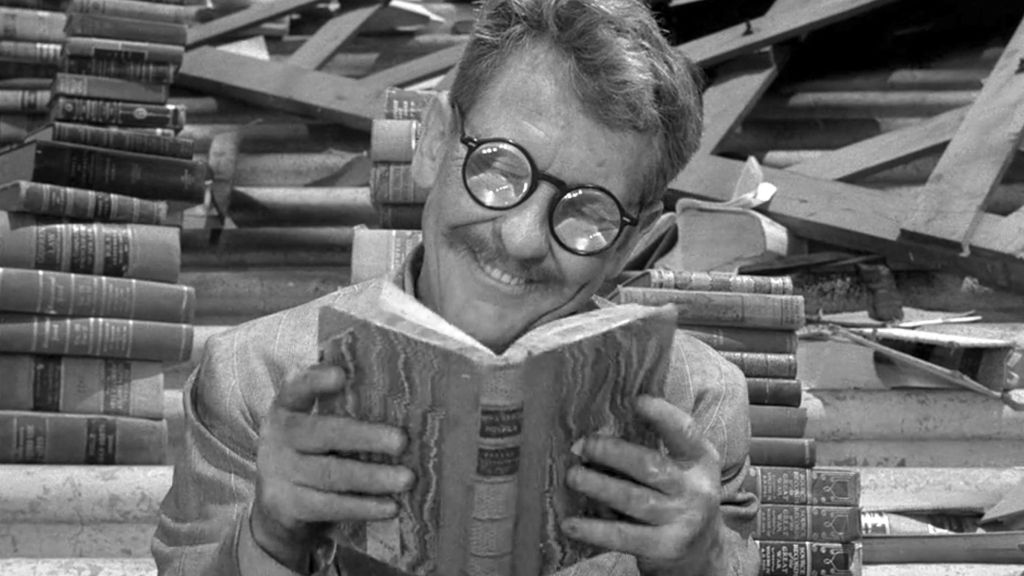
“Time Enough at Last” stars Hollywood legend Burgess Meredith as Henry Bemis, a bank teller who loves to read and is surrounded by people who resent it, including a wife who destroys his books. When a nuclear war wipes out humanity while Bemis is in a vault, he is left alone in the rubble with every book he could ever want. His happiness is shortened by his glasses snapping as the episode ends on one of television’s bleakest resolutions.
Rewatching “Time Enough at Last” means witnessing Serling’s brilliance as a writer, with all the elements of the story slowly falling into place. Bemis’s complete absorption in books is established in the first act as the condition that allows him to survive the war, and the eyeglasses that ultimately fail him are present throughout as a constant visual reminder of his frailty. In a short TV episode, Serling manages to raise concerns about anti-intellectualism at the same time that he discusses the dangers of humanity’s over-dependence on technology, themes that are explored by a single character trapped in a heartbreaking tragedy.
3) “Eye of the Beholder” (Season 02, Episode 06)

For most of its runtime, “Eye of the Beholder” shrouds its protagonist, Janet Tyler (Maxine Stuart), in shadows and bandages, hiding her face as she undergoes an eleventh surgery to correct a “deformity” that has made her an outcast in a totalitarian state. The doctors and nurses, their own faces carefully kept out of frame, speak of her with pity and revulsion, and the pressure to conform is echoed by the sterile set design. The twist happens when the bandages come off to reveal a conventionally beautiful woman (Donna Douglas) by our standards, while the medical staff, the state leader on the television screen, and everyone else we see are revealed to have asymmetric, pig-like faces.
What “Eye of the Beholder” calls a deformity is nothing more than a mismatch with the arbitrary norm of a society. The twist, then, turns the episode into a cautionary tale about conformity and the randomness of beauty standards, themes that become clearer on a rewatch. In addition, “Eye of the Beholder” is a masterclass in visual storytelling, with every camera angle and lighting choice serving as a deliberate piece of misdirection. As a result, it’s amazing to rewatch this episode and realize how every frame was carefully constructed to obscure the twist.
2) “Nightmare at 20,000 Feet” (Season 05, Episode 05)
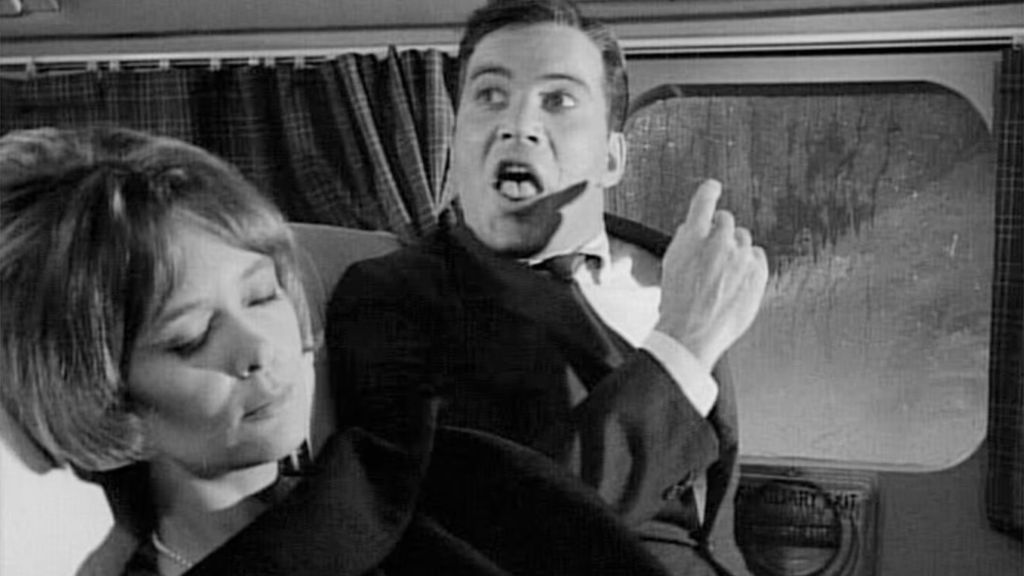
William Shatner delivers one of the most iconic performances in The Twilight Zone as Bob Wilson, a man fresh out of a six-month sanatorium stay for a nervous breakdown, now seated by the wing of a commercial airliner during a storm. When he glances out the window and sees a hairy gremlin tampering with the engine, no one on board believes him. The genius of the episode lies in its absolute commitment to Bob’s perspective, as every time he pulls back the curtain alone, the creature is there, malevolently prying at metal. Meanwhile, if he tries to share proof of the gremlin with his wife, the crew, or even other passengers, the creature is gone. The climax, in which Bob finally gets his hands on a revolver, opens the emergency exit, and fires into the storm, ends with him sedated and strapped to a stretcher. However, the final shot of the damaged wing confirms Bob’s nightmare was real.
The reason “Nightmare at 20,000 Feet” holds up on a rewatch is that the creature was never really the point. Wilson is a man who knows his own history makes him an unreliable witness, and Shatner plays that internal conflict throughout, balancing genuine terror with the creeping fear of his own mind. Furthermore, Richard Donner’s direction keeps the creature ambiguous until the final moments, which means that on subsequent viewings, the episode becomes a study in how television can create doubt even in the viewer. Finally, the episode also functions as a sharp allegory for the stigma around mental health, as Bob is not unreliable after all, but the whole world has already decided he is.
1) “To Serve Man” (Season 03, Episode 24)
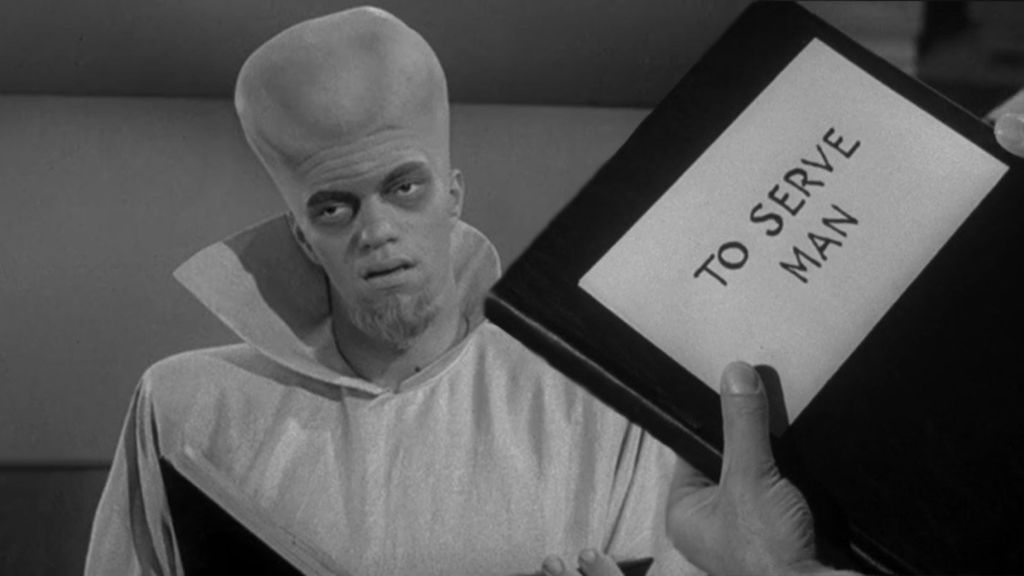
“To Serve Man” revolves around a seemingly benevolent alien race called the Kanamits. After they arrive on Earth, the Kanamits end famine, share limitless energy, and ask for nothing in return but humanity’s trust. Soon enough, people are volunteering for trips to the Kanamit home planet by the thousands. The only source of unease is a mysterious book one of the aliens leaves behind, written in their language, whose title is eventually deciphered as “To Serve Man.” The U.S. government scrambles to crack the alien language until a codebreaker, played by Richard Kiel, realizes the translation is literal. “It’s a cookbook!” became one of the most famous lines in television history, and the final image of a passenger ship ascending while a desperate man is forced to continue his journey to the dinner table remains one of the most chilling twists Serling ever devised.
Rewatching “To Serve Man” allows fans to appreciate how the Kanamits’ benevolence is presented with complete earnestness. Serling structures the episode so that humanity’s eager surrender feels entirely reasonable to the viewer, right up until it isn’t. It’s also fun to notice all the culinary elements hiding in plain sight and how they foreshadow the grim twist. In addition, the closing narration, which observes that man’s instinct to trust can be his undoing, feels even more acidly prescient today, while the episode’s commentary on imperialism and the polite language of conquest has only sharpened with age.
Which Twilight Zone episode do you consider the most rewatchable of all time? Leave a comment below and join the conversation now in the ComicBook Forum!
More TV Shows
-
Image Courtesy of Warner Bros.