The 1990s were the best decade, not just in general but for a wide range of types of entertainment. Television, movies, and even video games just hit different in the 1990s, giving fans iconic stories and characters that stick with us even now. When it comes to specific genres, sci-fi in particular was thriving in the 1990s as well with some genuine masterpieces of movies and television that still hold up.
Videos by ComicBook.com
But movies, television, and video games weren’t the only types of entertainment that were thriving in the 1990s. Books, particularly sci-fi books, were also truly great during the decade. While sci-fi books are currently having another great era thanks to some new and upcoming books, the 1990s shouldn’t be discounted as a great sci-fi decade for readers. Here are five books from the decade that are unquestionable classics — and you should read them if you somehow haven’t already.

5) The Giver by Lois Lowry (1993)
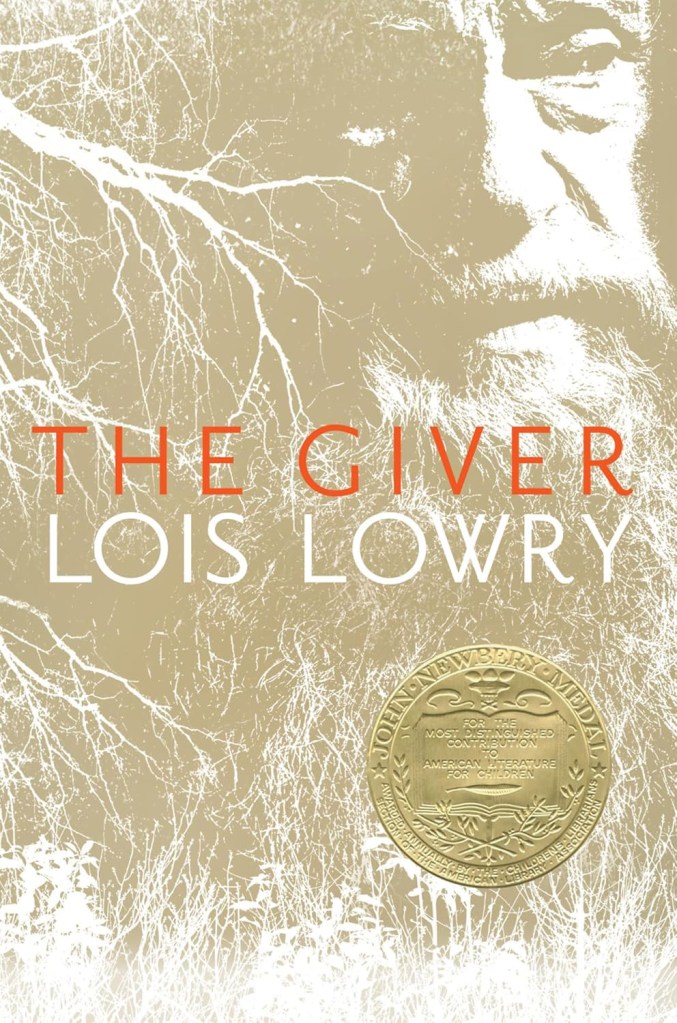
While it might be hard to distance The Giver from required school reading if you happened to be a kid growing up in the 1990s or 2000s, the truth is that Lois Lowry’s 1993 novel is unquestionably one of the best sci-fi novels for young adults ever written — and it holds up beautifully even if you’re an adult reader. The first book in a very loose quartet of novels set in the same universe (Gathering Blue, Messenger, and Son are the other three), The Giver is set in a society that, on the surface, appears to be a utopia as the society has eliminated pain and suffering and has complete equality having converted to something called “Sameness”. One person, the Receiver of Memory, stores all of the memories of the time before this Sameness. When a 12-year-old boy is chosen to become the new Receiver of Memory, he struggles with emotions as he is introduced to them and the society is slowly revealed to be dystopian.
The Giver is just a beautiful book from cover to cover, but it also has some fascinating and deep themes. Memory and religion are key themes in the book as is the idea of the absence of color being a key part of Sameness. There are also questions about eugenics and government control of the population that come up in the book, making The Giver complex and layered. It’s a masterpiece.
4) The Sparrow by Mary Doria Russell (1996)
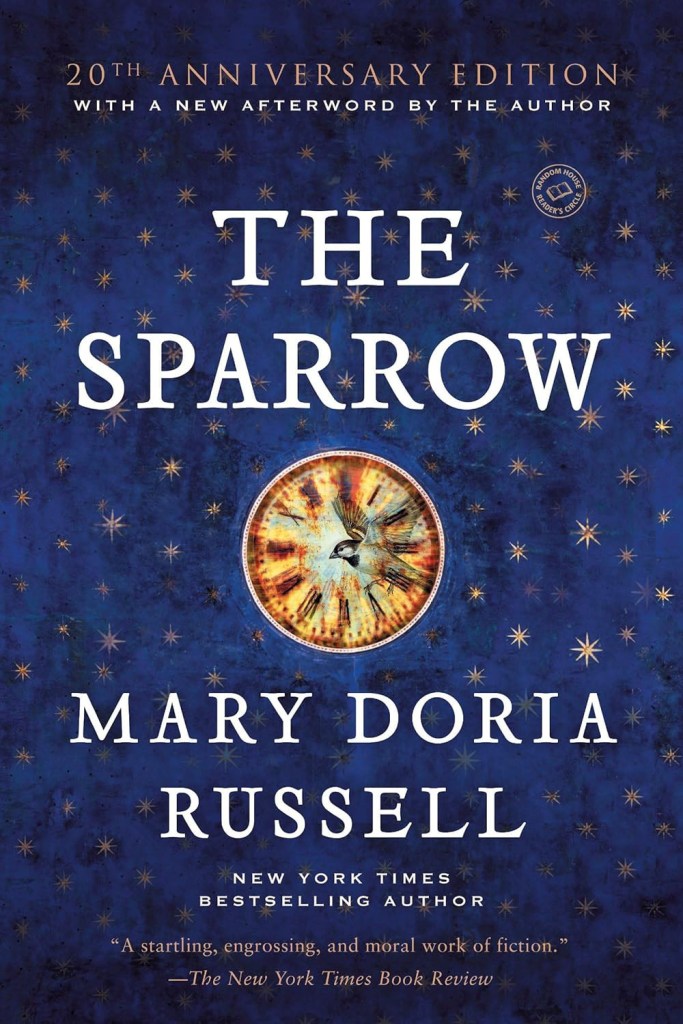
If we’re being honest, both The Sparrow and its 1998 sequel, Children of God, belong on this list so consider this entry a two-for-one. Set in the then-future of 2019, The Sparrow follows Emilio Sandoz, a Jesuit priest who is part of a mission to make first contact with extraterrestrial life after the SETI program discovers radio broadcasts of music from Rakhat, a world area near Alpha Centauri. Over 40 years later, only Emilio returns, the sole survivor of the journey, broken in body and mind.
The Sparrow is, in many ways, a harrowing book but it is incredibly well-written. Structurally presented with parallel plots that follow Emilio’s space journey and his return to Earth, the novel takes a deep look about faith, evil, what it means to be human, and how one’s faith handles — or does not handle — the unknown when truly faced with it. Part sci-fi, part horror, it’s a great book. The follow up, Children of God, continues the story as the Jesuits return to Rakhat and is a great book as well.
3) Use of Weapons by Iain M. Banks (1990)
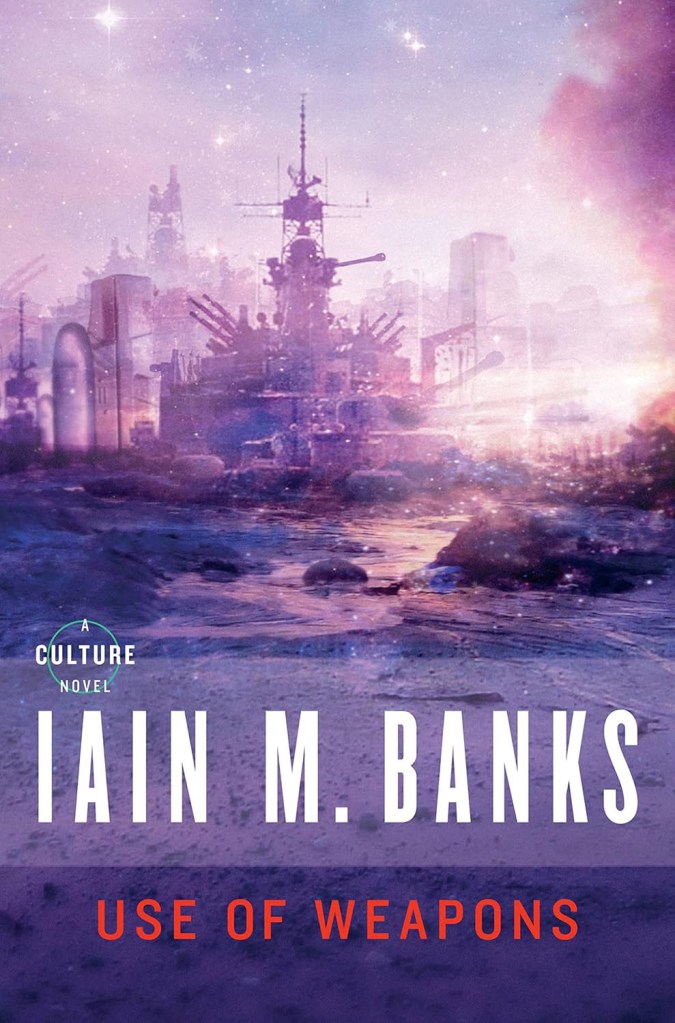
While Use of Weapons is the third novel in Banks’ Culture series, you don’t have to have read the previous books to enjoy this one or even recognize why it’s considered a near perfect sci-fi novel by many readers. The book is set up as though it’s the biography of a man named Cheradenine Zakalwe, born outside of the Culture, but recruited into it by Diziet Sma, a Special Circumstances agent, to work as an operative in less advanced civilizations.
It’s a little difficult to fully describe Use of Weapons — it’s one of those books that you just have to read — but the book has a theme that is pretty straightforward: it’s about weapons and how they are used, but it also include people as weapons. Zakalwe is being used as a weapon by the people he works for even as he is using actual weapons. The book has strong themes of disillusionment and consequence. Not the easiest of reads, but very well worth the time.
2) Jurassic Park by Michael Crichton (1990)
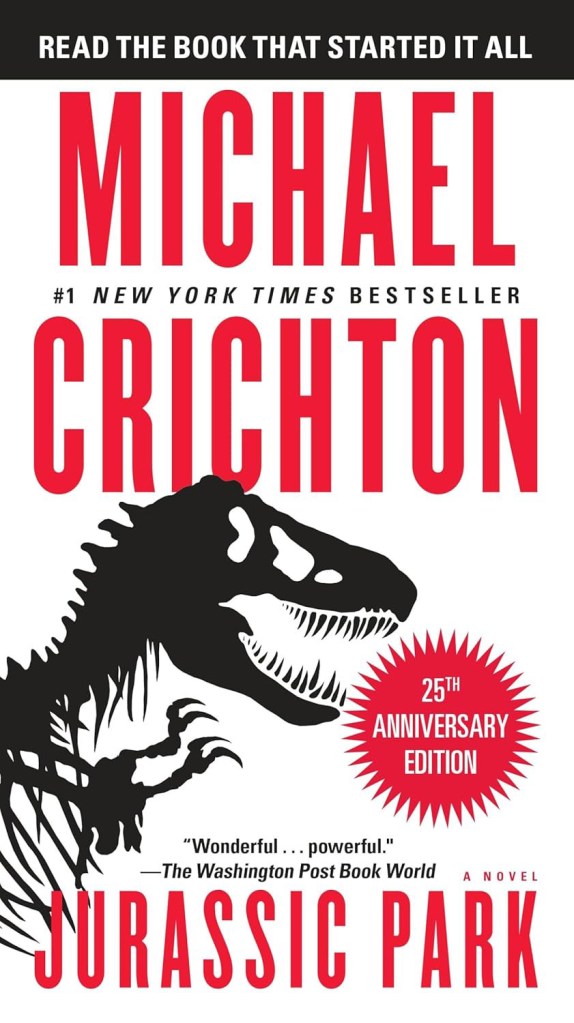
While many people only think about Jurassic Park in terms of the blockbuster movie franchise, this is your reminder that it was actually a science fiction novel first — and one that doesn’t get nearly enough credit for how great it actually is. The novel is, as you probably can guess, about a theme park located on a remote island where dinosaurs are brought back from extinction thanks to genetic engineer. It seems cool, but when the park’s systems fail, it becomes man versus mighty beast in a terrifying fight for survival.
The book has some surprisingly sound science, but the thing about Jurassic Park is that it also makes you think about the idea of “just because we can, does that mean we should?” Rather than being just a high-octane action thriller of a sci-fi, the novel is also a serious cautionary tale. Also worth noting that there are some key differences between the book and the movie (the latter of which Crichton co-wrote) so even if you think you know Jurassic Park, you still should check this out.
1) Parable of the Sower by Octavia E. Butler (1993)
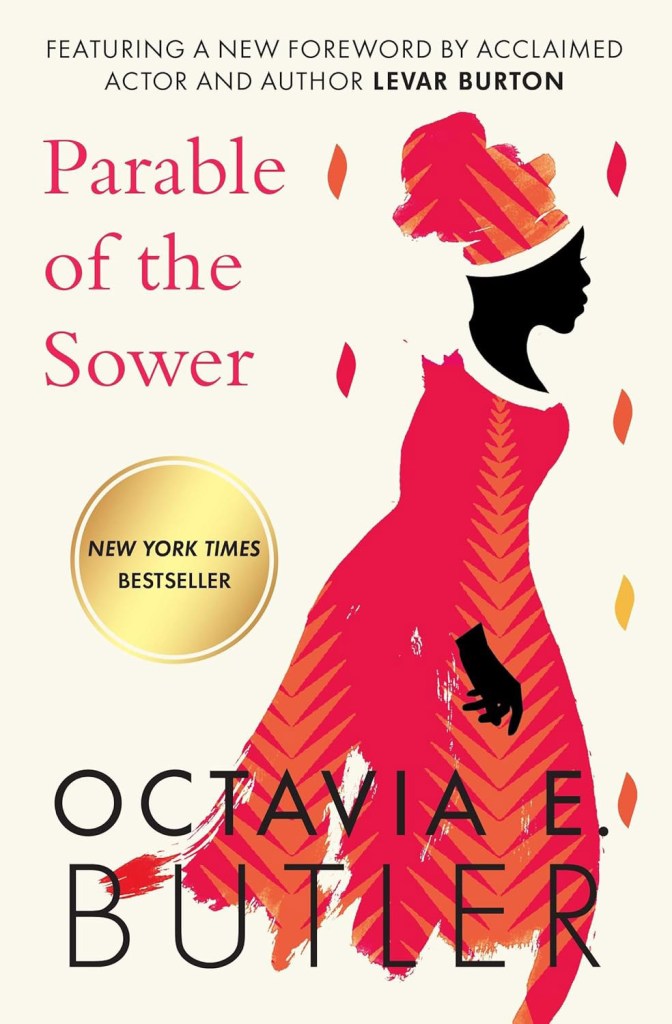
Parable of the Sower is one of those books that regularly pops up on “best of” sci-fi lists and for a good reason. It’s an incredible book. It also has a sequel, Parable of the Talents that was published in 1998. Set on a post-apocalyptic earth that has been catastrophically impacted by climate change as well as social inequality, Parable of the Sower follows a young woman named Lauren who can feel the pain of others. After she is displaced from her home, Lauren is joined on a journey north by various others with Lauren preaching of a religion that she has come up with called Earthseed.
Both a complex sci-fi and a layered meditation on society, Parable of the Sower is a haunting book. It’s follow up, Parable of the Talents, is also good. Unfortunately, while there was meant to be more books in the Parable series, Butler struggled with writers block later in life and died in 2006 before she was able to finish the series. Even with that, Parable of the Sower reads as complete in a standalone sense and is very well worth the time.
What do you think? Leave a comment below and join the conversation now in the ComicBook Forum!
Most Viewed
-

Sony Pictures -

Image courtesy of The Pokemon Company -
Image Courtesy of Marvel Comics -

Image Courtesy of HIDIVE -
Image Courtesy of Netflix -

Image Courtesy of Marvel Studios