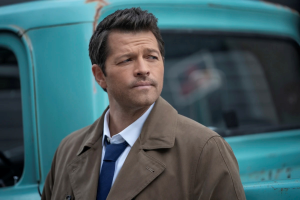
How many times have we seen shows start strong, with bold ideas and a completely fresh, intriguing world, only to end up getting so complicated that they lose control of their own storytelling? In sci-fi especially, a few come to mind: Heroes, The 100, Lost, and the infamous Westworld. Instead of evolving naturally, there’s often an overload of ideas thrown into the plot, or a clear loss of direction in terms of what the show was originally trying to do. That ends up pushing audiences away, simply because it feels like the series no longer really knows where it’s going. And that kind of issue is actually pretty common in the genre when ambition grows faster than the narrative structure can support it.
Videos by ComicBook.com
But not every show falls into that trap. Some manage to maintain an insane level of control even while expanding their lore or scale, keeping a razor-sharp sense of direction that other series could only hope to match. They’re the kind of shows that make people want to keep watching sci-fi on TV. So, with that in mind, here are a few examples that are unbeatable when it comes to staying on track.
5) Farscape
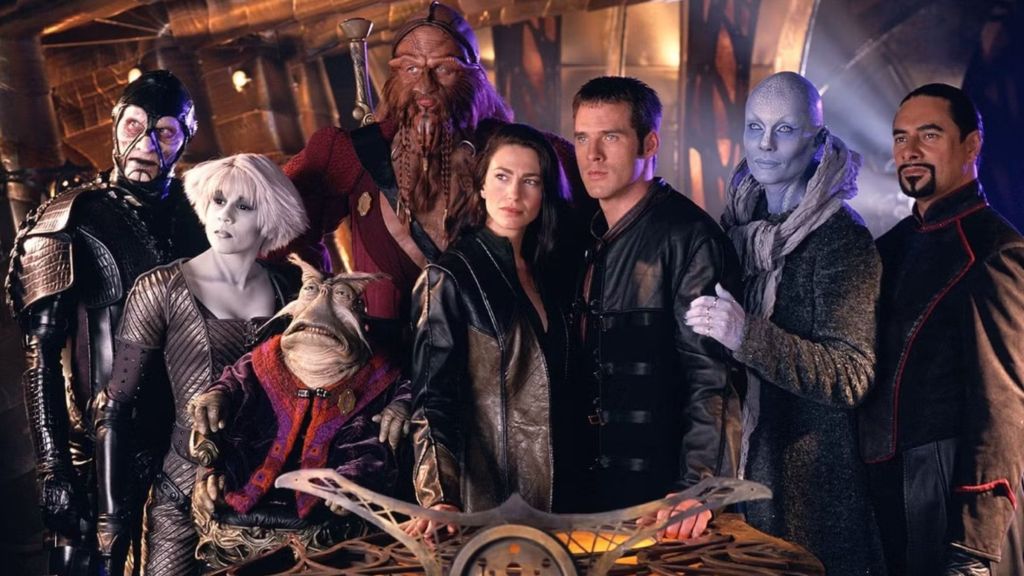
At first glance, Farscape feels like a series that should completely fall apart. The story is basically John Crichton (Ben Browder), an astronaut who gets thrown into a distant region of space and ends up trapped on a ship full of criminals always on the run. So basically, you’ve got a living ship (literally), extremely bizarre alien characters, and a human protagonist dropped into this chaotic world. It could have been a complete mess. However, even with its tonal shifts, the show never actually loses itself.
What happens in Farscape is that status quo changes are constant, and that could absolutely hurt the story. However, they’re carefully planned, with everything carrying real weight on the characters’ psychology (especially Crichton), and that slowly wears him down without the show ever resetting things back to normal just to make future episodes easier. It’s a series that feels chaotic on the surface, but is actually very disciplined from start to finish. It was cancelled at one point, but later wrapped up with a very satisfying miniseries.
4) Person of Interest

Few people really know Person of Interest when it comes to sci-fi, which is a shame, because we’re talking about one of the smartest shows in the genre. It starts as something much simpler than it actually becomes, following John Reese (Jim Caviezel) and Harold Finch (Michael Emerson), an ex-CIA operative and a billionaire who use an AI that predicts crimes to intervene in individual cases before they happen. It’s the classic procedural format, right? But it doesn’t stay there. There’s a clear transition into something much bigger, and that’s where the show really finds its strength.
In short, the series uses that shift to build into a full-scale war between artificial intelligences and surveillance systems. And what keeps it from ever falling apart is that, even when the scope becomes global and almost abstract, it never abandons its internal rules or its core characters. Person of Interest gets more complex, but it never turns into just a sci-fi concept floating without grounding. It’s a scale-up that never breaks the original structure — and that’s rare.

3) The Expanse
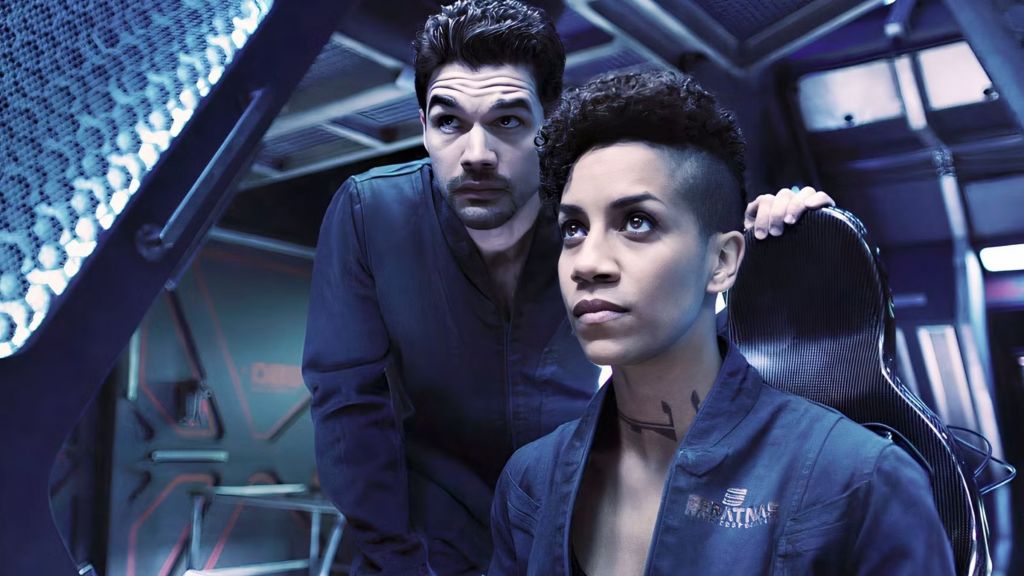
Every sci-fi fan has heard of The Expanse, since it’s basically the textbook example of how to build a genre show without ever losing control of the narrative. The story starts in a system divided between Earth, Mars, and the Belt, where political tensions are already at a breaking point, while an alien threat begins to surface in the background. And the key difference here is that almost everything has direct, cumulative consequences — there’s no real sense of a reset between seasons.
It can be dense and a bit confusing at first, but that’s not a sign that it’s doing something wrong, just that it actually demands your attention before it clicks. Once it does, the story flows naturally and becomes totally addictive. And each character ends up mattering a lot because they actively shift the political balance of the entire system, and those changes keep echoing long after they happen. Eventually, the show does expand into high-concept sci-fi territory, but the political and social core never disappears. The Expanse is a story that keeps evolving with care and consistency, and it’s no surprise so many people still want it back on TV.
2) Andor
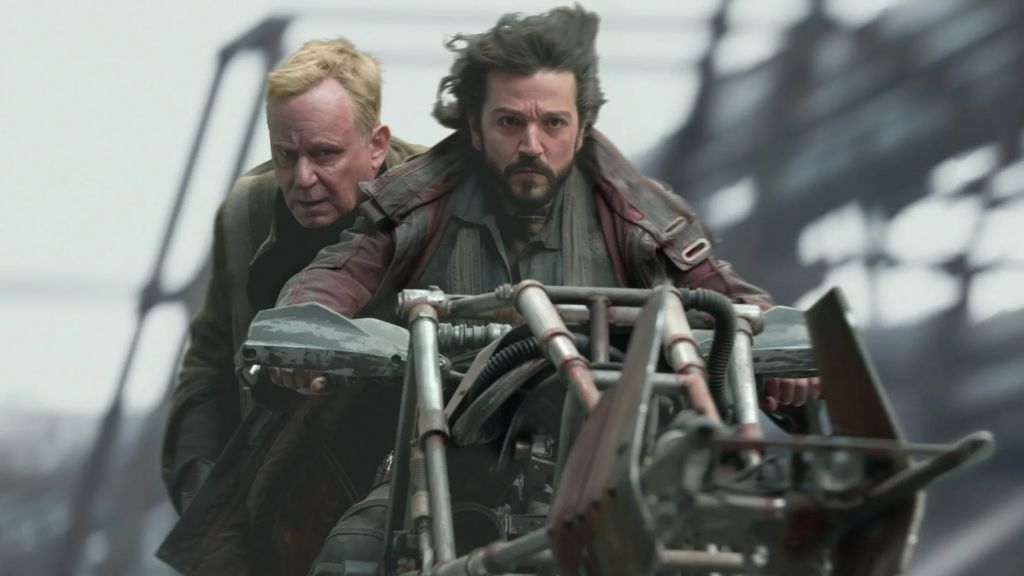
Star Wars is iconic, but in the past few years, the franchise as a whole has felt a bit unstable. However, Andor, a prequel to Rogue One: A Star Wars Story, is probably the clearest example so far of controlled, disciplined storytelling within the saga. The series follows Cassian Andor (Diego Luna), an ordinary man who is slowly pushed into becoming part of the Rebel Alliance’s formation against the Empire. From Season 1 onward, it was widely praised, and a big part of that comes down to three simple reasons.
The production never tries to be big in the traditional Star Wars sense, so it doesn’t rely on nostalgia, doesn’t expand lore just for the sake of it, and doesn’t break its pacing to insert the usual fan service. Everything in Andor is about building political, social, and personal pressure. Each arc directly shows how oppressive systems sustain themselves and how ordinary people end up shaped by them. It’s a strong spin-off, but what actually makes it work is how focused it stays on its own premise without ever drifting away from it.
1) Dark

Dark is a masterpiece from start to finish, and we could end the conversation right there without needing to add much else. It could have turned into a total mess (really easily), especially with how complex its time travel concept is, but it does the exact opposite and ends up being one of the most tightly constructed sci-fi shows ever made. Everything in it connects, and there’s a real sense that nothing is left hanging without purpose. The story follows a small German town where missing person cases lead to the discovery of a time travel loop that connects several generations of the same families.
But what exactly makes Dark so great? It never tries to escalate chaos for the sake of it. Instead of always opening new narrative threads, it gradually closes the ones it already set up, with almost mathematical precision. Nothing exists just to surprise the audience; everything has a function inside the system, even the smallest details. It’s a show that feels almost intimidating in how controlled it is across all seasons, and it stands completely in a league of its own when it comes to sci-fi storytelling done with discipline and intent. It’s pure genius.
What do you think of these shows? Leave a comment below and join the conversation now in the ComicBook Forum!
More TV Shows
-

Courtesy of 20th Television Animation / Hulu