After its debut on Netflix, Kpop Demon Hunters has defied expectations to become the most-watched original film in the platform’s history. This meteoric rise is largely attributed to the visceral synergy between Sony Pictures Animation’s stylized visual language and a high-octane soundtrack that blurred the lines between cinematic score and global chart-toppers. Furthermore, the fictional girl group at the center of the narrative, HUNTR/X, goes through an emotional journey that resonated far beyond the standard demographic for animated features, driven by themes of sisterhood and the crushing pressure of idol culture. On top of that, critics and fans alike have praised the production for its kinetic action sequences and a vibrant aesthetic that feels like a modern evolution of the “used future” and cyberpunk tropes. Despite all that, Kpop Demon Hunters still has a major flaw: there’s only one of it.
Videos by ComicBook.com
While Sony Pictures Animation and Netflix have officially confirmed that a sequel is in development, the industrial realities of high-end animation suggest that Kpop Demon Hunters 2 will not grace screens until 2028 or 2029 at the earliest. This multi-year hiatus is a significant hurdle for a fandom built on the infectious energy of the first film. Fortunately, television is filled with productions that share some of Kpop Demon Hunters‘ DNA, offering similar blends of supernatural combat, musical performance, and teenage rebellion.
5) Totally Spies!

Totally Spies! merges high-fashion aesthetics with the structural rigors of an international espionage thriller. The series follows Sam (voiced by Jennifer Hale), Alex (voiced by Katie Leigh), and Clover (voiced by Andrea Baker), three Beverly Hills students who lead double lives as undercover agents for the World Organization of Human Protection. Much like the protagonists in Kpop Demon Hunters, these characters must maintain a carefully constructed public image while utilizing advanced technology to combat international threats.
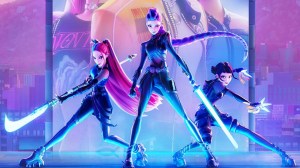
The production design of Totally Spies! emphasizes a bright, color-coded aesthetic that echoes the individual personalities of the trio, mirroring the distinct branding seen in Kpop Demon Hunters. Plus, by prioritizing the bond between the leads as they navigate the complexities of high school and secret missions, the series provides a blueprint for the “girls with a secret mission” trope that continues to captivate audiences.
4) Scott Pilgrim Takes Off
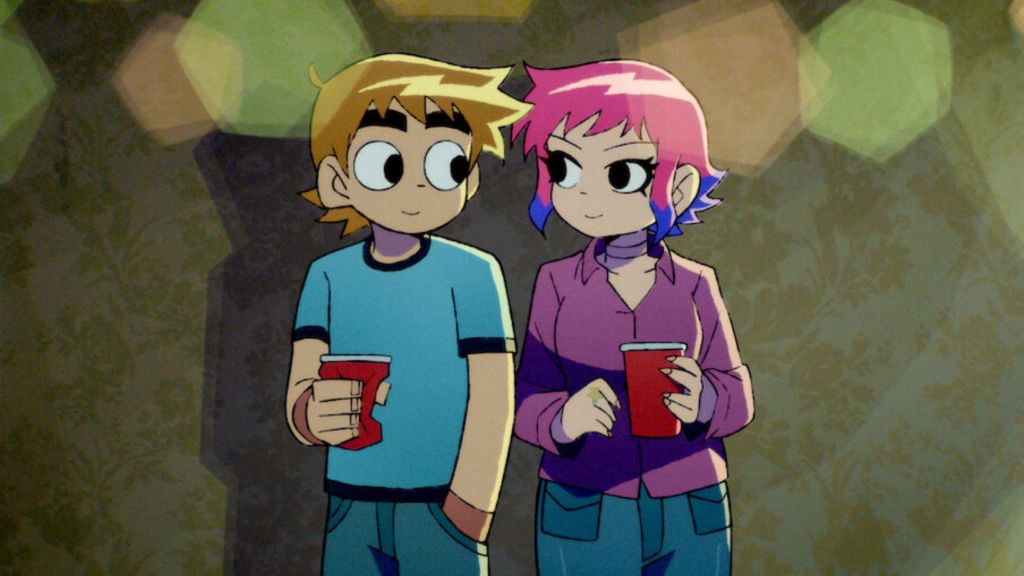
Scott Pilgrim Takes Off functions as a brilliant subversion of its source material, offering an alternate-timeline narrative that prioritizes character deconstruction over a standard retelling of the original comics. After the titular Scott Pilgrim (voiced by Michael Cera) is seemingly defeated in the opening episode, the focus shifts entirely to Ramona Flowers (voiced by Mary Elizabeth Winstead) as she investigates his disappearance.
The structural shift allows Scott Pilgrim Takes Off to humanize the League of Evil Exes, transforming them from generic bosses into fleshed-out individuals with their own emotional arcs and regrets. The animation by Science Saru provides a kinetic, video-game-inspired aesthetic that aligns perfectly with the hyper-stylized combat seen in Kpop Demon Hunters. Furthermore, the inclusion of original music from Sex Bob-Omb ensures that the rhythmic identity of the franchise remains a central pillar of the storytelling.
3) Jem and the Holograms
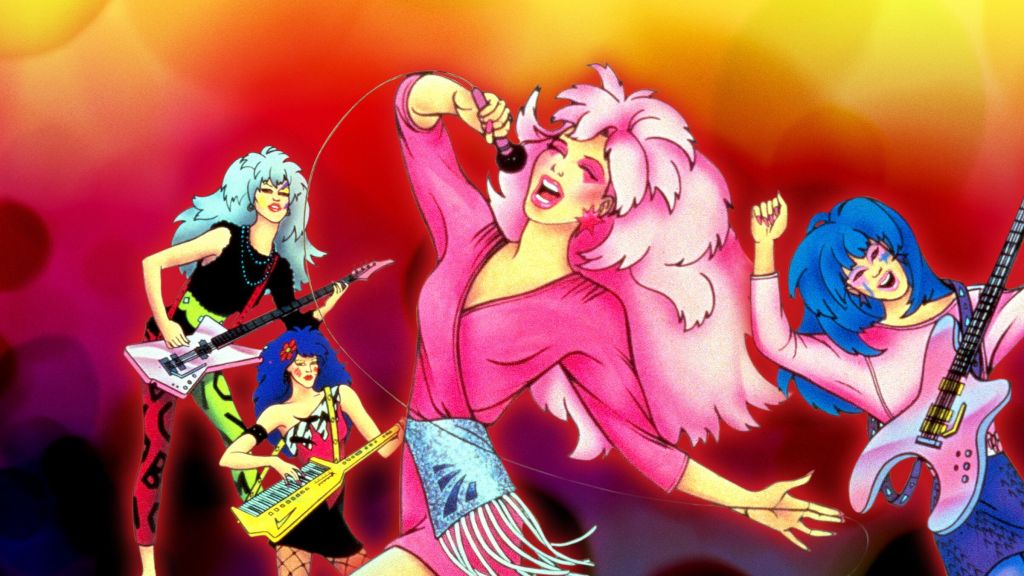
For those who were specifically drawn to the musical infrastructure of the hunters’ world, Jem and the Holograms remains a foundational TV show that explores the intersection of technology and stardom. The narrative revolves around Jerrica Benton (voiced by Samantha Newark), who utilizes a highly advanced holographic computer named Synergy (voiced by Charlie Adler) to transform into the mysterious rock star Jem. This central conflict of identity is complicated by the ruthless corporate sabotage of the Misfits, a rival musical group led by the manipulative Pizzazz (voiced by Patricia Alice Albrecht).
Jem and the Holograms was revolutionary for its commitment to producing original songs and music videos for every episode, establishing a rhythmic pace that mirrors the infectious energy of a modern K-pop production. Beyond the neon hair and 80s glam, the show investigates the ethics of image manipulation and the importance of maintaining one’s authentic self amidst the pressures of fame.
2) Star vs. the Forces of Evil
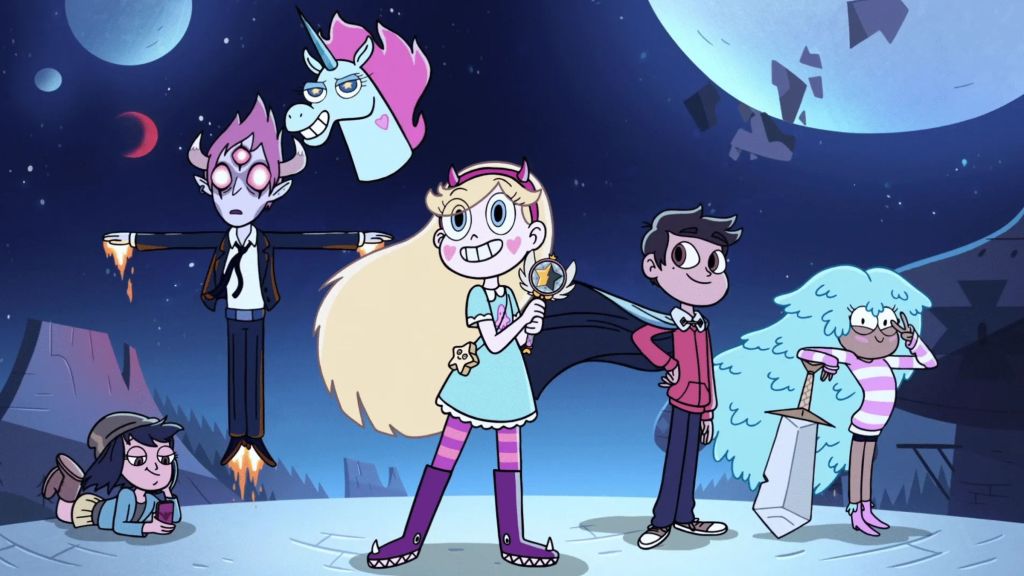
Star vs. the Forces of Evil serves as a subversive deconstruction of the “magical girl” genre, utilizing an increasingly dark narrative arc to explore the consequences of inherited power. The story centers on Star Butterfly (voiced by Eden Sher), a reckless princess from another dimension who is sent to Earth to master her magical wand under the supervision of Marco Diaz (voiced by Adam McArthur).
While the early Star vs. the Forces of Evil episodes lean into whimsical humor and dimension-hopping adventures, the overarching plot eventually matures into a sophisticated examination of systemic prejudice and the morality of demon-slaying. This narrative evolution mirrors the emotional depth found in the hunters’ struggle, as Star must confront the reality that her supernatural enemies, such as the monstrous Ludo (voiced by Alan Tudyk), are often products of complex historical conflicts. Finally, the show’s fluid animation and imaginative creature designs create a world where the boundary between the mundane and the magical is perpetually blurred.
1) Jentry Chau vs. The Underworld

Jentry Chau vs. The Underworld stands as the most direct precursor to Kpop Demon Hunters. The series centers on Jentry Chau (voiced by Ali Wong), a Chinese-American teenager living in a small Texas town who discovers that her repressed supernatural abilities have made her a target for the forces of the underworld. This discovery forces Jentry to seek the guidance of her Great-Aunt (voiced by Joan Chen) and a mysterious weapons expert (voiced by Bowen Yang) to prevent an ancient evil from entering the mortal realm.
The series utilizes a sharp animation style that emphasizes the visceral nature of the demon encounters, drawing heavily from East Asian folklore to create a unique bestiary. This cultural specificity provides the narrative with an authentic weight, as Jentry’s struggle to master her powers is inextricably linked to her journey toward self-acceptance. For fans of the hunters, the series offers a perfect blend of high school drama, stylized combat, and the investigation of ancestral legacies, making it the definitive viewing choice during the long wait for Kpop Demon Hunters 2.
Which animated series do you think best captures the high-energy spirit of the K-pop idol world? Leave a comment below and join the conversation now in the ComicBook Forum!
Most Viewed
-

Official art by Bastien Lecouffe-Deharme -
Image courtesy of Tor Books/Macmillan -
A photo of the Retrovolt Arcade taken in 2017, showing several classic arcade cabinets and stools.