The 1990s delivered a seismic shift in how science fiction operated on television. First of all, advances in digital visual effects lowered the barrier for depicting interstellar combat, alien worlds, and temporal anomalies on a broadcast budget, while a post-Cold War cultural anxiety led writers to interrogate government institutions, extraterrestrial threats, and the limits of human identity with a seriousness the genre had rarely been afforded before. Serialized storytelling also began its slow displacement of the procedural model, meaning that science fiction series were no longer collections of isolated episodes but architecturally complex narratives that rewarded audience investment across multi-season arcs. As a result, the 1990s produced cultural phenomena and template-setting experiments that redefined what the medium was capable of delivering.
Videos by ComicBook.com
What separates the genuinely durable series of that era from the ones that calcified into nostalgia is a combination of thematic ambition and structural integrity. The shows that endure are the ones that grounded their speculative premises in recognizable human behavior, building characters whose decisions felt motivated by psychology rather than plot convenience. That discipline, applied consistently across dozens of hours of television, is what allows a viewer encountering these series for the first time in 2025 to find them as gripping as audiences did when they originally aired.
7) The Outer Limits
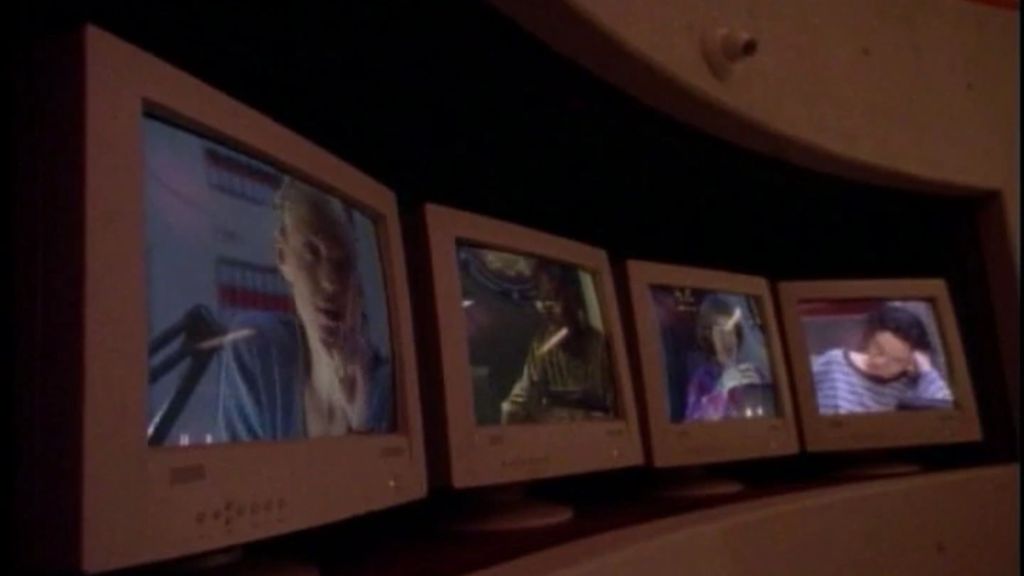
The 1995 revival of The Outer Limits operated as an anthology series in an era when that format was commercially unfashionable, producing self-contained science fiction parables across seven seasons on Showtime and the Sci-Fi Channel. The show’s structural freedom allowed it to adapt stories from established authors, commission original scripts, and experiment with tone in ways that no serialized narrative could permit, cycling between hard science horror, ethical philosophy, and social satire within the same production run.

The anthology format does create an uneven experience across the full run, since the quality of any given episode depended entirely on the strength of its individual script and the synergy of cast and crew. The episodes that succeeded, however, did so because the show understood that the best science fiction uses an implausible scenario to illuminate a very plausible human failing, a principle that remains as creatively potent today as it was thirty years ago. Plus, The Outer Limits‘ structure and themes make it a predecessor to Black Mirror, one of the best ongoing sci-fi series.
6) Star Trek: Voyager
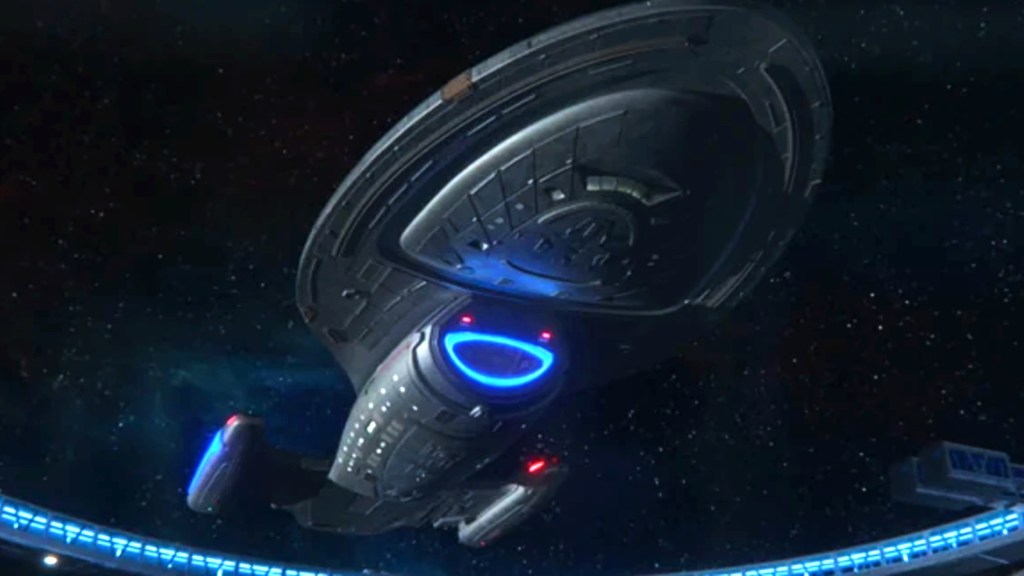
Star Trek: Voyager launched in 1995 as the anchor of UPN and the fourth live-action television series in the Star Trek franchise, positioning a stranded Federation starship 70,000 light-years from home as the central dramatic premise. The isolation of the USS Voyager’s crew, cut off from Starfleet support and forced to navigate an entirely uncharted quadrant of the galaxy, led to a survival framework that gave the series a structural tension largely absent from the more diplomatically adventures of The Next Generation.
The Voyager’s Captain Kathryn Janeway (Kate Mulgrew) remains one of the most rigorously written commanding officers in franchise history, a character defined by the genuine intellectual weight she brought to decisions that had no clean resolution. To be fair, the series struggled with consistency in its middle seasons, occasionally abandoning the consequences of earlier episodes in favor of episodic resets. The Borg’s expanded presence in the later seasons, however, restored narrative momentum and gave Voyager a recurring threat whose menace still registers as credible by contemporary standards.
5) Farscape
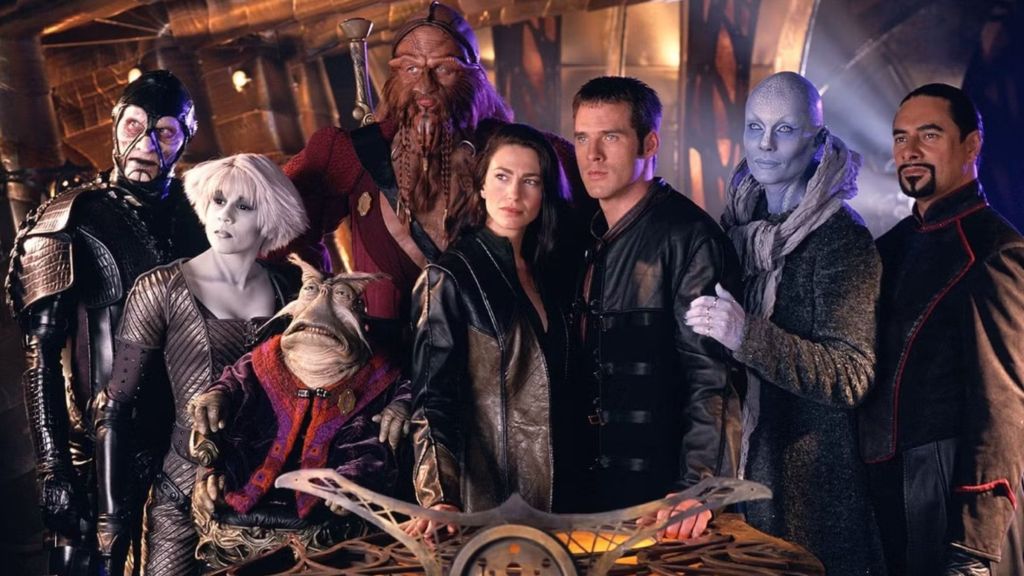
Farscape debuted on the Sci-Fi Channel in 1999, following an American astronaut hurled across the universe and trapped aboard a living ship crewed by alien fugitives. While that premise could have collapsed into parody, Farscape instead became one of the decade’s most narratively unpredictable science fiction series. The Henson Company’s involvement meant the alien characters were realized through advanced puppetry and practical creature effects that have aged with far greater dignity than the CGI-heavy productions of the same period, giving Farscape a tactile visual identity that remains distinctive.
On top of that, the central relationship between astronaut John Crichton (Ben Browder) and the Peacekeeper officer Aeryn Sun (Claudia Black) was written with a psychological complexity that resisted the genre’s tendency to resolve romantic tension quickly, sustaining genuine dramatic stakes across four seasons and the subsequent miniseries The Peacekeeper Wars. Farscape also treated its own mythology as genuinely consequential, ensuring that character deaths and strategic reversals accumulated weight rather than evaporating between episodes.
4) Stargate SG-1
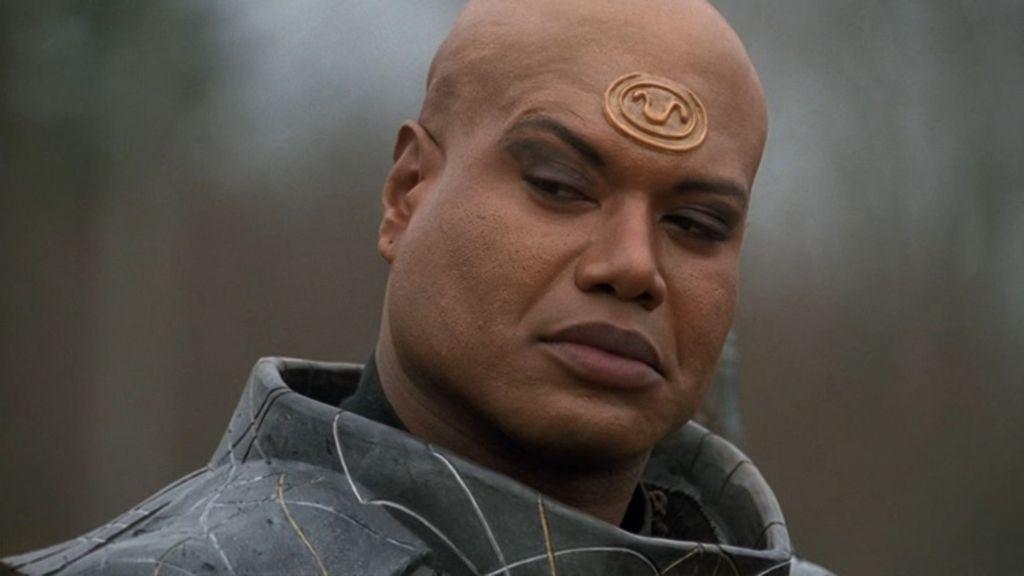
Stargate SG-1 launched in 1997 as a television expansion of Roland Emmerich’s 1994 theatrical film and ran for ten seasons, making it the longest-running North American science fiction series at the time of its conclusion. The premise of a military unit using an ancient transportation network to visit planets seeded with human civilizations by alien beings posing as Egyptian gods gave the writing staff an essentially unlimited vault of historical mythology to draw from, allowing the show to cycle through Goa’uld, Asgard, and Ori antagonists without ever exhausting its conceptual foundation.
Richard Dean Anderson’s portrayal of Colonel Jack O’Neill in Stargate SG-1 also grounded the series’s more outlandish developments in a specifically American military pragmatism that served as an effective tonal anchor, preventing the show from drifting into the self-serious register that occasionally undermined competing franchises. In addition, the series developed one of the most coherent internal continuities of the era, building a mythology across a decade of television that rewarded long-term viewers without becoming inaccessible to newcomers encountering individual story arcs. With a Stargate revival currently in development, the moment is ideal to revisit the original show.
3) Futurama

Futurama premiered on Fox in 1999 as Matt Groening and David X. Cohen’s animated science fiction comedy, set in a 31st-century New York populated by robots, aliens, and a cryogenically revived pizza delivery boy named Philip J. Fry (voiced by Billy West). What distinguished Futurama from its contemporary animated competitors was the writers’ room’s demonstrable familiarity with actual physics, mathematics, and computer science, a credibility that allowed the show to construct jokes whose punchlines operated simultaneously on a comedic and an intellectually rigorous level.
Futurama‘s emotional range also exceeded what the format typically demanded, with individual episodes addressing grief, addiction, and existential loneliness without abandoning the comedic framework. The show’s multiple revivals, including the most recent season on Hulu, confirm that its satirical targets—corporate power, bureaucratic indifference, technological dependency—have only grown more relevant.
2) Babylon 5

Babylon 5, which premiered in 1993 on the Prime Time Entertainment Network, was the first American science fiction television series constructed entirely as a pre-planned, five-year narrative arc, a structural decision that influenced the architecture of virtually every prestige drama that followed it. Creator J. Michael Straczynski wrote the overwhelming majority of the episodes himself, a workload that guaranteed thematic consistency across a storyline that encompassed interstellar war, political corruption, and the literal return of ancient evil to the galaxy.
The station’s commander, John Sheridan (Bruce Boxleitner), and his predecessor Jeffrey Sinclair (Michael O’Hare) were both written as figures whose personal histories were embedded in the larger mythological framework, meaning that character revelations doubled as plot revelations in ways that rewarded attentive viewers. It’s worth noting that the show’s production budget was perpetually strained, resulting in CGI that reads as dated by current technical standards. Still, the quality of the writing is sufficient to render those visual limitations irrelevant to the experience of following the story. After all, Babylon 5 demonstrated that long-form serialized science fiction could carry the structural ambition of literary fiction.
1) The X-Files
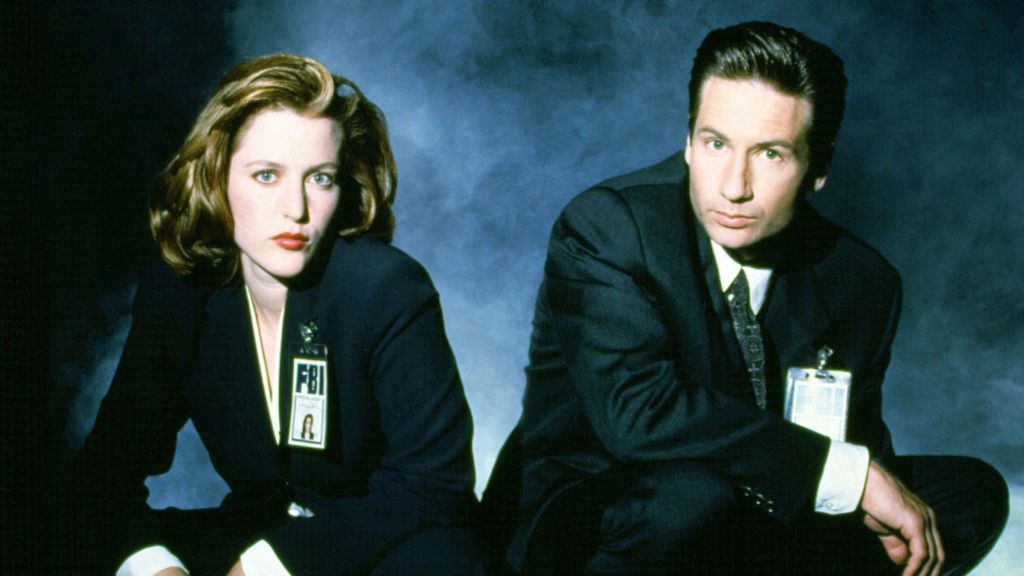
The X-Files premiered on Fox in 1993 and transformed the paranoid texture of Cold War-era American culture into one of the most formally sophisticated genre series ever produced for network television. Creator Chris Carter built the show around a fundamental epistemological conflict, as FBI Special Agents Fox Mulder (David Duchovny) and Dana Scully (Gillian Anderson) approached identical evidence through the irreconcilable frameworks of faith and empiricism. This central dynamic gave the series an internal engine capable of sustaining both self-contained monster-of-the-week episodes and the sprawling government conspiracy mythology that ran across the full nine-season original run.
The X-Files conspiracy arc’s themes of institutional deception, surveillance, and the weaponization of public ignorance have acquired a resonance in the intervening decades that Carter’s writing could not have entirely anticipated, making the show feel less like a period artifact and more like a diagnostic of the future. Scully’s scientific skepticism, in particular, reads as a model of rational inquiry in an era when that quality feels genuinely embattled, ensuring that The X-Files functions as both entertainment and cultural argument. It’s no wonder the series is getting a reboot, as it remains as relevant as ever.
Which 1990s sci-fi TV show is your favorite? Leave a comment below and join the conversation now in the ComicBook Forum!
Most Viewed
-
Courtesy of Cartoon Network -
Image Courtesy of Marvel Comics



![Spider-Man: Brand New Day Trailer: Watch Every Clip Released So Far [Updating]](https://comicbook.com/wp-content/uploads/sites/4/2026/03/Spider-Man-Clips.jpg?w=300)