Several high-profile television series have successfully carved out their niche in pop culture by establishing music as their foundational aesthetic. Projects like Crazy Ex-Girlfriend and Pushing Daisies utilized melodic performances to build their core identity, ensuring that the act of singing was an expected and inextricable part of the weekly narrative. However, a far more curious phenomenon occurs when a series that is not a musical suddenly pivots into a rhythmic experiment. These one-off episodes represent a high-stakes departure from the established language of a production, forcing an ensemble rooted in traditional drama or comedy to communicate through a foreign medium.
Videos by ComicBook.com
The subversion from a musical episode has become increasingly rare as the industry has transitioned from the long-form episodic model to the rigid serialization of the binge-watching era. The traditional 22-episode broadcast season once functioned as an incubator for these detours, providing showrunners with the structural breathing room to engage in genre-bending exercises without jeopardizing the seasonal arc. In contrast, the modern streaming environment demands a relentless focus on the primary plot, viewing standalone episodes as a luxury that the compressed eight-episode schedule cannot afford. That’s a shame, as the best musical episodes in non-musical TV shows prove that experimentation can elevate a great series.
7) The Flash – “Duet” (Season 3, Episode 17)

The CW utilized the professional musical theater backgrounds of its primary leads to execute a high-concept crossover that remains a definitive highlight of the Arrowverse era. In The Flash episode titled “Duet,” a multidimensional antagonist known as the Music Meister (Darren Criss) traps Barry Allen (Grant Gustin) and Kara Danvers (Melissa Benoist) in a coma-induced dreamscape modeled after the Golden Age of Hollywood cinema. To regain consciousness, the protagonists must complete the script of a classic movie musical, which involves navigating a 1940s-inspired gangster conflict while performing choreographed routines. This production succeeds because it treats the musical numbers as a direct reflection of the characters’ internal romantic struggles, specifically regarding their respective relationships with Iris West (Candice Patton) and Mon-El (Chris Wood). The inclusion of original compositions like “Runnin’ Home to You” and “Super Friend” provides a lasting emotional resonance that justifies the whimsical premise, proving that melodic storytelling can facilitate genuine character development within the superhero genre.
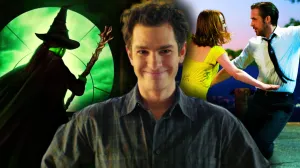
6) Batman: The Brave and the Bold – “Mayhem of the Music Meister!” (Season 1, Episode 24)

Batman: The Brave and the Bold thrived on its willingness to embrace the theatrical absurdity of the Silver Age of comics, and “Mayhem of the Music Meister!” serves as its most creative achievement. The narrative introduces the flamboyant titular villain (voiced by Neil Patrick Harris), whose vocal powers allow him to mind-control heroes and villains alike, forcing the entire city into elaborate performances. By utilizing the flexibility of animation, the production delivers imaginative sequences that exceed the visual limitations of live-action, ranging from prison-themed tap dances to cosmic operatic battles. The songwriting is remarkably sharp, satirizing the tropes of both musical theater and the superhero archetype with surgical precision. Batman (voiced by Diedrich Bader) provides the perfect comedic foil as the stoic, non-singing center of the chaos, heightening the humor of his involuntary participation in the villain’s grand spectacle.
5) Community – “Regional Holiday Music” (Season 3, Episode 10)

Greendale Community College provided the perfect setting for a scathing yet affectionate parody of the cultural phenomenon Glee in the episode “Regional Holiday Music.” The experiment follows Abed Nadir (Danny Pudi) as he attempts to manufacture a happy Christmas for his friends by replacing the school’s regular glee club after a legal incident. The narrative functions as a psychological thriller masquerading as a holiday special, depicting the infectious nature of the musical format as a literal virus that consumes the cast members one by one. Each song is a meticulously crafted subversion of established character traits, from the cynical rock posturing of Jeff Winger (Joel McHale) to a disturbingly infantilized holiday performance by Annie Edison (Alison Brie). This Community episode is a standout because it uses the musical medium to critique the artificiality of performative joy in mainstream television while maintaining the sharp meta-humor that defined the series. The technical execution of the original songs remains impressive, successfully mimicking the high-budget production value of the shows it intends to satirize.
4) Scrubs – “My Musical” (Season 6, Episode 6)

Clinical settings rarely lend themselves to rhythmic choreography, but Scrubs found a brilliant medical justification for its melodic detour in the episode “My Musical.” The story centers on a patient named Patti Miller (Stephanie D’Abruzzo) who suffers from a neurological condition that causes her to perceive all human speech as elaborate Broadway performances. This premise allows the production to maintain its grounded reality while the ensemble cast, led by J.D. (Zach Braff) and Christopher Turk (Donald Faison), engages in high-energy musical numbers that recap years of interpersonal friction. The compositions are diverse and technically polished, ranging from the comedic R&B of “Guy Love” to the grand ensemble finale involving the entire hospital staff. The success of this experiment stems from the integration of the songs into the daily professional stresses of the characters, ensuring that the humor remains consistent with the show’s established tone.
3) Futurama – “The Devil’s Hands Are Idle Playthings” (Season 4, Episode 18)

Acting as the original series finale for the animated sci-fi hit Futurama, “The Devil’s Hands Are Idle Playthings” centers on Philip J. Fry (voiced by Billy West) making a literal deal with the Robot Devil (voiced by Dan Castellaneta) to gain musical talent. The climax of the episode is a full-scale opera within the show, where the characters use music to resolve the long-standing romantic tension between the protagonist and Turanga Leela (voiced by Katey Sagal). The musical experiment is remarkable for its sophisticated composition and its ability to weave plot and melody into a seamless whole. The lyrics are packed with the show’s signature wit, while the visual direction during the opera sequence captures the epic scale of the conflict. The final moments, featuring a simple melody on a holophonor, provide a poignant end that balances humor with sincere sentiment.
2) Star Trek: Strange New Worlds – “Subspace Rhapsody” (Season 2, Episode 9)
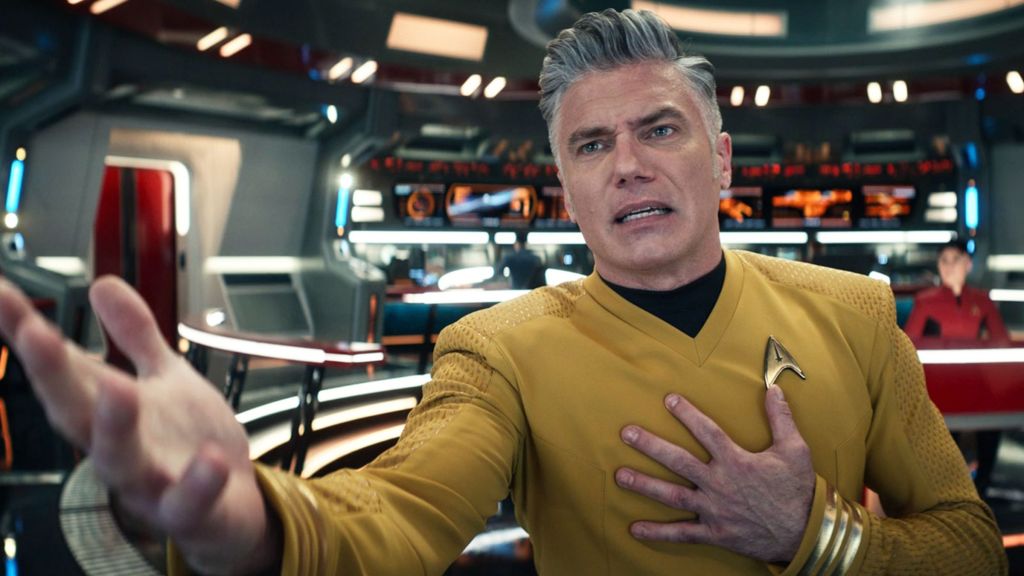
Breaking a six-decade tradition within the franchise, Star Trek: Strange New Worlds delivered a comprehensive musical event that successfully merged high-concept science fiction with theatrical performance. In “Subspace Rhapsody,” a rift in space-time creates a reality-warping field that compels the crew of the Enterprise to sing their most private thoughts and emotional burdens. The production is a significant technical achievement, featuring a variety of musical styles that reflect the diverse personalities of the ensemble, including the pop-inspired rhythms of Nyota Uhura (Celia Rose Gooding) and the emotional vulnerability of Christopher Pike (Anson Mount). The experiment succeeds because the songs are used to accelerate long-standing character arcs, forcing La’an Noonien-Singh (Christina Chong) and others to confront secrets they had previously suppressed. By providing a scientific explanation for the phenomenon, the show maintains the internal logic of the Star Trek universe while embracing the inherent absurdity of the musical genre.
1) Buffy the Vampire Slayer – “Once More, with Feeling” (Season 6, Episode 7)
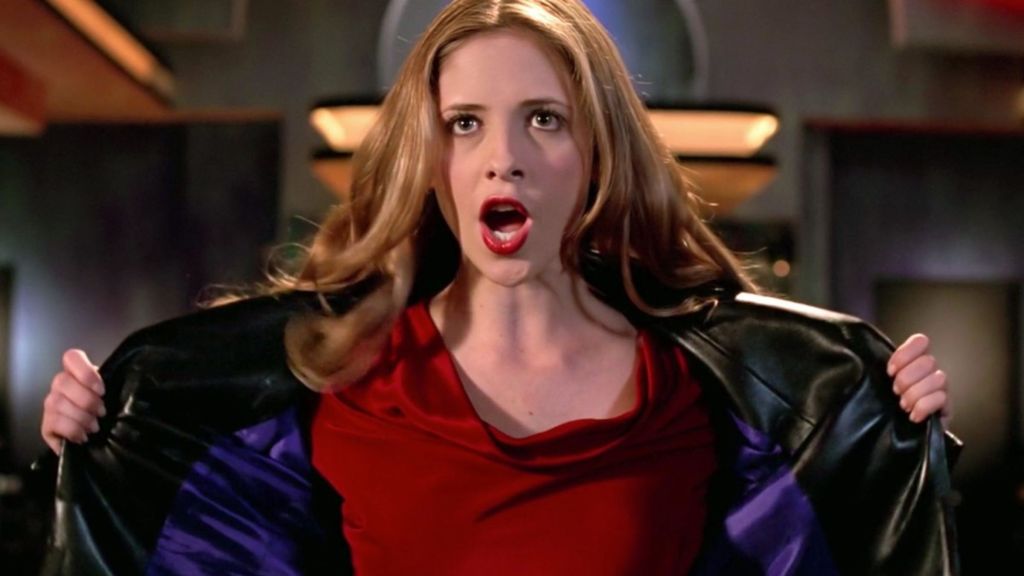
More than two decades after its debut, Buffy the Vampire Slayer‘s “Once More, with Feeling” remains the definitive gold standard for the non-musical TV episode. Written and directed by Joss Whedon, the episode features a demon (Hinton Battle) who causes the residents of Sunnydale to sing until they spontaneously combust. The brilliance of this experiment lies in its narrative necessity; the songs act as a vessel for the characters to reveal secrets they have kept for years, particularly the trauma of Buffy Summers (Sarah Michelle Gellar) following her resurrection. The music spans various genres, including rock, disco, and lullabies, each meticulously crafted to fit the individual character arcs. This production is a massive achievement because it avoids the pitfalls of being a mere novelty, instead serving as a critical turning point for the season’s overarching story.
Which television series do you think delivered the most impressive musical episode during its run? Leave a comment below and join the conversation now in the ComicBook Forum!
Most Viewed
-
Image Courtesy of Netflix -
Image courtesy of Netflix -

Image Courtesy of Crunchyroll