Few franchises have survived as many near-death experiences as Star Trek. What began as a single NBC series in 1966 has since sprawled into 13 shows across broadcast television, first-run syndication, and multiple streaming eras, alongside 14 feature films and a fan base that has repeatedly proven itself capable of resurrecting projects the studio had already written off. As the franchise approaches its 60th anniversary this September, that history feels especially relevant because Star Trek is in the middle of another gap. For the first time since Star Trek: Discovery relaunched the TV franchise in 2017, there is no new Star Trek series in active development. Star Trek: Strange New Worlds and Star Trek: Starfleet Academy are both burning off already-filmed final seasons, and the sets built for both shows have reportedly already been torn down.
Videos by ComicBook.com
While the situation looks grim for Star Trek fans, cancellations have been part of the franchise since its inception. In fact, only Deep Space Nine, Voyager, and Picard ended their runs on their own terms, making them outliers. That means the other 12 greenlit Star Trek TV shows were all cancelled, some even before they aired a single episode.
12) Star Trek: Short Treks

Created by Bryan Fuller and Alex Kurtzman as a companion anthology to Star Trek: Discovery, Star Trek: Short Treks ran for ten episodes across two seasons between October 2018 and January 2020, mixing live-action shorts with animated installments and earning an Emmy nomination for Outstanding Short Form Comedy or Drama Series in 2020. After the series vanished from the future calendar, Kurtzman said that he hoped to produce more, but the pandemic disrupted production schedules across the franchise, and Paramount Television never ordered a third season.
In addition to the timing issues, the format itself may have worked against it. Short Treks existed to buy time between seasons of Discovery and to bridge into Star Trek: Picard. Once that connective function was no longer needed, there was no obvious reason to keep commissioning ten-minute installments. The series simply stopped, without a press release marking the end, making it a casualty of shifting priorities.
11) Star Trek: Khan – Ceti Alpha V

Nicholas Meyer’s Khan project spent nearly a decade bouncing between formats before finally reaching audiences, but its original incarnation as a television miniseries never made it past the planning stage. Meyer, who directed Star Trek II: The Wrath of Khan, was hired in 2017 to write a three-episode limited series chronicling Khan Noonien Singh’s exile on Ceti Alpha V between “Space Seed” and the events of his 1982 film. Alex Kurtzman signed off on the concept as part of a broader deal to expand the franchise beyond Discovery, but the cost of producing a short-run prestige miniseries stalled the project for years, and by 2021, Meyer was still describing it as being held back by budget concerns.
Paramount ultimately converted the idea into an audio drama in 2022, expanding it into a nine-episode format written by Kirsten Beyer and David Mack and starring Naveen Andrews as Khan. That version was finally released as a podcast in the fall of 2025. As a television project, though, Paramount decided Ceti Alpha V could not justify its budget.
10) Star Trek: The Animated Series
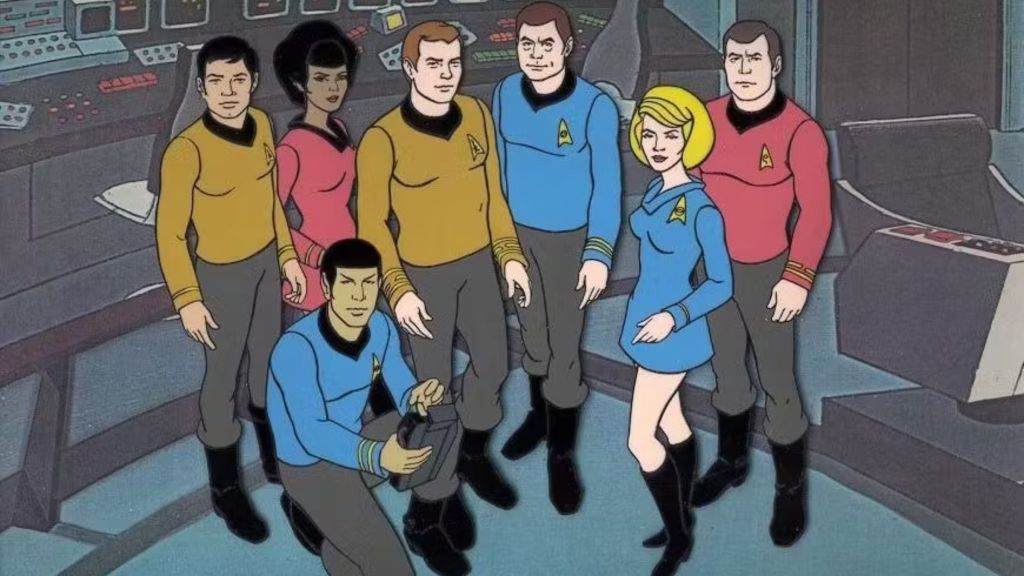
Whether Star Trek: The Animated Series counts as a true cancellation is debatable, since Filmation and Roddenberry secured a two-season, 22-episode commitment from the outset and the show delivered exactly that. The series aired on NBC’s Saturday morning schedule from September 1973 to October 1974, reuniting most of the original cast, including William Shatner, Leonard Nimoy, and DeForest Kelley, and it won the 1975 Emmy for Outstanding Children’s Entertainment Series. That level of prestige should have ensured further seasons, but that’s not what happened.
Filmation producer Lou Scheimer lobbied hard to move the show to primetime and extend its run, but NBC’s Saturday morning advertisers were specifically targeting a younger children’s demographic that the show, by Scheimer’s own account, was never really built for. Since the network never renewed it beyond its original contract and Scheimer’s push for more seasons went nowhere, Star Trek: The Animated Series got a soft cancellation, with the project’s ambitions outpacing what the network was willing to fund.
9) Star Trek: Section 31

Section 31 spent roughly six years in development as a television series before Paramount quietly abandoned that plan altogether. Michelle Yeoh’s interest in a spinoff centered on Emperor Philippa Georgiou dated back to before Discovery‘s first season premiere, and the project was formally announced as a series in January 2019, only to be delayed repeatedly by rewrites, the COVID-19 pandemic, and Yeoh’s own skyrocketing profile following her Oscar win for Everything Everywhere All at Once.
In April 2023, Paramount officially confirmed that Section 31 would no longer be a weekly series and would instead become a standalone streaming movie, with executives framing the shift as a deliberate strategy to avoid oversaturating the franchise with another ongoing show. That reframing effectively killed the series version of Section 31 for good, with the badly received film eventually premiering in January 2025 and telling a self-contained story with no built-in path back to episodic television.
8) Star Trek: Lower Decks
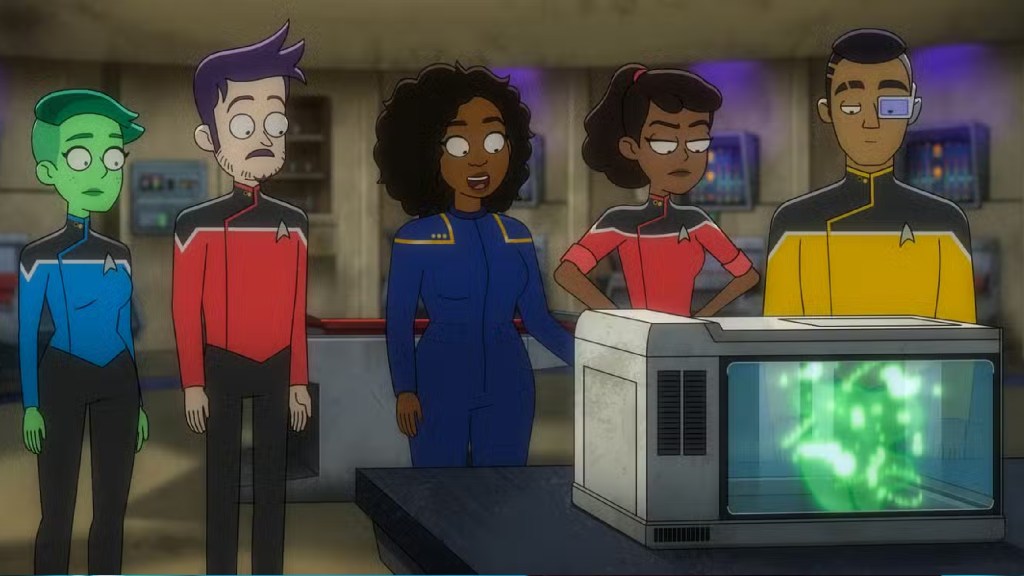
Star Trek: Lower Decks ran for five seasons and ended in December 2024 as part of the same round of Paramount+ belt-tightening that claimed Discovery. However, while Paramount’s official statement and creator Mike McMahan avoided the word “cancellation” during the process of saying goodbye to the show, speaking in more diplomatic terms about a planned conclusion. McMahan had said as early as October 2023 that further seasons were not guaranteed, particularly after Prodigy‘s cancellation and the confirmed final seasons of Discovery and Picard signaled a broader contraction across the animated and live-action slate. Therefore, the creator prepared for the worst to ensure the series would get a proper ending.
Despite that, the fifth season, which follows the crew of the USS Cerritos as they navigate an Orion war and reunite with Star Trek: Voyager‘s Harry Kim, was never planned as a series finale in the traditional sense. Plus, Star Trek: Lower Decks closed out with an 89% Rotten Tomatoes score, with McMahan and Kurtzman publicly hoping the characters would resurface elsewhere. No continuation has materialized, and Lower Decks remains a show that was, in effect, cancelled under the cover of a graceful send-off.
7) Star Trek: Phase II

Before Star Trek: The Motion Picture existed, it was supposed to be a weekly television series. Announced in mid-1977 as the flagship program of a planned fourth broadcast network called the Paramount Television Service, Phase II would have reunited most of the original cast under William Shatner, introduced new characters who later influenced the creation of Star Trek: The Next Generation‘s Data and Riker, and cost an unprecedented $3.2 million for its two-hour pilot alone. Thirteen scripts were written, sets were partially built, and test footage was shot before Paramount quietly halted production in November 1977, roughly a year after Close Encounters of the Third Kind convinced the studio that a theatrical Star Trek film made more commercial sense.
That pivot meant the planned pilot script, “In Thy Image,” was reworked into 1979’s Star Trek: The Motion Picture instead. Because Phase II never aired a single frame and its cancellation is directly responsible for redirecting Star Trek toward feature films for the next decade, it ranks among the most consequential cancellations in the franchise’s history.
6) Star Trek: Prodigy
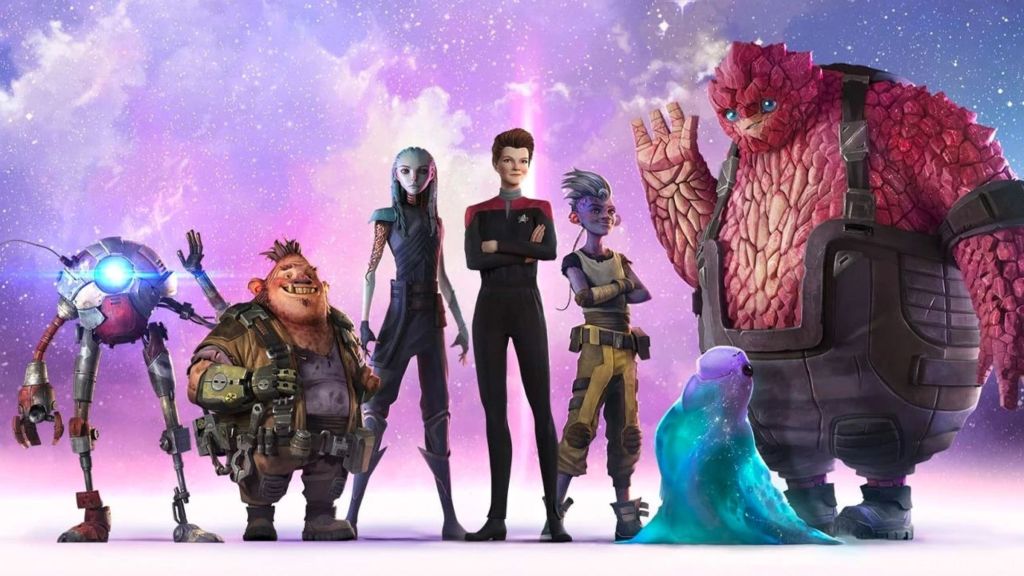
Star Trek: Prodigy‘s cancellation was announced abruptly in June 2023, when Paramount+ pulled the plug on the animated series alongside three other shows as part of a broader content write-down following the Paramount-Showtime merger. The decision came in the middle of post-production on the second season, and Paramount+ went a step further by removing the already-aired first season from its library entirely. Co-creators Kevin and Dan Hageman confirmed the crew would keep working to complete season 2 regardless, and a fan campaign that included a GoFundMe-funded plane banner flown over the offices of Netflix, Amazon, Hulu, and Apple helped convince Netflix to pick up both seasons that October.
Prodigy briefly looked like a genuine second chance, with the complete second season debuting on Netflix in July 2024, but the streaming platform ultimately let its license lapse, removing season 1 in June 2025 and season 2 that December with no announced season 3 to follow. Prodigy‘s journey from cancellation to rescue to quiet disappearance shows how little a positive critical and fan reception can guarantee in the streaming era.
5) Star Trek: Starfleet Academy
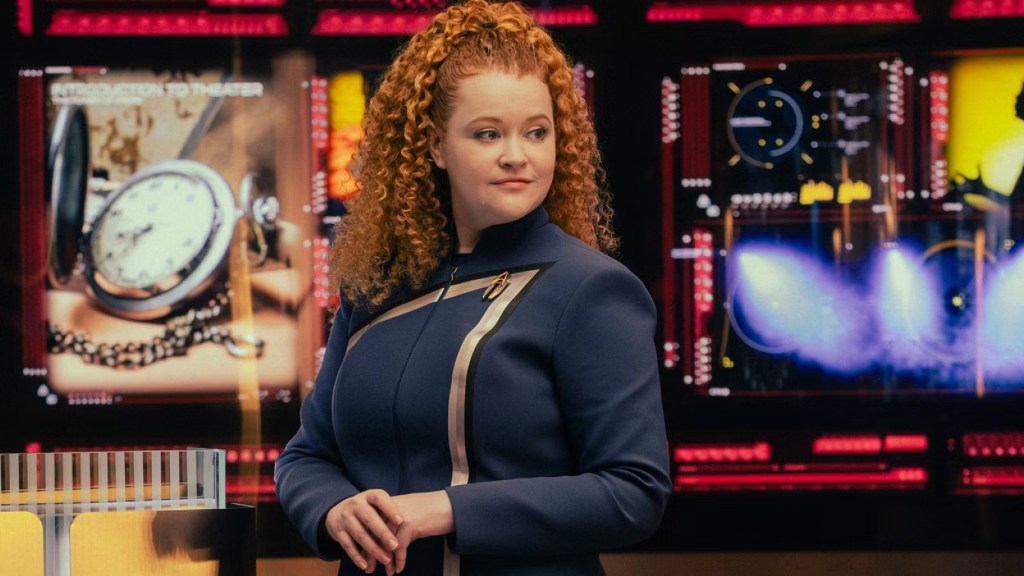
Star Trek: Starfleet Academy became the most recent casualty of the franchise’s contraction when Paramount+ confirmed in March 2026 that its second season, already filmed, would be its last. The series follows the first class of cadets to attend a rebuilt Starfleet Academy in the 32nd century and stars Holly Hunter and Paul Giamatti alongside a young ensemble cast. Starfleet Academy premiered its first season in January 2026 to a strong 87% critics’ score on Rotten Tomatoes but a much softer 51% audience score, and it never cracked Nielsen’s weekly streaming top ten during its run.
Paramount+ had renewed Starfleet Academy for a second season before the first had even premiered, which made the swift reversal especially jarring. Showrunners Alex Kurtzman and Noga Landau wrote an open letter to cast and crew addressing the online backlash the show had faced since launch, and reports since have indicated the production’s sets at Pinewood Studios Toronto have already been dismantled, closing the door on any reversal.
4) Star Trek: Strange New Worlds
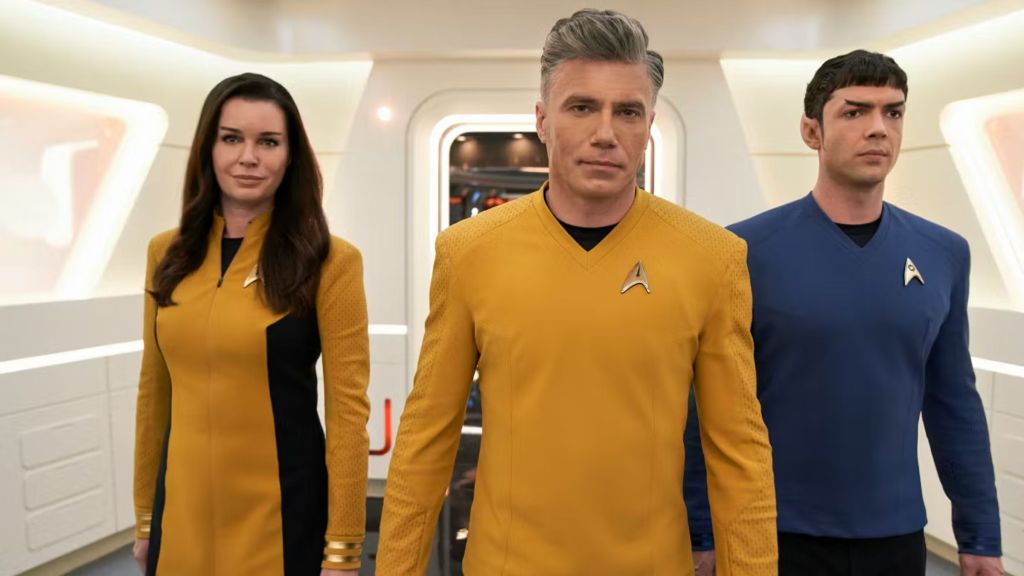
Star Trek: Strange New Worlds carried a 94% Rotten Tomatoes score and a reputation as the strongest entry of the Paramount+ era, which made its June 2025 cancellation especially difficult to justify. Paramount confirmed the series would receive a fifth season, but that season would run just six episodes rather than a standard order, driven explicitly by financial pressure tied to Paramount Global’s cost-cutting measures and its merger process with Skydance Media, which included a 15% reduction in the company’s domestic workforce.
Showrunners Akiva Goldsman and Henry Alonso Myers had reportedly told Paramount they would need at least six additional episodes to properly connect the series to Star Trek: The Original Series, and the studio worked with them to make sure those episodes got made rather than repeating what happened with Discovery‘s rushed coda. That means Strange New Worlds received a negotiated exit rather than a truly planned conclusion in the mold of Star Trek: The Next Generation or Star Trek: Voyager. Season 5 of Strange New Worlds will close out the series at 46 total episodes, fewer than any prior live-action Trek series managed by the same point in its run.
3) Star Trek: Discovery

Star Trek: Discovery‘s cancellation stands out because the cast and crew did not find out Season 5 would be the show’s last until after they had already finished filming it. Paramount announced in March 2023 that the series, which had launched the franchise’s entire streaming era in 2017 and made Sonequa Martin-Green the first Black woman to lead a Star Trek series as captain, would end after its fifth season. The decision was tied to broader cost-cutting as Paramount signaled 2023 would be its peak year of streaming investment before scaling back.
Because the cancellation came after principal photography had wrapped, Paramount+ granted Star Trek: Discovery a small mercy in the form of three additional days of filming so showrunner Michelle Paradise could craft a proper series finale rather than leaving the story unresolved. Martin-Green later described the news as “bittersweet and shocking,” noting that the cast had wrapped Season 5 expecting to return for a sixth. Across 65 episodes, Discovery had already spun off Strange New Worlds and helped launch Prodigy and Lower Decks, which made its abrupt ending feel like the first domino in the wider contraction that followed.
2) Star Trek: Enterprise
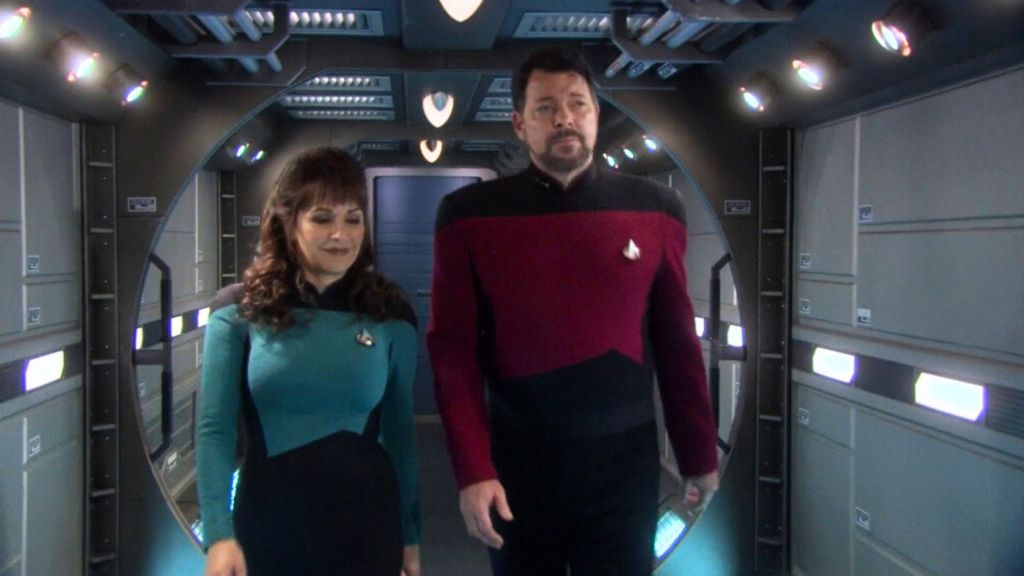
Enterprise‘s cancellation in February 2005 ended an 18-year unbroken streak of new Star Trek television production that had run continuously since The Next Generation premiered in 1987, making it a genuine turning point for the franchise. The prequel series drew a promising 12.5 million viewers for its 2001 premiere, but ratings collapsed by its second season, and despite a serialized third-season overhaul centered on the Xindi that critics received well, UPN moved the show to the Friday night “death slot” for its fourth and final season while slashing its per-episode budget by more than half.
UPN announced the cancellation of Star Trek: Enterprise on February 3, 2005, and the ensuing fan campaign, which included an attempt to raise $30 million through TrekUnited.com to fund a fifth season, ultimately fell short despite collecting $32 million in pledges. The show’s cancellation left the franchise without any television production for the first time in nearly two decades, a gap that would not end until Discovery‘s premiere 12 years later.
1) Star Trek: The Original Series

NBC’s 1969 decision to pull Star Trek after three seasons and 79 episodes is the reason the franchise learned to survive being cancelled in the first place. The series never posted strong ratings even in its acclaimed second season, and after a fan letter-writing campaign secured a third-season renewal, NBC exiled the show to a Friday 10 p.m. slot, slashed its budget by roughly $10,000 per episode, and announced its cancellation on February 18, 1969, when the show was conspicuously absent from the network’s schedule for the following season.
What happened next is the reason Star Trek matters. Reruns performed so well in syndication throughout the 1970s that Star Trek became appointment viewing years after its cancellation, drawing more than 3,000 attendees to the first dedicated convention in 1972 and eventually pushing Paramount toward an animated follow-up, a planned second series, and ultimately a feature film franchise. Every other entry on this list, from Phase II‘s collapse to Discovery‘s abrupt ending, is a variation on a pattern the original series established first, proving that a Star Trek cancellation has never meant the end of the story.
Which cancelled Star Trek series do you most wish had been allowed to finish its story? Leave a comment below and join the conversation now in the ComicBook Forum!
More TV Shows
-
Courtesy of Adult Swim -

Courtesy of Paramount+ / Rotten Tomatoes -
Image Courtesy of DC Comics