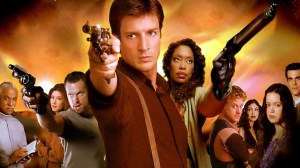
Earlier this month, Nathan Fillion took the stage at Awesome Con in Washington, D.C., alongside the bulk of the original cast to announce that an animated Firefly series is coming. The proposed series is set between the original 2002 television run and its 2005 feature film continuation, Serenity, with Fillion noting he secured the blessing of original creator Joss Whedon before proceeding. The project is being developed through Fillion’s production banner Collision33 in partnership with 20th Television Animation, with married writer-producers Tara Butters (Agent Carter, Dollhouse) and Marc Guggenheim (Arrow, The Flash) attached as showrunners, and a completed script already in hand. Finally, Oscar and Emmy-winning animation studio ShadowMachine, which produced Guillermo del Toro’s Pinocchio, is handling the visuals. While all of that sounds great, the animated second season of Firefly will have to deal with some uncomfortable canon choices.
Videos by ComicBook.com
Fox canceled Firefly after airing only 11 of its 14 produced episodes, a decision that denied the series any formal conclusion. However, the Firefly universe did not remain static in the intervening years. Dark Horse Comics published a line of canonical comics beginning in 2005, with the Serenity: Those Left Behind miniseries functioning as a direct bridge between the television series and the film. In 2018, Titan Books kicked off a series of authorized Firefly novels with Whedon attached as executive editor. Later that same year, Boom! Studios assumed the comic license from Dark Horse, launching an ongoing series that was treated as a canonical continuation of both the television series and the accumulated Dark Horse material. Sadly, Boom! Studios did not appear to closely respect the continuity established by the earlier Dark Horse titles. The animated series is therefore entering a franchise where the definition of canon is already fractured, a problem Star Wars encountered first and solved with a controversial decision.
Star Wars‘ Extended Canon Once Became Unmanageable

For nearly four decades before Disney’s 2012 acquisition of Lucasfilm, the Star Wars Expanded Universe accumulated a sprawling body of licensed fiction that filled in every gap the films left behind. Novels published by Del Rey and Bantam Spectra, video games, comic series from Dark Horse, and reference encyclopedias all operated under a tiered continuity system overseen by Lucasfilm’s licensing division. The architecture attempted to organize this material by assigning levels of canonical authority—the films at the top, the novels below them, the games below those—with the understanding that lower-tier material would yield to higher-tier contradictions. In practice, the system generated thousands of hours of supplemental storytelling and a devoted readership that treated the exploits of characters like Mara Jade and Jacen Solo with the same seriousness as anything on screen.
The critical flaw in the Star Wars model became obvious the moment new storytelling arrived at scale. The prequel trilogy created immediate retroactive contradictions with novels that had already established specific origins and events. The more material that accumulated, the harder it became to write new stories without inadvertently stepping on established continuity. As a result, by the time Disney began developing The Force Awakens, the Expanded Universe had grown so densely interconnected that honoring all of it would have required the film’s writers to perform archeological research rather than creative work.
In April 2014, the Expanded Universe was reclassified as Star Wars Legends, a parallel continuity that was acknowledged as existing but removed from official canon. The decision freed new creators entirely, and stories set after Return of the Jedi were rebuilt from scratch during the Disney era. For the past decade, Legends material could be selectively referenced, homaged, or ignored depending entirely on whether it served the new narrative. For instance, the Thrawn trilogy and the novels of Karen Traviss did not disappear, but they no longer constrained anyone, as TV and movie creators could use whatever part of those stories they wished, while throwing the rest away.
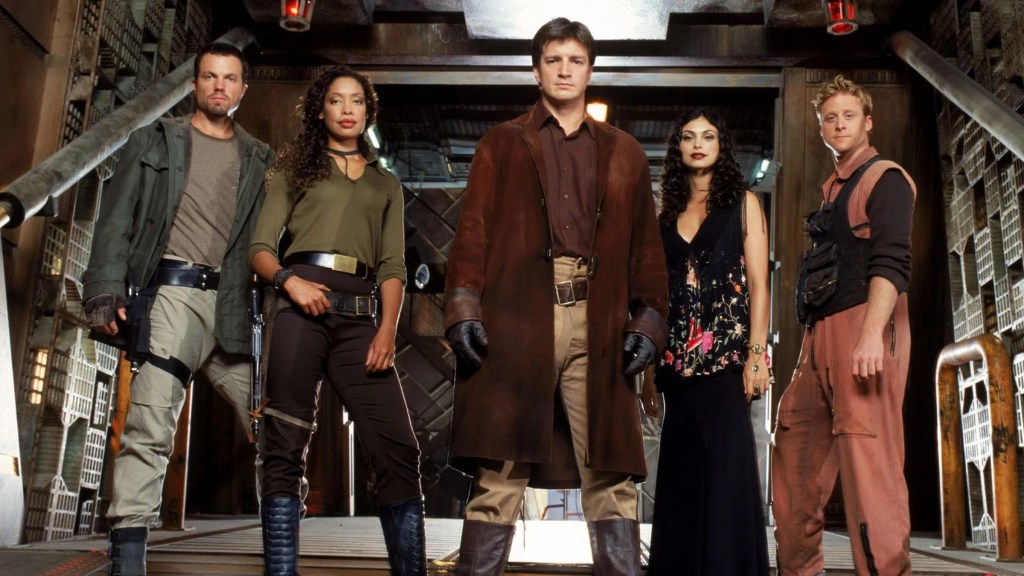
The Legends reclassification was a pragmatic solution to a structural problem, and the Firefly animated series faces a version of the same issue. The series is positioned between the television run and Serenity, which means it will intersect directly with a timeline that multiple publishers have already populated with canonical events. The Dark Horse Serenity: Those Left Behind miniseries, for instance, was specifically designed to account for character departures like Inara’s exit from the crew and Shepherd Book’s decision to leave the ship, resolving plot threads that the series itself never closed.
An animated Firefly series occupying that same window will need to either honor those established events, contradict them, or formally declare that they do not apply. Showrunners Guggenheim and Butters, both veterans of franchise television, are skilled at navigating complex continuities. What the Firefly animated series ultimately requires, however, is less a narrative workaround and more a formal institutional decision about which prior material is binding and which is available for reinvention. Without it, the series risks inheriting twenty years of accumulated contradictions before a single episode airs.
Are you concerned that the weight of Firefly‘s extended canon could complicate the animated series, or do you think Guggenheim and Butters can navigate it cleanly? Leave a comment below and join the conversation now in the ComicBook Forum!
Most Viewed
-
Image Courtesy of Ufotable -

Image via Studio Bones