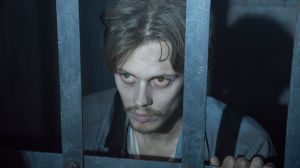
In 1991, Robert DeNiro gave one of his most impressively chilling performances of all time as Max Cady in Martin Scorsese’s remake of Cape Fear. Sinewy and heavily-tattooed, Cady was like Travis Bickle’s viscerally evil cousin, wretched to the core, and relentlessly driven by vengeance. While the remake was never quite as good as J. Lee Thompson’s original, De Niro was a revelation, who would be a meme had the movie been released 30 years later. I start this review with that assessment because I think Javier Bardem’s take on the same character may have just surpassed De Niro’s.
Videos by ComicBook.com
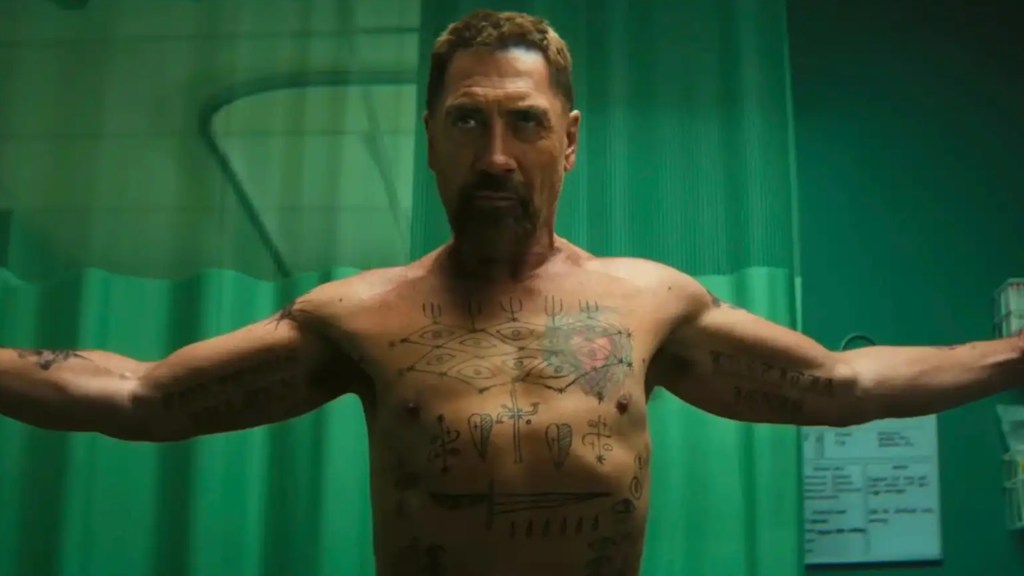
Bardem stars as Cady in Apple TV’s new 10-part reimagining/remake of Cape Fear, which takes some creative liberties, expands the story, dials up the gore, and somehow captures the same lightning in the bottle De Niro managed for a villain performance from Bardem that’s just as terrifying as his Anton Chigurh and his Raoul Silva. That’s quite the hat-trick of disturbingly brilliant monsters: it’s very clear that Bardem has a knack for it. In Cape Fear, Cady plays a man who was imprisoned for the murder of his wife (and unborn child), who is released after new evidence emerges, and sets about making the lives of his defense lawyer Anne (Amy Adams), and her husband, and the prosecuting lawyer in his case, Tom (Patrick Wilson) hell. But this is no mere tale of revenge, and the show’s expansion to longer form allows for a slow-build, claustrophobic nightmare that really leaves a mark.
Rating: 4.5 out of 5
| PROS | CONS |
|---|---|
| Javier Bardem is a revelation | Some of the subplots are a little unnecessary |
| The rest of the cast are also excellent | |
| The updated story elements make Cape Fear even more relevant without sacrificing the legacy of previous versions | |
| Genuinely very creepy |
Javier Bardem is Terrifying & Terrific as Max Cady
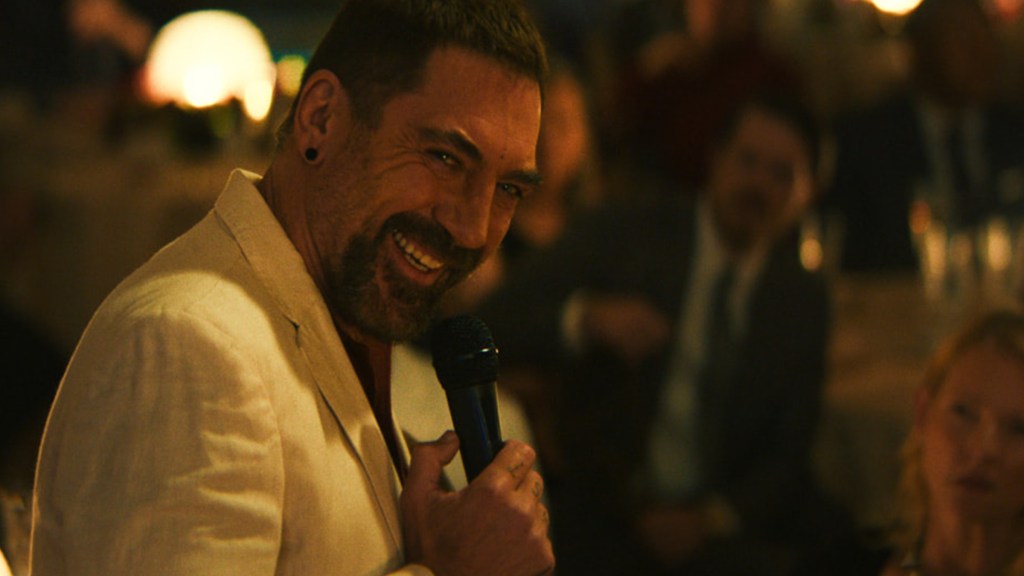
The cast is very well put together, from Amy Adams (whose languid Southern drawl is one of the only eyebrow raisers) and Patrick Wilson’s increasingly desperate prey, the Bowdens, to their kids – Natalie (Lily Collias) and Zack (Joe Anders) – through to pretty much every supporting role. You have to somewhat concede, though, that they’re all doing the charitable work of allowing Bardem’s performance to exist. So central is his Cady that every key character is either a reaction to or a result of his influence, and Bardem is utterly believable as that sort of heartbeat character.
Bardem feels huge without being a hulk, with an obvious strength that gives even his quieter moments of menace an added dimension. He’s charismatic but chilling, calculating but very obviously volatile, and there’s a haunted element to him that balances the animal. I really can’t say enough about how great he is here, honestly. The colored contact lenses could have come off as corny, but they actually help build his dangerous mythology, because his aura works when he’s believable as attractive to women and engaging to men. He’s a corrupter, and the eyes sell his spell.
He also isn’t the only villain, which is a difficult thing to engage with without getting too far into spoilers, and nor is he the only excellent larger-than-life performance. Special mention has to go to Pretty Little Liars star Malia Pyles, whom I can tell you literally nothing about here, other than the fact that she is really great. To offer such an impressive performance alongside Bardem is no small feat, and she has moments that are definitely as memorable as his.
Cape Fear Updates a Classic (& Mostly Avoids Unnecessary Gimmicks)
When modern remakes come into play, there’s often a danger that the filmmakers will update things for the sake of being modern, unwittingly sinking their project in the process. Here, mercifully, showrunner Nick Antosca is a fan of the original material – not only of the two movie versions, but also of the 1957 novel, John D. MacDonald’s The Executioners. He treats the material with reverence, but also fundamentally understands that there’s value in using Cady and the Bowdens to tell more universally appealing – and universally appalling – horrors. There are, as a result, far more ultra-modern references – drones, in-home surveillance, AI – but they’re built on older paranoid fears, and they actually make Cady more compelling as a villain. I’d say they might date the show, but that seems to be the way the world is relentlessly marching, so probably not.
Antosca was clearly very committed to making Max Cady both a universal horror and a thoroughly modern fear, and it works. The Bowdens’ gated community living is a great update, because it barely hides the cracks in their reality, and the kids’ struggles with the kind of issues entire afterschool specials are written about makes them even better targets. None of the Bowdens are particularly likeable as we learn more about them, and perversely, thanks to Bardem’s performance, Cady occasionally comes off as disarmingly charming. He’s a psychopath, obviously, but we all do love a bad boy.
That provocative challenge is just one small part of what Cape Fear does best, which is to present a horror story for the post-truth era. Throughout, we’re forced to reckon with the facts of Cady’s conviction, without learning anything concrete for a long time, and Antosca wields doubt like a champion. Throw in psychedelics and the increasingly fraught mental conditions of basically everyone involved, and you get a story that consciously messes with reality constantly. Characters see visions, apparitions, haunted memories, and drug-fuelled hallucinations, and you’re supposed to feel discombobulated. It’s a very smart, and very effective technique.
Not Everything’s Perfect with Cape Fear (But It’s Still Great)
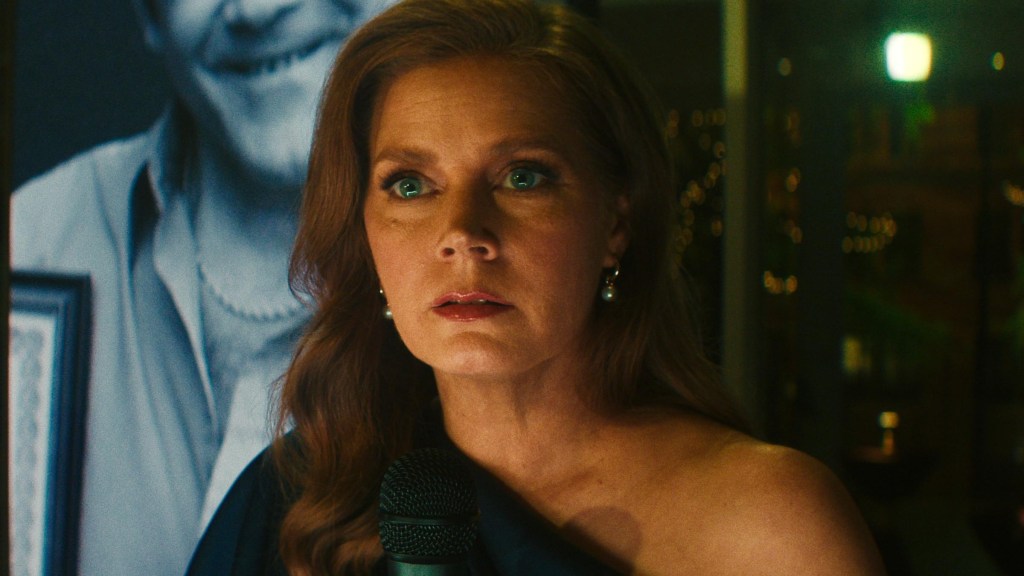
My only real issues with Cape Fear are perhaps not fatal complaints: some of the more provocative scenes – particularly the violence and gore – are pushed a little far, almost to the point of this being an exploitation series. That is, though, sort of the point, as the Bowdens’ perilous situation escalates. I found Adams’ accent more distracting as time passed, because of that escalation, but it does help the story that she and her husband aren’t enthusiastically likeable. There’s also a religious subplot that felt pretty unnecessary, and while one secret casting that I won’t spoil here is a nice nod to the 1991 version, I found their involvement mostly baffling for good stretches. It’s a bit of a stunt for the sake of a stunt.
There isn’t much else not to love, though. The atmosphere in particular is brilliant. There’s an irresistible Southern gothic feel that practically drenches everything in sweat and grime and heat, and matches the tone perfectly. The Hitchcockian references are immaculate and actually enrich the show, the performances are excellent, the new additions to the story mostly work very well, and I cannot stress how horribly watchable Javier Bardem is. And that’s coming from someone who thought nobody could put in a better performance in a Cape Fear remake than Sideshow Bob.
Cape Fear‘s first two episodes release on Friday, June 5, with new episodes arriving every Friday on Apple TV. Are you looking forward to it? Leave a comment below and join the conversation now in the ComicBook Forum!
More TV Shows
-

IMAGE COURTESY OF PARAMOUNT PICTURES