“To boldly go where no one has gone before.” The closing lines of Star Trek: The Original Series rousing monologue summed up the ethos of the show perfectly: bold exploration and endless possibility. Over its three series, The Original Series demonstrated its ability to produce some of the most ground-breaking science fiction storytelling ever seen, bringing us a whole raft of classic stories that pushed the boundaries of what was deemed possible and indeed acceptable at the time. Gene Roddenberry’s utopian vision means the show is often fondly remembered for its sense of optimism and hope for humanity’s future. However, TOS wasn’t afraid to venture into far darker territory, and for all the colourful costumes, bright lights and cheerful sets, episodes could sometimes come with a chilling twist.
Videos by ComicBook.com
From stories about genocide and slavery to tales of psychological torment and human frailty, the Enterprise’s adventures often reminded us that the stars can be just as dangerous as they are wondrous. While The Original Series is often enjoyed for its humour and campy charm, these episodes remind us that it could also be deeply unsettling. From infiltrating androids will to genocidal leaders hiding in plain sight, TOS wasn’t afraid to tackle dark storylines head-on. And in doing so, it laid the groundwork for the moral complexity that later Star Trek series would fully embrace, particularly in these 7 episodes.
7) “Charlie X” (Season 1, Episode 2)
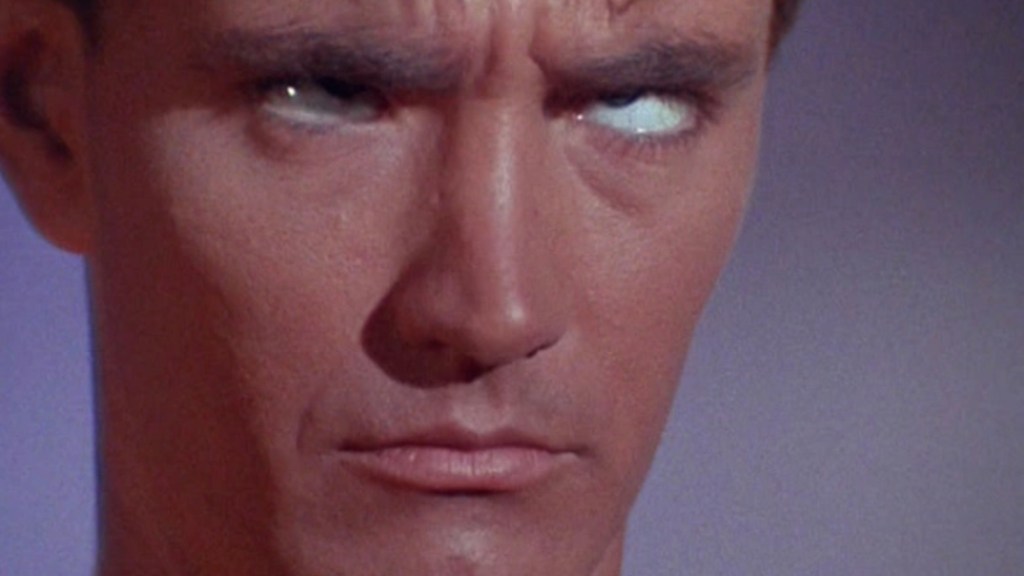
The episode “Charlie X” was an early standout for Trek. This second episode of the first series introduces the eponymous Charlie, a teenage boy rescued after years of isolation on an alien planet when the rest of his crew is killed upon crashing there. At first, settling into life aboard the Enterprise, Charlie seems awkward but harmless — until it’s revealed he has superhuman powers granted by the Thasians, the aliens native to the planet who gave him these abilities to help him survive alone there. Having extraordinary powers of telepathy and transfiguration might actually be a force for good in the right hands, but Charlie, having had no real socialisation with other humans from a young age, lashes out like an angry child with these godlike abilities: making people vanish, crippling crew members, and in one truly sinister moment, erasing a woman’s face.
It’s hard not to remember the disturbing scene as one of the darkest moments in the show as we watch the unfortunate ensign frantically gripping her throat, presumably gasping for air – it’s not hard to imagine the horrendous fate that would have befallen her without being able to breathe… But what really makes the episode one of TOS’s darkest is Charlie’s desperation to belong. Underneath the bravado, Charlie is nothing more than a lonely and pretty messed-up kid, unwittingly given power beyond his understanding, which makes his ultimate fate even darker. Charlie is eventually returned to the Thasians against his will after it’s established that he will never really be able to live amongst his own kind, pleading in terror as they take him away forever. It’s one of Trek’s first true horror stories; Charlie’s final echoing cry of “I wanna stay!” as he is transported away is hard to forget.
6) “The Conscience of the King” (Season 1, Episode 13)
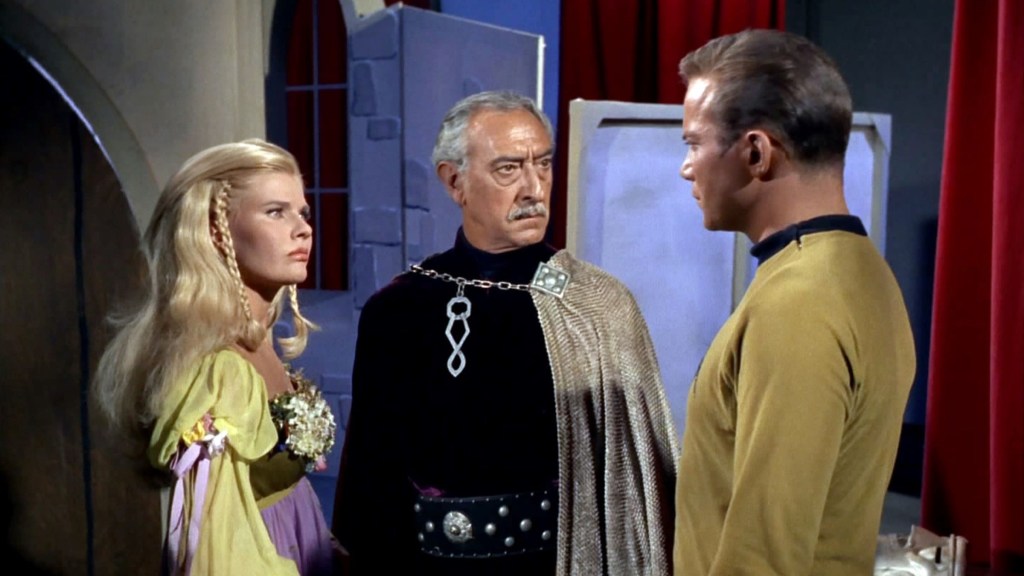
When Kirk is tipped off that Anton Karidian, leader of a traveling acting troupe (hilariously still performing Shakespeare’s Macbeth in the 23rd Century – English teachers take heart!), might actually be ‘Kodos the Executioner’ — a former governor of the colony Tarsus IV. governor who sanctioned state-ordered mass genocide there years earlier — the usually happy-go-lucky captain is forced to confront his difficult past. It turns out that, aged just 13, Kirk was a witness to the horrors of mass murder when, due to a failed harvest and lack of forthcoming food supplies, Kodos ordered the execution of nearly half the 8,000 colonists living on the planet at the time, to save those he deemed to be more important. This really was the episode that launched a thousand fanfictions, as explorations of Kirk’s experiences and time on Tarsus IV are rife!
The episode’s mystery plays out like a post–World War II Nazi-hunt narrative, complete with survivors, cover-ups, and revenge, and there are definite similarities to the trials carried out on high-ranking Nazi officials after the Second World War. It turns out Karidian is indeed Kodos, and his daughter Lenore has been tracking down and murdering the nine remaining eyewitnesses who could identify him in order to protect him. When her father dies saving Kirk in perhaps his one act of good, taking the phaser shot that was intended for Kirk, Lenore is left broken. Justice is served, but the price is haunting, as is the knowledge of what Kirk must have endured on Tarsus IV at such a tender age. The episode really made us see our fearless Captain in a new light and also reminded us how a person capable of committing the most despicable acts could be a loving family man convinced he is doing right.
5) “The Gamesters of Triskelion” (Season 2, Episode 16)
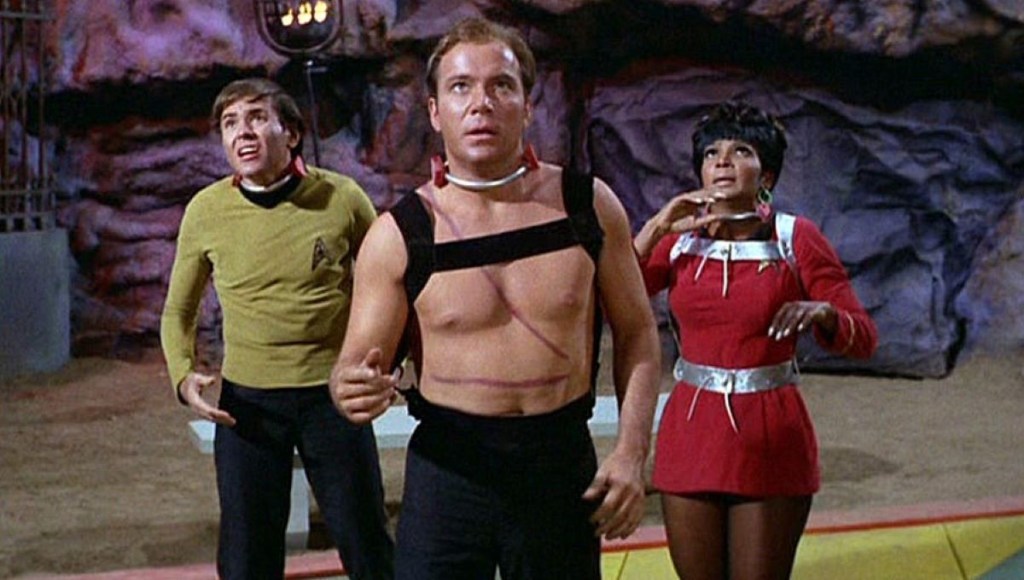
In this somewhat bizarre episode, Kirk, Uhura, and Chekov are kidnapped and forced to fight as gladiators for the amusement of the “Providers,” higher beings that look like disembodied brains and who treat lesser beings as nothing more than disposable playthings for their entertainment. Shock Collars, known as ‘Collars of Obedience,’ keep the Providers’ subjects in line, while constant obedience training and forced combat with each other strip away their dignity. Though Kirk ultimately outsmarts the Providers, and it’s a supposedly happy ending when the prisoners, known as ‘thralls’, are released and allowed to govern themselves, the clear illusion to slavery and themes of colonialism make this one of the more insightful yet sinister episodes of the series.
The lives of the freed thralls remain bleak, scarred by years of violence and slavery. The dark premise — people reduced to sport by inhuman overlords — makes this one of Trek’s most unsettling episodes. But the main event that earns the episode its place on our list is the attempted assault of Uhura by one of the Providers’ goons. We don’t actually see this horrendous event, on but the agonised look on Kirk’s face as he calls out to his friend and colleague, trapped in a separate cell and helpless to protect her, accompanied by Uhura’s cries, is haunting to say the least and is perhaps one of the darkest moments in all of TOS.
4) “What Are Little Girls Made Of?” (Season 1, Episode 7)
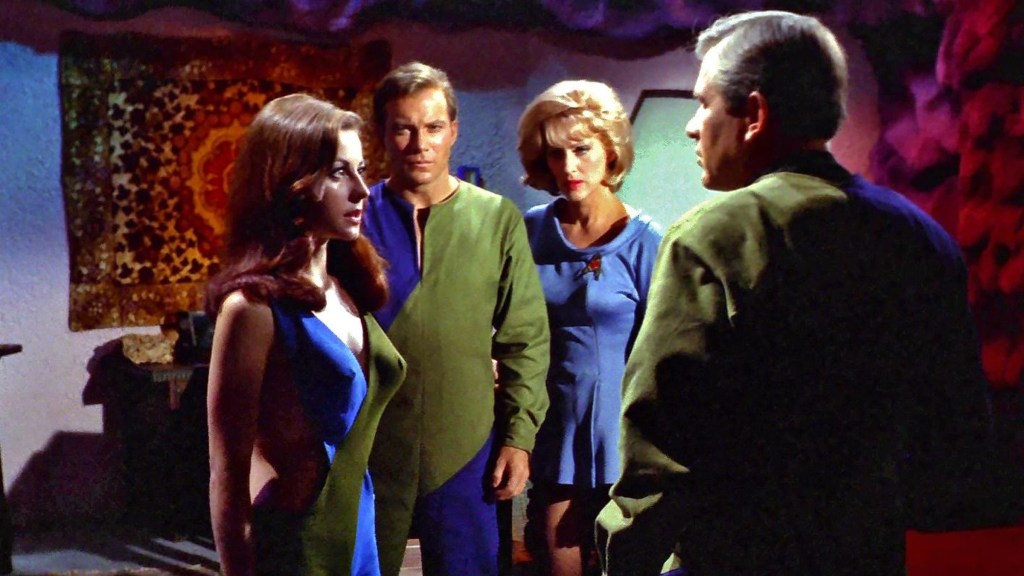
Fans of Strange New Worlds may recognise Doctor Korby from the most recent series, where he was introduced as Nurse Chapel’s new fiancé. But Korby wasn’t just a recently created love interest for Christine and was, in fact, introduced as her fiancé nearly six decades earlier in The Original Series episode, “What Are Little Girls Made Of?” In the episode, Kirk and Nurse Chapel visit the ice planet Exo-III to find Roger, who has been missing until recently. It turns out finding him is the main reason Christine signed on to the Enterprise. Once on the planet, they discover that the once sweet Korby has been creating evil android replicas of humans using alien technology, and when Korby builds an android Kirk to infiltrate the Enterprise, the full terrible scope of his plan emerges: to create a future where humanity is replaced by machines by infiltrating and replacing the lifeforms on other planets like Exo-III.
But why, you might ask, would Korby want to do such a thing? The truth about the Doctor himself is even darker — it turns out the real Korby died long ago of frostbite and in desperation, transferred his consciousness to one of his Android experiments in a futile attempt to live on. The Korby we see is only an echo of the original, with his humanity long gone. Kirk and company are left with little choice, and by the end of the episode, every remaining android is destroyed, including Korby’s android love Andrea, leaving something of a bittersweet taste in the mouth for viewers. The episode is surprisingly relevant in our current age of AI and automation, serving as a grim warning about the dangers of allowing technology to strip away what makes us human.
3) “The Mark of Gideon” (Season 3, Episode 16)
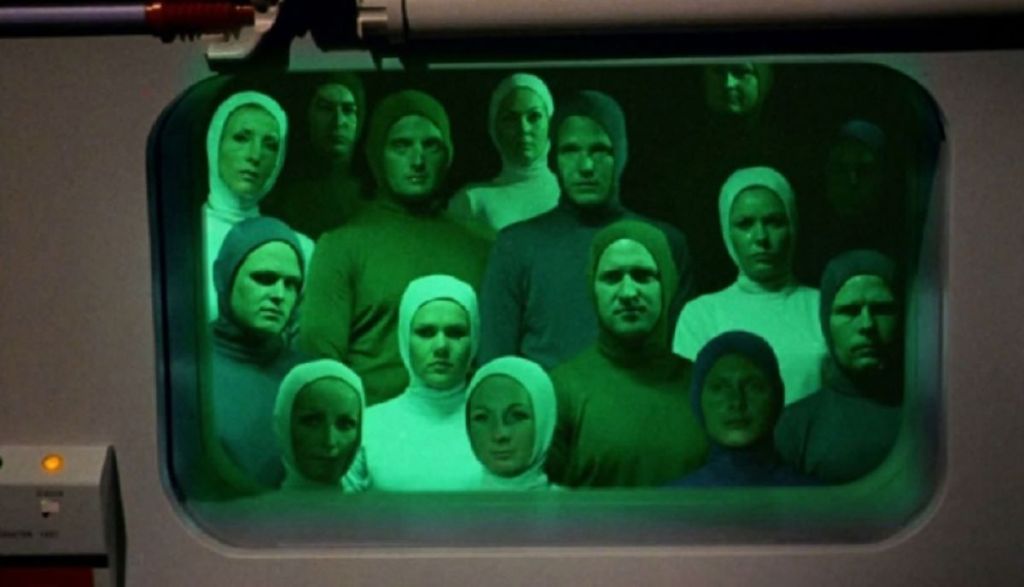
When undertaking a diplomatic mission to the planet Gideon, Kirk finds himself in a carefully laid trap by the planet’s leaders. He learns that overpopulation has reached critical levels and pushed Gideon society to desperation, with the planet so overcrowded that citizens are squashed together like sardines. To finally solve the crisis, the planet’s leaders have hatched a horrifying plan. They intend to reintroduce the often-fatal disease Vegan choriomeningitis, of which Kirk is a carrier, into their genetically pristine people in order to thin the population where other methods have failed. Ambassador Hodin has even offered up his own daughter, Odona, to be the first test subject, fully aware she might die in the process in order to encourage others to get behind the plan and sacrifice themselves for the greater good.
The images of crowds and desperate faces crushed against the Enterprise windows periodically throughout the episode are enough to spark claustrophobia in anyone, and almost make you sympathise with the Gideon Leadership’s desperate decision. The idea that a civilization would deliberately reintroduce death as a solution to population control is chilling, but somehow doesn’t feel a million miles away from our reality, where concerns about resources and distribution of wealth are frequent topics of discussion. The episode earns its place on our list as it holds up nearly 6 decades later, proving that the universal issues and struggles facing us as a society haven’t changed. The bleakness of Odona’s sacrifice — and her father’s cold acceptance of it — makes this one of TOS’s darkest social commentaries.
2) “A Taste of Armageddon” (Season 1, Episode 23)
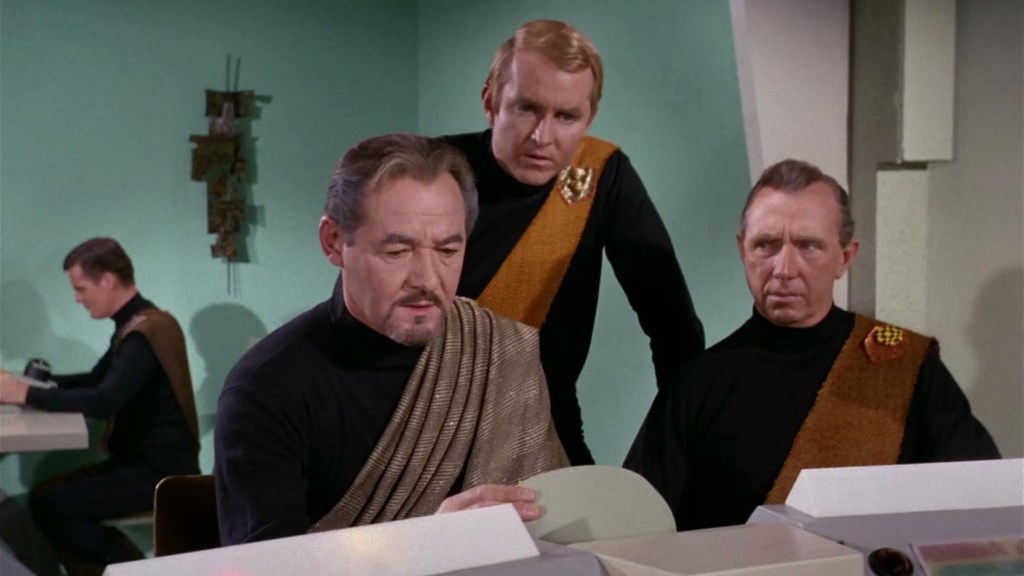
When the USS Enterprise travels to the planet Eminiar VII, which has long been at war with its neighbouring planet Vendikar, the crew discovers that the two planets appear to have discovered a seamless and “perfect” way to wage war. Instead of actual physical battles, causing widespread bloodshed and devastation across the planet, the planet’s respective governments instead have computers simulate attacks and designate casualties, who are then executed accordingly in disintegration chambers. Kirk and the crew are understandably horrified. The two societies might have sanitized war, making it bloodless and allowing the unaffected citizens to carry on life as normal, but the battle being waged is no less lethal to the unfortunate casualties selected.
By making war clean and efficient, the people have removed all its visceral horror, meaning there’s far less incentive to stop the fighting and come to a resolution, and the war has become virtually endless. Kirk finally destroys the war computers, forcing the two planets to either keep fighting traditionally and face the true cost of violence or finally pursue peace. It’s an intriguing premise for an episode, but what makes it disturbing is the citizens’ willingness to walk to their deaths on command and the lack of grasping of the consequences of war that seems to prevail on the planet. If people live with a status quo for long enough, they forget there’s another way. It’s one of Trek’s most brutal moral lessons: war without pain is war without end.
1. “The Enemy Within” (Season 1, Episode 5)
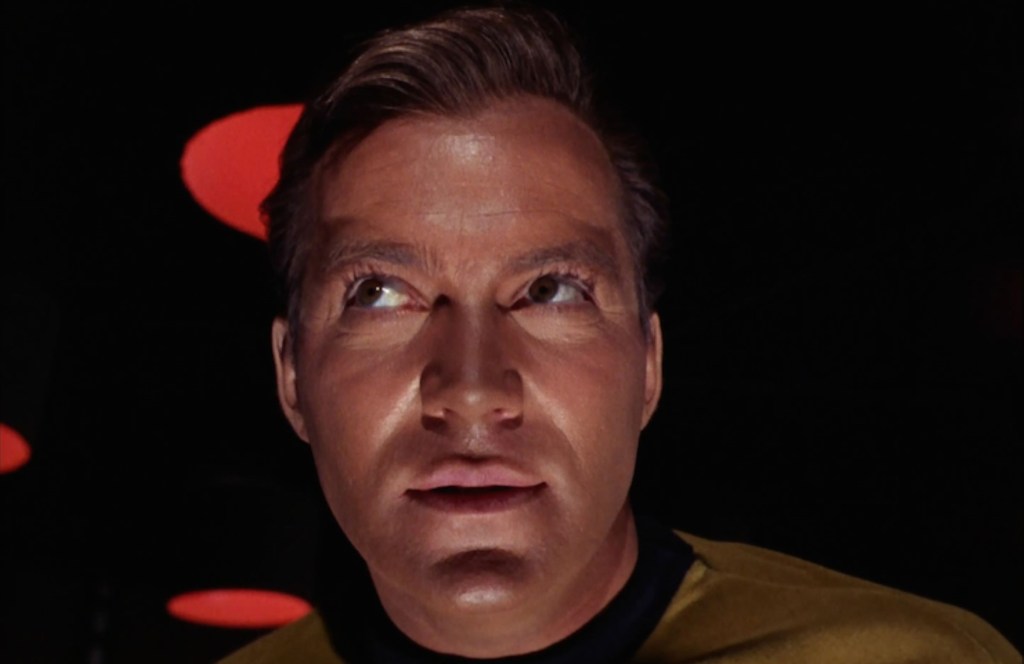
In one of the first classic ‘Transporter goes wrong’ episodes that provided inspiration for many tales to come, “The Enemy Within” sees a transporter malfunction split Captain Kirk into two opposite versions of himself: one passive and indecisive, the other violent and aggressive. While the “evil” Kirk terrorizes the crew, seemingly unable to control his violent impulses, the “good” Kirk struggles to function as the born leader and decisive Captain we have come to know, without his darker impulses and reckless side to balance out the by-the-book do-gooder. The episode raises disturbing questions about human nature. Can we be whole, and are we really human without our flaws? Are darker impulses sometimes a necessary part of leadership, of what makes us, us?
The unsettling portrayal of Kirk’s ‘evil half’, acted brilliantly by the legendary William Shatner, is all the more sinister because we can’t blame it on alien possession or space pollen making him act out, we can’t claim he’s not in his right mind, it’s all him… What really makes this episode disturbing, though, and earns it the top spot on our list, is Kirk’s attempted assault of Yeoman Rand, an extremely sinister and bold plot point to include, and a stark reminder of what Kirk might actually be capable of and the darker impulses he might have, however deeply buried. The way it forces us to process, very early on in the series, that the captain we have begun to look up to may not be as admirable as he seems, and the damage caused before Kirk’s two halves are reunited, makes “The Enemy Within” perhaps the darkest hour of The Original Series.
Most Viewed
-

©Toshiaki Iwashiro,Shueisha/PSYREN Secret Society -
Images courtesy of TriStar Pictures and Warner Bros. Pictures -

Image courtesy of Marvel Television