Uncanny X-Men is going through something of a renaissance, with writer Gail Simone taking the book back to its character-heavy, soap opera roots. Once upon a time, it was the bestselling comic in the industry, easily beating out the Avengers, Spider-Man, Superman, and Batman. It built its legend through the late ’70s, after revolutionary X-Men writer Chris Claremont came aboard, while it was still X-Men (Vol. 1), changing its title to the one we all know today starting with issue #114. Claremont was able to take a bunch of newer characters, most of whom he either created or defined, and build them into superstars that are still vital today. However, all good things must come to an end and Claremont’s first run with the X-Men would end in 1991, leaving Uncanny after “The Muir Island Saga” ended.
Videos by ComicBook.com
The success of the artists on Uncanny X-Men would lead to them gaining more and more power over the book. Claremont created amazing X-Men stories, but editor Bob Harras was pushing artists Jim Lee, Rob Liefeld, and Whilce Portacio. With Claremont leaving the book, they were put in charge of the X-Men’s future (which would turn out to be a little over a year), with Lee and Portacio plotting Uncanny X-Men, X-Men legend John Byrne returning to the book to script it, and Portacio on pencils. The first issue with this new creative team was Uncanny X-Men #281, a book that introduced readers to the Gold Team and set the group in a new direction.
Uncanny X-Men #281 Is a Forgotten Gem of X-Men History
So, usually, when we talk about the X-Men in 1991, we’re usually talking about the bestselling comic ever, X-Men (Vol. 2) #1. This book from Chris Claremont and Jim Lee made Magneto a villain again and introduced the Blue/Gold Team dichotomy, focusing on the Blue Team. It was the book with all the variant covers and it’s the one that got all the attention. Uncanny X-Men #281 was the second part of the one-two punch of the team’s reboot. Lee, Portacio, and Byrne were joined by inker Art Thibert, colorist Joe Rosas, and letterer extraordinaire Tom Orzechowski, introducing a new concept to the X-Men comics and ending with a shocking bang.
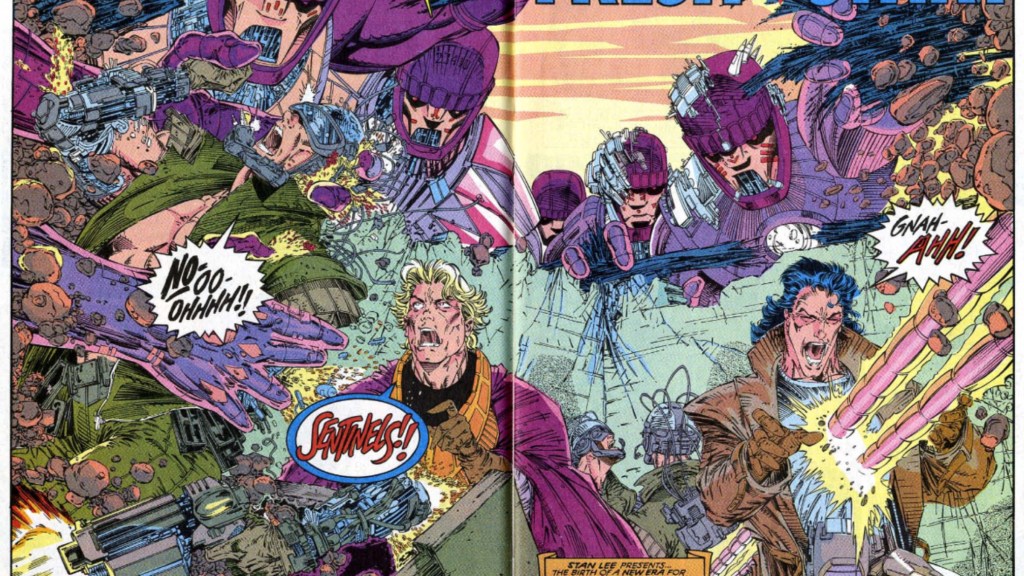
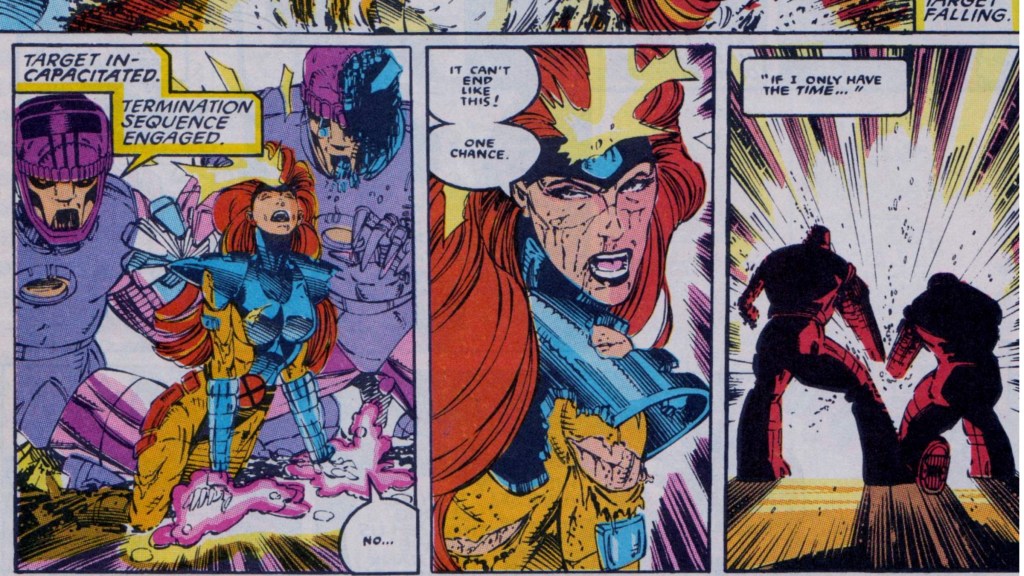
The issue kicked off at the cybernetic villain team the Reaver’s base in the Outback (where the X-Men had lived not long before in the Outback Era), when that group is attacked by a group of Sentinels. They are slaughtered by the the robots, with leader Donald Pierce using Gateway to escape. The issue then shifts to the Hellfire Club headquarters, where the X-Men have been invited to meet with the White Queen Emma Frost, leading to some problems with her Hellions. Meanwhile, Hand leader Matsuo Tsurayaba speaks to new mutant Trevor Fitzroy about the attack on the Reavers, revealing they were behind it as members of the Upstarts. Back at the Hellfire Club, Frost burst into the room fighting an assassin, defeating them and warning the X-Men about mysterious attackers when Pierce steps out of a portal and is quickly dispatched. The X-Men and the Hellions fight back against the Sentinels, but Frost and various Hellions are killed, with Fitzroy showing up and killing more of them. The issue ends with the Sentinels killing Jean Grey, the team in a panic.
Uncanny X-Men #281 is basically an action comic from start to finish. The opening fight scene is very cool, reminding readers how scary the Sentinels can be, the middle of the book is simple but engaging, and the book ends with another exciting and bloody action scene. In a lot of ways, it’s similar to X-Men (Vol. 2) #1 in structure – begin with the villains in an action scene, build up the plot in the middle while introducing a new villain team, and then ending with a big action scene. However, looking at the events of this book, it did way more to show that this wasn’t going to your grandpa’s X-Men comic.
It introduced a villain team that was supposed to be a big deal but never got there – the Upstarts. This group of villains were younger mutants who had been recruited by the mysterious Gamemaster to kill the previous generation of villains. They began by targeting members of the Hellfire Club, and it’s hard not to see Lee and Portacio making a statement about the changing of the guard at Marvel with this. They were the Upstarts, along with the other future Image founders, and they were “killing” the old guard at Marvel. This alone makes this book a better comic than X-Men (Vol. 2) #1, but it doesn’t stop there.
The book killing Emma Frost and Jean Grey were massive shocks. This was one of my first comics and I was shocked by it on every page. It was a meatgrinder and I was hooked to it. This was how you made a comic people would talk about in 1991, throwing massive surprises at readers on page after page. It’s definitely not a perfect comic – it’s a simple book that depends mostly on shocks to keep readers hooked – but it’s still a pretty good one. It’s flawed in a number of ways, but it’s also one of the coolest comics you could read.
Uncanny X-Men #281 Was Integral to the Success of the X-Men
I want you to put your mind into that of an 11-year old picking up this comic for the first time. It was mindblowing to see this kind of action and development in one comic that wasn’t something like Infinity Gauntlet, a massive event book with a huge body count from the first issue; this was just a normal issue of Uncanny. It was the kind of comic that grabbed your brain by the lobes and never let go. It was a blockbuster in every sense of the word, even if it didn’t sell eight million copies.
Uncanny X-Men #281 never really gets talked about anymore. It’s gotten to the point where you rarely see anyone talk about this death of Jean Grey or what role this story played in the evolution of Emma Frost over the ’90s. This comic is definitely flawed in a lot of ways, just like all the X-books of this post-Claremont period, but it was the proof of concept of the art team as the writers and it honestly worked pretty well. This issue isn’t exactly a gem, it’s more like a really cool crystal you found somewhere. It’s not worth much, but it’s pretty.
More Collectibles
-

Image Courtesy of Marvel Comics -
Image Courtesy of Marvel Comics