That’s right, it’s been three decades since arguably the most infamous experiment in Marvel and DC Comics’ respective history. Ever since Superman and Spider-Man crossed paths nearly 50 years ago, the Big Two have periodically collaborated on crossovers, bringing some of their biggest icons together in various one-shots and special events. There have been a lot of wild crossovers between the two titans (with more to come this year), but nothing is ever going to top the work the publishers did with Marvel vs. DC/DC vs. Marvel and the incredibly unique imprint to come from it.
Videos by ComicBook.com
For those unfamiliar, DC vs. Marvel was a crossover series from 1995/1996. It focused on a pair of cosmic entities known as the Brothers (representing the Big Two worlds) becoming aware of one another and coming into conflict. To stop their battle from rendering both universes apart, the Brothers were combined into one entity, creating an entirely new universe populated by fusions of Marvel and DC characters. This was the Amalgam Universe, and three decades ago today, Marvel and DC released a swath of new titles under their shared Amalgam Comics imprint, something that took crossovers to the next level.
Marvel and DC Went Above and Beyond with Amalgam Comics

It was the third issue of Marvel vs. DC that introduced the Amalgam Universe, but the concept of a universe packed to the brim with fusions was simply too interesting to keep confined to the event’s pages. So, a week after Marvel vs. DC’s penultimate issue, the Big Two released 12 (that’s right, 12) issues under the joint Amalgam Comics banner. Bruce Wayne, Agent of S.H.I.E.L.D., Legends of the Dark Claw, Doctor Strangefate, Super-Soldier, Amazon, Spider-Boy, and more were unleashed onto the world, and yes, they were all as cool as they sounded.
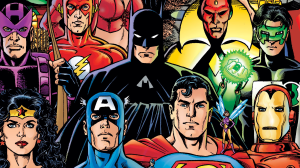
Marvel and DC Comics went all out for this experiment, bringing in several legendary writers and artists, including Mark Waid and Dave Gibbons for Super-Soldier, John Ostrander and Gary Frank for Bullets and Bracelets, and Ron Marz, José Luis García-López, and Kevin Nowlan for Doctor Strangefate. The fusions themselves ranged from the logical to the unpredictable. Spider-Boy, for example, was a fusion of Ben Reilly and Conner Kent due to their clone status, while Speed Demon was a combination of Flash and Ghost Rider. I’m not entirely sure why, but the result was pretty damn interesting.
These books were incredibly creative, taking elements from both universes to build something so unbelievably unique. The publishers even went above and beyond and included fake letters to the editors in the back of many of these books, fabricating a history for Amalgam Comics to really immerse fans into this wild, new reality. To say this line was a success is underselling it. In fact, a year after the first wave, Marvel and DC decided to revisit the Amalgam Universe with a new collection of titles like Iron Lantern, Challengers of the Fantastic, Bat-Thing, and Lobo the Duck (seriously).
Decades Later, Amalgam Comics Stands Out as One of Marvel and DC’s Best Experiments
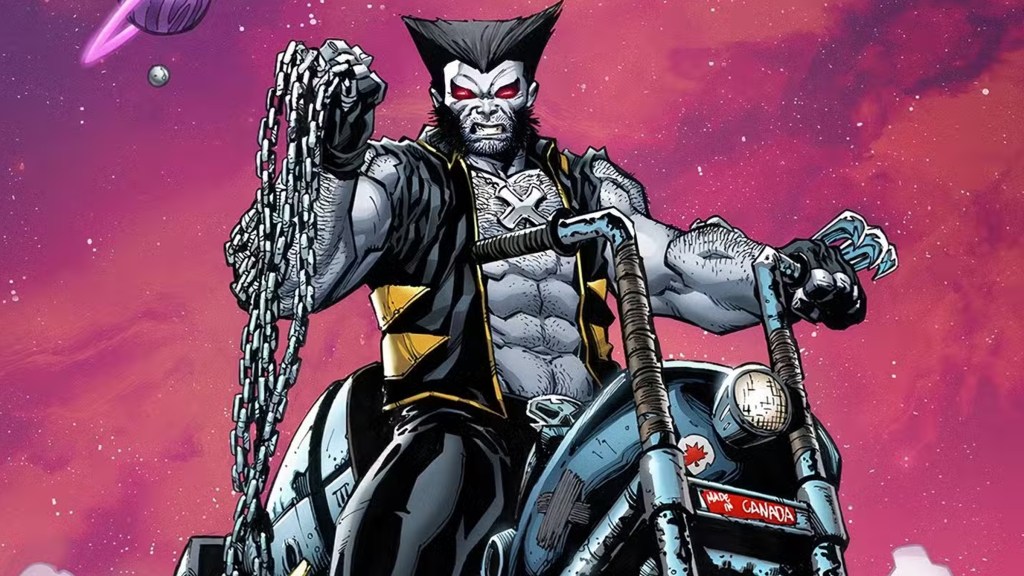
I cut my teeth in comics during the period where Marvel and DC had more or less sworn off of ever doing crossovers. So when I first heard about the Amalgam Comics line, I was pleasantly surprised by how cool and creative it was. It was amazing to see icons like Wolverine and Batman smooshed together to make something as outlandish as Dark Claw. I’m the kind of reader who loves comics that try weird things. So in an age where comics were becoming increasingly serious, it’s nice to see something from the ‘90s that is rooted in fun.
Obviously, DC and Marvel have done a lot of crossovers in the 30 years since the heyday of the Amalgam Universe. From having their heroes meet other icons like Godzilla, the Transformers, the Power Rangers, and even the main characters of Black Hammer. And while those crossovers have something going for them, too, it’s just missing that je ne sais quoi Amalgam had. The Big Two could have left things at Marvel vs. DC and made the equivalent of mashing toys together. Instead, they produced something that, years later, fans look back on in appreciation for its innovation.
I absolutely believe that the Amalgam era still holds up. Nothing proved that more than the brief revival of it we saw in Deadpool/Batman with the Logo story that introduced a Wolverine/Lobo fusion. Fans absolutely loved this world and the heart and soul put into it. I don’t know if we’ll ever get a full-scale revival of Amalgam Comics. But then again, I was certain we’d never see Marvel and DC collaborate again. Hopefully, with as good a reputation as Marvel and DC’s creation has, we’ll eventually see a real return to the Amalgam Universe one day.
What did you think about the Amalgam era of Marvel and DC Comics? Let us know in the comments or share your thoughts on the ComicBook Forum!
Most Viewed
-

Image Courtesy of Netflix -

Image via HBO