Since her inception back in 1975, Ororo Monroe, aka Storm, has been one of the most beloved X-Men in Marvel Comics thanks to her engaging personality, leadership skills, and god-like abilities. However, while Storm herself is doing well in her own comic lines, the X-Men brand itself is in a rough spot. Storylines involving the X-Men, like “Age of Revelation” and “From the Ashes,” are struggling with mixed reviews at best. However, in Storm: Earth’s Mightiest Mutant #2, the titular hero not only calls out the biggest issue with modern X-Men stories, but she also reignites the dream on which the X-Men were founded on.
Videos by ComicBook.com
Storm has always been one of the most important and powerful mutants on the planet. Still, her influence and abilities have only grown over the years, as when she became the regent of Mars during the Krakoa era and when she officially became a goddess and Avatar of Life. Yet despite all these larger-than-life positions and power-ups, one of the character’s best moments in recent memory is also one of her most grounded. In a world where humans and mutants are constantly at odds, Storm reminds readers of what the X-Men used to stand for.
Storm Opens Her Doors to Everyone in Need, Not Just Mutants
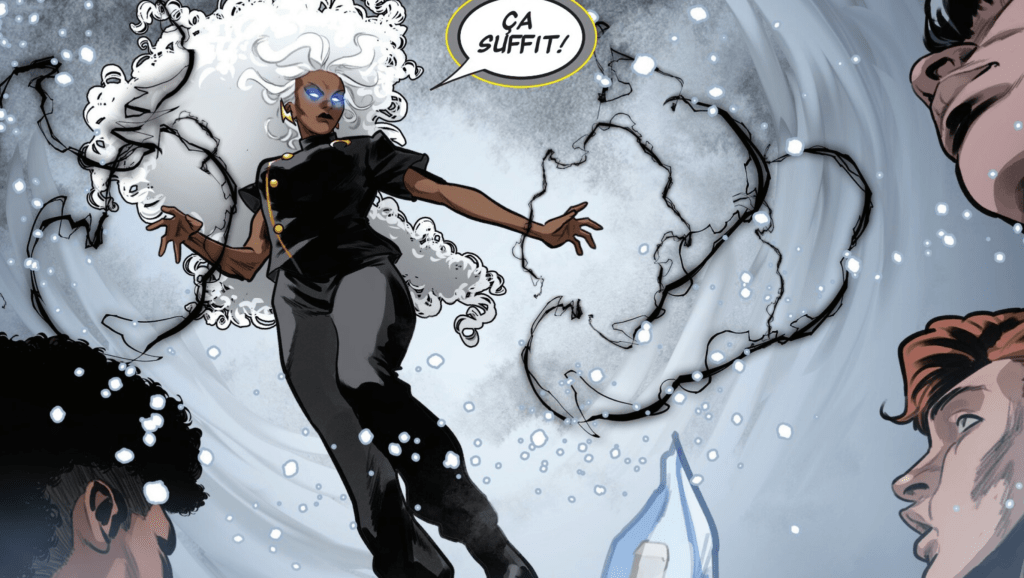
Recently, Storm has used her weather-manipulating abilities to create an environmental Eden called the Storm Sanctuary. This massive, floating building acts as a place for refugees and discriminated mutants to find a place of security. After the destruction of the mutant nation of Krakoa, the Storm Sanctuary seemed like a chance for many mutants to have a fresh start. However, tensions immediately begin to arise again after an army of Japanese demons lays waste to France, and the Storm Sanctuary arrives to offer aid. While inside the Sanctuary, everyone is happy and well-fed, outside, there is a full-on riot.
In a scene disturbingly similar to the isolationist ideology of the Krakoa era, many mutants refuse to allow human refugees into the Storm Sanctuary. A metallic mutant screams that the Storm Sanctuary is for mutants only and punches a human for trying to get in. The mutant also says that it was unfair for French emergency response groups to prioritize saving humans. However, the refugee rightfully points out that humans were just as affected by the demon attack, if not more so. They didn’t have any powers to defend themselves, and many humans lost their lives in the devastation. And while mutants inside the Sanctuary were filling their bellies, the destitute humans were starving. Things nearly get worse when the human tries to hit the mutant with a sledgehammer.
Storm arrives and quickly puts a stop to the hostility. However, instead of kicking out the human refugees, she welcomes them into the Sanctuary and offers them food and safety. Storm has always been one of the X-Men’s most charitable members as she frequently uses her powers to bring fertile lands to areas suffering from famine, so this action isn’t surprising. Later, the mutant who attacked the humans asked Storm why she wouldn’t maintain Krakoa’s mutant-only policy. Storm replies that while Krakoa was beautiful and gave mutants a chance to prosper, it didn’t help diminish the fear and hatred humans had for mutants. More importantly, she says they must be willing to help anyone, regardless of race or creed.
If this were during the Krakoa era, the X-Men would have kicked the refugees out for even daring to set foot on Krakoa without a mutant ambassador to vouch for them. After nearly a decade of the X-Men acting superior to humanity, Storm finally shows what it means to respect all sapiens and thereby to be a hero and an X-Man. The Krakoa era may have been a time of prosperity for mutants, but it was also a time when they isolated themselves from the rest of the world and allowed bigoted views towards humans fester. What Storm has done by opening her doors to human civilians in need of aid is to rekindle the dream that Professor X created when he first created the X-Men.
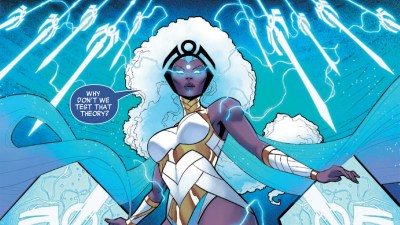
Storm Restores the X-Men’s Dream of Coexistence
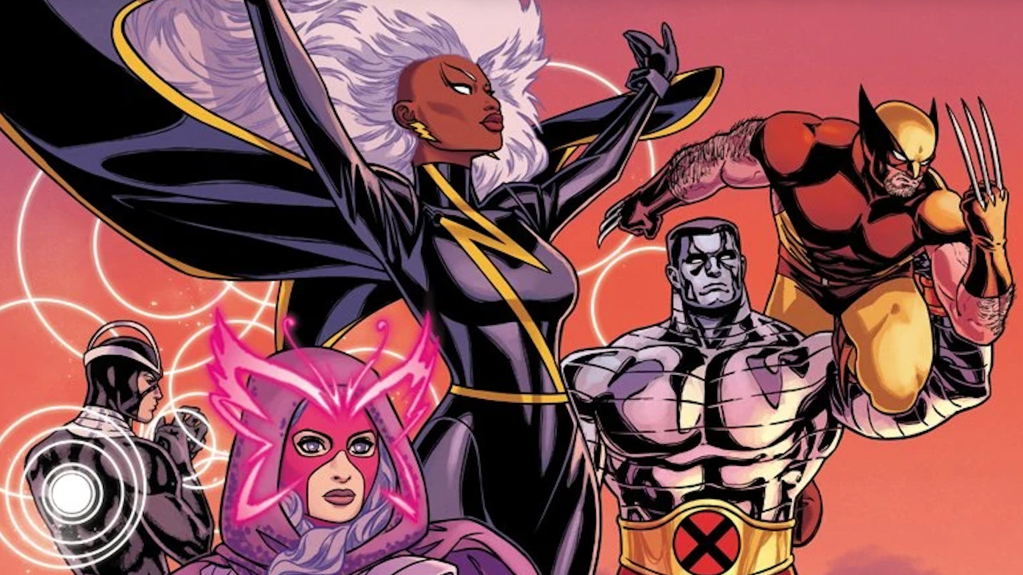
When the X-Men first debuted, they were created by Professor X to fight for mutant rights and to promote peaceful coexistence between humans and mutants. Although he wasn’t perfect, Professor X once genuinely believed that humans and mutants could live in harmony. A significant source of the X-Men’s feud with Magneto and the Brotherhood of Evil Mutants is that the villains believed that mutants are superior and that coexistence is impossible. Many of the X-Men’s storylines focused on trying to prevent villains like Magneto or Apocalypse from subjugating or exterminating humanity. Additionally, many X-Men preached the idea that people shouldn’t fear them and that they should be seen as equals. However, over the decades, the dream on which the X-Men were founded withered and died.
When the X-Men established Krakoa and asked that all mutants on Earth join them, it was a symbol that these heroes had given up. Tired of constantly being the victims of persecution, mutantkind isolated itself from humanity. While mutants having their own country isn’t necessarily a bad thing, how they implemented their policies made it clear that they viewed humans as inferior. On top of the fact that humans are generally not allowed into Krakoa, the X-Men were adamant about asserting sovereignty but had no qualms about bullying and flaunting their power over other countries to get their way. Additionally, the Krakoans kept for themselves all their innovations like a death cure that would have benefitted everyone. And if a crisis didn’t directly impact mutants, the X-Men barely got involved.
Of course, this was always the intention of the Krakoa era: to show what happens when a marginalized group is pushed too far and wishes for a place to call its own. And as Storm stated, isolating themselves, becoming a global powerhouse, and claiming superiority did very little to quell the animosity humans had towards mutants. And after Krakoa was destroyed, the X-Men tried to pick up the pieces and once again focused entirely on mutant-related issues. Nowadays, humans are treated as an afterthought at best and a looming threat at worst. Outside of Storm, no attempts are made to foster peaceful coexistence or open dialogue. Instead, the X-Men seem more focused on building walls and new fortresses to protect themselves and other mutants, as seen with the Factory and the new X-Mansion.
What the riot at the Storm Sanctuary and Storm’s response prove is that isolation by itself is not a long-term or healthy solution to dealing with prejudice and mistrust between different groups. Instead, Krakoa and the X-Men’s most recent actions enforce segregationist policies and stoke hatred between humans and mutants. The X-Men now see humanity as nothing more than an enemy. When Storm saw the French refugees getting ready to fight the mutants keeping them out, she didn’t see violent bigots planning to wipe out mutantkind. Instead, she saw starved, grief-stricken people who had lost everything and needed help. Storm de-escalated the riot not through taking one side or diminishing human plights, but by lending a hand and showing compassion.
In a time when the X-Men and even Professor X himself had lost faith in the dream of coexistence, Storm shows that it’s not dead yet. Although Professor X’s initial idea of peaceful coexistence can be attacked as being naïve, Storm’s actions show that it is possible and that the mutual respect of the inherent dignity of mutants and humans is a necessary moral axiom for them both. Instead of constantly preparing for war, X-Men need to get back to their roots of helping everyone, mutant and human alike, to show that mutants aren’t to be feared and to be the heroes they were meant to be. Only through empathy, kindness, and cooperation can real progress be made in human-mutant relations.
What do you think? Leave a Comment below and join the conversation in the ComicBook Forum!
More Comics
-

Image Courtesy of DC Comics -
Image Courtesy of DC Comics -
Image Courtesy of Marvel Comics -

Image Courtesy of Marvel Comics -
Image Courtesy of DC Comics