When Marvel announced its Age of Revelation event, it was met with some excitement. Coming at the 30th anniversary of the Age of Apocalypse, the event was presented as offering a new status quo for the X-Men, with storytelling taking things a decade into the future to a world reborn in the image of the heir of Apocalypse, none other than Doug Ramsey, aka Revelation, who had carried out Apocalypse’s goal of a world where only the fittest survived. it was presented as a story about a mutant utopia that was anything but, as it was built on a lie that endangers all of humanity.
Videos by ComicBook.com
Age or Revelation, initially, felt like it had the same sort of energy that Age of Apocalypse had, with a reality-shattering event that meant bleak and terrifying fallout for both human and mutantkind. But instead of getting a groundbreaking epic like Age of Apocalypse, Age of Revelation has fallen flat. Fans just aren’t as invested in the story and, as we’re getting close to the end, the next initiative — Shadows of Tomorrow — is already on the horizon. So, why did Age of Apocalypse work and Age of Revelation just… not? Turns out there are a lot of factors. Let’s break them down.
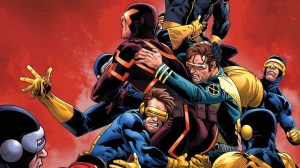
7) Age of Apocalypse Was Unique and Groundbreaking; Age of Revelation Simply Isn’t
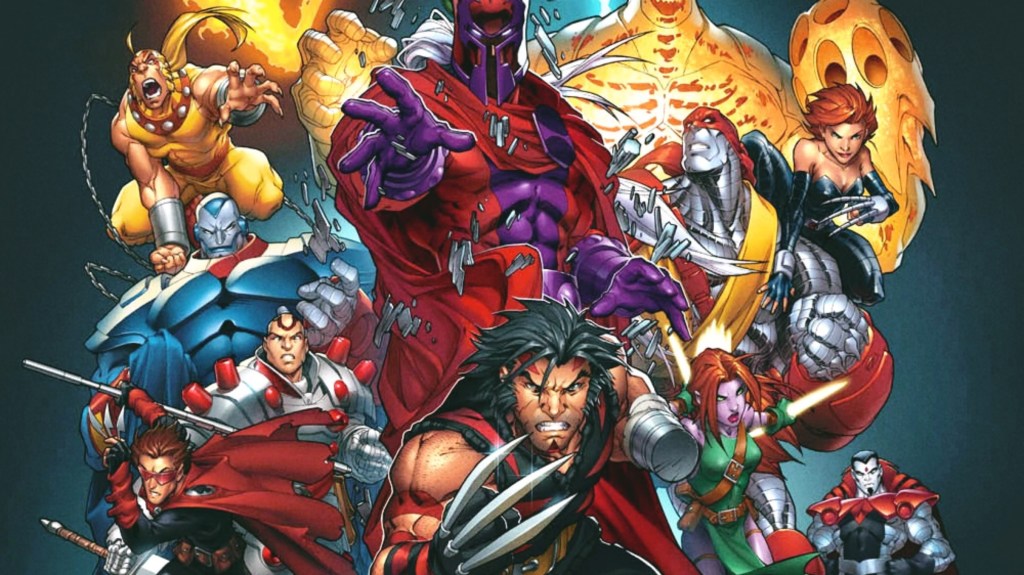
When Age of Apocalypse came out in 1995, it genuinely shook the Marvel universe. While the event was centered around the X-Men, it had wide-reaching impact, with the Age of Apocalypse replacing the main Earth-616 universe for a time and having significant ramifications across all of Marvel when the original timeline was restored. There had really been nothing quite like this before, this story with a true alternate reality where Legion travels back in time and kills Charles Xavier (by accident, he meant to kill Magneto) and causes Apocalypse to show up a decade before he was “supposed” to. In a sense, Age of Apocalypse was the wildest “what if” made manifest to devastating effect.
In comparison, Age of Revelation had none of that originality. Instead, it was just another, done-to-death dark future concept trotting out the idea of a mutant utopia, this time with Apocalypse’s name slapped on it by way of his heir, Doug Ramsey, aka Revelation. Because this was a glimpse into the future — and thus, arguably something that can be prevented in the first place — not only was the story just kind of uninteresting, but it also didn’t feel like it really mattered. We already know that the X-Men will go back to the present and what happened in the future will be something they work to prevent. There isn’t anything particularly special about this and the event hasn’t really gone out of its way to do anything groundbreaking or even that surprising.
6) Does Age of Revelation Even Have Stakes?
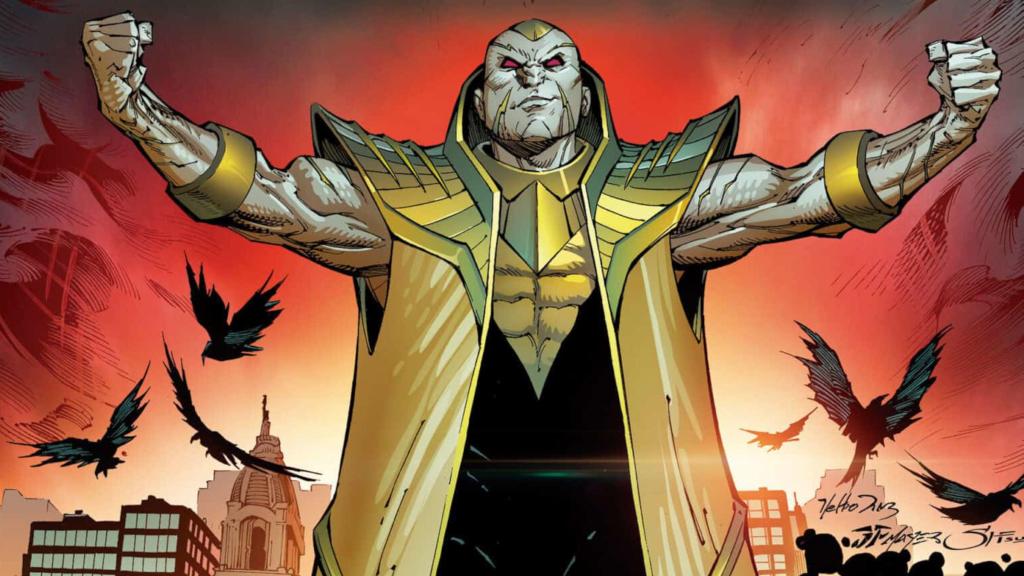
Speaking of if Age of Revelation actually mattered, there’s the question of stakes. Age of Apocalypse as an event felt like it had real stakes. It was a high stakes story with both the present and the future on the line because of what Legion did and the world that resulted from Legion’s mistake made that very clear. The world of Age of Apocalypse was extremely dark and very brutal. Some of our favorite heroes went into some very grey territory, morally, and when there were victories, they were often hard-won. We, as readers, also didn’t really know what was coming next but everything came with a cost.
With Age of Revelation, Marvel signaled almost form the start that we’d be coming back to the present and that what happened in Age of Revelation was years in the future. That right out of the gate made the story less pressing somehow. Instead of being something imminent and world-shattering, Age of Revelation felt more like something to deal with later — the X-Men catastrophe equivalent of scheduling dental work that you know you need to get done but have a little time to complete. By putting the focus on the future impact, it made it hard to invest in what it meant for now. That future impact also didn’t really feel especially dire, either. Age of Revelation’s story is so spread out over a large number of titles that don’t feel especially connected. That, in turn, gives the entire event this overall sense that none of it really matters.
5) Age of Revelation’s Plot Was Confusing While Age of Apocalypse Was Very Well-Defined
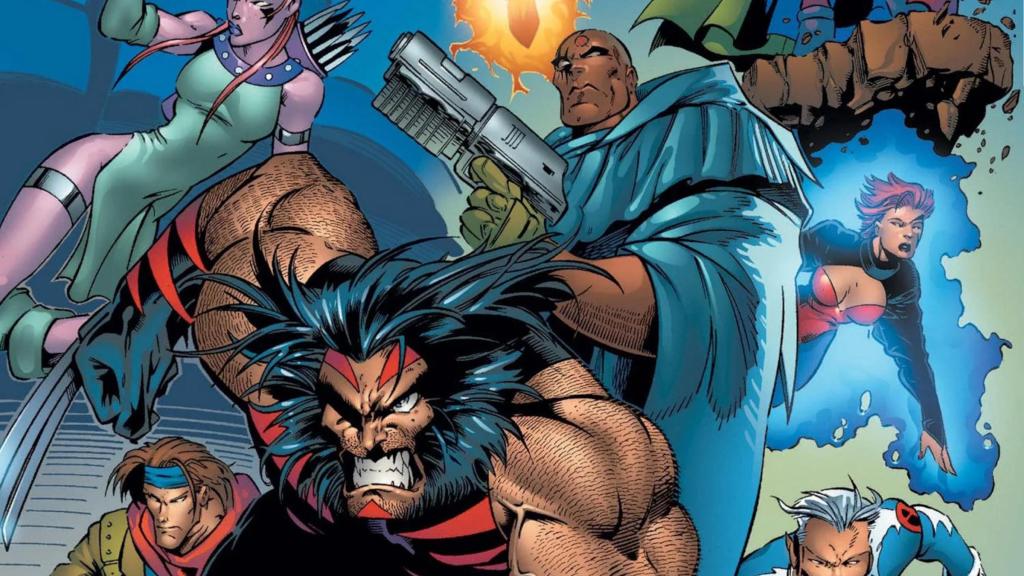
Coherence is another big reason why Age of Apocalypse was so good and Age of Revelation has fallen so flat. With Age of Apocalypse, readers got a very defined timeline that came with a pretty clear plot, some set rules, and it ended in a definitive way that still left lasting marks. On top of that, Apocalypse had very clear goals as a threat. In many ways, the entire event became a roadmap for major events in Marvel in terms of how you deliver a high-stakes, high octane story that knows where it’s going and gets them there with few bumps along the way.
The same cannot be said for Age of Revelation. There’s actually a lot going on in Age of Revelation, but that’s not a compliment. You have the X-Virus released by the Gene Bomb wiping out much of humanity but turning the rest of them into mutants. You also have Revelation, now with evolved powers, bending reality and creating a mutant utopia that is really an authoritarian state. You have different factions responding to this reality. Revelation’s general motivations aren’t especially clear, either, and all of it is spread out over 16 different series, each with multiple issues. Not only does a reader have to jump from series to series to try to figure out the overall situation, but not all of the series seem to be on the same page. The result is a confusing tangled mess that gives the sense that it never had a clear plan to begin with.
4) Age of Revelation Feels Redundant
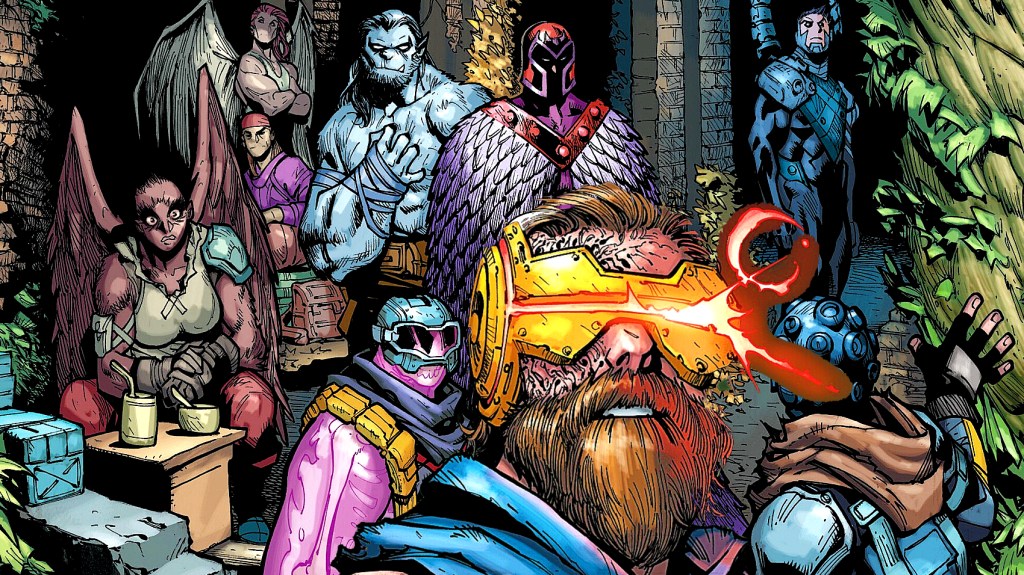
That goes into the next reason why Age of Apocalypse worked while Age of Revelation hasn’t really landed very well. Age of Revelation feels very redundant — and not just because we’ve already had Apocalypse-adjacent authoritarian shenanigans before. No, what feels really redundant here is the glimpse at the bad future of it all. We’ve done this before and we’ve done it better in an iconic story called “Days of Future Past”.
That might be the biggest issue with Age of Revelation. It’s trying to be two different things and failing at both of them. When we find out that the whole plot to stop Revelation is just send that time’s Cyclops back to stop Doug, we’re now deeply into weird copycat territory. Given that this idea is one that’s been more or less done before and could still be done reasonably if it was done with some tighter control, the whole Age of Revelation event is just too big and too messy to be this redundant.
3) Age of Apocalypse Was Original. Age of Revelation Has No Idea What it Wants To Be
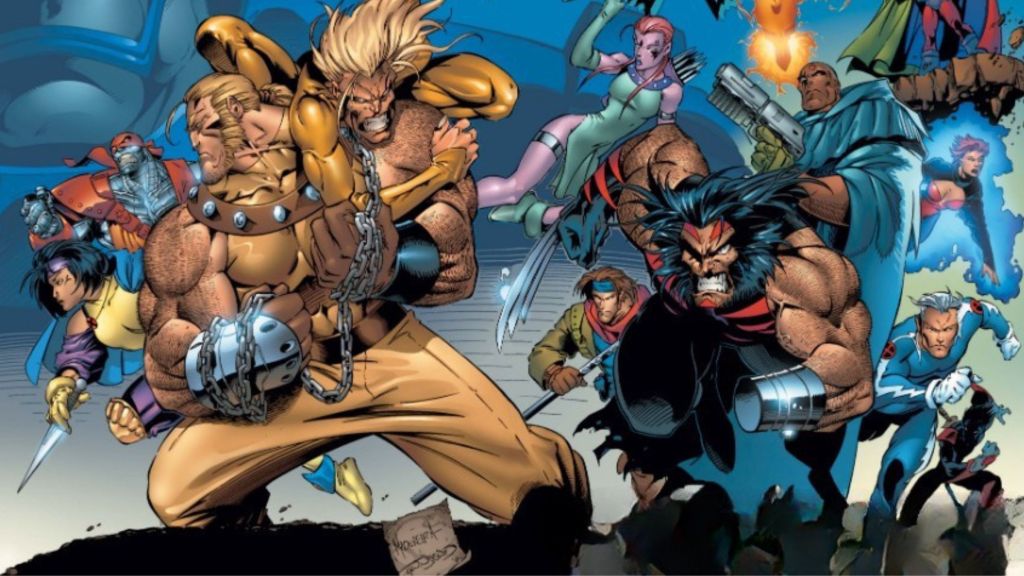
We’ve already covered that Age of Apocalypse was very original in terms of story at its time. It was fresh and unexpected and that gave it a lot of room to take some grim turns and give readers some very surprising things (more on that in a bit). Age of Apocalypse, as a story, felt like it had purpose. Age of Revelation on the other hand doesn’t feel like it even knows what sort of story it wants to be.
With Age of Revelation coming out 30 years after Age of Apocalypse it was presented as something of an anniversary homage situation, but that didn’t really turn out to be the case. Then, as the story got deeper, we got the “Days of Future Past” elements of things — the previously mentioned plot to send Cyclops of X Years Later back in time to stop Doug before the whole mess could start in the first place. So, which is it? Is it an homage to Age of Apocalypse with Revelation trying to continue Apocalypse’s work (which also kind of doesn’t totally make sense if you think too hard about it) or is it a riff off “Days of Future Past”? Is Age of Apocalypse trying to be something else entirely? Realistically, the latter is probably true. The X-Men corner of Marvel has been struggling since the end of the Krakoa era and Age or Revelation is sort of serving as a bridge to the big Shadows of Tomorrow storytelling phase, but the convoluted nature of Age of Revelation never really makes that clear and it makes the entire story frustrating.
There’s also the matter of the X-Men of Apocalypse story, a different Age of Apocalypse anniversary story going on roughly at the same time as Age of Revelation that is separate. That doesn’t necessarily contribute to Age of Revelation’s issues, but it does speak to the larger sense of confusion that seems to surround the purpose of the whole event.
2) Age of Apocalypse Was Very Character Focused
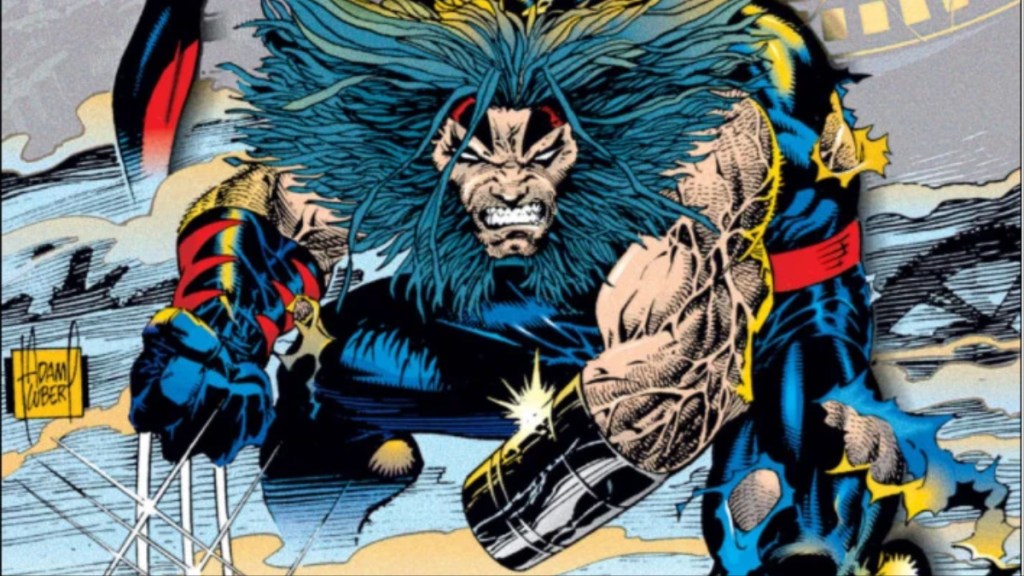
One of the things that was really great about Age of Apocalypse among a wealth of great things is also that the story, while an event, was also very character focused. This was a wide-ranging threat that still managed to tell more intimate stories and explore the motivations and even in some cases alternative origins for characters. Weapon X (Wolverine) had a particularly good story. Bishop is another standout. These character focuses really helped Age of Apocalypse work on multiple levels of scale which made it a compelling story.
Age of Revelation hasn’t given readers that. The biggest character focus, if you can call it that really has been Magik, but that’s more because of the controversy over what happened in X-Men Age of Revelation Infinity Comic #4 which saw a very upsetting development for the fan-favorite character.
1) Let’s Face It: No One Cares About Doug Ramsey (At Least Not the Same Way They Did Apocalypse)

Maybe the biggest reason why Age of Revelation hasn’t managed to work comes down to its villain: Doug Ramsey, aka Revelation. Let’s face it, who even cares about Doug Ramsey? Doug wasn’t necessarily a particular popular character when he was a hero — his OG powers where he could understand any language don’t necessarily make him seem that useful. Making a villain isn’t necessarily a bad idea, but it’s how Marvel chose to do it that is just forced in a way that doesn’t work. They just slapped some Apocalypse cosplay on him to try to make him cool rather than develop him into any significant threat of his own. It’s hard for fans to buy into that. Yes, Doug earned his role as Apocalypse’s heir — he won it in X-Men: Heir of Apocalypse by participating in a 12 mutant tournament — and it wasn’t like he broke bad overnight. Krakoa did show Doug doing some manipulating and scheming, but going from there to Age of Revelation just feels like such a hard shift with a character that many readers still don’t see as a real threat. And it hasn’t helped what should have been an explosive and landmark event be much more than a dud.
What do you think? Leave a comment below and join the conversation now in the ComicBook Forum!
Most Viewed
-

©Toshiaki Iwashiro,Shueisha/PSYREN Secret Society -

image courtesy of Warner Bros.