Just shy of hitting its seventh anniversary, Anthem is officially dead. Electronic Arts has turned off the servers and made sure one of BioWare’s most controversial games will never be playable again (unless there are some crafty preservationist-minded modders out there). It was a stunning and sad failure, the Concord of its time before that ill-fated hero shooter could be mocked and shunned. But that doesn’t mean Anthem is devoid of value. It serves as a solid cautionary tale, but, sadly, it doesn’t seem like many publishers learned the right lessons.
Videos by ComicBook.com
One of Anthem’s biggest problems was that it was seemingly a terrible fit for the BioWare teams that had primarily focused on single-player games (essentially, the developers not working on the MMORPG Star Wars: The Old Republic). BioWare made its name developing Mass Effect, Dragon Age, Baldur’s Gate, Jade Empire, and Star Wars: Knights of the Old Republic, all of which are almost exclusively offline titles. Mass Effect 3’s cooperative mode was surprisingly thrilling, but it was by no means something that carried the team’s long-standing legacy.
Anthem‘s Death Was a Long Time Coming
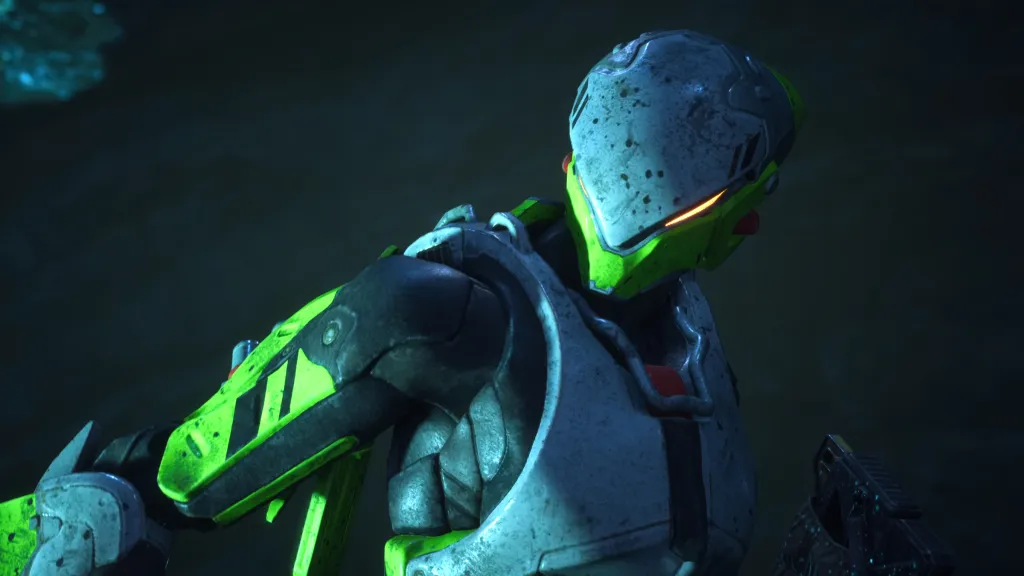
As such, it means the studio had little business going so out of its wheelhouse to create something so radically different. There’s nothing inherently wrong with shifting gears — Horizon Zero Dawn, The Last of Us, Ghost of Tsushima, and Death Stranding are modern examples of relatively big and successful swings — but it becomes an issue when done cynically. As noted by BioWare veteran Mark Darrah, the pitch for the game was almost exactly what the EA executives wanted to hear at the time, as he recalled it being talked about like a Mass Effect game that could hit FIFA numbers because of its longer potential tail. So while EA didn’t put a gun to the team’s collective heads in order to get a live-service game out of them, it was pitched in a way to be exactly what the live-service-addled brains of the EA executives wanted to hear.
Anthem’s release in February 2019 meant it was one of the early casualties of this depressing trend. Marvel’s Avengers, Redfall, Babylon’s Fall, and Suicide Squad: Kill the Justice League are just four other big examples that have somewhat similar histories to Anthem. Crystal Dynamics was mostly known for its Tomb Raider games. Arkane was notorious for its immersive sims. PlatinumGames’ dominated the character action genre. Rocksteady Studios’ Batman trilogy contains three of the best single-player superhero games of all time. These studios had specialties that built their legacies and softly coercing them to drift far outside of their skillsets was wildly risky.
This was not even lost on Square Enix’s leadership since its president, Yosuke Matsuda, noted that the company going forward “[needs] to select game designs that mesh with the unique attributes and tastes of [its] studios and development teams” when speaking of Marvel’s Avengers’ disappointing sales. Thankfully, Crystal Dynamics is back developing Tomb Raider games.
Anthem Should Have Been a Wake-Up Call

Only 18 months separated Anthem and Marvel’s Avengers, but Redfall and Suicide Squad came out years later and didn’t appropriately shift in response (and, like Anthem, were seemingly pitched in a certain way to hook greedy executives who were seeking for specific buzzwords). And, as such, both were massive disappointments that were easy to see coming from anyone not with huge cartoon dollar signs in their eyes. A more crafty publisher would have seen the writing on the wall with Anthem and rethought things.
Games take a long time to make, though. Anthem’s roots stretch back to as far as 2012. Rocksteady’s Suicide Squad started taking form around 2016 or 2017. Redfall began production in 2018. It’s not totally feasible to completely change course in response to a flop in just a few months. However, it’s hard to not at least see what happened as likely possibilities, so while it would have been great to pivot after a high-profile flop, these are problems that should have been caught in the incubation stages.

By and large, that’s still not happening or happening at such a scale to make stories like this a thing of the past. PlayStation’s grand (and mostly failed) live-service pitch came well after Anthem’s botched launch. It’s hard not to directly think of Concord as a casualty of this approach. There are still various flavors of shooter — extraction, hero, battle royale — that seemed destined to die on the vine upon announcement. Highguard is the most recent example, as even though it has notable talent behind it, it was met with uneasiness and skepticism. Can the market support yet another multiplayer first-person shooter, especially when players are mostly locked to the same games they’ve been playing for years?
This trend of slavishly chasing trends and pitching games out of obligation for a mythical audience to executives who are only programmed to grab onto certain keywords should have died with Anthem. It spent years languishing in development hell only to be pushed out too early and lampooned when it finally arrived. Such a catastrophic mismanagement from such a once-beloved developer should have been a reality check.
But it hasn’t been. Publishers and executives safe from the harm they spread have continued to fail reading the room and have only been seduced by sweet nothings that have phrases like “engagement” and “seasonal store” peppered throughout. The tarnished reputations and lost years churning away have not seemed to cause enough of a shift in the industry. Anthem is a cautionary tale, but one a lot of the industry doesn’t seem to want to analyze.
What do you think? Leave a comment below and join the conversation now in the ComicBook Forum!
Most Viewed
-

Image Courtesy of Studio Bones -

Image Courtesy of Science SARU