Baldur’s Gate 3 has become, to many, the pinnacle of the RPG genre and even gaming itself. One cannot say a bad word about this game or else suffer the wrath of some, frankly, justified fans. It’s beloved, and for good reason; its high-quality quests, incredible writing, and stellar attention to detail give way to an experience unlike any other. No title in the history of gaming affords the player as much freedom as Baldur’s Gate 3, and, for that, it understandably earns the title of best RPG for the majority of players.
Videos by ComicBook.com
Yet, despite all of its strengths, its innovative gameplay mechanics, and Larian’s revolutionary approach to game design, Baldur’s Gate 3 actually reveals the worst in gaming. From truly dreadful trends to a bleakly uncertain future, BG3, as a result of its excellence, illustrates exactly what is wrong with the industry right now. Rather than inspiring a new generation, Baldur’s Gate 3 has been branded as an unattainable goal and a one-of-a-kind experience we’ll never get again. In my opinion, that’s a dangerous way of thinking.
Baldur’s Gate 3 Isn’t Too Good, It’s Just Where Development Should Be
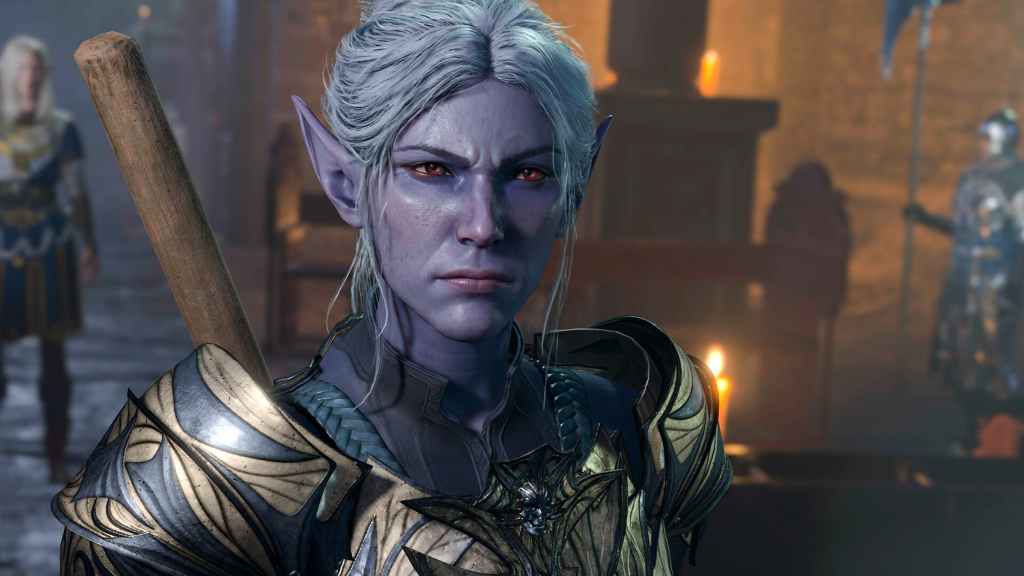
It has been said ad nauseam that we’ll never get another game like BG3. This is largely owing to the game’s experimental, costly, and ambitious production, one that was possible thanks to a dedicated team, a long stint in Early Access, and a ballooning budget supported by past successes and a committed fanbase. Despite this, it is almost unprecedented for a revolutionary title not to serve as a form of inspiration to the next generation of developers. Yet, with Baldur’s Gate 3, the opinion is one of timid acceptance that this is a freak occurrence the likes of which we’ll never see again.
This confuses me, as Baldur’s Gate 3 is not a perfect game. It’s missing core features, is frequently buggy, and has proven a divisive experience for some. It also isn’t as if CRPGs haven’t been offering a level of freedom akin to Baldur’s Gate 3 for some time, either. Even Larian’s own previous titles are nearly at BG3’s level. RPGs have also been steadily improving over the past decade, so it is no surprise that Baldur’s Gate 3, with its long development time, managed to deliver its nevertheless impressive level of freedom. Suffice it to say, the bar it sets is high, but not impossibly so, not by a long shot.

What this really comes down to is the fact that Baldur’s Gate 3 exposes where game development should be. Its own production is, in itself, an innovation. The switch to Early Access to both involve the highly motivated D&D and CRPG communities and garner important player feedback feels like a smart move. Considering how long game development takes and how quickly budgets can balloon, offsetting costs with Early Access funds and involving the people who will ultimately play your game in the long term makes perfect sense.
Importantly, it also prevents antiquated development, which is to say games that begin production at a time when certain mechanics were popular, only to be released by the time they’ve grown outdated. Ubisoft is a perfect example of this, releasing the Witcher 3-inspired Assassin’s Creed: Valhalla five years after CD Projekt Red’s game came out. Furthermore, it sets expectations of a somewhat broken release, a now inherent feature of most AAA games, and allows developers to price it accordingly, pulling in a wider pool of gamers.
Baldur’s Gate 3 Should Be The Rule, Not The Exception

This is not to say that all AAA games should now become Early Access titles, nor that they need to all feature the same types of freedom and quality as Baldur’s Gate 3. Rather, the strict, budget-intensive, and ultimately stifling production pipeline that AAA developers have been shoehorned into needs to die out. Spending hundreds of millions of dollars on games that are rarely in line with what players want or expect is an enormous waste of money and is ultimately resulting in job losses and studio closures.
Baldur’s Gate 3 became a phenomenon not because its source material is beloved by all, or because it has the fanciest graphics or comes from the most popular studio. Rather, its success was born out of the high-quality experience that came about thanks to the collaboration between the developer and its players, and later the positive word of mouth from said players. More games can be like Baldur’s Gate 3 if they spend less time being developed in secret away from the near billions of people gaming daily, and more in collaboration with them
However, and this must be stressed, that is not to say that fans are always right. Developers and creatives understand the machinations of production and the best implementation of certain mechanics far better than we ever could. Rather, utilizing the vast wealth of experience from dedicated fans and prospective players as opposed to small QA teams the industry is hellbent on replacing with AI anyway, is a great way of understanding what will ultimately make for a great experience.
Baldur’s Gate 3 Can Save The Gaming Industry
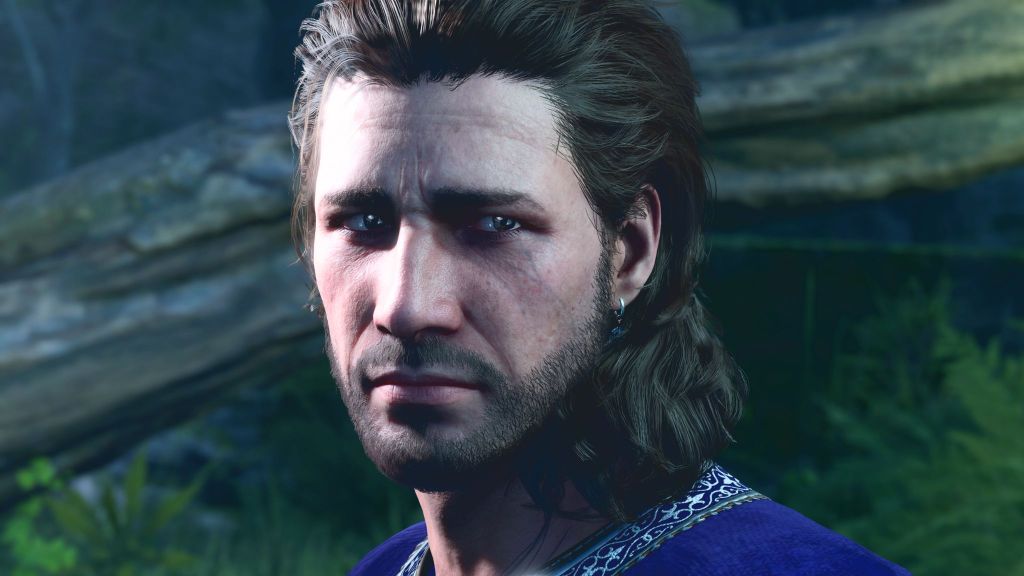
Much like Hollywood, the gaming industry has been forced to deal with development in a very specific way and is being slowly killed off by it as a result. However, also akin to Hollywood (which saw Gareth Edwards make the CGI-intensive sci-fi film The Creator for a quarter of the budget of most blockbuster films thanks to his innovative and efficient approach to pre-production), there are people out there willing to improve things. All Larian Studios did was prove that a AAA experience can be produced using means that have been adopted by AA and indies for years now and still succeed both critically and commercially.
It is true that we won’t get more games like Baldur’s Gate 3 if the industry doesn’t alter its approach to game development. Instead, we’ll see massive flops like Concord, Suicide Squad, and Highguard, games developed in a bubble, released before they’re ready, and packed full of antiquated ideas no one cares about anymore. However, if the industry looks at Baldur’s Gate 3 as a blueprint rather than an unattainable goal, then we could finally see the revolution this industry has needed for quite some time.
What do you think? Leave a comment below and join the conversation now in the ComicBook Forum!
Most Viewed
-

Image Courtesy of TOHO -

Image Courtesy of Crunchyroll -

Image courtesy of Marvel Studios -

Image Courtesy of Marvel Comics -

Image Courtesy of Good Shepard Entertainment/Sony Interactive Entertainment