The Witcher 3: Wild Hunt stands out, over a decade later, as one of the most impressive games of its era. The wildly entertaining and deeply engaging fantasy epic helped turn the franchise into a household name, all while being a deeply entertaining video game to boot. That’s what makes expectations for its spiritual successor, The Blood of the Dawnwalker, so high — and what makes the finished product so impressive.
Videos by ComicBook.com
During a preview event attended by members of the press (including ComicBook.com), Rebel Wolves and Bandai Namco got to show off the depth and scope of The Blood of the Dawnwalker, highlighting how the new game from The Witcher 3 director is living up to the legacy of that fantasy epic. The controls are tight, the story is immersive, and the stakes are high in this gothic adventure, which was all to be expected from a team of this pedigree. However, it’s the little touches that really elevate it — including a passage-of-time mechanic that’s one of the best ways I’ve seen a game approach the open-world sandbox design aesthetic without losing sight of the central narrative.
The World Of The Dawnwalker Is Huge
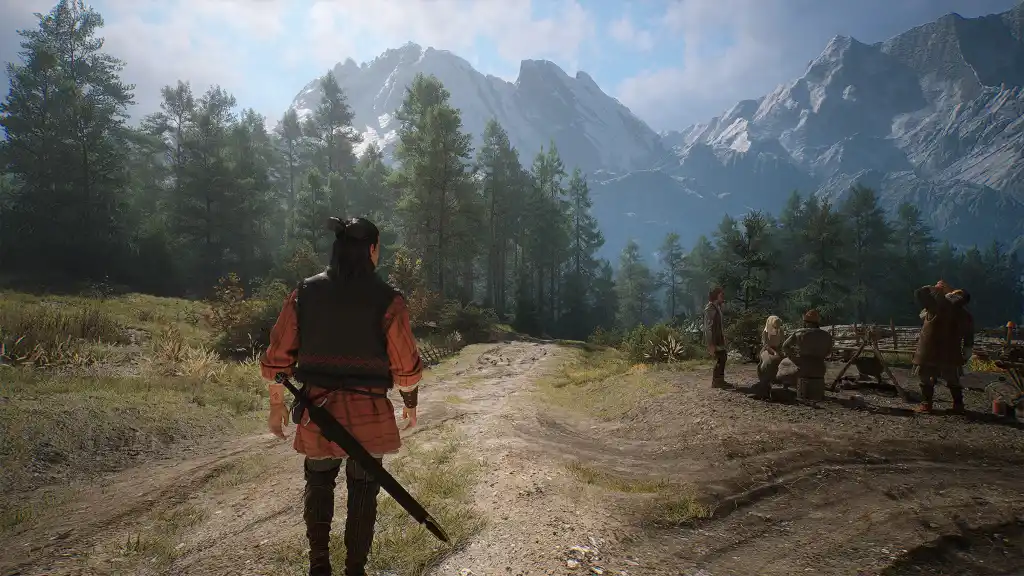
The Blood of the Dawnwalker is a truly massive space, something that becomes very clear once players actually get to venture outside of their small town and into the larger setting of Vale Sangora. The realm has been taken over by vampires and, after a prolonged prologue section that highlights the way players will need to blend exploration, combat, and diplomacy to progress the story, is opened up to the player. Players venture out as Coen, with their unique status as a Dawnwalker giving them the ability to pass as human during the day and transform into a vampire at night. These modes come with different abilities and styles of combat, whether that be the magical powers afforded to the more human side or the more monstrous abilities available to players who embrace the vampiric path.
Combat is tight, and the exploration is easy, especially once players unlock Coen’s teleportation power and ability to walk up walls for a brief period of time. As players explore the world, the game takes cues from the likes of The Legend of Zelda: Breath of the Wild by introducing massive towers that need to be climbed to get a full view of the world at large. Doing so opens up the map and gives the player a better idea of the scale of the game. The map is littered with challenges, wild animals, and secrets that can be capitalized upon to upgrade Coen. There’s a lot to be done in The Blood of the Dawnwalker, to the point where players could theoretically lose sight of their mission and just get lost in the endless side quests. That’s where the game’s blend of narrative purpose and game mechanics best comes into play.
The Passage Of Time Mechanics In Blood Of The Dawnwalker Fix An Open-World Problem

At the heart of The Blood of the Dawnwalker is the fate of Coen’s family. While certain members of the group can be killed off during the prologue depending on player choices, the early section ends with most of Coen’s loved ones captured by the despotic Brencis and his lieutenants. After the prologue, Coen is informed that the family is intended to be among the many sacrifices made to the vampire lord in one month’s time. This gives players 30 in-game days and nights to stage a revolution against the vampire and save his family. Instead of there being some kind of in-game clock akin to Dead Rising, The Blood of the Dawnwalker goes a slightly different route and introduces time almost as a resource that must be managed. Moving through the land at will won’t cost the player time unless they choose to move on from day to night or vice versa.
However, taking on side quests or completing story missions will consume a certain amount of the day or night, leaving the player with less time to dedicate to their attack on the castle belonging to Brencis. The developers of the game noted that players could just go confront Brencis immediately but would risk being stomped by the ensuing boss battle. By contrast, players who explore the realm can empower themselves and bring down the lieutenants serving under Brencis, weakening him while raising the risk that something may happen to their family. It’s a clever mechanic that quietly fixes one of the biggest problems with open-world games.
In most iterations of this genre, it’s easy to get lost in the weeds and forget the actual plot of the game. Players can often find themselves getting so enamored with side quests that the central narrative loses tension while players become overpowered by completing every side mission. By making time a valuable resource, players have to pick and choose what missions they want to embark on and which NPCs they want to help out. It’s a clever mechanic that forces players to fully interact and immerse themselves in the world, choosing who to help, who to abandon, who to romance, and who to kill. It fixes one of the biggest struggles many players have with open-world games and will keep players on task even as they have fun exploring the world.
After A Few Hours, I’m Convinced Blood Of The Dawnwalker Is This Generation’s Witcher 3

The Witcher 3 was one of those games that felt inescapable when it launched over a decade ago. The terrific writing, tight gameplay, and engrossing world all delivered one of the best action-fantasy experiences of that gaming generation. While I’ve only gotten to play a few hours of it, The Blood of the Dawnwalker is just as impressive. It feels like it has learned from The Witcher 3’s legacy, taking cues creatively not just from that game but plenty of other expansive adventures that have come out in the years since. It allows the players a massive amount of power without letting them forget how easy it can be to fail in their mission. Combat is precise, with easy controls that take time to master.
The interpersonal conversations aren’t just “good” or “evil,” but complex and complicated in unexpected ways. While Coen is a clear character, there’s enough ambiguity baked into his personality that players can bring their own voice to his actions and attitude. There’s a genuinely staggering level of depth at play in The Blood of the Dawnwalker that nevertheless avoids the typical problems that open-world sandboxes usually suffer from. Put together, it all speaks to a truly engrossing experience that feels more in-depth and engaging than most games I’ve played recently. As someone who loves The Witcher 3, it’s hard to imagine a mature, story-driven fantasy that could match it — but Rebel Wolves and Bandai Namco just proved that they can deliver an experience that I can’t wait to sink my teeth into.
The Blood of the Dawnwalker is scheduled to release for the PlayStation 5, Windows and Xbox Series X/S on September 3, 2026.
More Gaming
-

Image courtesy of Nintendo -

Courtesy of Arc System Works