Crimson Desert, the game we all deemed too impossible to be real, has stirred up quite a considerable amount of controversy. Surprisingly, it isn’t surrounding the merits of its gameplay, of its implementation of heavily-influenced ideas, or indeed its shift from being an MMO to a solo-only adventure. Rather, the Crimson Desert discourse is in relation to its status as an RPG, or rather, lack thereof. It has spawned a somewhat baffling and, at times, frustrating back and forth between both the developer and the wider gaming public, their differing opinions clashing over something that, frankly, I think we’ve been getting wrong for quite some time.
Videos by ComicBook.com
Interestingly, I think this discussion goes far beyond simply whether or not Crimson Desert is indeed an RPG. What is more important, and Crimson Desert’s placement within the RPG genre will determine the outcome, is what it truly means to be an RPG. For too long, developers have been labelling practically anything involving a character and an open world as an RPG, and, as a result, the genre has become utterly diluted and far removed from its original intent. This recent discussion around Crimson Desert has made me realize that not only do developers seemingly not know what an RPG is, but neither do players. So, it is about time that we knuckle down and actually figure out what makes an RPG, and whether Crimson Desert fits the description.
RPGs Aren’t Just Games Where You Play A Character

The central reason Crimson Desert’s status as an RPG has come so under fire is due to comments made ad nauseam by its developer, Pearl Abyss, stating that it is, indeed, not an RPG, but rather an open-world action adventure game. The developer has been fairly consistent in this messaging, even though many have mistakenly referred to it as an RPG on multiple occasions. I myself am guilty of stating that Crimson Desert will be the next best RPG, capable of dethroning the likes of The Witcher 3. I don’t think it helps that so many of Crimson Desert’s obvious influences are role-playing games, CD Projekt Red’s seminal work included in that long list. Still, apparently, a vocal majority cannot grasp why Crimson Desert isn’t a role-playing game.
One of the arguments I have seen in favor of Crimson Desert being an RPG is that, well, you play a character. User SnackBarChezLeon stated on X (formerly Twitter), “Are you playing someone in an open world? It is an RPG… Only because there are no levels doesn’t mean it is not,” in response to a summarising of why Crimson Desert is not being referred to as an RPG. Many others have claimed this as well, rather confidently stating that any game, typically open-world titles, in which you play as a role or character makes it, by definition, a role-playing game.
And, I mean, they’re technically right. However, that would imply that every game is an RPG. You play as Chell in Portal, so I presume that’s an RPG too. Let’s not forget the legendary RPGs Mario Kart, Nintendo Switch Sports, Animal Crossing, and Halo. I’m being a tad facetious, but the notion that merely assuming the role of a character makes it an RPG game is ludicrous. However, one could be somewhat forgiven for believing this based on the fact that a lot of games that frankly should not be considered an RPG are often labelled so.
RPG Goes Far Beyond Stats And Levels
Because of the ambiguity surrounding what constitutes an RPG spiritually, for lack of a better word, we’ve decided to classify it mechanically. RPGs, therefore, are games with leveling systems, stat-based systems that influence combat and exploration, player-driven choices, and, slightly less consistently, multiple-endings caused by said choices. Many others lump in inclusions like side quests, a greater focus on narrative, an open-world, and other broader concepts that feel as if they’re too easily attributed to other genres to truly count.
However, while this mechanical classification does apply to many of the greatest RPGs ever made, and technically earns a game the right to call itself an RPG, I’d argue that it isn’t enough. Not only are there vastly different types of RPGs, each with its own unique classifications, but distilling a genre entirely down to its inner machinations disregards its essence. Simply put, there are levels to which something is an RPG; while one game can tick all the aforementioned boxes but lack the spirit of the genre, another can do the same and offer players the sensation that the entire genre is based on, that being the freedom afforded by TTRPGs like Dungeons and Dragons.
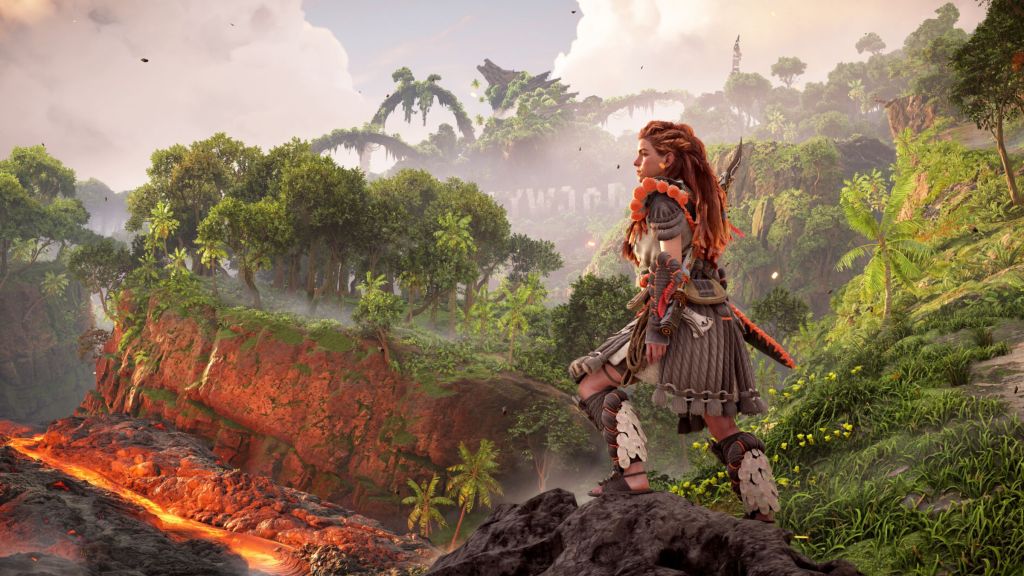
Take Horizon Zero Dawn, for example. It is classed as an ARPG (Action Role-Playing Game), features levels, a skill tree, upgradable equipment, dialogue choices, a vast open-world to explore, and a pre-determined role to assume. However, I’d argue, while these certainly qualify Guerrilla Games to call it an RPG, it feels like a cinematic, narrative-focused action game with the guise of being an RPG. Its skill tree and levelling system feel incidental to the entire experience; it lacks much of the freedom the genre is typically known for and is present in more ambitious RPGs like Baldur’s Gate 3 and Kingdom Come: Deliverance 2. The same can be said of the more recent Assassin’s Creed games, which adopt many of the traits associated with the genre to use the RPG buzzword and sell more copies, but their implementation is surface-level.
Because, at its core, being an RPG means you don’t just play the role, but truly inhabit it. It isn’t about picking from a handful of dialogue options that best fit the personality of a pre-determined character, or creating a build that matches them and their skillset before you started. Aloy’s chosen weapons, abilities, and lifepath are all more or less chosen before you even start playing; you just unlock them in an order that feels as if you’re somewhat included in the decision process. The same can be said of Eivor, Bayek, Kassandra, and Naoe in their respective Assassin’s Creed games. Simply offering those mechanics doesn’t work if you don’t then give players the freedom to truly determine the direction, playstyle, and choices of those characters.
Crimson Desert Is Not An RPG
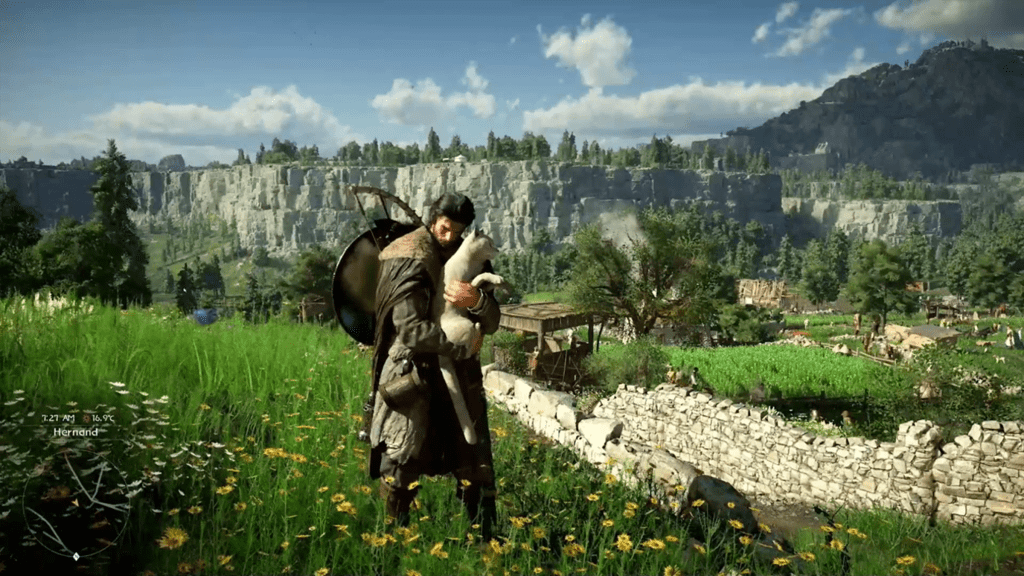
I think if we were to look at Crimson Desert objectively and through the more mechanical metrics that determine what an RPG is, we’d find it simply isn’t one. This is not least due to its developers’ insistence that it doesn’t fit within the genre, nor that it attempted to make an RPG, but also because it lacks the most crucial aspects that make an RPG: leveling and skill points. Sure, you can unlock new abilities, but these are found via exploration and not by player choice. Kliff gets stronger as a result of the player getting better, unlocking better equipment, and finding unique abilities. By all metrics, it fits firmly in the action-adventure genre, one defined by its focus on player skill and exploration, rather than arbitrary leveling systems.
Similarly, were we to look at Crimson Desert through the lens of what I believe to be a true RPG, one that adheres to the genre’s main influence and empowers the player through complete freedom of choice, then it also doesn’t fit. It is about telling Kliff’s story, the story of his compatriots and the Greymanes; it is not about telling your story, and that, at least in my eyes, prevents it from being a true RPG. I think the lack of freedom, coupled with the missing core mechanics inherent to the RPG genre, is precisely why Pearl Abyss chose not to slap the buzzword onto Crimson Desert. It almost certainly feared comparison to bigger titles like Baldur’s Gate 3 and Kingdom Come: Deliverance 2, which do deliver upon every promise made by the RPG genre.

I can understand the desire to refer to it as an RPG; after all, its range of influences was bound to lead to the introduction of certain mechanics typically associated with the RPG genre. However, I firmly believe that Crimson Desert will not be any less enjoyable merely because one cannot slot it neatly into the RPG category. It still looks set to be one of the best open-world fantasy games we’ve ever seen, a category in dire need of more entries, and it’ll benefit from the few RPG tropes it has adopted.
Frankly, the way I see it, everyone wins. RPG purists like myself don’t have to sigh at yet another action-adventure game passing itself off as an RPG, and role-playing enthusiasts can enjoy a bevvy of features they’re familiar with. Honestly, all the RPG nonsense aside, I feel that rather than bickering over the categorization of Crimson Desert, we should be celebrating that it even exists at all.
Do you think Crimson Desert is an RPG? Leave a comment below and join the conversation now in the ComicBook Forum!
Most Viewed
-

Courtesy of Crunchyroll / Sony Pictures -
Image Courtesy of Ufotable -

Courtesy of TOHO Animation -

Image Courtesy of Netflix