Crimson Desert never asks to be compared to a Souls game, yet the comparison finds it anyway. Somewhere between the weight of its combat and the deliberate pace of its encounters, something familiar begins to surface. It does not announce itself loudly. It creeps in through tension, through the way a single mistake can unravel an entire fight, through the understanding that success will not be handed to you. For players who have lived in that space before, the feeling is unmistakable.
Videos by ComicBook.com
That familiarity is not imitation. It is alignment. Crimson Desert understands something many modern games seem eager to forget, that challenge creates meaning. It trusts players to fail, to learn, to adapt, and to return stronger for it. In doing so, it captures the same rhythm that defines the best Souls-like experiences, even if it never fully commits to the label. The result is something that feels both unexpected and entirely intentional.
Boss Fights That Punish Mistakes and Reward Mastery
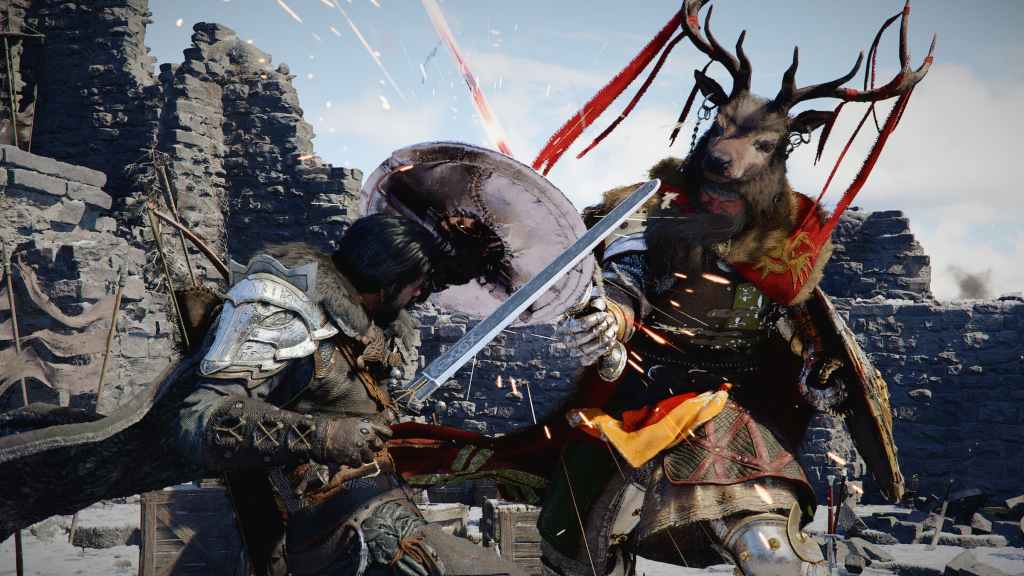
Crimson Desert’s boss fights do not just test your reflexes. They, additionally, test your discipline. Rolling is not a panic button here as it has consequences if mistimed by even a fraction. Try to spam the dodge button, and the game shifts your behavior, turning repeated rolls into a short backstep instead. On paper, that sounds like a safety net, and if done with intent, it is. It even allows for special attacks setups if you’re aware of them. In practice, though, it is a trap. The backstep carries far fewer invincibility frames, which means the very instinct to panic dodge becomes the thing that gets you hit. The game is not just punishing mistakes, it is punishing bad habits.
That design alone reshapes how you approach every encounter. You cannot rely on muscle memory built from other action games where rolling repeatedly can brute-force survival. Crimson Desert forces intention into every input, asking you to commit to timing rather than frequency. Blocking introduces its own layer of risk as stamina becomes a finite resource that can collapse under pressure. You are constantly balancing options, weighing whether to evade, guard, or disengage entirely. That tension creates a kind of focus that feels unmistakably Souls-like, where survival hinges on control rather than speed.
There is also a deliberate pacing to these fights that reinforces that philosophy. Bosses do control space and punish overcommitment with brutal efficiency. Many encounters unfold across multiple phases that do more than simply increase difficulty, they fundamentally alter how the fight is read. An enemy that once felt measured can suddenly accelerate, chain attacks differently, or introduce new pressure points (often red attacks) that force immediate adaptation. If you were leaning on repetition, the game pulls that crutch away with the only warning be a phase change and a renewed health bar.
What makes these encounters stand out is how tightly they are tuned around player growth. Early failures feel overwhelming, almost unfair, until patterns begin to surface and your reactions become more deliberate. A well-timed dodge replaces panic movement, a patient opening replaces reckless aggression, and suddenly the fight begins to shift in your favor. By the time victory comes, it feels less like overcoming a boss and more like mastering a system that was always there, waiting for you to understand it. That is the Souls-like heartbeat running through Crimson Desert’s combat.
There Are Hidden Souls-Like Lessons in Every Boss Encounter
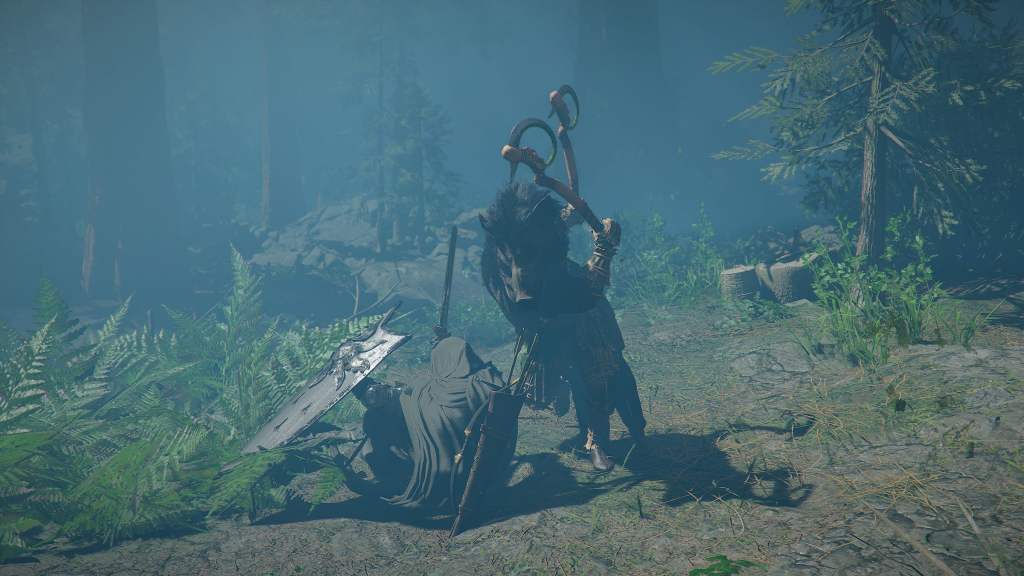
The lesson here to be understood is that Crimson Desert teaches without ever explaining. It places you in situations where failure is often inevitable, then encourages you to ask “why”. Every encounter becomes a lesson, not through instruction, but through consequence. The game does not guide you toward improvement. It expects you to find it yourself. That process can be frustrating, no doubt, but it is also where the experience finds its depth. That frustration becomes an instrument to your instruction. You are carving a path through trial and error, slowly shaping your understanding with every failed attempt.
Over time, patterns begin to reveal themselves. The timing of an attack, the spacing of an encounter, the rhythm of a fight; these elements start to feel intentional rather than overwhelming. The over punishing encounter starts to feel fair, even precise, as if the game had been communicating with you all along. You stop seeing difficulty as an obstacle and start recognizing it as design. It becomes something you can learn, not something you simply endure. That is what transforms frustration into engagement, and why many gamers adore the Souls-like genre so much.
This is where Crimson Desert aligns most closely with Souls-like philosophy itself. It does not chase accessibility at the cost of engagement. Instead, it leans into friction, trusting that players will rise to meet it. And for those who embrace it, the reward is not just progress, but a deeper connection to the experience itself. It asks more from you, but in doing so, it gives more back. That is what makes the challenge feel worthwhile, and while a boss in Crimson Desert is often a “sit-up-in-your-chair” moment.
What do you think? Leave a comment below and join the conversation now in the ComicBook Forum!
Most Viewed
-

Image courtesy of The Pokemon Company -

Image Courtesy of Toei Animation