The success of Balatro set off a race in the gaming space, with plenty of indie titles taking their own approach to classic games in search of the next hit. The combination of traditional poker hands and a roguelike progression system was a huge win for LocalThunk, and has prompted plenty of copycat titles or games that approach simple card games, dice games, and coin games with their own touches. One of the most promising yet is Dice of Arcana, which goes further than most by creating an entire setting around the game.
Videos by ComicBook.com
Dice of Arcana is a first-person game from Studio Evil and Shoreline Games that brings players aboard a mysterious caravan. Therein, a figure speaks from the shadows and tasks you with playing your way through a series of board games. With new dice and pieces unlocked with each victory, the foundation is set for a new entry in a quickly growing genre. However, the art design, subtle narrative, and creepy touches on display during a demo of the game at LVLUP elevate Dice of Arcana into something unique.
How Dice Of Arcana Reimagines Dice Games With A Creepy Touch
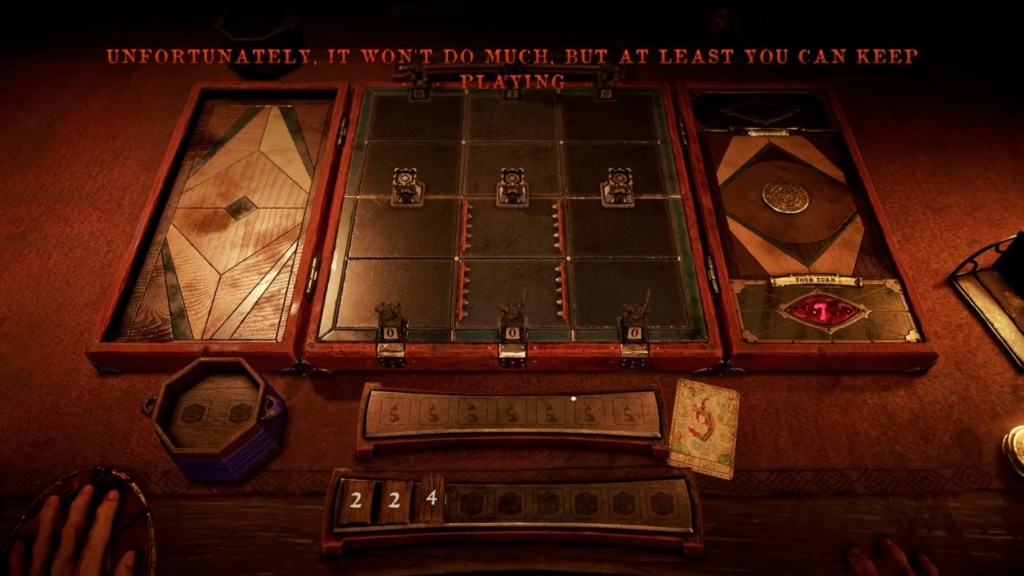
Dice of Arcana is a creepy melding of a Baltaro-style roguelike and a strategic board game, forcing players to mix a lot of skill and a bit of luck if they want any chance of escaping the mysterious caravan they’re stuck in. From the onset, Dice of Arcana‘s creepy aesthetic helps separate it from other recent approaches to dice games in the world of gaming. The game sees players trapped in a caravan by a mysterious figure, who forces you to take part in a board game known as the Game of Siege. The board game itself is fairly simple, with minis that players collect over the course of the game serving as the pieces on the board. Players place them on one of three paths, with the mission to score higher on that path than the opponent. Different pieces have different abilities (such as forcing an opponent to reroll a die or laying traps to tangle up enemy plays), encouraging players to experiment with different pieces and dice for the best intended effect.
Just like any roguelike, though, there’s a certain amount of inherent chance that makes the challenge all the trickier. A lucky roll of the dice can empower your forces enough to earn a win — and a bad roll can just as easily doom you. Each win in the game moves the player along and unlocks unique dice and upgraded minis. However, losses can result in the player losing a finger — and losing too many in a row can lead to certain death. The actual gameplay is fairly quick to learn, with the demo largely focused on a tutorial of the game itself. The Game of Siege is simple enough to learn quickly and tricky enough that it’s easy to see how the game could add plenty of layers and tweaks to keep things exciting. There’s enough of a roguelike element to keep the actual gameplay fresh in repeated games, but with enough extra elements to create something unique.
Dice Of Arcadia’s Mystery Might Be More Enticing Than The Gameplay
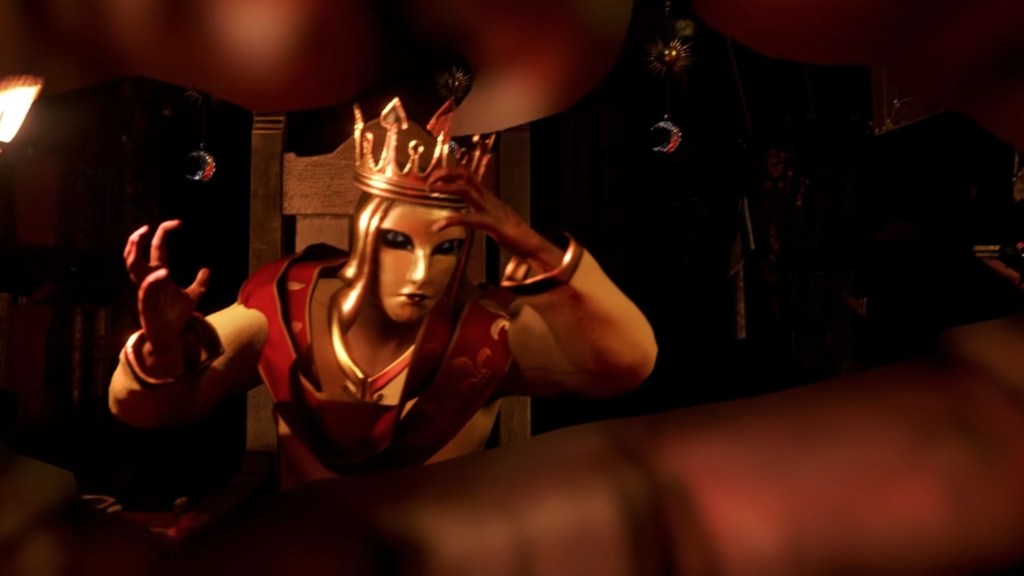
While the underlying gameplay of the Game of Siege is solid enough on its own, the real draw of Dice of Arcadia is the worldbuilding and slowly unraveling narrative. In between games, players slowly find out more about the caravan they’re trapped in, the mysterious force pulling the strings from the shadows, and the potential prize that might be awaiting them if they can defeat everyone. The shadowy visuals and creepy puppet designs go a long way towards giving the board game a real sense of stakes, as losing a round can result in a brief cut-scene where arms sprout from all around the players and use a blade to take fingers. The grim visual aesthetic gives it a unique touch that helps Dice of Arcana stand out from other similar dice and board games, all while adding to the tension of the narrative and creating new dangers for the player to uncover on their journey.
The first-person perspective ensures that the player remains rooted in the world, with the creepy charms of the host never playing well into the aesthetic. The little environmental puzzles further draw the player in with some key clues towards the full circumstances they find themselves trapped within. That natural storytelling is a key element of Dice of Arcana‘s presentation, suggesting it could add new layers to the Baltaro approach to fusing roguelike principles with traditional games by including a central narrative. While it remains to be seen if the full game is able to maintain that balance between unsettling aesthetics, addictive gameplay, and mysterious narrative, Dice of Arcana‘s demo hints at a much more fulfilling horror experience hiding just beneath the solid gameplay.
More Gaming
-
Courtesy of Interplay Productions -

Courtesy of Ubisoft