Few games have captured the modern day open world like Rockstar Games’ Grand Theft Auto. It has repeatedly defined what players expect from an open-world game, from sprawling cities and criminal stories to vehicles, side activities, radio stations, and the freedom to cause ridiculous amounts of trouble. There have been plenty of games influenced by GTA, but very few developed an identity strong enough to stand beside it. One series came remarkably close, though, and it did so by refusing to take itself nearly as seriously. Instead of competing with Rockstar through realism, it embraced chaos, customization, absurd humor, and increasingly ridiculous power fantasies.
Videos by ComicBook.com
Saints Row is the closest any series have come to rivaling GTA, but Saints Row IV effectively marked the end of the series. While the game wasn’t bad, it just couldn’t compete with the direction GTA was going. Saints Row IV transformed the series into something far removed from its earlier street-crime roots, putting players in control of the President of the United States while an alien invasion trapped the Saints inside a simulated Steelport. It was absurd and fans loved it. But after this, the series just fell off.
Saints Row Was the GTA Rival Willing to Be Completely Ridiculous
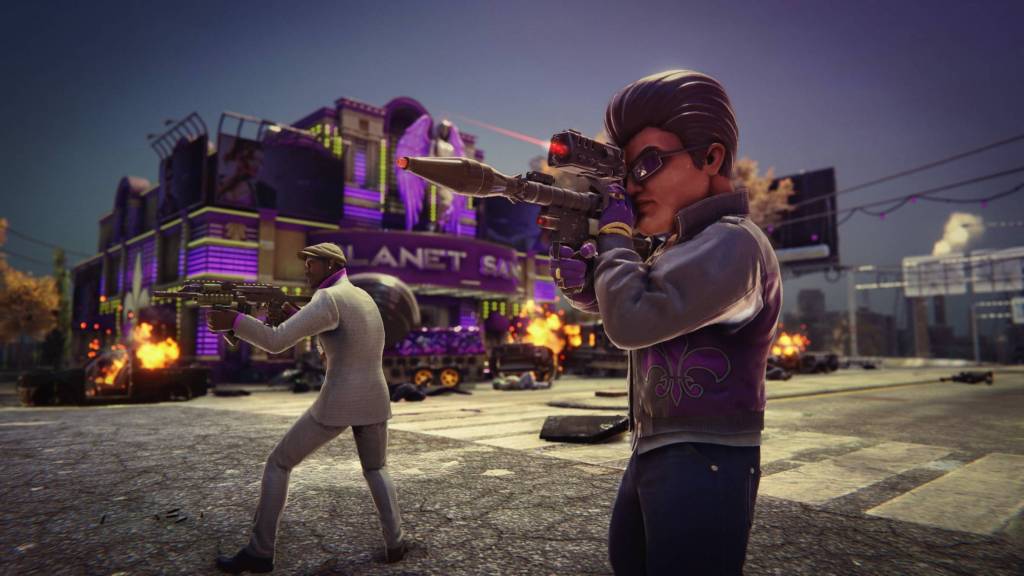
The original Saints Row arrived in 2006 as a more straightforward competitor to Grand Theft Auto, but it changed its concept going forward. Saints Row 2 embraced the contrast between Rockstar’s increasingly serious approach and Volition’s willingness to let players indulge in ridiculous behavior. It was even more free of morals and serious consequences than Rockstar’s series. Never before had a game embraced such chaotic open-world mayhem, with maybe the exception of Just Cause.
That distinction became increasingly important with Saints Row: The Third. Instead of trying to imitate the grounded crime drama Rockstar was pursuing, Volition leaned harder into spectacle. The Saints became celebrities, the story filled with bizarre situations, and the game was packed with exaggerated weapons, vehicles, characters, and activities. The game’s humor and story became increasingly surreal and ridiculous, which only made it more popular.
By the time Saints Row IV arrived, the series had essentially become the anti-GTA. The player could run across walls, leap enormous distances, use superpowers, and fight an alien empire while controlling a customized version of the Boss. It was not trying to convince anyone that it was a realistic crime simulator. It was offering a gigantic playground where almost every system existed to let players cause trouble. That willingness to be goofy was exactly what made Saints Row such a compelling alternative.
Saints Row IV Was a Surprisingly Strong Ending
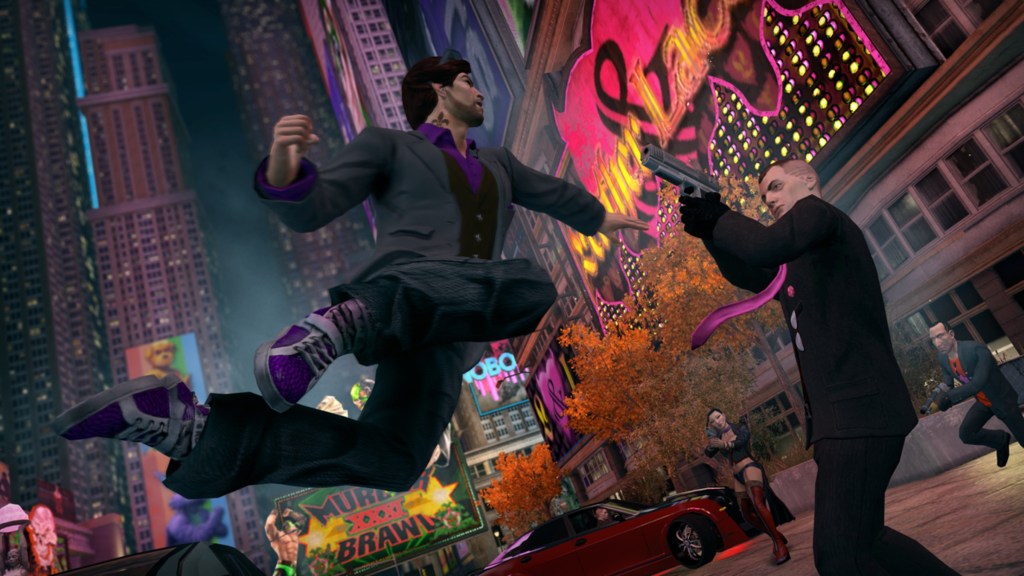
It is easy to look back at Saints Row IV as the moment the series went too far, but its reception tells a different story. It was received incredibly well and despite how it seemed even too far for the series, fans loved it. Its humor, customization, freedom, and willingness to give players enormous amounts of power. Overall, the game sold pretty well and showed that taking it these new heights worked.
That in itself is part of the problem. After Saints Row IV, the series had nowhere obvious to go. Saints Row IV had already pushed its concept into alien invasions and superhero-like abilities. The subsequent Gat Out of Hell spin-off continued the escalation, but the original formula had reached a strange endpoint. What began as a gang-focused open-world crime series had become a supernatural comedy action game. In some ways, that made Saints Row IV a fitting conclusion. It was difficult to imagine how Volition could raise the stakes again without completely abandoning what remained of the original premise.
The best the series could do was to head in an even more ridiculous direction, but this ran the risk of fulfilling what fans feared Saints Row IV would do. By creating such an off-the-wall concept, Volition had written themselves into a corner. How do you give players a more expansive world in which they could already do almost anything they wanted? Instead of answering this, the developer decided to pivot and give the series a soft reset.
The Reboot Failed to Restore the Series
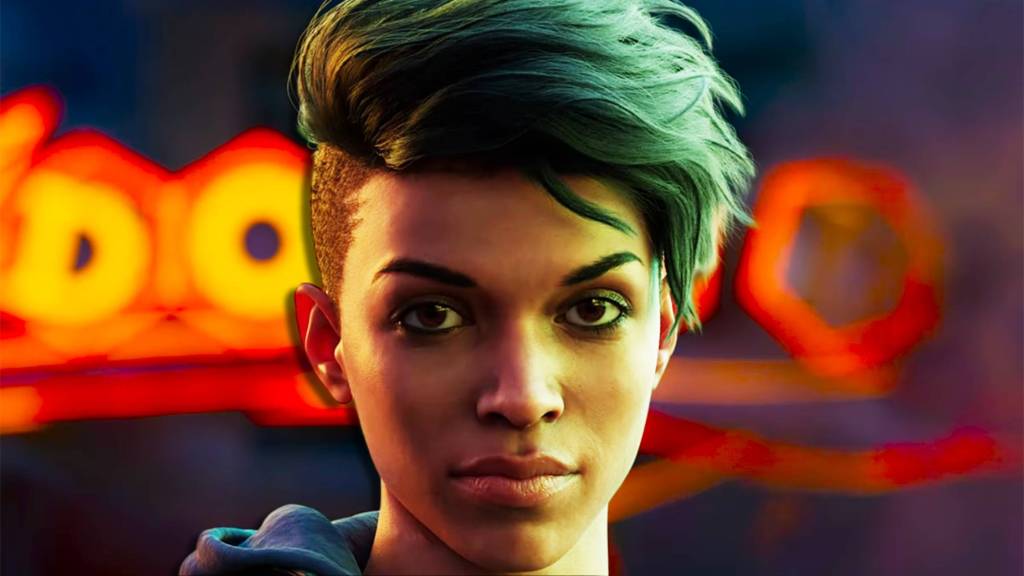
The attempt to bring Saints Row back arrived in 2022, with a reboot that abandoned the established cast and setting while attempting to recapture the series’ open-world comedy. The game released on August 23, 2022, and the response sealed the series’ fate. The developer itself admitted that the reboot did not meet expectations, and with that, gamers all but lost the chance to see GTA’s greatest rival push back, especially with the looming release of Grand Theft Auto VI.
The reboot’s issues weren’t just bugs or technical problems. It lacked much of the personality and chaotic creativity that had defined the older games. Missions were repetitive and the open world felt unresponsive. Overall, it felt like a nostalgia throwback bait without actually capturing what fans loved from the series. With the game’s poor reception, Volition shut its doors, effectively dooming the series to history.
The fact that Grand Theft Auto VI is one of the most anticipated games of all times makes Saints Row’s failure more disappointing. Now, the genre is missing the rival that was willing to go in the opposite direction and be more experimental. Thirteen years after Saints Row IV, there is basically nothing filling that role at the same scale. The reboot was supposed to bring the series back, but instead it demonstrated just how difficult it is to recreate what made the original games special. For now, Grand Theft Auto has the field almost entirely to itself.
More Gaming
-

Courtesy of Rockstar Games -

Courtesy of Fury Studios -

Courtesy of 343 Industries