I absolutely adore the Yakuza games, and have done since I first watched my brother play the original PS2 game when I was far too young to understand the violence unfolding before me. Its blend of life-sim-esque gameplay, beautiful world simulation, extremely graphic violence, and cinematic storytelling is unrivaled by any other series and helps firmly plant it in a league of its own. Yakuza is an exceptionally unique franchise, and perhaps the only one I’ve ever had the pleasure of experiencing that so perfectly blends humor and moments of harrowing sadness so effortlessly. Great job, Yakuza.
Videos by ComicBook.com
Still, despite its best efforts, developer Ryu Ga Gotoku Studio hasn’t managed to iron out Yakuza’s biggest problem. Even the very best Yakuza games suffer from this crucial flaw that makes them completely inaccessible to newcomers. If you’ve never played a Yakuza game, it isn’t so much a question of where you should start, but if you should. Fortunately, the brand new action game, Stranger Than Heaven, promises to fix that, as it also comes from Ryu Ga Gotoku Studio and appears to be following a very familiar formula, only this time without well over 10 games of baggage.
Stranger Than Heaven Will Be The Perfect Yakuza Game For Non-Yakuza Fans
I do believe that the Yakuza series is worth playing at least once in one’s life, but I can also completely understand the reticence to do so. Each game in the exceptionally lengthy series is long, full of cameos and references to previous entries, and also vastly different in terms of content, quality, and features. You may see the quaint countryside aesthetic of Yakuza 6 and Takeshi Kitano’s starring role and feel like starting with that one, but you’ll need to play around 175 hours of the previous 6 games to truly appreciate what’s going on. Like a Dragon, the seventh game in the series, was meant to serve as a reboot of sorts, but even that featured cameos from previous games and has now been folded into the main timeline. Not even the spin-offs are really safe, with Ishin using the likenesses of characters from across the Yakuza franchise, and the recent pirate-themed game focusing heavily on a major character, Goro Majima.
So, you’re forced to start from the very beginning, and that isn’t that unexpected, as narrative-focused TV shows share the same requirement. However, it’s trickier here when the level of investment is far greater, and the time it takes to get to the experience you actually want to play is substantially longer. For many, this won’t be a problem, and all the more power to you. However, I know I find it overwhelming when there’s just one extra game I need to play, let alone the 9 you’ll need to get through to play Infinite Wealth, for example, and I suspect there are many like me. It is perhaps the most divisive aspect of Yakuza, and an unfortunate barrier to entry for a truly incredible series.
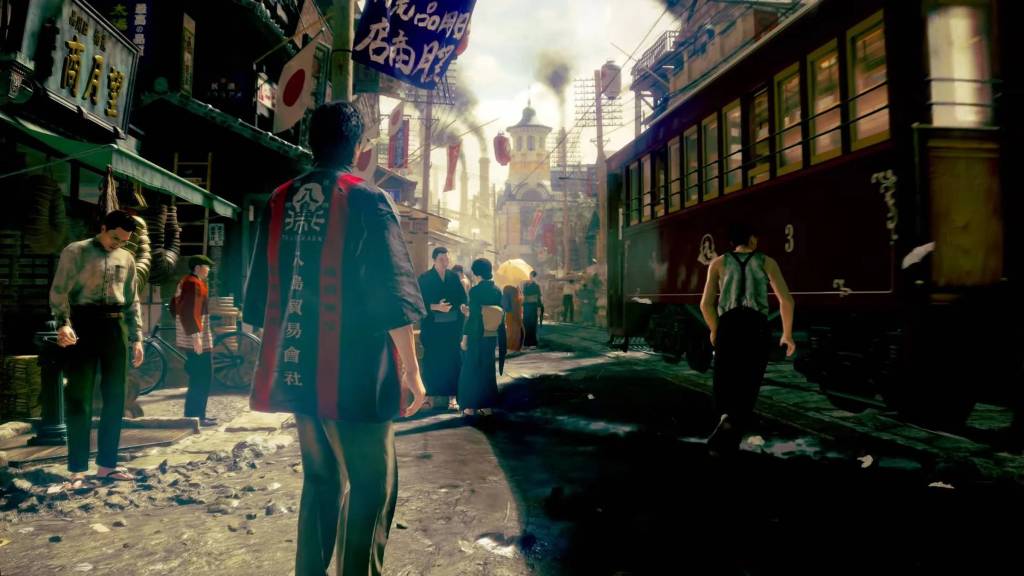
Fortunately, if you find the overall style of the Yakuza series appealing but have been put off playing it due to the sheer investment of time and money required, then fear not, as Stranger Than Heaven is the perfect solution. Developed by the exact same studio and clearly deriving a lot of its gameplay ideas from the Yakuza games, Stranger Than Heaven looks set to attempt, once again, to create a newcomer-friendly experience that still appeals to hardcore audiences. It is taking all the best bits of Yakuza, its brutal brawler combat, its location-hopping narrative, its densely detailed environments, and its life-sim elements, but giving them a historical twist. As a long-time fan, I am extremely excited, and I would encourage anyone even remotely interested to pay attention, as when Ryu Ga Gotoku Studio is at its best, which it appears to be with Stranger Than Heaven, it creates masterpieces.
Stranger Than Heaven Still Has Room To Fail
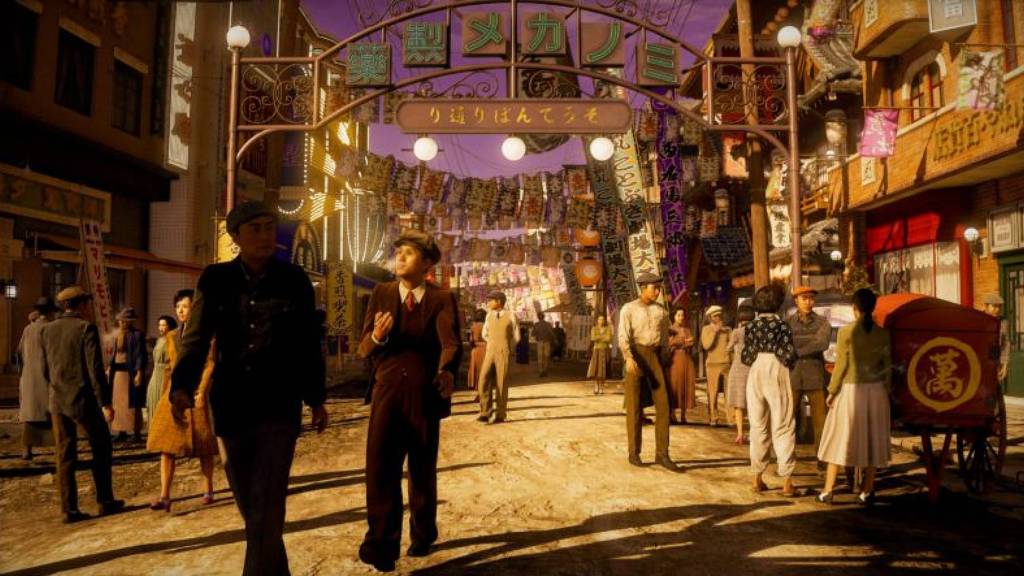
Now, while I don’t believe that Stranger Than Heaven will be a bad game (the decades of Ryu Ga Gotoku Studio producing nothing but amazing titles should indicate it’ll be good at the very least), I do think it could fail at feeling like an accessible game for newcomers. Stranger Than Heaven’s latest trailer revealed that it is seemingly set within the same universe as Yakuza, as we’d been suspecting for quite some time. We see locations from the game, only set in the past, and that would indicate that we’ll likely see a plethora of references to characters and events from the Yakuza games, such as the formation of its main faction or even the parents of its protagonist.
If this is the case, and Stranger Than Heaven is serving more as a Yakuza origins experience, then newcomers will likely feel alienated. It could end up like the fourth season of Fargo, as bizarre a comparison as that may seem, as that delved into the lore of the various warring factions seen throughout the entire show and was therefore completely unenjoyable to anyone without a vested interest in its crime-laden world. That’s not to say it was a bad season (I loved it), but rather that it relied heavily on pre-existing knowledge and appreciation for what it was trying to do.
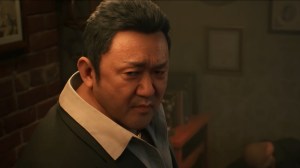
However, while I don’t doubt there will be a reference or two, I think there’s a very good chance that Stranger Than Heaven won’t really focus on the events of Yakuza too much, or at least to a degree that requires prior understanding to appreciate. For one, it isn’t called Yakuza: Origins, or, indeed include the Like a Dragon or Yakuza moniker anywhere. It is also only partially set within the main location of the Yakuza series, and thus, one can imagine, will only briefly deal with its origins. I would be surprised if we didn’t see any references to the earlier Yakuza games, but I would also be equally shocked if it heavily focused on them.
Regardless, it is nice to see Ryu Ga Gotoku Studio deliver an experience comparable to the earlier Yakuza games without the pre-requisite that you’re either in for the long haul or accepting you’ll have no idea what’s going on. Yakuza 0 somewhat did this, as it is largely standalone, but its inherent connection to the rest of the series evokes that aforementioned sense of being overwhelmed. Like a Dragon altered the game’s core combat model in favor of a turn-based battle system, which robs players of the frenetic brutality of Yakuza 0 – 6. Stranger Than Heaven avoids all of these issues while delivering the most modern take on the Yakuza formula, and, as a result, is seemingly the ideal entry point. I’m glad people will have a Yakuza-like experience without the feeling of needing to commit to an entire series, as it may, ironically, end up encouraging them to try out the other ones by dispelling that initial sense of overwhelm.
Are you going to play Stranger Than Heaven? Leave a comment below and join the conversation now in the ComicBook Forum!
Most Viewed
-

Sony Pictures -

Image courtesy of The Pokemon Company -

Courtesy of Crunchyroll -

Image Courtesy of Marvel Studios