The Nintendo 64 remains one of the most iconic home consoles in the history of Nintendo, signifying the publisher’s shift into the 3D space. While the console struggled at times to keep up with the advancements made by Sony’s PlayStation, the strength of the console’s multiplayer games and exclusive titles kept the N64 in plenty of homes around the world. As with all platforms, though, the system eventually lost support from developers. As developers moved onto newer consoles like the GameCube, though, Nintendo gave the console one last Mario experience to go out on.
Videos by ComicBook.com
Dr. Mario 64 is one of the last games to be released for the Nintendo 64, with a refinement on a traditional puzzle game mechanic that leaned heavily into the things that make Nintendo stand out. While it may not have had the sheer scope of the console’s biggest adventures or the replayability of the most memorable multiplayer titles, Dr. Mario 64 was a great way to bring together some friends or experience another goofy conflict between Mario and one of his most enduring rivals. Twenty-five years after it debuted, here’s why it’s worth remembering Dr. Mario 64.
Dr. Mario 64 Was Everything Good About The N64 As A Console
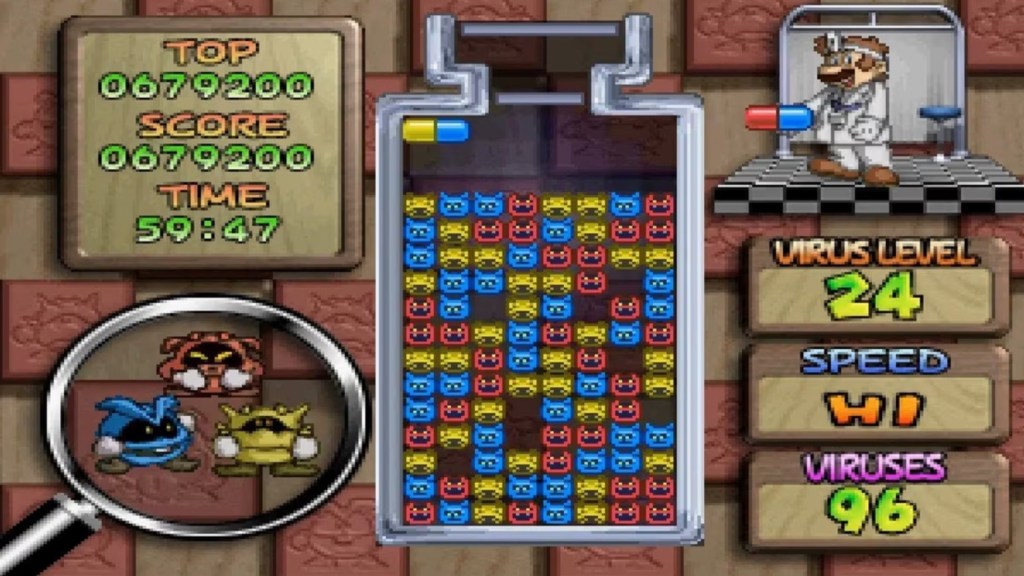
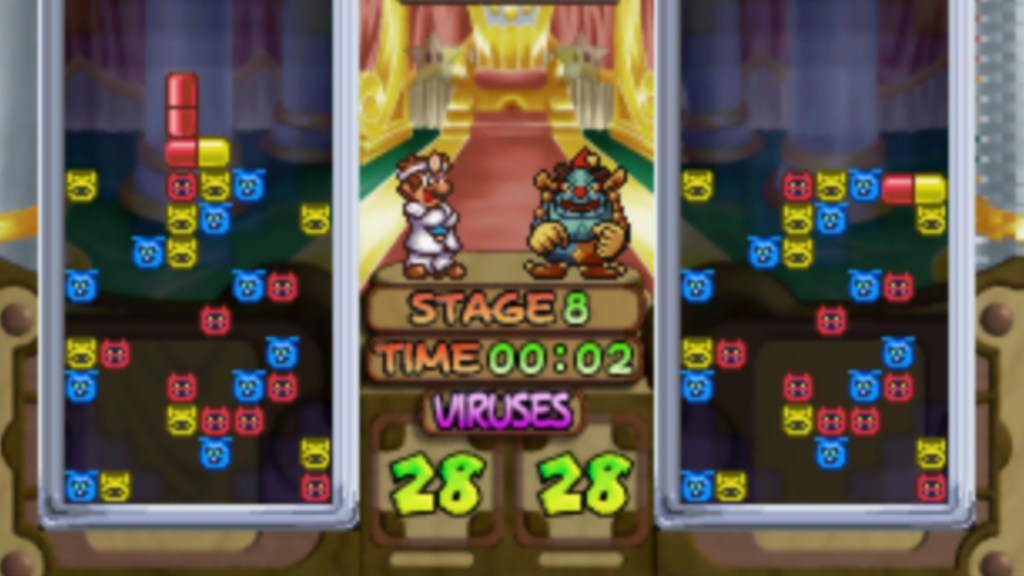
Debuting in North America on April 9, 2001, Dr. Mario 64 was an updated take on the puzzle game that had originally debuted on the NES and Game Boy over a decade prior. The falling-block puzzle game doesn’t necessarily try to reinvent the wheel, playing like countless games that had come before and after it on a purely mechanical level. However, Nintendo gave the game a tight presentation and engaging execution. The multiplayer, which could accommodate up to four players at a time, was a solid final draw for the console towards the end of its life cycle.
The game also included a surprisingly robust single-player mode, where players either take on the role of Dr. Mario or Wario, both of whom set out after Mad Scienstein and Rudy the Clown to recover the Megavitamins the pair stole amid flu season — Dr. Mario because he wants to help people, Wario because he wants the pills so he can sell them himself and get rich. The charming (and deceptively difficult) single-player game added some of the classic Mario charm to the puzzle game mechanics, adding a colorful layer to the moment-to-moment gameplay that makes it all the more engaging to play.
Dr. Mario 64 received solid, if not groundbreaking, reviews but didn’t become one of the better-selling games on the console. Still, the game serves as a great case study of what the Nintendo 64 did best: fun refinements of what had come before, all while putting focus on the joys of playing with family and friends. That’s why, given the time it launched, it serves as a fitting swan song for the Nintendo 64 as a whole.
Dr. Mario Was Nintendo’s Goodbye To The N64
By the time Dr. Mario 64 came out, Nintendo was moving on from the N64. The console had been home to plenty of great games and generational hits like Super Mario 64, The Legend of Zelda: Ocarina of Time, and GoldenEye 007, but it had also struggled against new rivals like the Sony PlayStation. To compete with the PlayStation 2, the Sega Dreamcast, and the Microsoft Xbox, Nintendo moved away from cartridges and embraced a new direction. The Nintendo GameCube debuted in 2001 as well, bringing Nintendo players into the next generation of console gaming.
This left Dr. Mario 64 as the last game developed by Nintendo to hit the N64 in North America — the remaining six games released for the console in North America were from other publishers like Activision, Midway, and EA Sports, with the final game (Tony Hawk’s Pro Skater 3) hitting the console in early 2002. Nintendo had one more game to launch for the console in Japanese markets, Dōbutsu no Mori — which would be released in North America as Animal Crossing for the GameCube in 2002. As such, Dr. Mario 64 takes on an additional layer as the final chapter in one of Nintendo’s most important eras.
The shift to 3D was difficult for plenty of developers, with Nintendo’s old rival Sega struggling to adjust fully and eventually leaving the console market entirely. While the PlayStation was the clear winner of the generation (outselling the N64 globally by a wide margin), Nintendo’s collection of exclusive titles and broader evolution of their established franchises helped them maintain their place in the larger gaming culture. Dr. Mario 64 served as a fitting final game from the company for the console, a title that updated older games for new platforms with an emphasis on their in-house icons and a focus on accessible multiplayer experiences. 25 years later, Dr. Mario 64 stands out as a perfectly fitting finale for the console.