A venue change usually isn’t much of a story. An event moves, the banners go up somewhere new, and the competition goes on.
Videos by ComicBook.com
But when The Pokemon Company closed out the 2026 North America International Championships (NAIC) by announcing a move to Chicago’s McCormick Place in 2027, the news felt less like a routine relocation and more like a reinvigorating breath of fresh air. And that says a lot, because at no point during the weekend did it feel like the event was anywhere close to stale, nor did the competitors and fans seem like they were looking for a change of scenery.
It’s just that after three years in New Orleans, one of Pokemon’s premiere North American events has, in a very literal sense, outgrown the building.
That’s a good problem to have. It’s also a real one.
The Growth That Broke The Room

The numbers tell the story before Chris Brown, TPCi’s Director of Global Esports and Events, even gets to the explanation. Since the event landed at its New Orleans venue three years ago, attendance has climbed more than 150 percent. The three-year growth target the team set when they arrived? They hit it in two. A critical hit, you might say,
This year, the show was effectively flat. Not because demand cooled, but because there was nowhere left to put people. Several competitions sold out immediately.
“The demand is there. We sold out a lot of our competitions in seconds,” Brown said. “But we don’t have the space.”
The ceiling, he was careful to point out, was never interest. It was square footage. The Ernest N. Morial Convention Center is one of the largest convention spaces in the world, but “large” only helps if the halls you need are available, and the ones adjacent to Pokemon’s footprint were already booked by other clients. You can’t conjure up extra space the week of the show, unfortunately. The event had grown into a box it couldn’t grow out of.
Why Chicago, Specifically
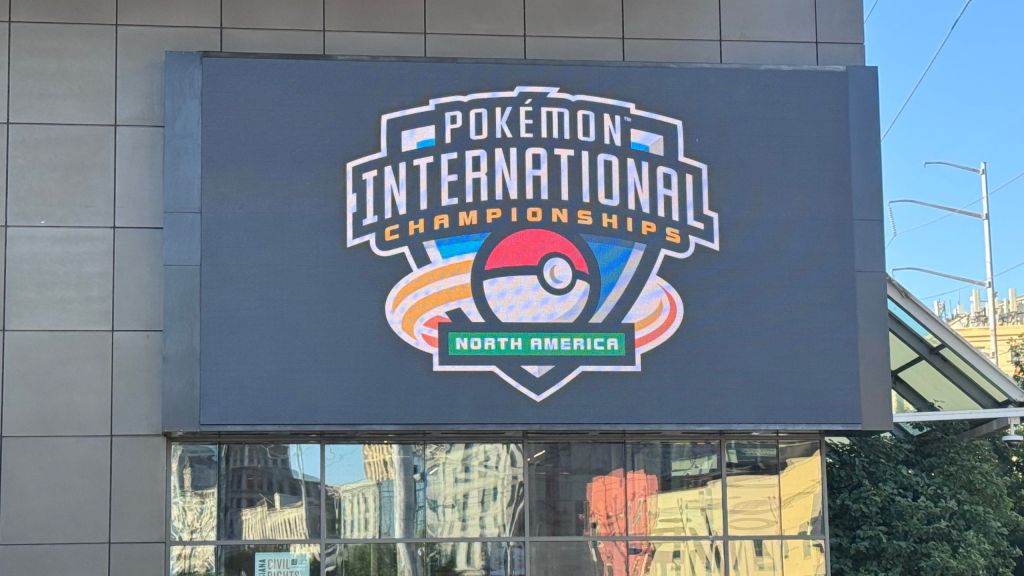
It would be easy to assume the move is purely about a bigger floor. Brown’s criteria are more layered than that.
Accessibility came up first. Not for fans on the floor, but for the people flying in. NAIC drew competitors and spectators from 48 countries and regions this year, and an event at that scale lives and dies on travel logistics. New Orleans served that very well during its three-year run. However, Chicago, a global hub with direct flights from much of the world, may serve it even better.
Then there’s the question Brown says the team always asks: what is there to do? Attendees come for the competition, of course, but the weekend is long, and “dinner has to happen somewhere.” A world-class city that families can build a vacation around (arriving early, staying late) is part of the entire experience.
But the unlock is space to grow on both fronts at once. For the last couple of years, every expansion decision has been a bit of a trade-off. Either protect the competition or keep building out the fan experience, because there wasn’t room for two fully-fleshed out experiences.
Even though both components felt like they were firing on all cylinders at this year’s event, Chicago, Brown says, finally lets them stop choosing.
The Logistics Nobody Sees
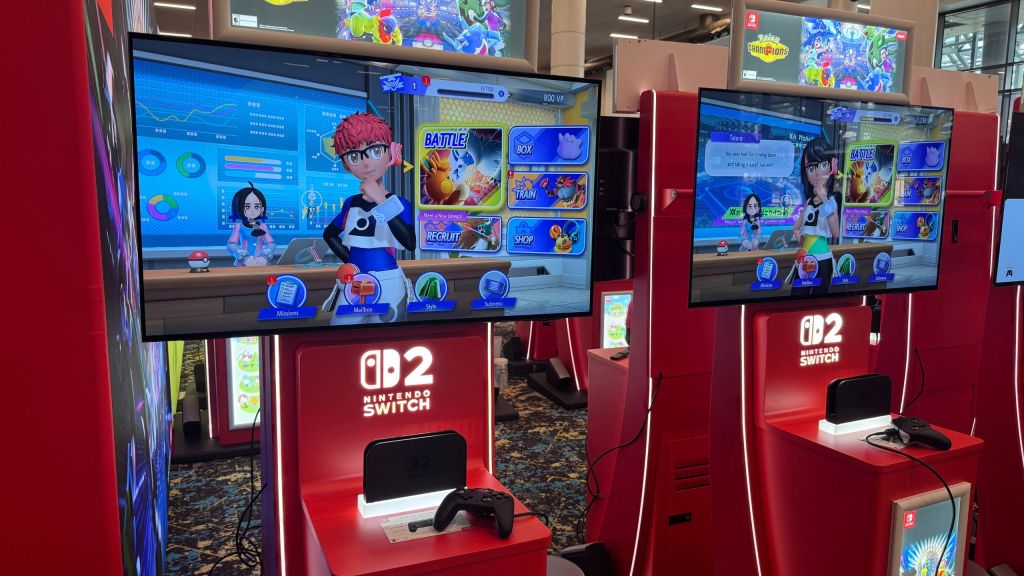
Space matters a lot, and there’s a lot to grasp what’s actually being assembled on that floor. According to Brown, it’s a scale of operation that has no real comparison.
And the stat that raised my eyebrows with his claim? There were roughly twice as many people competing at this year’s event over a single weekend as there are athletes at the entire Winter Olympics. And unlike the Olympics, they’re all competing simultaneously.
“Nowhere on the planet do these logistics exist,” Brown said.
Supporting that means standing up around 1,000 internet-connected stations in under 48 hours. It means running more than 5,000 Trading Card Game matches at the same time, alongside the video game competition, Pokemon GO, AND Pokemon UNITE. All the while, four live broadcast streams run in parallel (which is quite a sight to see happening on a single laptop screen all at once. Brown’s point isn’t that this is impressive just for a fan convention. Nowhere else on the planet are these kinds of logistics happening.
So, naturally, if that machine relocates to Chicago, it has to get bigger. The behind-the-scenes growth Brown is proudest of is arguably the organizational muscle of staffing structures and project management across every partner company involved that lets a show this size run smoothly enough that attendees never notice the strain behind the scenes. By his own account, this year’s event was the smoothest New Orleans run yet, and most of the reason for that lives in spreadsheets and load-in schedules (and nobody is buying a ticket to see those).
What The Extra Room Actually Buys

So what does Pokemon do with space it hasn’t had?
The answer comes in the fan programming it’s been forced to ration at the NAIC. Brown is candid that the competitive core has always come first. This is, after all, fundamentally a tournament to crown international champions on the road to Worlds. When space is tight, that’s the audience that gets served first. Notably, the team didn’t shrink the competition this year to make room for fans, which is exactly what a bigger venue is meant to dissolve in terms of balance and tension.
The experiments waiting in the wings hint at the direction. Carnival-style fan games expanded at this year’s NAIC and are rolling out to the regional level. There’s a programming stage at the European International Championships that NAIC still doesn’t have, and the team is figuring out what else belongs. And partner activation booths with one-to-one brand experiences (like potentially LEGO and Funko) become possible with more floor space.
In 2027, Chicago will offer up the space that this 30-year-old beloved franchise needs to keep accelerating without making one of its biggest weekends feel smaller.
As for whether Chicago becomes the long-term home after 2027? Brown wouldn’t bite. “No comment,” basically, delivered with a smile. For an event organizer, the goal is having the same show in the same place at the same time every year. “That’s the organizer’s dream,” he said. “We move Worlds around… let me tell you, that’s really, really hard to do.”
After three years of growing in New Orleans, that kind of stability could end up being the most luxurious thing Chicago has to offer. See you all in The Windy City!
More Gaming
-

Courtesy of Ubisoft