Final Fantasy has long been the standard-bearer for the JRPG in gaming. The long-running Square Enix franchise constantly reinvents itself and tries unique approaches to gameplay and narrative, with the best titles in the series almost restructuring the popular gamer imagination around their success. There have been plenty of rivals who have sought to undercut the series over the years, with one of the more successful attempts coming courtesy of Nintendo at the dawn of the century.
Videos by ComicBook.com
Debuting on the Game Boy Advance on August 1, 2001, Golden Sun was a surprisingly ambitious and endearingly deep fantasy JRPG that took plenty of cues from Final Fantasy even while creating its own distinct style of magic and narrative approach. The result was a highlight for the GBA in a genre that often felt underserved on the portable platform — and one of Nintendo’s best cult classics. Twenty-five years since the series debuted and now available on the Nintendo Switch, it’s worth reflecting on what made Golden Sun work and why it’s overdue for a follow-up.
Golden Sun Could Have Been Nintendo’s Final Fantasy Killer, But Fizzled Out

Golden Sun was the brainchild of the Takahashi Brothers, who were key figures at Camelot Software, the developer behind Mario Golf and Mario Tennis. Designed explicitly as a way for Nintendo to compete with Square Enix in the RPG space, Golden Sun was an ambitious project that was intended for the N64. As that console’s lifespan ran its course, however, the focus was shifted to the then-upcoming Game Boy Advance. The original concept for the epic was split into two games, separated by a year. Set in the world of Weyard, Golden Sun and its direct follow-up, Golden Sun: The Lost Age, follow two parties of “adepts,” powerful young magic users who are trying to release (or contain) the chaotic but powerful forces of Alchemy. The two games were hailed upon release for their depth, both in terms of RPG gameplay and storytelling focus.
By splitting the narrative and showcasing both sides of the conflict, Golden Sun embraced a surprisingly nuanced take on the traditional JRPG fantasy tropes. The art design is bright and poppy, while the power effects all feel appropriately powerful. The result was a critically acclaimed addition to the GBA that, despite its relatively small size when compared to other games of the era, felt genuinely epic in its storytelling scope and world design. The games earned solid reviews upon release — although the sales didn’t quite match the critical reception. The two games collectively sold over 2.75 million copies globally, making it a solid success for Nintendo at the time. Golden Sun: Dark Dawn was eventually developed and released in 2010 for the Nintendo DS but failed to match the heights of the previous two games, with little mention of the series from Nintendo in the years since outside of some cameo appearances in games like Super Smash Bros. Ultimate.
Why Golden Sun Deserves A Revival
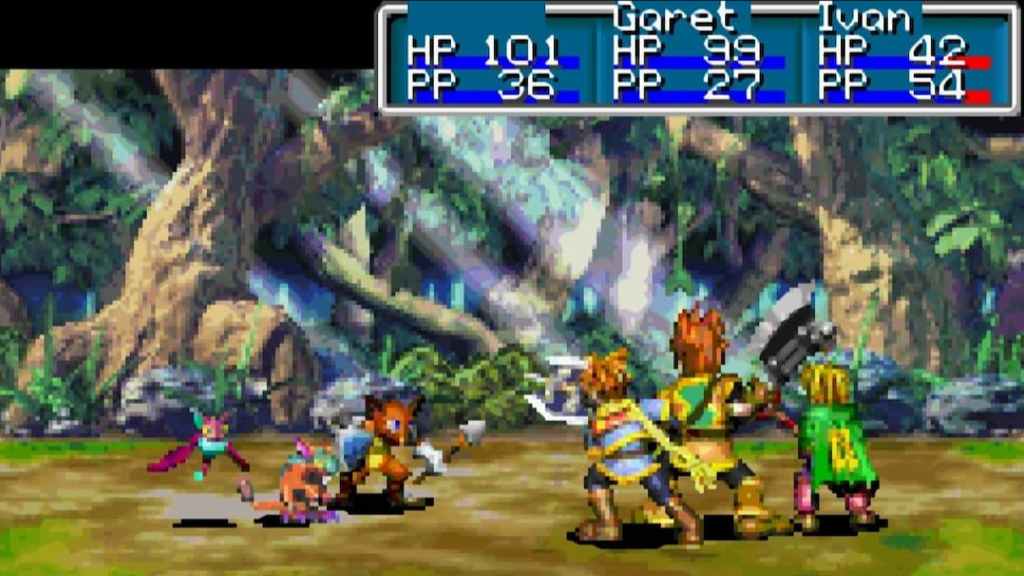
It’s a shame, too, because Golden Sun was a genuine attempt to pick up the legacy of the classic Final Fantasy games while the series shifted into a more grandiose space on consoles. There’s a real sense of ambition to the design and depth of the game that makes it memorable, even twenty-five years later. The visual effects were incredibly impressive for their time, with elements like 28 collectable Djinn scattered across the world providing plenty of unique approaches to combat and gameplay. The opposing parties were both given a real sense of personality even outside of their somewhat standard archetypes, with their initially antagonistic relationship providing both games some real emotional throughlines. It was an ambitious pair of games that were addictive to play and engrossing to explore.
Fans have been clamoring for a follow-up for years, with the series currently in a 26-year-long drought. It’s also long overdue for a remake or a reimagining, which could help reintroduce players to the setting and highlight what made the game stand out in the first place. Golden Sun‘s approach to morality and power could feel especially resonant today, especially if the characters were still positioned against one another for the purposes of the adventure. A new game that reimagined the original two entries as a single adventure could benefit from the subsequent decades of game design innovation, refining what worked before and improving on it with modern elements.
A full-blown sequel could also be a lot of fun, delving back into the world sometime after the events of the previous three games as a chance to showcase how much the world has changed in light of the player’s actions. This would also allow the prospective continuation to potentially expand the world or experiment with gameplay mechanics, tweaking the experience and helping it bounce off how much the Final Fantasy series has changed. With the proper runway, Golden Sun could rise back up and realize the potential that Camelot Games initially saw for it.
More Gaming
-
Courtesy of NetherRealm Studios