South Park is an institution of modern pop culture, with the citizens of the town growing more iconic with each passing year. The characters have become icons, the dialogue has become memes, and the satire has influenced generations of creatives. The franchise is approaching its 30th anniversary, with an impact that has grown far beyond the space of television comedies to become its own franchise worth billions of dollars.
Videos by ComicBook.com
While modern South Park fans have plenty of great options when it comes to South Park in other media, it wasn’t always that way. In fact, when the series got its earliest video game adaptations, the best reviews were middling — and the harsh ones were brutal. While the Nintendo 64 and PlayStation versions of South Park were terrible, they inadvertently set the stage for the series’ creators to get more involved in the development of much better-received titles.
How South Park Came To Gaming
Launching in 1997, South Park quickly became a critical and commercial success for Comedy Central. The subversive gross-out comedy gradually transformed into one of the most cutting satires on television, a foul-mouthed hit among younger audiences that quickly earned accolades from critics. While older audiences connected with the social satire, the surface-level crass comedy made it a popular (if controversial) hit with kids. It makes sense, then, that video games based on the show were quickly set up. Acclaim Entertainment got the rights to the show, and games were quickly moved into active development.
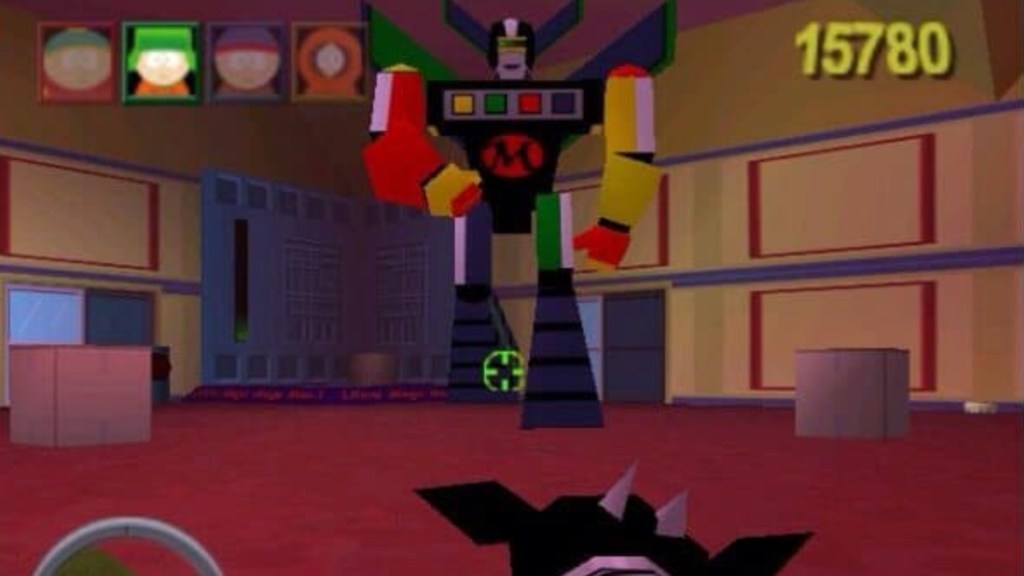
The first of these titles was simply titled South Park, a first-person shooter that cast players as one of the four central characters (Stan, Kyle, Cartman, and Kenny) using a variety of weapons from around town to save the day after a mysterious comet sets off a series of strange events in South Park. Designed with a tweaked version of the Turok 2: Seeds of Evil game engine, South Park was launched on the Nintendo 64 on December 21, 1998. It had tanky controls, and the presentation was limited by lackluster graphics.
The limited quotes from the show became grating in short order, and the surface-level reading of the source material was missing all the core elements that made South Park more than just a series of crass gags. The following year, the game was brought over to Microsoft Windows and PlayStation, the latter of which was timed to land at the same time as the film South Park: Bigger, Longer & Uncut. Unfortunately, the ports were heavily criticized, which sums up the overall reception to the title from critics.
Why South Park Flopped Critically

South Park suffered from negative reviews upon release, with many critics specifically citing the poor graphics and audio as a flaw. The N64 version of the game was at least considered a functional (if dull) FPS. The ports to the PC and especially PlayStation received even harsher reviews. The graphics and music were worse, and the multiplayer “Head-to-Head” splitscreen mode failed to match the more kinetic fun of the N64 version. Although the game sold well with audiences (likely in large part due to the brand recognition), it failed to make the same kind of impression that other FPS titles of the era did.
As a result, Acclaim was forced to reevaluate its plans for the brand. Although a sequel had been considered during development, Acclaim changed course and instead developed two other spin-offs, the party game South Park: Chef’s Luv Shack and the kart racer, South Park Rally. Both games also flopped critically, and couldn’t match the sales heights of the first South Park game. It would be nine years before the next video game based on South Park, 2009’s South Park Let’s Go Tower Defense Play!, which was met with better success from critics upon release.
The Failure Of Acclaim’s South Park Titles Led To Better Games

The South Park game’s critical drubbing, coupled with the other poorly received South Park games and the cancellation of a proposed South Park title for the Game Boy Color, led to a dearth of games based on the show for some time. However, it may have a solid result in the long run. South Park creators Trey Parker and Matt Stone were reportedly frustrated by the games and became more involved in the development of any other South Park titles. This led to the story-driven South Park: The Stick of Truth, a turn-based RPG that was deeply rooted in the show’s identity and style of comedy.
The pair worked heavily with Obsidian and Ubisoft to accurately reflect the tone and style of the show. Stick of Truth was a critical and commercial success, earning several awards and setting up the similar South Park: The Fractured But Whole. Since then, there have been more games with South Park Digital Studios’ involvement — some well-received, and others (like South Park: Snow Day!) earning unfavorable comparisons to the N64 game. Still, it’s a huge advancement from what came before. In retrospect, those early flops might have been crucial in convincing Parker and Stone to take more agency in games based on the show. It’s possible that, without the mishandling of the South Park brand in the initial batch of games, South Park‘s creatives wouldn’t have gotten so involved in future projects — denying gamers one of the silliest riffs on the standard RPG to ever hit broad audiences.